As federal policy landscapes shift, state agencies across the country are facing mounting pressure to harmonize complex eligibility protocols for major public assistance programs. At the center of this administrative challenge are mandatory work requirements, which have long formed a pillar of the Supplemental Nutrition Assistance Program (SNAP) and are now expanding into the Medicaid program. Beginning January 1, 2027—or sooner at the option of individual states—44 states will be required to condition Medicaid eligibility for adults in the Affordable Care Act (ACA) expansion group and enrollees in specific waiver programs on compliance with work requirements.
However, federal law includes essential safeguards for vulnerable populations, notably mandatory exclusions for individuals deemed "medically frail." To qualify for this exemption, enrollees must possess a qualifying medical condition and demonstrate that the condition directly impairs their ability to fulfill the mandated work requirements. While the Centers for Medicare & Medicaid Services (CMS) has recently released guidance outlining a framework that states can utilize to verify these medical frailty exclusions, participation is not mandatory, leaving significant ambiguity regarding the exact verification processes individual states will implement.
This regulatory uncertainty has brought renewed attention to how SNAP has historically managed similar administrative hurdles. Much like the impending Medicaid medical frailty exemption, the SNAP framework exempts individuals who are found unable to work due to physical or mental limitations. Although state SNAP agencies have long exercised considerable flexibility in verifying work capacities, these procedures may soon undergo significant shifts. Recent federal reconciliation laws tie a portion of state SNAP benefit costs directly to individual state payment error rates, creating high financial stakes that could force agencies to tighten documentation rules. While the SNAP program offers valuable insights, structural differences in how eligibility is determined mean that Medicaid verification processes will ultimately diverge in several key aspects.
How Have States Historically Determined Ability to Work for the SNAP Program?
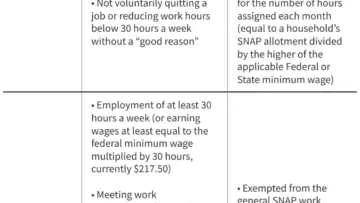
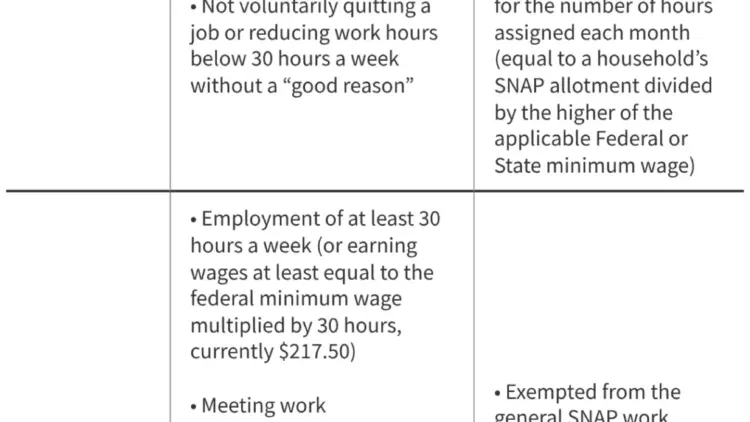
States have long enjoyed broad flexibility in defining the exemption criteria for individuals deemed physically or mentally unfit for employment. The vast majority of SNAP adult recipients under the age of 65 must comply with general work requirements, which include registering for employment, accepting suitable job offers, participating in assigned SNAP Employment and Training programs, and avoiding voluntary job quits or arbitrary reductions in work hours below 30 hours per week without valid justification. Furthermore, time-limited work requirements apply to specific non-exempt individuals, mandating that they work or participate in qualifying work programs for at least 80 hours per month to maintain benefits beyond three months in a rolling 36-month period.
Federal regulations grant state agencies wide discretion to define physical and mental fitness and establish localized verification procedures for general exemptions, while rules governing time-limited requirements offer only slightly more specific boundaries. Because federal oversight leaves room for interpretation, definitions vary significantly across state lines. Several jurisdictions maintain expansive criteria for physical or mental limitations, encompassing individuals experiencing chronic homelessness or survivors of domestic violence whose circumstances severely impact their physical or mental well-being. Furthermore, states are mandated to exempt individuals receiving temporary or permanent disability benefits—such as Supplemental Security Income, Worker’s Compensation, Veterans Affairs support, Railroad Retirement, or developmental disability services—though the specific documentation required to prove these statuses can vary widely.
A cornerstone of the SNAP application and recertification workflow is a mandatory phone or in-person interview with an eligibility worker responsible for screening enrollees for potential exemptions. Most states report conducting initial screenings for physical or mental limitations directly during the application phase or during the subsequent mandatory interview prior to program certification. More than half of state agencies grant frontline staff discretionary authority to evaluate various physical or mental limitations during these interactions, sometimes permitting visual observations—such as noting a recipient’s reliance on an oxygen tank—to serve as the basis for an exemption determination.
When evaluating individuals who appear obviously unfit for work, state practices diverge. Some jurisdictions consistently require formal medical documentation, whereas others accept client statements unless an eligibility worker finds the narrative questionable or unclear. Evaluations of SNAP work requirement exemption processes indicate that some caseworkers favor mandatory documentation because it reduces staff burden, minimizes personal liability, and increases consistency by limiting subjective decision-making. Conversely, enforcing strict documentation requirements invariably increases administrative overhead for enrollees, healthcare providers, and eligibility staff tasked with processing and clarifying records. Because recipients are reevaluated for exemptions during recertification cycles every six to twelve months, studies show that the evidentiary information collected rarely changes from the initial application.
When unfitness to work is not immediately obvious, states must secure a statement from a licensed medical professional to substantiate the exemption. The specific details requested by state agencies vary, with some jurisdictions requiring specialized provider forms while others accept written narratives or direct phone attestations from healthcare workers. Because medical providers receive limited formal guidance on how to assess functional fitness for work, their determinations can introduce additional variance and inconsistency into the exemption process.
Compounding these administrative choices, new mandates from federal reconciliation legislation require most states to cover a portion of SNAP benefit costs if their payment error rates exceed six percent, effective October 2027. Because these error rates primarily reflect administrative mistakes rather than fraud, states face heightened financial exposure. Historically, state verification policies balanced administrative integrity against the burden placed on enrollees, but the introduction of steep financial penalties is prompting some jurisdictions to reevaluate their approaches. For instance, Arizona recently implemented stricter documentation rules for cases where client statements were previously considered sufficient, illustrating a broader trend toward tighter oversight to safeguard against fiscal penalties.
How May the Medicaid Process Compare to SNAP?
In stark contrast to traditional SNAP workflows, the upcoming Medicaid verification process for the medical frailty exclusion will require states to exhaust available administrative data before directly requesting documentation from enrollees or healthcare providers. Medicaid programs maintain access to extensive claims and encounter data that are unavailable within the SNAP ecosystem. Under an interim final rule released by federal regulators, states are instructed to leverage claims records from the preceding 12 months to automatically verify an individual’s medical frailty status prior to initiating direct contact.
CMS has outlined a tiered medical frailty framework designed to streamline this process. Under this structure, states can identify eligible individuals using claims data alone in the first tier, combine claims with encounter or alternative data in the second tier, or rely on individualized manual processes requiring additional documentation in the third tier when administrative data are absent or insufficient. While automated verification will successfully capture many eligible enrollees, data limitations—such as a lack of historical records for newly enrolled applicants or inconsistent medical coding practices by healthcare providers—mean that manual interventions and supplemental documentation will remain necessary for a portion of the population.
When available data prove insufficient, state Medicaid programs will lean heavily on treating providers to verify medical frailty and work capacity, mirroring aspects of the SNAP model. Because federal Medicaid rules prohibit mandatory interviews, frontline eligibility workers will play a less direct role in initial verifications, though joint programs or robust data-sharing agreements may allow Medicaid agencies to leverage information already gathered through SNAP interviews. When data gaps persist, states will need formal attestations from medical providers. However, because the current interim final rule provides sparse detail on the precise information required, states are likely to develop divergent forms and collection standards, echoing the fragmented landscape seen in SNAP. Some states, such as North Carolina, have proactively designed unified provider attestation forms intended to serve both Medicaid and SNAP exemption determinations.
Starting in January 2028, state flexibility regarding self-attestation within Medicaid will become significantly more restrictive than current SNAP policies. While SNAP rules require additional verification only when client statements appear questionable without placing a blanket ban on self-attestation, Medicaid regulations will sharply curtail this practice. Throughout 2027, states are permitted to accept self-attestation when reliable administrative data are absent. However, beginning January 1, 2028, states may only accept self-attestation of medical frailty one time per enrollment period. For subsequent renewals, states must rely on administrative data or demand formal documentation, introducing a more rigorous and time-consuming renewal process. This restriction marks a significant shift, as preliminary surveys indicated that a majority of states initially intended to rely heavily on self-attestation to operationalize the medical frailty exemption.
Ultimately, state Medicaid verification strategies will vary widely, shaped heavily by the looming threat of federal financial audits and penalties. The federal Medicaid rule establishes that states will be flagged for noncompliance if audits reveal frequent approvals of medical frailty exemptions without sufficient evidence demonstrating how the underlying condition impairs work capacity. As state agencies scramble to operationalize these exemptions while safeguarding against fiscal penalties and avoiding excessive administrative burdens, they must navigate these complex policy changes simultaneously alongside impending updates to the Medicaid Payment Error Rate Measurement program. These converging regulatory pressures will force states to carefully calibrate their documentation demands as they prepare for the 2027 implementation date.