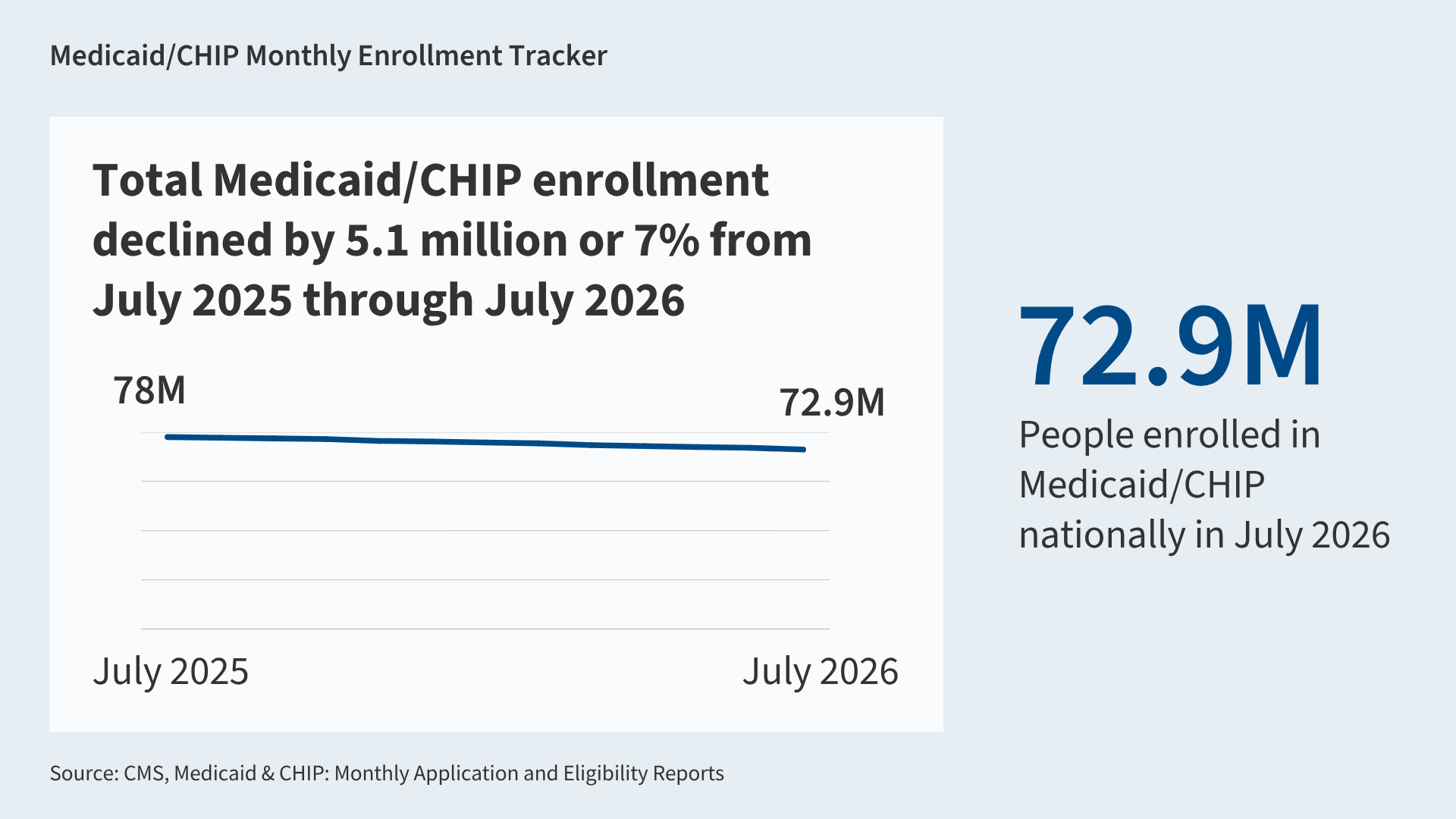
Federal health officials and policy analysts continue to monitor shifting dynamics within the nation’s public health coverage programs, highlighting long-term trends in Medicaid and the Children’s Health Insurance Program (CHIP). Monthly enrollment reporting published by the Centers for Medicare & Medicaid Services (CMS) as part of the Performance Indicator Project provides crucial insight into how participation numbers fluctuate across the country among both children and adults.
While these recurring federal reports offer an essential window into broader enrollment trajectories, experts note that the figures capture full-benefit enrollees exclusively. Individuals receiving limited benefits—such as those restricted solely to family planning services—are omitted from these counts. Consequently, the CMS metrics do not deliver a complete enumeration of every person tied to the Medicaid system, nor can they be utilized in isolation to monitor shifting participation across precise eligibility pathways, including specific subsets like adults qualifying under the ACA Medicaid expansion group.
Legislative Shifts on the Horizon
Looking ahead, the policy landscape governing public health insurance is poised for substantial transformation. The federal budget reconciliation legislation enacted in 2025 introduced major structural changes to the Medicaid program. Among these provisions is a federal mandate requiring non-disabled adults in the expansion group, alongside participants in certain Section 1115 demonstration waiver programs, to satisfy new work and reporting requirements beginning in January 2027.
Health policy researchers project that these incoming mandates will lead to a contraction in overall Medicaid enrollment over the subsequent decade compared to baseline projections under prior law. These anticipated shifts place heightened importance on tracking current baseline data, evaluating historical patterns, and monitoring state-level implementation strategies as agencies prepare for the new regulatory environment.
Historical and Current Enrollment Trends
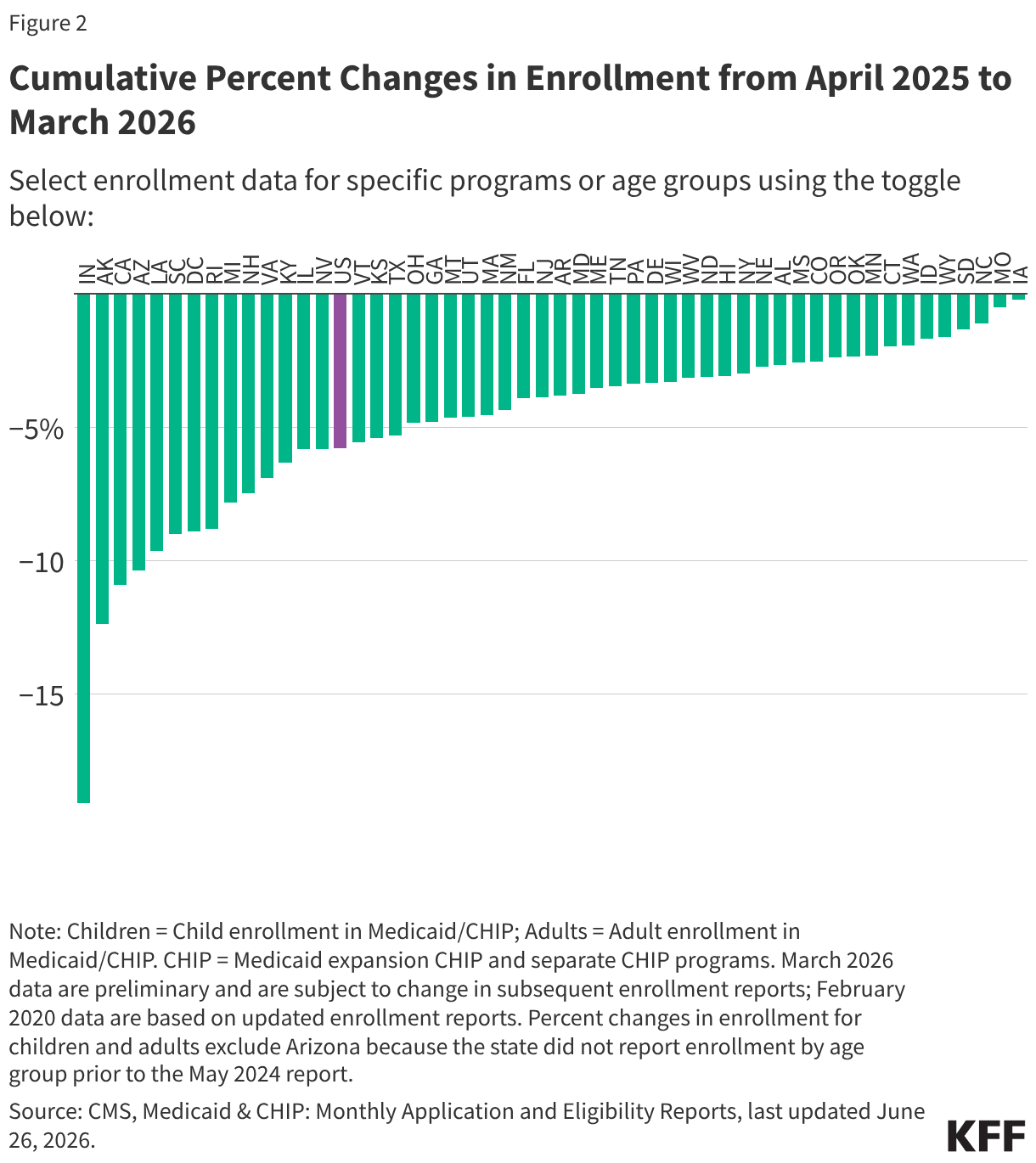
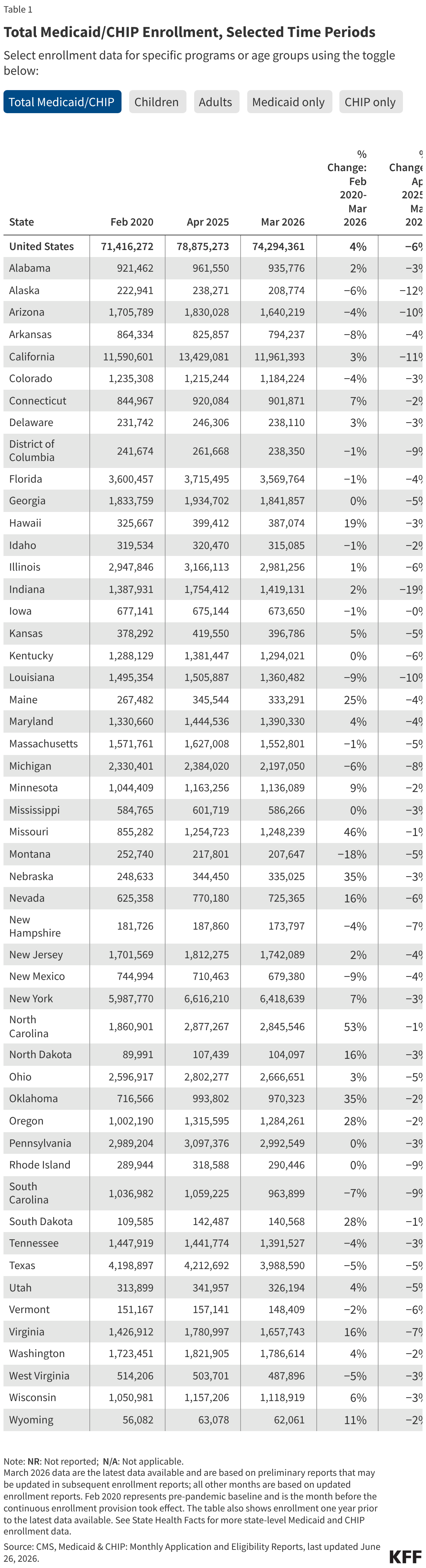
To understand the trajectory of public health coverage, analysts examine longitudinal data spanning from the pre-pandemic baseline of February 2020—the month immediately preceding the implementation of the continuous enrollment provision—through the most recent reporting periods available as of mid-2026.
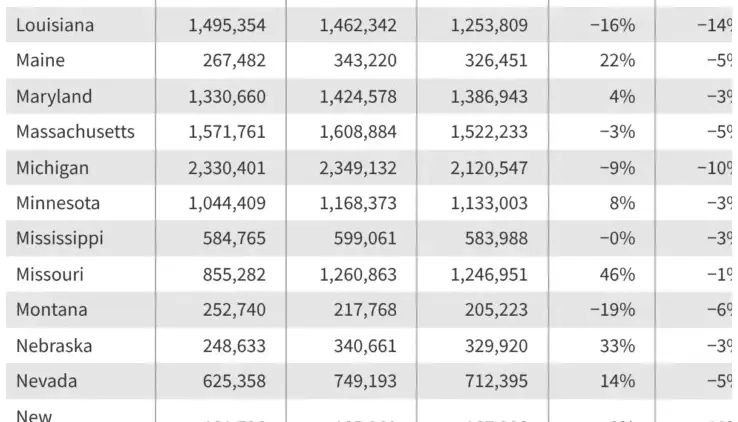
Aggregated figures distinguish between combined Medicaid and CHIP participation, child-only groups, adult-only groups, and distinct program categories. Because of data reporting gaps in certain jurisdictions—such as Arizona, where comprehensive child and adult metrics remain unavailable for specific months—national totals routinely account for these omissions to maintain statistical accuracy. Preliminary numbers for mid-2026 reflect early reporting cycles that remain subject to subsequent reconciliation and refinement by state agencies and federal overseers.
The Post-Pandemic Unwinding Period: Lessons and Outcomes
A major chapter in the history of public health insurance concluded with the winding down of pandemic-era continuous enrollment rules. Comprehensive data compiled through September 2024 captured the massive administrative undertaking known as the Medicaid unwinding. During this period, states systematically redetermined eligibility for tens of millions of enrollees who had maintained coverage without interruption since early 2020.
By the time most states finalized their unwinding processes in late 2024, cumulative data showed that renewal outcomes had been successfully processed for nearly nine out of ten individuals who were enrolled in Medicaid or CHIP prior to the initiative’s launch. Across reporting jurisdictions, state agencies successfully renewed coverage for tens of millions of individuals, affirming their ongoing eligibility under regular program rules.
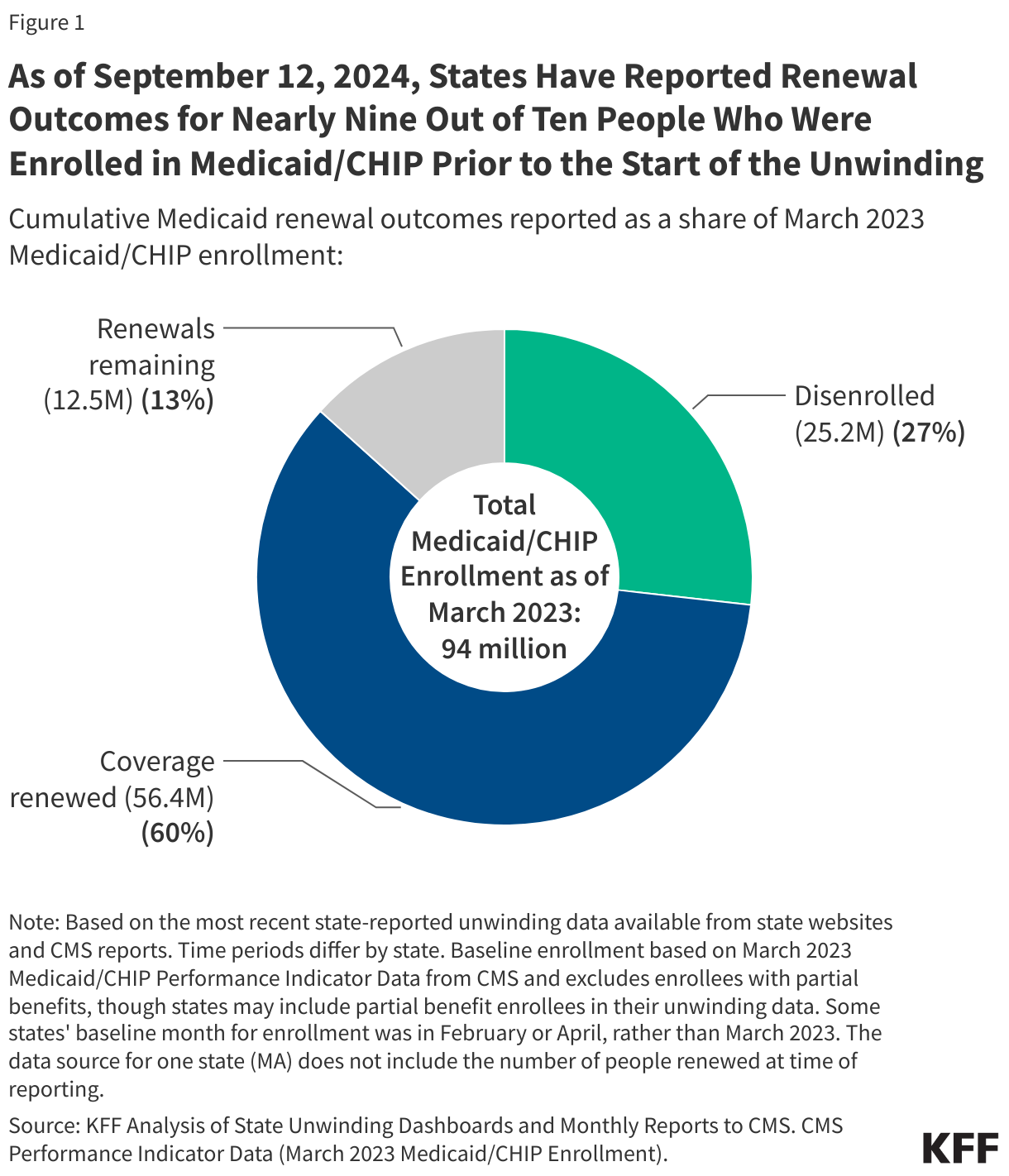
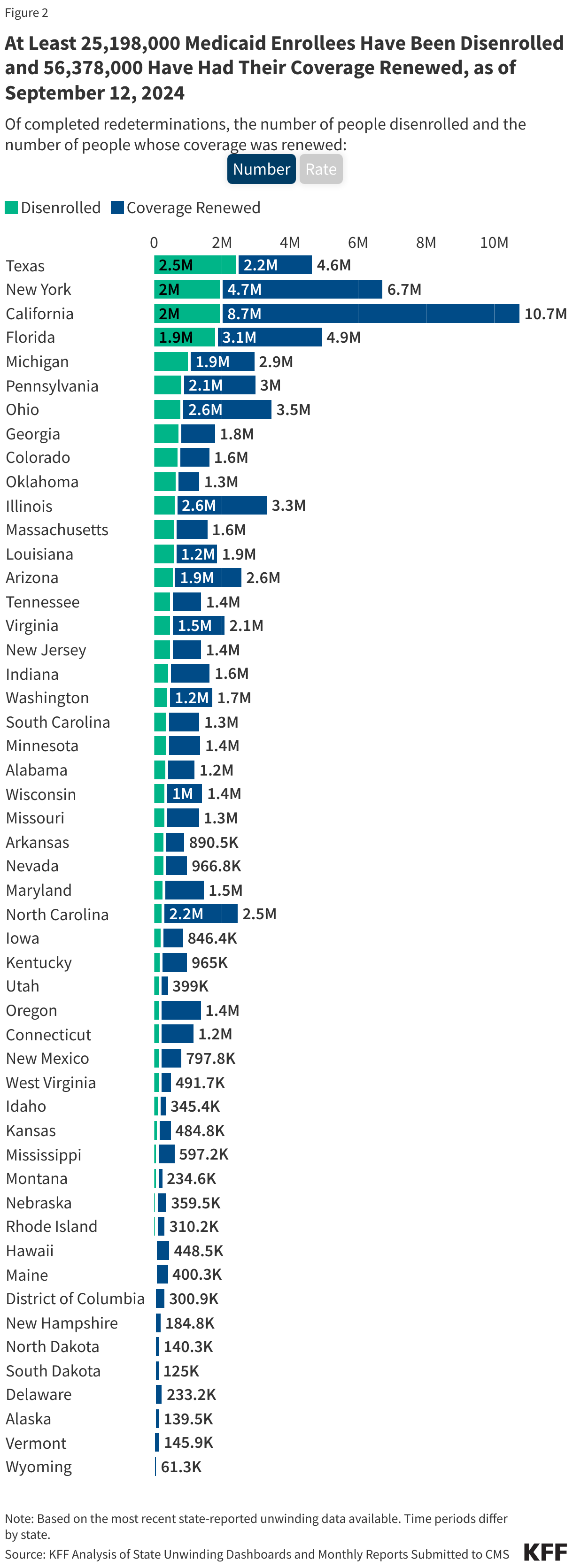
At the same time, millions of individuals were disenrolled from the programs. Administrative data highlighted significant variance in disenrollment rates across different states, reflecting divergent state operational capacities, outreach efforts, and administrative procedures. For instance, completed redetermination disenrollment rates ranged from a high of 57 percent in Montana to a low of 12 percent in North Carolina.
Procedural Terminations and Administrative Hurdles
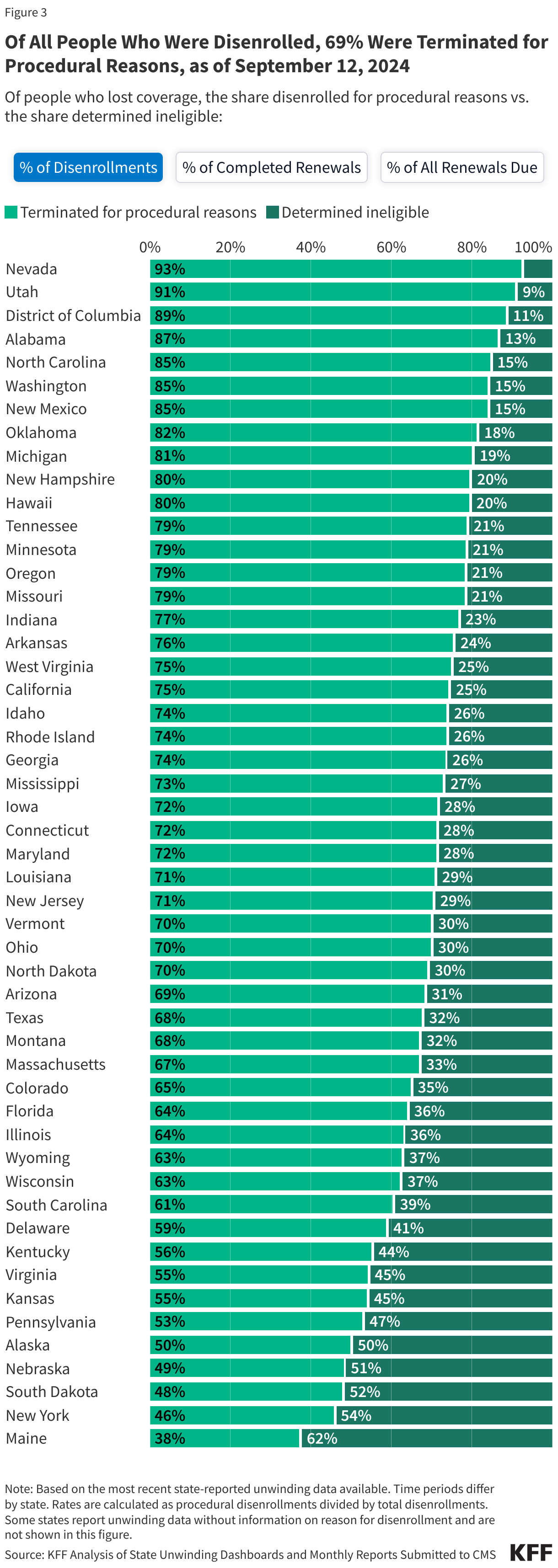
A central finding of the unwinding period involved the heavy reliance on procedural disenrollments—situations where coverage was terminated not because an individual was formally determined to be financially or medically ineligible, but because they failed to complete the required paperwork or because local agencies could not successfully contact them.
Analyses of state-reported metrics revealed that of all individuals disenrolled during the unwinding, a substantial majority lost their coverage due to procedural reasons. When evaluated as a share of all completed renewals, procedural terminations constituted roughly one-fifth of all processed actions, emphasizing the persistent challenges enrollees face in navigating complex renewal notices and maintaining updated contact information with state agencies.
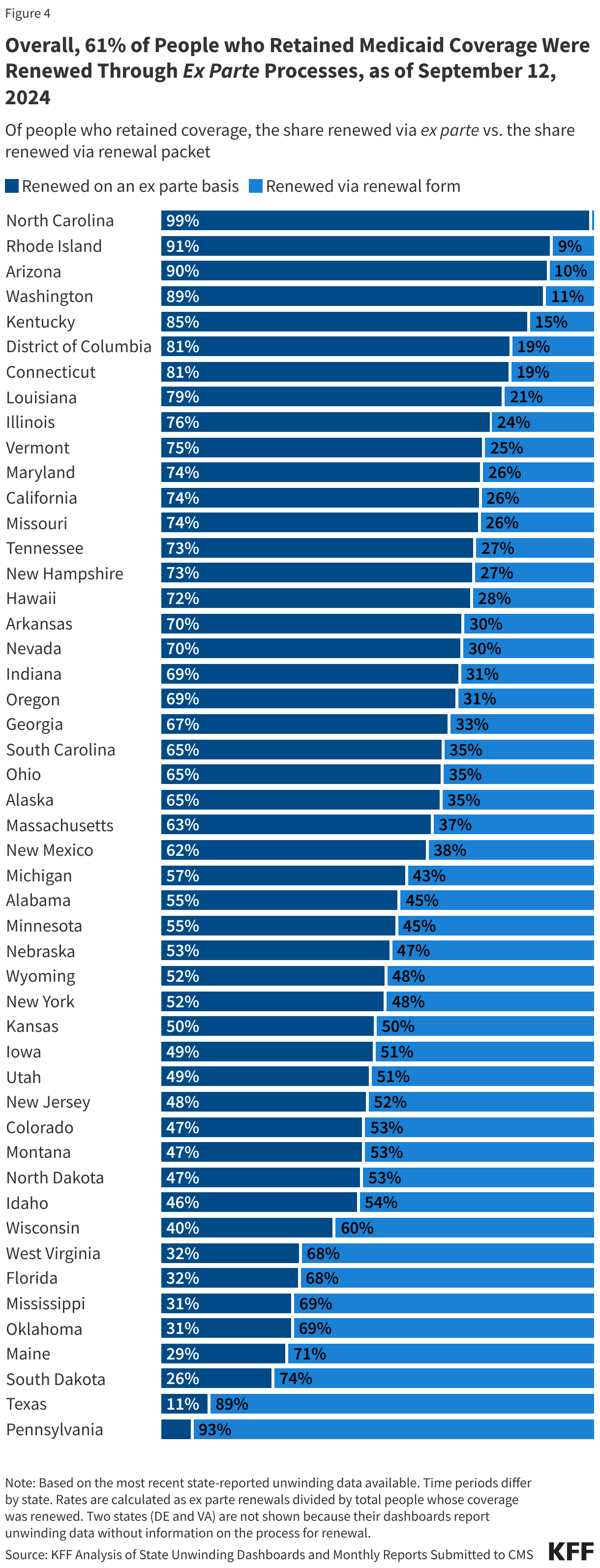
To mitigate these procedural losses, many state health agencies relied heavily on automated renewal processes, commonly referred to as ex parte renewals. Federal and state data indicated that a significant majority of individuals who successfully retained their Medicaid coverage during the unwinding did so through these automated data-matching systems, which allowed states to verify ongoing eligibility using existing income and public program databases without requiring enrollees to submit manual paperwork.
Federal Versus State Reporting Metrics
Discrepancies frequently surfaced between cumulative renewal metrics published directly by CMS and those featured on localized state dashboards or monthly state reports. These differences typically arose due to timing lags in federal data processing, differing definitions of active caseloads, and the continuous updating of state files to account for the resolution of pending cases.
While CMS data provided a standardized federal benchmark, state-specific dashboards often offered more timely insights into local administrative backlogs and renewal outcomes. Throughout the unwinding and its aftermath, analysts emphasized the necessity of reviewing both federal compendiums and localized state reports to construct a complete picture of public health insurance administration.
As states transition into a post-unwinding operational framework while bracing for the incoming 2027 work and reporting mandates, continuous monitoring of enrollment data remains critical for policymakers, health advocates, and researchers seeking to understand access to care for low-income populations across the United States.