
In an era defined by endless digital notifications, rapid-fire media, and mounting daily pressures, maintaining concentration has become an unprecedented challenge for developing minds. Educators, parents, and adolescent development experts are increasingly grappling with how to help children and teenagers navigate a world saturated with distractions. Recent academic literature underscores a reassuring reality: attention is not a fixed trait, but a foundational skill that can be systematically strengthened through evidence-based practices.

An evidence-based approach relies on strategies validated by rigorous scientific research. When evaluating these methods, educational researchers frequently turn to meta-analyses—comprehensive reports that synthesize the findings of numerous individual studies to determine overarching trends and effectiveness. By examining both individual research papers and meta-analyses, experts have identified a wide array of scientifically supported techniques that children and adolescents can use to tune in, concentrate, and successfully work toward their goals in both classroom settings and everyday life.
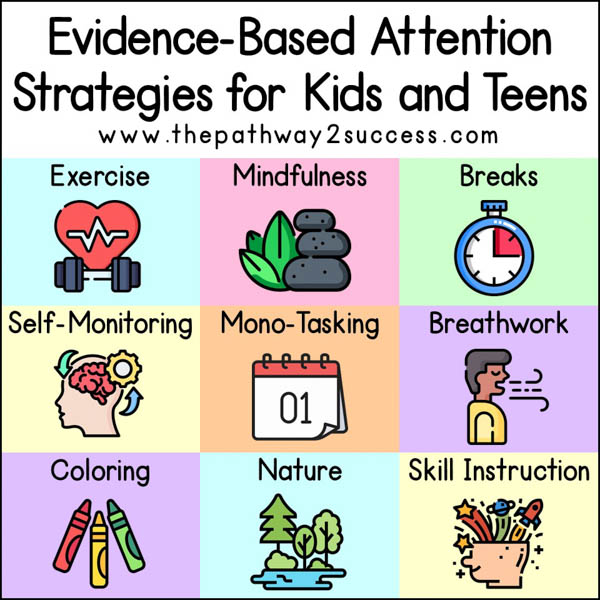
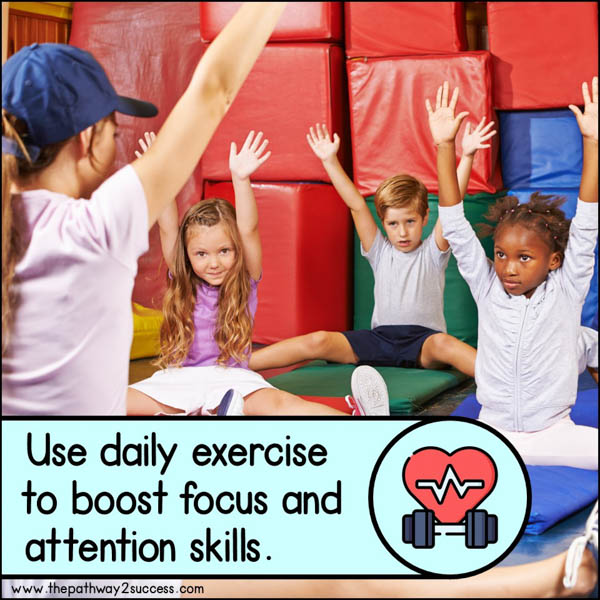
Among the most robustly supported interventions is regular physical exercise. Extensive scientific literature indicates that physical activity has a profoundly positive effect on attention spans and overall academic performance. According to a prominent meta-analysis conducted by de Greeff and colleagues in 2018, the most significant cognitive benefits are derived from consistent exercise routines maintained over the course of many weeks. Furthermore, research highlighted by the Committee on Physical Activity and Physical Education in the School Environment demonstrates that integrating movement directly into classroom lessons substantially increases student attention and time-on-task behavior.
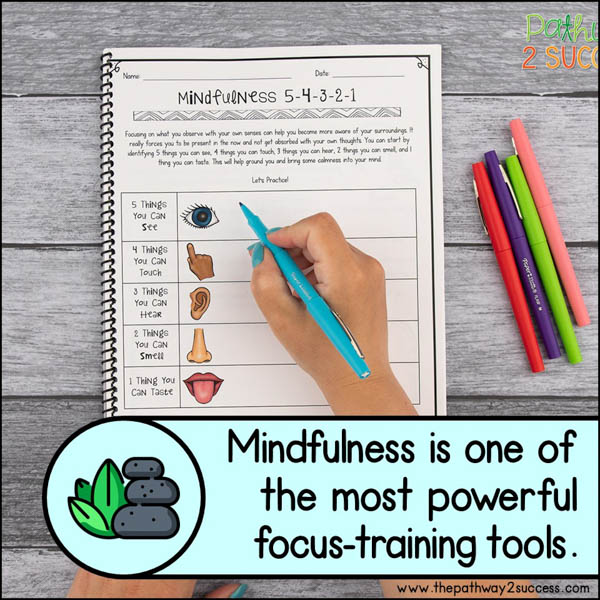
Complementing physical movement are mindfulness and meditation practices, which center on anchoring awareness in the current moment. Mindfulness encompasses various modalities, including meditative breathing, guided relaxation, and sensory observation. Substantial psychological research, such as the work compiled by Keng and collaborators, shows that these practices yield broad benefits, including improved behavioral regulation, reduced emotional reactivity, and enhanced psychological well-being. Specifically regarding cognitive function, a comprehensive meta-analysis conducted by Verhaeghen revealed that mindfulness training produces significant, measurable improvements in both focused and sustained attention, cementing its status as a powerful cognitive tool for young people.
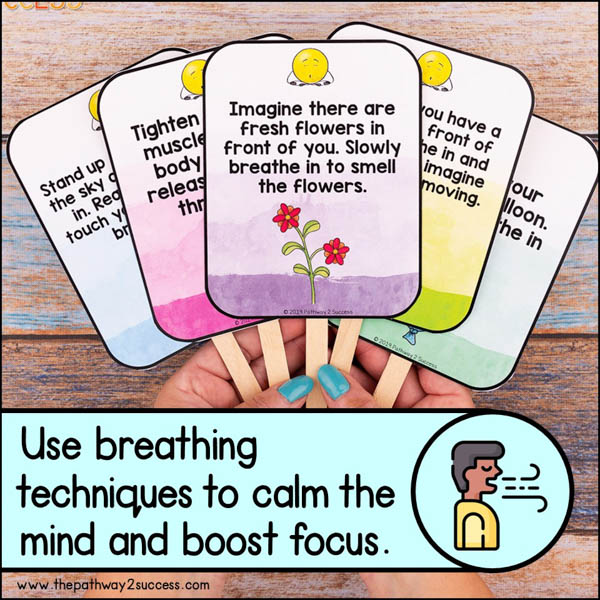
Closely related to mindfulness are intentional breathing techniques, which rely on focused inhalation and exhalation to cultivate physiological and mental calm. Scientific inquiry demonstrates that purposeful diaphragmatic breathing directly improves sustained attention while simultaneously lowering cortisol levels and decreasing negative affect. This occurs because calming deep breaths soothe the amygdala—the brain’s emotional processing center—thereby reducing stress and clearing the pathway for heightened concentration.

Researchers also emphasize the critical role of scheduled breaks in sustaining cognitive stamina. Breaks provide vital windows for the brain to regroup and refresh, ultimately driving higher productivity and deeper focus. Experimental findings by Janssen and colleagues indicate that both passive breaks, such as listening to a narrative, and active breaks involving physical movement produce significant short-term improvements in attention. Broader educational studies further confirm that stepping away from academic tasks periodically leads to improved on-task behavior and stronger overall academic achievement.
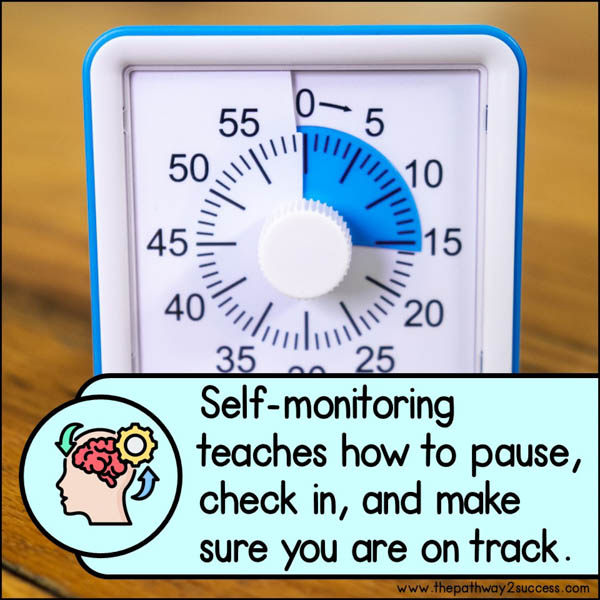
To foster long-term cognitive independence, experts point to self-monitoring as an essential mechanism. Self-monitoring involves training learners to continually evaluate, assess, and adjust their own behaviors to ensure alignment with their objectives. When a student pauses to check their attention level, recognizes that they have drifted off-task, and proactively deploys a strategy to re-engage, they are exercising executive functioning. A meta-analysis led by Reid and colleagues established that self-monitoring is a highly effective intervention, particularly for students with specific attention needs.
In tandem with self-monitoring, educational psychologists advocate for mono-tasking—the deliberate practice of focusing on one task at a time. Scientific investigations into human cognition, such as those by Gopher and colleagues, clarify that true multitasking is a biological impossibility; instead, the brain rapidly switches back and forth between activities. This constant shifting drains cognitive energy, diminishes productivity, increases error rates, and accelerates mental fatigue. Mono-tasking offers a direct remedy by consolidating attention on a single goal.

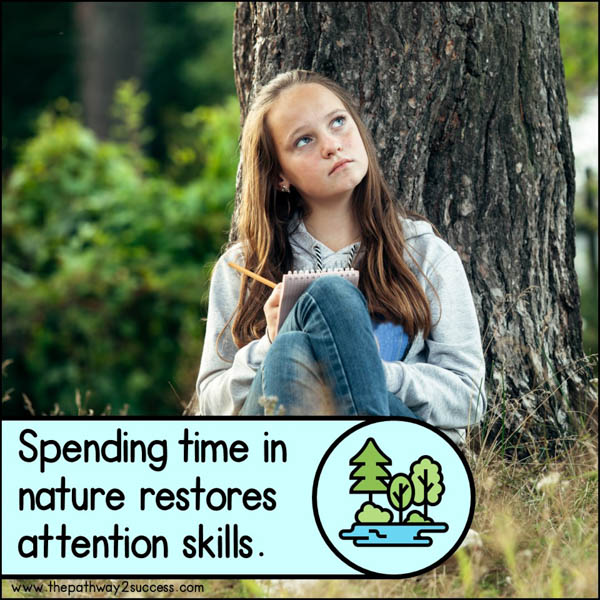
Environmental factors also play a vital role in cognitive restoration. According to attention restoration theory and supported by extensive empirical evidence, spending time in natural settings significantly improves attention spans and alleviates mental fatigue. A meta-analysis conducted by Stevenson and colleagues demonstrated measurable enhancements in working memory, cognitive flexibility, and attentional control following exposure to natural environments. Crucially, research by Berman and others indicates that even indoor views of nature can yield restorative benefits when outdoor access is unavailable.
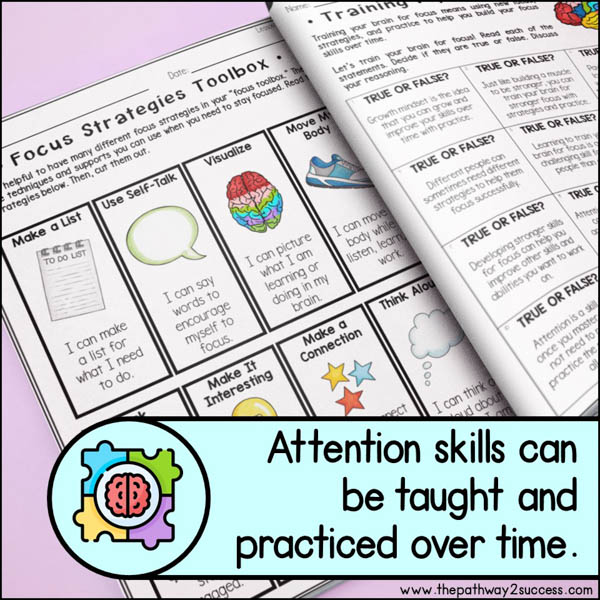
Direct skill instruction provides another structured pathway for cognitive development. Highlighted by educational synthesis research from Hattie, direct instruction involves explicitly teaching and practicing the specific skills with which students struggle. Whether applied to academic subjects like reading and math or executive functioning domains such as task initiation and study organization, structured strategy instruction equips learners with an internal toolbox of capabilities. Meltzer and colleagues have similarly emphasized the value of direct strategy instruction in supporting executive functioning among youth.
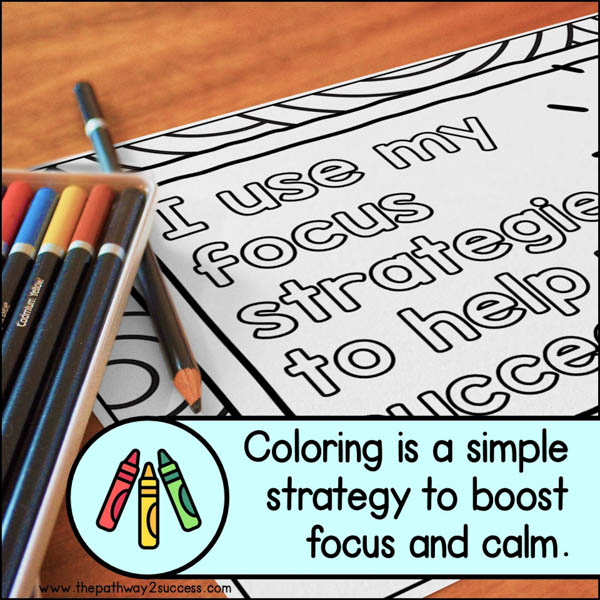
Creative outlets have likewise garnered empirical support as focus-enhancing tools. Controlled experiments involving coloring, such as those examined by Holt and colleagues, show that young adults who engage in coloring activities experience reduced anxiety alongside heightened selective attention. More recent research by Suryagayathri indicates that students who incorporate coloring report significant improvements in their ability to manage distractions, concentrate in noisy environments, and refocus their attention. These benefits extend across all age groups, offering a simple yet effective mechanism for stress reduction and mental clarity.
Similarly, structured movement practices like yoga combine physical postures with mental discipline to foster cognitive control. A systematic review of multiple studies examining yoga and youth attention, compiled by Yadav and colleagues, suggests that regular practice leads to notable improvements in children’s attentional capacity, alongside secondary benefits such as enhanced memory and reduced stress.

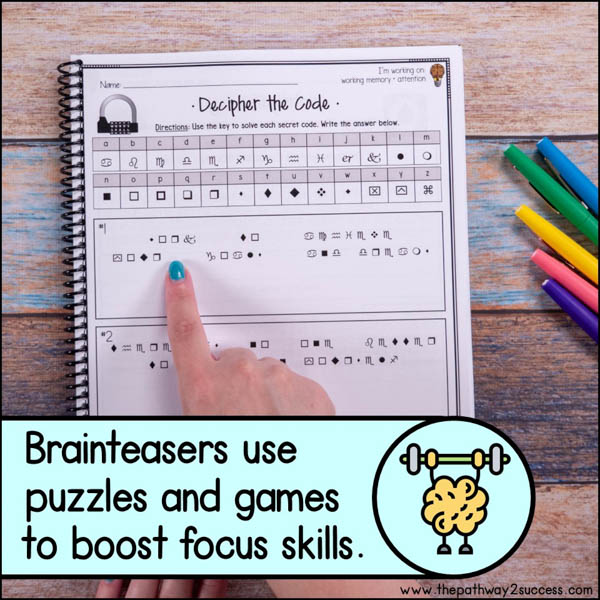
Cognitive engagement through brainteasers and puzzles offers yet another scientifically supported method for sharpening focus. Research by Winarsunu and Fasikkhah demonstrated that children who engage in collaborative puzzle-solving exhibit stronger self-regulation and attention skills. Furthermore, comparative studies, including work by Altun and colleagues, found that implementing a structured brainteaser curriculum over several weeks produced measurable increases in the attention spans of participating students compared to control groups.
While primarily occurring outside the traditional school environment, sleep is widely recognized by neuroscientists as an indispensable pillar of cognitive function. In his comprehensive overview of sleep science, Dr. Matthew Walker details how high-quality sleep allows the brain to perform critical restorative operations necessary for daytime focus. Chronic sleep deprivation degrades attention spans, impairs concentration, and slows reaction times, underscoring that adequate rest is a foundational requirement for academic and personal success.

Ultimately, experts note that because individuals possess unique cognitive profiles, the most effective attention strategies will vary from person to person and across different contexts. By exploring and experimenting with these evidence-based techniques, children, teens, and educators can better understand their own cognitive patterns and cultivate environments that support sustained focus and well-being.