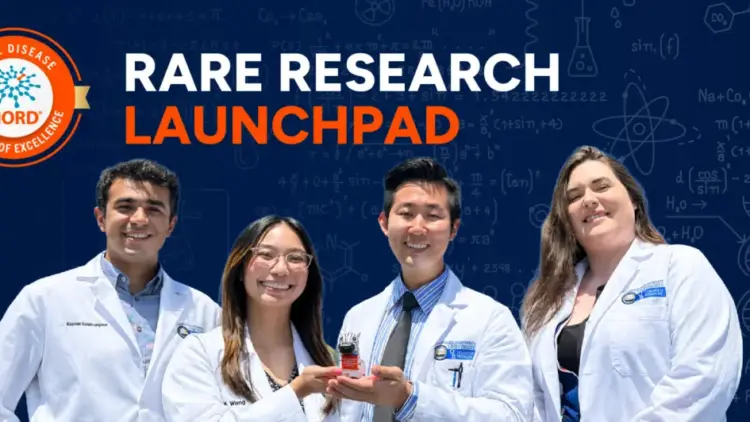
NORWELL, Mass. — In a major push to address a critical talent pipeline gap in biomedical science, the National Organization for Rare Disorders (NORD®) and the Rosenau Family Research Foundation announced the official launch of the “Rare Research Launchpad: A Career Exploration Series in Rare Disease Research.” Available free of charge, the self-paced online curriculum is specifically tailored to introduce students, trainees, and early-career scientists to the unique landscape of rare disease research and the diverse professional pathways available within the field.
The newly minted educational series is hosted on NORD’s established RareEDU® online learning platform. By utilizing real-world case studies centered on cystic fibrosis and Krabbe disease, the Rare Research Launchpad aims to demystify the scientific mechanisms behind rare and genetic disorders. Participants are guided through the complex journey of how foundational scientific discoveries transition from the laboratory bench toward potential clinical therapies. Furthermore, the curriculum sheds light on the vital skills, multidisciplinary experiences, and collaborative career pathways required to successfully advance rare disease research in academic, clinical, and industry settings.
Developed by NORD in direct collaboration with expert researchers from the nationwide NORD® Rare Disease Centers of Excellence Network, the initiative fills a persistent educational niche. Many students interested in science, technology, engineering, and mathematics (STEM) fields—as well as those pursuing medical degrees—often experience limited exposure to rare diseases during their foundational training. By weaving together rigorous scientific learning, first-hand perspectives from affected families, insights from veteran researchers, and practical career guidance, the series serves as both a standalone exploration tool and a valuable supplemental resource for graduate students and early-career trainees.
“As technologies used to study rare and genetic diseases and develop new therapies continue to advance, we need to prepare the next generation of scientists who will carry this work forward,” said Rebecca Aune, MPA, Director of Education Programs at NORD. “Rare Research Launchpad gives students an early look at rare disease research and helps them understand the skills, experiences, and relationships that can lead to a career advancing science and improving the lives of millions of people with rare diseases.”
The selection of cystic fibrosis and Krabbe disease as the foundational case studies was a deliberate choice to illustrate the broad spectrum of challenges and triumphs inherent in rare disease investigation. Together, these conditions expose participants to core principles across genetics, molecular biology, neuroscience, and translational biomedical research. More importantly, they demonstrate how laboratory science, clinical expertise, and the lived experiences of patients and families collectively inform the trajectory of therapeutic development.
These two conditions also represent markedly different milestones along the therapeutic development landscape. Cystic fibrosis has benefited from decades of sustained, intensive research efforts that have ultimately yielded multiple U.S. Food and Drug Administration (FDA)-approved therapies, including breakthrough treatments designed to target the underlying molecular defect of the disease. In contrast, there is currently no FDA-approved therapy specifically indicated to treat Krabbe disease, a severe and progressive neurological condition. By examining these contrasting paradigms, participants gain a realistic view of both the remarkable progress that rare disease research can achieve and the formidable scientific barriers that still remain across the broader rare disease community.
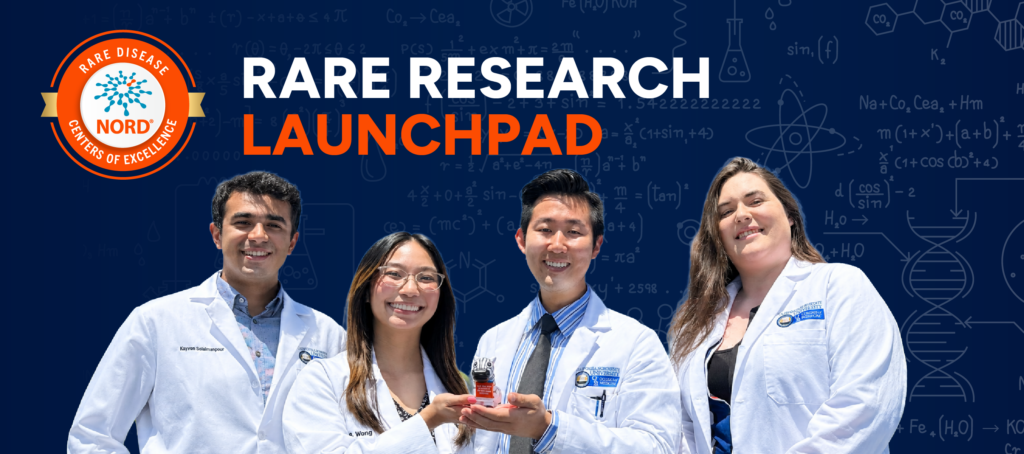
The initiative is fully funded by the Rosenau Family Research Foundation, a dedicated NORD Member Organization that has long championed advancements in this specific arena. Gabriel M. Cohn, MD, MBA, Executive Director and Medical Director of the Foundation, emphasized the broader societal stakes of investing in young scientific talent.
“The Rosenau Family Research Foundation is focused on advancing research that can improve the lives of people affected by Krabbe disease and cystic fibrosis,” said Dr. Cohn. “Supporting NORD’s Rare Research Launchpad allows us to invest in future scientists while giving them a practical understanding of the research questions, career paths, and collaborations needed to advance treatments for the more than 10,000 known rare diseases of which only about 600 currently have an available treatment.”
With thousands of distinct rare conditions impacting tens of millions of individuals globally, the scarcity of approved treatments remains one of the most pressing public health challenges of the modern era. Organizers have designed the Rare Research Launchpad as a scalable, dynamic model capable of expanding over time. Future iterations could potentially introduce participants to additional rare disease topics, broadening the scope of career exploration and fostering sustained academic and professional engagement.
The Rare Research Launchpad is available immediately through NORD’s online learning portal. Participation in the series is entirely free for all interested students and trainees.
Founded in 1983, the National Organization for Rare Disorders (NORD®) operates as an independent, nonpartisan umbrella organization committed to improving the prognosis, care, and quality of life for the estimated 30 million Americans living with rare diseases. NORD collaborates extensively with more than 350 disease-specific member patient organizations, alongside 49 designated NORD Rare Disease Centers of Excellence that span over 170 academic medical centers, specialized research institutions, and children’s hospitals across the United States. Through advocacy, education, research grants, and patient services, the organization strives to forge a more equitable healthcare future for the rare disease community.
The Rosenau Family Research Foundation, established in 2008 as a 501(c)(3) private family foundation, is similarly dedicated to transforming the outlook for individuals and families impacted by Krabbe disease and cystic fibrosis. By deploying financial resources into basic, translational, and clinical research initiatives, alongside targeted public awareness and educational programming, the Foundation works to accelerate the discovery of treatments, cures, and enhanced screening protocols.