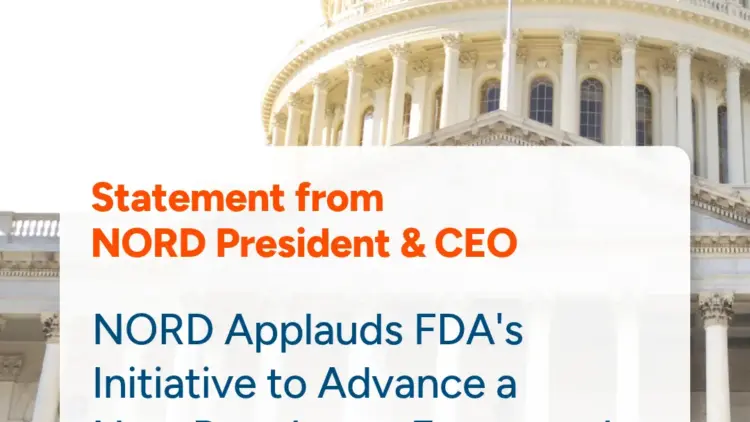
NORWELL, Mass. — The National Organization for Rare Disorders (NORD®) has issued a strong statement of support for the U.S. Food and Drug Administration (FDA) following the agency’s announcement of a landmark initiative. The FDA is launching an effort to develop a new regulatory framework specifically tailored to address the unique scientific and practical challenges inherent in rare disease drug development and regulatory review.
The announcement, highlighted in a statement released by Pam Gavin, President and Chief Executive Officer of NORD, marks a significant milestone for millions of Americans and families affected by rare conditions. According to NORD, this proactive step by the agency represents a vital and welcome evolution in the regulatory landscape, aligning federal oversight with the blistering pace of scientific innovation in modern medicine.
NORD congratulated FDA leadership for formally recognizing that extraordinary advances in rare disease science must be matched by a corresponding evolution in how potential therapies are evaluated and brought to market. The organization noted that the agency’s new initiative demonstrates a profound responsiveness to the pressing needs of the rare disease community. In particular, the move reflects concerns and priorities that NORD and other leading patient advocacy organizations brought directly to the attention of the Acting Commissioner during a series of discussions held in June. For patients and families who have endured years—and in many cases, generations—without viable treatment options, this institutional commitment offers a renewed and meaningful sense of hope for tangible progress.
The historical context of rare disease advocacy underscores the magnitude of the FDA’s announcement. Since its founding in 1983, NORD has championed public policies designed to advance rare disease research and accelerate therapeutic development. That same watershed year, the passage of the landmark Orphan Drug Act fundamentally transformed the landscape of rare disease innovation. By establishing vital economic and regulatory incentives for developers, the legislation encouraged the creation of treatments for medical conditions that had long been overlooked by commercial pharmaceutical research.
More than four decades later, unprecedented scientific advances have unlocked extraordinary opportunities for therapeutic discovery. However, this scientific progress has simultaneously underscored an urgent institutional need: a modernized regulatory framework that keeps pace with innovation while directly addressing the distinct, complex challenges that characterize rare diseases.
Traditional approaches to clinical development, while well-suited for common conditions with large patient pools, often prove difficult or entirely infeasible when applied to rare disorders. Small patient populations, limited natural history data, high levels of disease heterogeneity, and the frequent absence of established biomarkers or standardized clinical endpoints create significant roadblocks for researchers. Without a flexible regulatory approach, these hurdles can stall or halt the translation of promising laboratory discoveries into life-changing medications.
A regulatory framework that consistently accounts for these stark realities—while simultaneously maintaining the most rigorous standards for safety and effectiveness—is essential. NORD emphasized that bridging the gap between scientific discovery and patient access depends entirely on this adaptability.
Within the broader initiative, NORD has highlighted several specific areas where the FDA’s focus is particularly welcome. The organization praised the agency’s emphasis on strengthening consistency and predictability across various review divisions, ensuring a more cohesive experience for developers navigating the approval process. Furthermore, NORD supports the integration of patient perspectives throughout every stage of development and review, the strategic utilization of external scientific and clinical expertise, and the deliberate building of institutional knowledge necessary to support sound, forward-looking regulatory decision-making.
To achieve these ambitious goals, NORD stressed that sustained leadership, adequate agency staffing, robust resources, and consistent implementation across all departments of the FDA will be absolute essentials.
What makes this new initiative especially critical, according to NORD, is the historic opportunity to move beyond ad-hoc, case-by-case regulatory accommodations. Instead, the agency is aiming to build a comprehensive framework designed specifically around the actual scientific realities of rare diseases. When traditional clinical trial methodologies are mathematically or practically impossible due to tiny patient cohorts, the healthcare ecosystem requires scientifically rigorous mechanisms to evaluate alternative forms of evidence. NORD made it clear that this initiative is not about lowering regulatory standards or compromising patient safety. Rather, it is about ensuring that the methodological tools used to demonstrate safety and effectiveness are genuinely appropriate for the specific, highly specialized diseases and novel treatments under evaluation.
Looking ahead, NORD confirmed its intention to actively participate in the FDA’s upcoming stakeholder engagement process. The organization stands ready to work collaboratively alongside the agency and the broader rare disease community to help shape the development and implementation of this important initiative.
As part of this ongoing dialogue, NORD announced that it looks forward to welcoming key FDA leadership—including the Acting Commissioner and representatives from the FDA’s Rare Disease Innovation Hub—to the organization’s upcoming 2026 Rare Diseases and Orphan Products Breakthrough Summit®. The conference is scheduled to take place from October 25 to October 27 in Washington, D.C. The annual summit will provide a crucial, timely opportunity for the rare disease community to engage directly with top federal regulators, discuss the newly announced framework, and explore its practical implications in greater detail.
Ultimately, NORD stated that the true measure of success for this initiative will be evaluated by concrete results. Success will be defined by whether this high-level institutional commitment translates into more consistent regulatory practices, more effective and predictable pathways for developing life-saving therapies, and, most importantly, a broader array of treatment options for individuals living with rare conditions.
NORD affirmed that it stands fully prepared to work side-by-side with the FDA, researchers, clinicians, and the rare disease community to turn this federal commitment into meaningful, lasting progress. By doing so, the collective goal remains focused on delivering safe and effective treatments to the millions of individuals and families who are counting on reform.