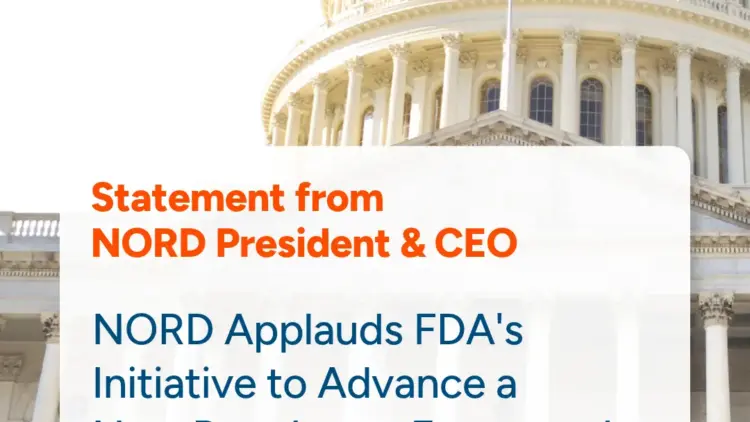
NORWELL, Mass. — The National Organization for Rare Disorders (NORD®) has issued a strong statement of support for the U.S. Food and Drug Administration (FDA) following the announcement of a major new initiative. The agency is launching an effort to develop a specialized regulatory framework tailored directly to the unique scientific and practical challenges inherent in rare disease drug development and clinical review.
The announcement marks a significant development for millions of patients, families, and advocacy organizations navigating the complex landscape of rare conditions. Pam Gavin, President and Chief Executive Officer of NORD, praised the agency’s leadership for recognizing that extraordinary scientific advancements in the field must be matched by a continuous evolution in how potential therapies are evaluated for safety and effectiveness.
According to NORD, this new regulatory direction is a direct response to ongoing dialogues between patient organizations and federal regulators. The initiative reflects specific concerns and recommendations that NORD and other advocacy groups brought directly to the Acting Commissioner in June. For patients and their families who have endured years—and in some cases generations—of waiting for viable treatment options, this institutional commitment offers tangible hope for accelerated progress.
The push for modernizing regulatory oversight arrives more than four decades after a major legislative turning point. Since its founding in 1983, NORD has continuously championed policies designed to advance rare disease research and therapeutic development. That same landmark year, the passage of the Orphan Drug Act fundamentally transformed the landscape of rare disease innovation by establishing vital financial and regulatory incentives to encourage the development of treatments for conditions that had long been overlooked by commercial developers.
More than forty years later, rapid scientific breakthroughs have created unprecedented opportunities for therapeutic discovery. However, this scientific momentum has simultaneously underscored an urgent need for a regulatory framework that can keep pace with modern innovation while addressing the distinct, often complex hurdles associated with rare diseases.
Traditional approaches to clinical development, which are often optimized for common conditions with large patient pools, frequently prove difficult or entirely infeasible when applied to rare disorders. Researchers and developers regularly confront formidable obstacles, including small patient populations, limited natural history data, high degrees of disease heterogeneity, and a general absence of established biomarkers or standardized clinical endpoints.
Without a flexible regulatory architecture, these hurdles can severely delay or halt the translation of promising laboratory discoveries into accessible bedside treatments. NORD emphasizes that a regulatory framework which consistently and predictably accounts for these real-world scientific limitations—while steadfastly maintaining rigorous standards for safety and effectiveness—is absolutely essential for bridging the gap between discovery and patient care.
Within the scope of the FDA’s new initiative, NORD has highlighted several key areas of emphasis that it finds particularly encouraging. These include strengthening consistency and predictability across various review divisions, actively incorporating patient perspectives throughout the entire lifecycle of development and review, drawing more systematically upon external scientific and clinical expertise, and intentionally building the institutional knowledge required to support sound, forward-looking regulatory decision-making.
To achieve meaningful success in these areas, NORD notes that sustained leadership, adequate agency staffing and resources, and consistent implementation across all departments will be paramount.
A central advantage of this new initiative is the opportunity it provides to move beyond isolated, case-by-case regulatory accommodations and toward a cohesive framework built intentionally around the actual scientific realities of rare conditions. When conventional clinical trial methodologies are impractical due to microscopic patient cohorts or rapid disease progression, the medical community requires scientifically rigorous alternative pathways to evaluate other forms of clinical evidence. NORD stresses that this endeavor is not about lowering regulatory standards or compromising on patient safety. Rather, it is about ensuring that the methodological tools utilized to demonstrate safety and effectiveness are genuinely appropriate for the specific diseases and novel treatments being evaluated.
As the FDA prepares to roll out the initiative, NORD has confirmed its readiness to participate actively in the agency’s upcoming stakeholder engagement processes. The organization intends to work closely alongside both the FDA and the broader rare disease community to help shape the development of the initiative in a manner that best serves patients.
An early and vital opportunity for direct engagement is already on the horizon. NORD announced that it looks forward to welcoming key FDA leadership, including the Acting Commissioner and representatives from the FDA’s Rare Disease Innovation Hub, to the upcoming 2026 Rare Diseases and Orphan Products Breakthrough Summit®. The annual event is scheduled to take place from October 25 to October 27 in Washington, D.C. The summit will serve as a premier forum for the rare disease community to engage in direct dialogue with federal leadership and to explore the new regulatory framework and its practical implications in greater detail.
Ultimately, the true measure of success for this initiative will not be found in initial policy announcements, but in whether this institutional commitment translates into predictable regulatory practices, more effective pathways for developing life-changing therapies, and a broader array of accessible treatment options for people living with rare diseases.
NORD reiterated that it stands fully prepared to partner with the FDA and the wider rare disease community to turn this federal commitment into meaningful, measurable progress. By working collaboratively, the stakeholders aim to foster the development of more safe and effective treatments for the millions of individuals and families who are depending on timely innovation.