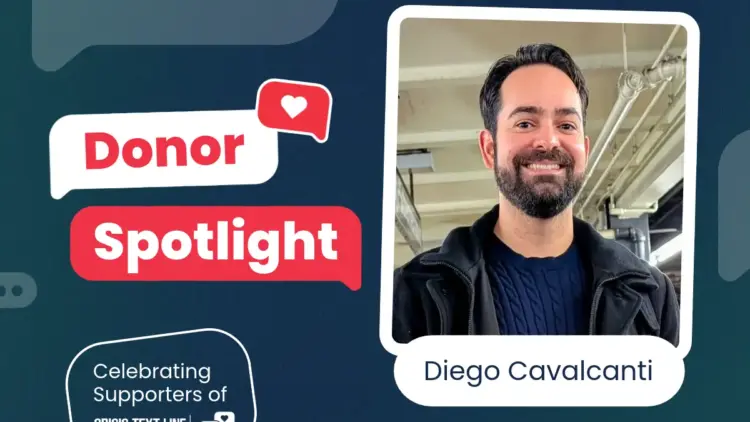
In an era where technology is frequently scrutinized for its impact on human connection and societal well-being, stories highlighting innovation driven by empathy stand out. This month, Crisis Text Line is shining a spotlight on Diego Cavalcanti, a dedicated donor and advocate whose background as a software engineer intersects profoundly with a personal passion for accessible mental health care. Through his financial contributions and advocacy, Cavalcanti supports the continuous training of volunteer Crisis Counselors who provide a vital lifeline to individuals navigating acute mental health crises.
In a recent question-and-answer feature, Cavalcanti shared his insights on why he chose to support the organization, how personal experiences shaped his worldview, and why he believes the intersection of technology and human empathy represents a powerful force for social good.
Discovering the Intersection of Tech and Empathy
Cavalcanti’s journey with Crisis Text Line began in a professional setting during Mental Health Awareness Month. Several of his colleagues volunteered as Crisis Counselors, sparking his curiosity and prompting him to examine the organization’s operational model.
"I first learned about Crisis Text Line at work during Mental Health Awareness Month," Cavalcanti recalled. "A few of my coworkers volunteered as Crisis Counselors, which caught my interest and prompted me to look deeper into the organization. As I researched their model, I became fascinated by how the organization leverages data and technology to scale human empathy and create a measurable societal impact."
For a software engineer accustomed to evaluating the practical applications of digital platforms, seeing innovation applied directly to high-impact advocacy turned him into an immediate supporter and donor.
A Deeply Personal Commitment to Mental Health
Cavalcanti’s dedication to mental health initiatives is not merely professional or abstract; it is rooted in personal experience. Mental health challenges and the tragedy of suicide within his family have given him firsthand insight into how devastating these struggles can be, particularly when individuals feel isolated.
"Mental health is a topic that is incredibly close to my heart," he explained. "I have a history of mental health challenges within my family, including suicide, so I know firsthand how devastating these struggles can be when people feel isolated. Having that personal connection makes the work of crisis intervention deeply meaningful to me."
This personal history fosters a deep sense of gratitude regarding his current position in life. Cavalcanti views his financial contributions as a way to channel those challenging experiences into meaningful support, ensuring that others do not have to face their darkest moments alone.
Why Text-Based Intervention Matters
As a technologist, Cavalcanti frequently considers how modern tools, including advancements in artificial intelligence, can solve complex societal problems. He views Crisis Text Line’s text-based platform as a brilliant blueprint for using technology for social good.
Meeting people where they are is critical, he noted, particularly for younger demographics or individuals living in environments where they lack the privacy, safety, or freedom to speak out loud or seek traditional, in-person therapy.
"A text message is silent, accessible, and immediate, making it a vital lifeline in moments of acute crisis," Cavalcanti said. Traditional intervention models—such as waiting for someone to visit a mental health center or pick up a phone to call a hotline—often fail to cater to younger populations who navigate the world through digital communication. By leveraging text messaging, organizations can successfully reach young people and vulnerable communities who might otherwise suffer in silence.
Maximizing Impact Through Reliability and Smart Tools
When evaluating where to direct philanthropic efforts, Cavalcanti looks for organizations tackling critical social issues through innovative frameworks. His contributions to Crisis Text Line are strategically focused on two primary objectives: maintaining systemic reliability and enhancing technological intelligence.
"I hope my donations help in two simple ways: keeping the system reliable, and making it smarter," Cavalcanti explained. "First, funding ensures the texting platform stays up and running perfectly 24/7. When someone is in a dark place and finally builds up the courage to reach out, the technology absolutely has to work without a hitch."
Beyond maintaining infrastructure, his support helps fund the smart tools operating behind the scenes. These technological assets instantly sort incoming messages, ensuring that texters experiencing the most urgent danger are connected to a human counselor without delay. Ultimately, he sees the objective as straightforward: utilizing technology to deliver human kindness to as many individuals as possible.
Rethinking the Potential of the Tech Industry
Reflecting on his broader professional landscape, Cavalcanti noted that the technology sector is frequently dominated by financial incentives and profit margins. For him, Crisis Text Line serves as a powerful reminder of what becomes possible when innovation is intentionally directed toward human welfare.
"With my technology background, it is incredibly fulfilling to see a highly successful, real-world case study of technology being harnessed purely to help people and meet them exactly where they are," he said. "Supporting this work gives me renewed hope that we, as a society, can look past the bottom line and use cutting-edge technology as a force for genuine social good."
Encouraging Community Support
For individuals considering whether to support Crisis Text Line, Cavalcanti’s message is clear and inclusive. He encourages people to contribute financially if they are able, or to dedicate their time as volunteers if monetary donations are not currently feasible.
"Crisis Text Line does a wonderful job of supporting individuals in their most vulnerable moments, and every single bit of support, whether through funding or volunteer hours, is absolutely critical to keeping this lifeline free and accessible," he noted.
Maintaining Personal Well-Being
To sustain his advocacy work and professional commitments, Cavalcanti emphasizes the importance of personal grounding and self-care. To maintain his own mental health, he prioritizes consistent physical workouts, regular therapy sessions, and a conscious effort to step away from screens to spend quality, unplugged time with his loved ones.