Picture a man sitting quietly on the edge of his bed late at night, his thumbs hovering over the glowing screen of his smartphone. He types out a sentence that represents the weight he has been carrying: I’m really struggling. He stares at the words for a few long seconds, weighing the vulnerability of hitting send against the ingrained pressure to keep up appearances. Slowly, deliberately, he presses backspace over and over again. What he ultimately sends instead is a deflection: All good, you?
If that silent internal struggle feels familiar, it is because millions of men live out variations of that exact scenario every single day. While society has made significant strides in discussing mental health openly, the hardest part of seeking help is rarely the conversation itself—it is the initial message.
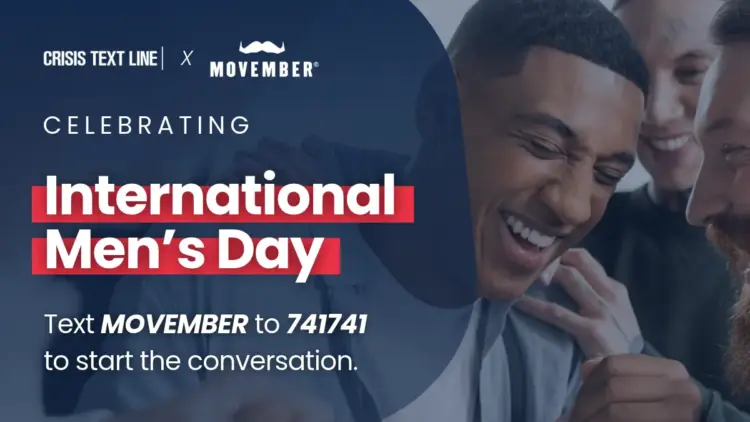
To bridge this critical gap, the Crisis Text Line and Movember have announced a major new partnership aimed at reducing the persistent stigma surrounding men’s mental health and connecting individuals to vital support systems. Running through November 2027, the initiative invites anyone in need of support to text the keyword MOVEMBER to 741741 to immediately reach a live, trained volunteer Crisis Counselor. The service operates completely free of charge, remains strictly confidential, and is available 24 hours a day, seven days a week, in both English and Spanish.
For years, Movember has successfully encouraged millions of men to grow mustaches during the autumn months and, more importantly, to open up about their physical and mental health. Known for meeting men where they are, the organization has long provided tools for individuals to ask for help while encouraging friends and family to move past superficial check-ins like a casual "How’s it going?"
Meanwhile, Crisis Text Line is built specifically for the acute moments when someone is overwhelmed and reaching out for intervention. By combining forces, the two organizations aim to provide men with an accessible, year-round resource rather than just a seasonal campaign.
"The challenge was never whether we could help men; it’s reaching them before a hard moment becomes a crisis," says Brian T. Jones, Vice President of Philanthropy at Crisis Text Line. "Together, we can meet men in the places they already spend time, like their phones and their communities, and make clear that reaching out is a sign of strength, not weakness."
The Silence and Its Consequences
The silence surrounding men’s emotional struggles carries heavy consequences, and the data paints a sobering picture of unmet needs. Yet, perhaps the most glaring statistic for Crisis Text Line is internal: fewer than 20% of the individuals who text their service identify as boys or men.
The demographic statistically most likely to die by suicide remains the group least likely to text crisis lines for help. Closing this disparity stands as the primary recommendation in Crisis Text Line’s annual trends report, serving as a driving force behind the new collaboration with Movember.
Understanding why men text less requires looking at the invisible barriers standing between an individual and the send button. Societal expectations around masculinity, the fear of being perceived as weak or burdensome, and the difficulty of putting complex emotions into words all contribute to the hesitation. When these factors combine, even typing out a simple acknowledgment of struggle can feel like an insurmountable task.
However, lower outreach rates do not mean that men are hurting any less. Often, it means that individuals are waiting until things reach a breaking point before they say anything at all. Data from recent crisis conversations reveals that when boys and men do reach out, they are carrying immense burdens, navigating complex emotional landscapes without adequate early intervention.
Why Texting Offers an Accessible First Step
For many individuals, texting removes many of the psychological and logistical hurdles that make asking for help feel intimidating. It offers privacy and lowers the immediate pressure of a vocal conversation. There is no need to speak out loud, and no one has to see your face or hear the tremor in your voice. For a demographic that often struggles with verbalizing vulnerability, text-based communication provides a safe, low-friction entry point to mental health care.
Furthermore, mental health struggles in men often manifest in ways that do not neatly fit the traditional definition of sadness. If friends, family members, or colleagues only listen for overt expressions of grief or melancholy, they are likely to miss the signs entirely. Struggles in men frequently look like a short fuse, uncharacteristic irritability, suddenly canceled plans, social withdrawal, or a persistent refrain of "I’m just tired."
Experts note that a sudden drop in patience, an unusually cynical outlook, or a retreat into isolation may be the closest thing to a cry for help that a man knows how to send. Recognizing these alternative indicators is crucial for loved ones trying to bridge the gap.
How to Support the Men in Your Life
Being the person who initiates a meaningful check-in does not require a psychology degree or a complicated script. It simply requires showing up consistently and creating a safe space for honesty. When reaching out to a friend, brother, father, coworker, or teammate, the approach can be casual yet intentional.
Simple prompts can open the door without demanding immediate emotional labor. Offering a message like, "Hey, been thinking about you. No pressure to reply with anything big. If you ever want to talk to someone, text MOVEMBER to 741741. It’s free, confidential, and available 24/7," removes the burden while providing a tangible lifeline.
The ultimate goal of the Movember and Crisis Text Line partnership is to normalize reaching out and foster deeper conversations all year long, stretching far beyond the traditional awareness efforts of November. Growing a mustache and participating in seasonal charity events remain powerful ways to raise visibility, but the true impact lies in checking in on the men around you and ensuring that the next time a drafted message of distress sits silently on a phone screen, there is a safe place to send it.