

In an era defined by continuous digital notifications, shifting media streams, and endless digital distractions, parents, educators, and developmental specialists alike are confronting a pervasive challenge: helping young minds maintain focus. For children and adolescents whose developing brains are uniquely susceptible to environmental stimuli, attention is not merely a preference, but a foundational skill essential for lifelong success. It serves as the primary cognitive mechanism that allows individuals to listen attentively, absorb novel information, lock onto critical long-term goals, and persevere through complex, challenging problems.
Recent educational and psychological research emphasizes a vital, encouraging reality: attention is a malleable skill. Children and teens can actively learn and cultivate evidence-based attention strategies to tune out background noise, sharpen their concentration, and successfully direct their efforts toward meaningful personal milestones. To understand what works best, researchers rely heavily on scientific rigor, often turning to meta-analyses—comprehensive reports that synthesize the results of numerous individual studies—to determine which methods yield the most consistent, reliable cognitive benefits.
The Role of Physical Exercise in Cognitive Function
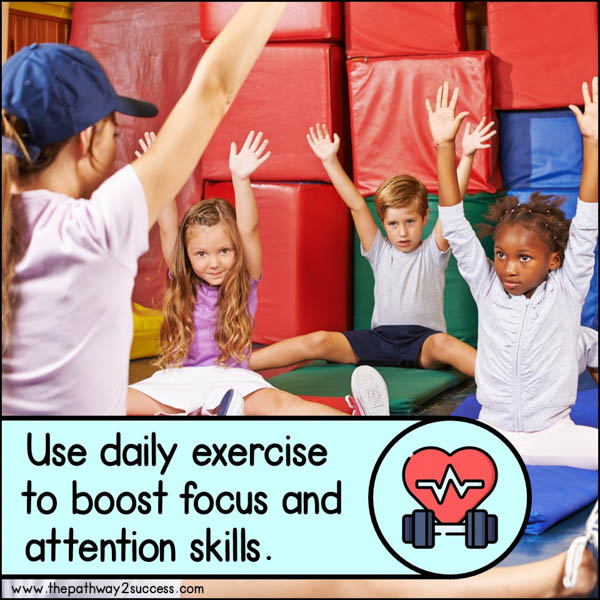
Among the most robustly supported interventions for building concentration is regular physical exercise. Extensive scientific literature demonstrates that physical activity directly enhances cognitive functioning, attention spans, and overall academic performance in youth. According to a prominent meta-analysis conducted by de Greeff and colleagues in 2018, physical activity exerts a distinctly positive effect on a student’s ability to concentrate, with the most pronounced cognitive gains observed when regular exercise routines are sustained consistently over multiple weeks.
Further compounding these findings, guidelines and reports from organizations such as the Committee on Physical Activity and Physical Education in the School Environment highlight the immediate utility of embedding movement directly into daily classroom routines. When physical activity is woven into instructional periods, students exhibit measurable increases in attention levels and greater overall time spent on academic tasks. Whether through structured physical education, active transitions between lessons, or brief movement breaks, physical exertion primes the neurological pathways necessary for sustained mental engagement.
Mindfulness and Meditation as Focus-Training Tools
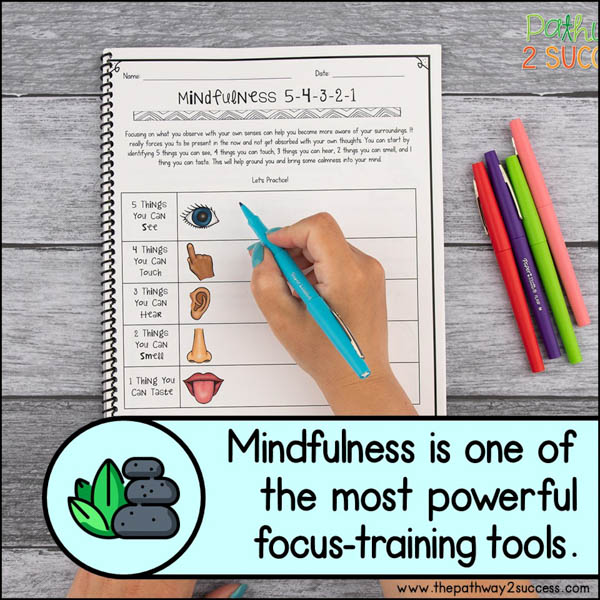
Complementing physical movement are contemplative practices such as mindfulness and meditation, which have emerged as powerful instruments for emotional and cognitive regulation. Mindfulness involves the intentional practice of bringing one’s awareness entirely to the present moment. This can be cultivated through a variety of targeted techniques, including mindful breathing exercises, guided body scans, focused relaxation, and sensory observation tasks.
Substantial psychological research, including work by Keng and collaborators in 2013, underscores the broad-reaching benefits of mindfulness, noting significant improvements in behavioral self-regulation, a reduction in emotional reactivity, and an enhancement of psychological well-being. When examined specifically through the lens of cognitive control, a comprehensive meta-analysis by Verhaeghen in 2021 revealed that systematic mindfulness training yields substantial positive effects on both focused and sustained attention. By learning how to anchor their awareness in the present, children and adolescents develop a durable internal mechanism to manage distractions and steady their attention.
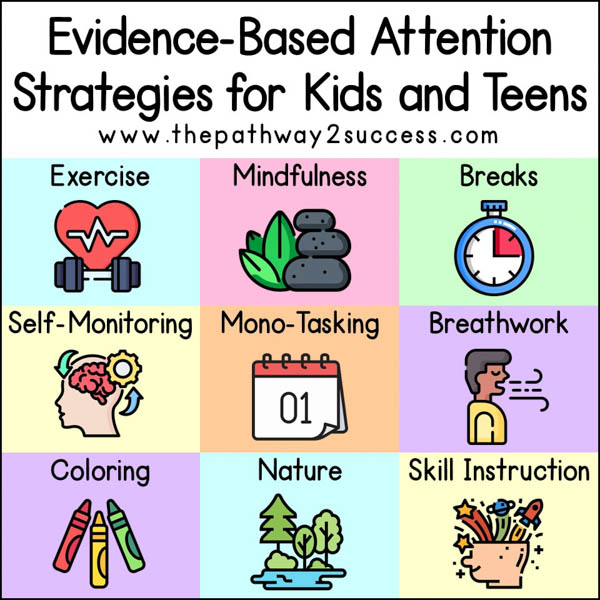
The Science of Strategic Breaks
While prolonged focus is often idealized in educational settings, cognitive science demonstrates that continuous, unbroken concentration is frequently counterproductive. Breaks play an essential regulatory role by granting the brain crucial intervals to regroup, refresh, and process acquired information. Far from being a waste of instructional time, well-timed breaks consistently increase overall productivity and cognitive stamina.
Experimental investigations into this phenomenon, such as a 2014 study led by Janssen and colleagues, evaluated the impact of both passive breaks—such as listening to a narrative story—and active breaks involving physical movement. The findings demonstrated that regardless of whether the pause was active or passive, participants exhibited significant post-break improvements in attention span. These experimental results align with broader educational research emphasizing that strategic pauses from academic demands reduce cognitive fatigue, improve on-task behavior, and elevate overall academic achievement.
Empowering Learners Through Self-Monitoring
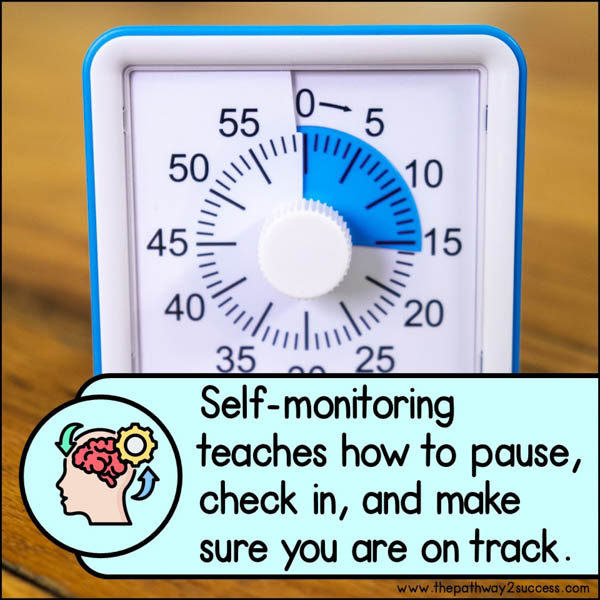
Beyond external interventions, teaching students to evaluate their own cognitive states offers a powerful pathway toward self-directed focus. Self-monitoring involves training learners to periodically check in with themselves while working through a task, encouraging them to assess their current behavior and make real-time adjustments to ensure alignment with their goals.
For instance, a student engaged in independent reading might pause, evaluate their current level of concentration, and realize they have drifted off-task. Armed with this awareness, the student can independently deploy regulatory strategies to re-engage and resume their work. Academic literature confirms the efficacy of this approach; a foundational meta-analysis by Reid and colleagues in 2005 established that structured self-monitoring is an exceptionally effective intervention for students experiencing attention-related challenges, fostering greater autonomy and task completion.
Diaphragmatic Breathing and Emotional Regulation
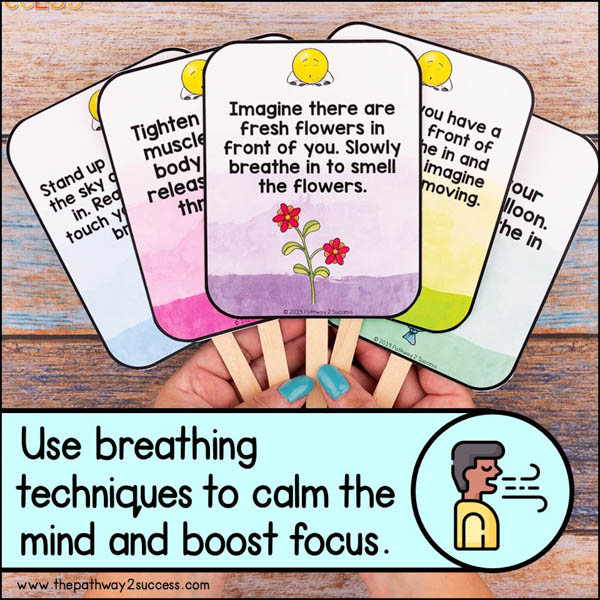
Physiological regulation offers another scientifically validated route to enhanced concentration, particularly through intentional breathing techniques. Diaphragmatic breathing requires individuals to focus purposefully on the rhythmic inhalation and exhalation of air, engaging the body’s natural relaxation response.
Research published by Ma and colleagues in 2017 demonstrated that structured, deep-breathing exercises significantly improve sustained attention while simultaneously decreasing negative affect and reducing physiological markers of stress, such as cortisol levels. This connection between calm and concentration is deeply rooted in neurobiology. By utilizing slow, controlled breathing to soothe the amygdala—the brain’s emotional processing center—individuals can down-regulate stress responses, stabilize their mood, and unlock an optimal cognitive state for learning and problem-solving.

The Cognitive Costs of Multi-Tasking Versus Mono-Tasking
In a culture that frequently praises the ability to juggle multiple responsibilities simultaneously, cognitive science offers a clear counter-narrative: true multitasking is largely a neurological myth. Research pioneered by Gopher and colleagues in 2000 reveals that when individuals attempt to process multiple attention-demanding tasks at once, the brain is not genuinely focusing simultaneously; instead, it is rapidly switching back and forth between activities.
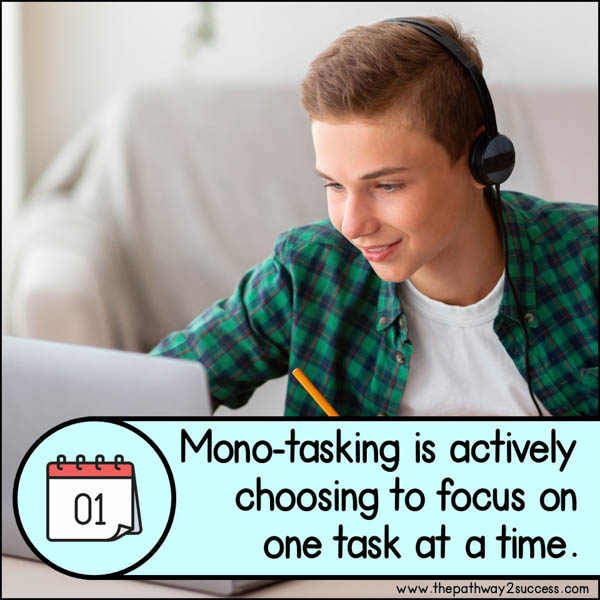
This constant shifting degrades attention quality, diminishes overall productivity, increases error rates, and accelerates mental fatigue. The empirically supported antidote to this cognitive strain is mono-tasking—the deliberate choice to focus exclusively on a single goal or activity at a time. By concentrating cognitive efforts on one endeavor, students can preserve mental energy, minimize mistakes, and achieve deeper levels of engagement.
Restorative Environments and the Benefits of Nature
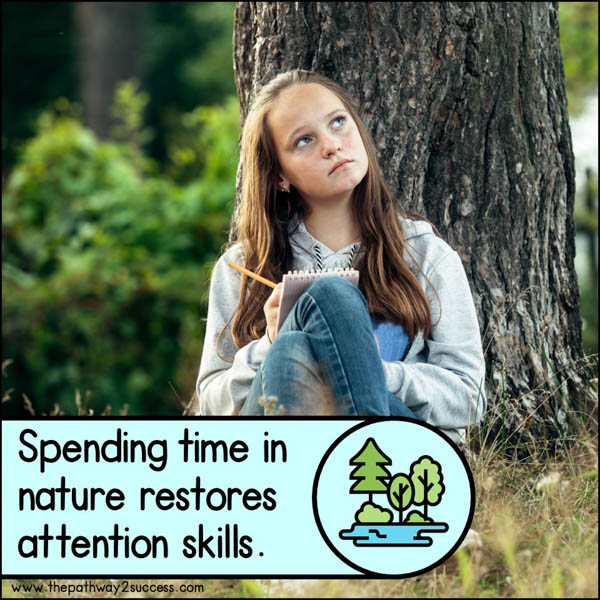
Environmental context also exerts a profound influence on cognitive endurance, a concept explored extensively through attention restoration theory. A significant body of research demonstrates that exposure to natural settings actively replenishes depleted attention resources and alleviates cognitive fatigue.
A meta-analysis conducted by Stevenson and colleagues in 2018 indicated that engagement with natural environments yields measurable improvements across several executive functioning domains, including working memory, cognitive flexibility, and attention control. Furthermore, when physical access to the outdoors is limited, research by Berman and colleagues in 2008 suggests that even visual exposure to natural scenery through windows or images can provide restorative benefits, helping to reset a tired mind.
Direct Skill Instruction and Structured Interventions
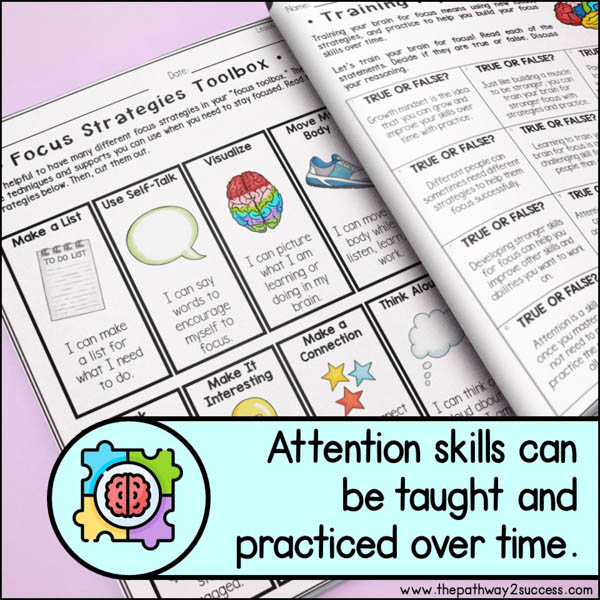
Because attention is a complex executive function, it benefits greatly from explicit, direct instruction. Grounded in educational research synthesized by scholars such as Hattie in 2018, direct instruction involves explicitly teaching students the specific strategies they need to succeed rather than assuming these skills will develop organically.
Whether targeting reading comprehension, mathematical problem-solving, task initiation, or broader study skills, structured instruction allows learners to build a robust internal toolbox of cognitive strategies. Research concerning executive functioning, including work by Meltzer and colleagues in 2007, underscores that explicit strategy instruction provides essential scaffolding for students navigating academic demands, ensuring they possess both the guidance and the practice time required to master self-regulation.
Creative Outlets: Coloring, Yoga, and Brainteasers
Emerging and established physical-creative activities likewise offer documented support for attention and emotional equilibrium. Coloring, traditionally viewed as a simple pastime, has been shown through empirical research to foster calm while enhancing selective focus. Studies by Holt and colleagues in 2019 found that college students who engaged in coloring experienced reduced anxiety and stronger selective focus, while more recent findings by Suryagayathri in 2024 highlighted that students utilizing coloring reported significant improvements in concentrating amidst noisy environments and managing distractions.
Similarly, structured movement practices like yoga combine physical postures with mental discipline. A comprehensive review of 18 studies by Yadav and colleagues in 2022 indicated that regular yoga practice leads to significant enhancements in attention span among children, alongside supplementary benefits such as improved memory and reduced anxiety.
Cognitive puzzles and brainteasers offer yet another engaging avenue for skill development. Experimental research, including studies by Altun and colleagues in 2016 and Winarsunu and Fasikkhah in 2022, demonstrated that children participating in structured puzzle-solving and brainteaser curricula exhibited measurable increases in attention span, enhanced self-regulation, and stronger concentration capabilities compared to control groups.
The Foundational Role of Sleep
While most attention strategies are implemented during waking hours, researchers emphasize that restorative sleep remains an indispensable prerequisite for cognitive function. In his comprehensive scientific overview Why We Sleep, neuroscientist Dr. Matthew Walker outlines extensive evidence detailing how high-quality sleep supports virtually every major biological system, with particular emphasis on executive function and focus.
During deep sleep, the brain actively performs critical maintenance operations, consolidating memories and clearing metabolic waste to prepare neural networks for optimal performance the following day. Conversely, chronic sleep deprivation degrades attention span, compromises concentration, and impairs reaction times. Consequently, adequate rest remains a non-negotiable pillar of cognitive health.
Selecting Personalized Focus Strategies
As specialists and educators note, human cognition is deeply individualistic, meaning that different focus strategies will resonate differently with various learners depending on context and developmental stage. By experimenting with a diverse array of evidence-based techniques—ranging from physical movement and mindfulness to structured breaks and restorative sleep—children, teens, and adults can better understand their own cognitive rhythms. Assessing one’s attention skills and thoughtfully integrating these research-backed methods provides a reliable roadmap for cultivating lasting focus, emotional well-being, and academic success.



