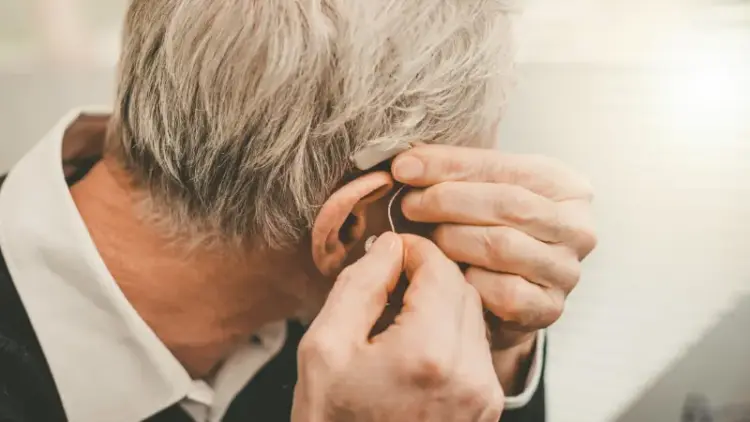
For many members of the hearing loss community, a persistent dilemma has defined daily life since early last year: how to protect vulnerable children from the inherent dangers of button cell batteries without inadvertently locking older adults out of their essential assistive technology. When safety mandates require complex mechanisms to secure household power sources, the resulting barriers often fall heaviest on individuals managing age-related physical limitations. Now, however, there are encouraging signs that major manufacturers are beginning to listen to these consumer concerns and actively working to bridge the gap between rigorous safety standards and everyday usability.
At the annual American Academy of Audiology (AAA) convention held in April, representatives from Energizer’s Rayovac brand showcased a newly developed line of hearing aid battery packaging explicitly designed to be more senior-friendly. Although the updated design still requires cutting to access the cells, the debut represents a notable shift in the marketplace. It demonstrates that when consumers, advocates, and end-users speak up about real-world accessibility challenges, manufacturing companies and industry leaders are willing to pay attention and adapt their products.
Why Hearing Aid Battery Packaging Changed
The conversation surrounding battery packaging safety underwent a dramatic transformation in March 2024, when strict new child-resistant packaging regulations for zinc-air button cell hearing aid batteries officially took effect. The primary impetus behind these sweeping federal requirements was the urgent need to prevent tragic accidental ingestions by young children. To achieve this, the Consumer Product Safety Commission established rigorous mandates under the legislative framework of Reese’s Law, aiming to keep small, hazardous power sources securely out of the reach of curious hands.
A key provision embedded within this legislation stipulates that any battery compartments containing replaceable button cell or coin batteries must be secured in a manner that demands either the use of a specialized tool or at least two independent and simultaneous hand movements to open. While this standard provides vital protection for households with infants and toddlers, it inadvertently created a severe obstacle for a massive demographic of adult consumers. Many individuals who rely on hearing aids daily—particularly older adults, as well as those managing conditions such as arthritis, tremors, neuropathy, low vision, or limited hand strength—suddenly found themselves struggling immensely just to open standard battery packaging that complied with the new federal rules.
What’s in the New Packaging
Representatives from the Hearing Loss Association of America (HLAA) who attended the AAA convention closely observed the design features of Rayovac’s updated packaging solutions. They noted that the revised senior-friendly approach incorporates thoughtful adjustments aimed at easing the physical burden on consumers while maintaining compliance with necessary safety protocols. Rather than relying on convoluted, multi-step physical manipulations that frustrate individuals with compromised dexterity, the updated packaging focuses on improving clarity and simplifying the physical interaction required to access the batteries.
This combination of baseline safety, enhanced visual clarity, and iterative product design suggests that segments of the manufacturing industry are finally paying close attention to real-life user experiences, rather than simply treating compliance as a matter of checking bureaucratic boxes. For an aging population that depends heavily on unhindered access to assistive listening devices, these subtle yet meaningful adjustments represent a crucial step forward in inclusive product design.
Tool-Free and Accessible Packaging is Essential
The daily reality for hearing aid users who face dexterity challenges means that tool-dependent packaging is far from a minor, easily dismissed inconvenience. When safety packaging requires complicated maneuvers, excessive force, or dedicated tools that may be difficult to handle, it can introduce profound risks and frustrations into a person’s routine.
For instance, overly restrictive packaging can lead to extreme frustration and heightened anxiety for individuals who already struggle with fine motor control. More concerningly, the physical struggle to open battery compartments can sometimes result in dropped and lost batteries, damaged hearing aid components, or even skipped usage of assistive devices altogether if a user simply lacks the physical stamina or capability to get the fresh batteries into their devices on a given day. Furthermore, the reliance on specialized tools or complex hand movements can undermine the independence of older adults, forcing them to rely on caregivers or family members for routine maintenance tasks that they should be able to manage on their own.
The newly redesigned packaging unveiled by Rayovac is intended to directly address many of these compounding issues by striking a more compassionate and practical balance. The Hearing Loss Association of America has celebrated this encouraging advance as tangible progress toward the broader goal of achieving effective child-resistant packaging that does not simultaneously restrict essential access for the individuals who rely on these medical and assistive devices to engage with the world around them. As the industry moves forward, advocates and consumers alike look forward to seeing manufacturers and regulatory bodies continue to collaborate, ensuring that safety innovations protect children without compromising the independence, dignity, and hearing health of older adults.