Mindfulness—the intentional practice of turning one’s attention inward to focus entirely on the present moment—has long been celebrated for its ability to induce calm and relaxation. However, a growing body of educational and psychological insight reveals that mindful practices also play a critical, foundational role in sharpening our executive functioning skills. By harnessing the power of mindfulness, educators, parents, and caregivers can provide crucial support to children and adolescents who need an extra boost with vital cognitive abilities such as attention, self-control, and working memory.
Executive functioning skills represent the complex, brain-based abilities that individuals utilize daily to plan actions, initiate tasks, manage time effectively, and work through inevitable challenges. People rely on these cognitive tools constantly, often without conscious thought. That is the true advantage of well-developed executive functioning: when these skills are robust, individuals deploy them seamlessly to reach personal and academic goals without realizing the heavy cognitive lifting occurring behind the scenes.
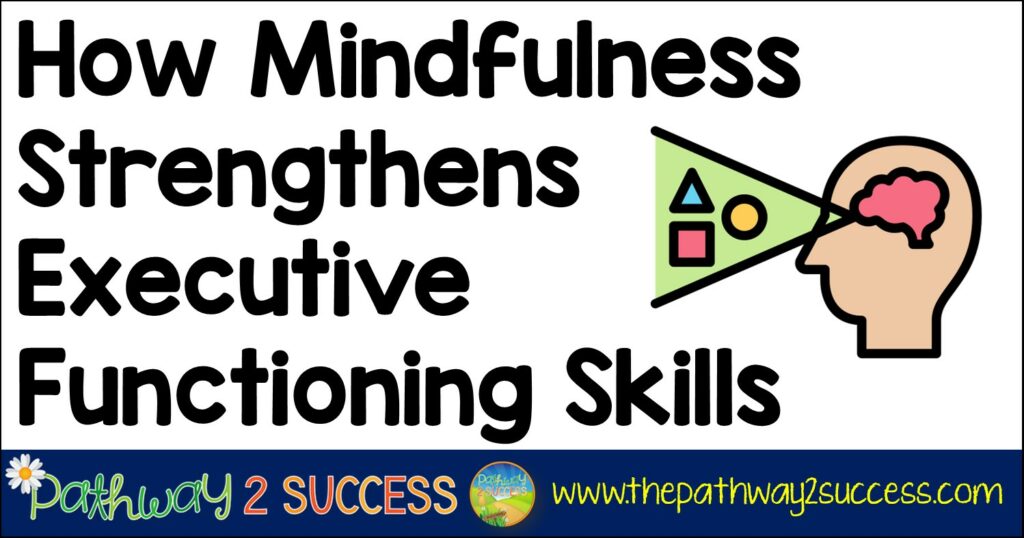
Recent educational frameworks emphasize that practicing mindfulness actively strengthens several distinct executive functioning domains. From a neurological perspective, this correlation is entirely logical. When individuals are calm, the prefrontal cortex—often referred to as the "thinking brain"—becomes fully activated. This physiological state enables better decision-making, enhanced focus, and more effective problem-solving when confronted with obstacles. Because mindfulness is a simple, meaningful, and engaging activity, it can be integrated easily into the daily routines of children and young adults of all ages. Recognizing mindfulness as an evidence-based strategy underscores the value of incorporating mindful practices into everyday schedules to support holistic youth development.
Focus and Attention
Attention is formally defined as the ability to focus cognitive resources on a specific person, task, or abstract idea for a sustained period. Children and teens deploy attention skills across nearly every facet of their daily lives, ranging from engaging in a thoughtful conversation with a peer to maintaining concentration while completing a complex mathematics assignment.
Mindfulness exercises directly train these foundational focus and attention mechanisms. By dedicating time to focus solely on the rhythm of breathing, an
individual trains the mind to anchor itself firmly in the "right now." With repeated practice, learners inevitably notice their attention drifting toward stray thoughts or external stimuli—a completely normal cognitive occurrence. The core mechanism of mindfulness training lies in gently redirecting that focus back to the breath. Over time, this recurring loop strengthens both baseline attention skills and overall mindfulness proficiency.
Self-Control
Self-control is characterized as the ability to pause and reflect before making a decision, relying on cognitive inhibition to halt an impulsive reaction rather than acting immediately on sudden urges.
Mindfulness actively cultivates self-control by providing structured opportunities to practice pausing before reacting. As individuals engage in mindfulness over time, this neural capacity for restraint grows noticeably stronger. Consider, for example, a teenager walking down a school hallway and passing a locker decorated with a celebratory birthday balloon. An initial, impulsive reaction might be to reach out and pop the balloon. However, through consistent mindfulness practice, that same young person possesses a heightened capacity to pause, take a breath, and let the impulsive urge pass without acting upon it. This enhanced self-control carries profound implications for both immediate choices and long-term behavioral development.
Emotional Regulation
Emotional regulation is the critical capacity to understand and manage daily emotions effectively, laying the psychological groundwork for how individuals feel, think, and act throughout the day.
Practicing mindfulness aids individuals in developing a heightened awareness of their emotional states without becoming completely overwhelmed by them. This elevated self-awareness sets the stage for managing feelings in constructive, socially appropriate ways. For instance, if a teenager feels deeply upset after discovering a peer does not want to work with them on a collaborative project, standard emotional reactions might include yelling, crying, or emotional withdrawal. Conversely, a few mindful deep breaths can ground the student, returning them to a state of calm. From this centered position, the adolescent is far better equipped to problem-solve and navigate the social situation constructively.
Working Memory
Working memory refers to the cognitive capacity to retain and manipulate information simultaneously in the mind. People utilize working memory across a wide array of cognitive tasks, such as listening to multi-variable instructions, retaining narrative details within a story, and working through multi-step mathematical equations.
Regular mindfulness practice actively reduces mental clutter. By clearing out extraneous thoughts and cognitive distractions, the mind creates vital mental space for the critical information required in the moment. A practical illustration of this dynamic involves a student attempting to follow complex morning instructions provided by an instructor. Instead of experiencing cognitive overload from a barrage of competing thoughts, a learner who practices morning mindfulness approaches the assignment with a cleared mental slate, facilitating a smoother transition into the academic day.
Flexible Thinking
Flexible thinking represents the brain’s ability to evaluate situations from multiple perspectives, adapt mindsets to novel circumstances, and consider alternative viewpoints.
Mindfulness supports flexible thinking by encouraging the non-judgmental acceptance of internal thoughts and external experiences. Through consistent practice, individuals learn to accept current realities, even when those circumstances prove challenging or unfavorable. For example, when a young adult receives critical editorial feedback on an essay, rigid thinking might trigger defensiveness. Flexible thinking, nurtured by mindful acceptance, allows the individual to evaluate the critique objectively, opening up clear pathways for personal growth and academic improvement.

Perseverance
Perseverance is defined as the steadfast ability to sustain effort and remain engaged with a task, even in the face of difficulty or frustration. It is a fundamental disposition utilized to overcome obstacles and achieve long-term objectives.
During mindfulness exercises, maintaining focus can occasionally prove difficult as the mind naturally wanders toward alternative desires or distractions. This challenge is an expected part of the cognitive process. Crucially, the act of sustaining mindfulness over extended periods mirrors the very mechanics of perseverance: learning to stick with a challenging endeavor rather than abandoning it prematurely.
Implementing Mindfulness Strategies

Before introducing mindfulness to children and teens, educators and parents benefit from discussing its explicit benefits. Framing mindfulness as a practical tool helps learners understand that it supports emotional and physical well-being. It can be utilized as a preparation technique to center oneself before delivering a class presentation or to cultivate focus and alertness prior to athletic competition.
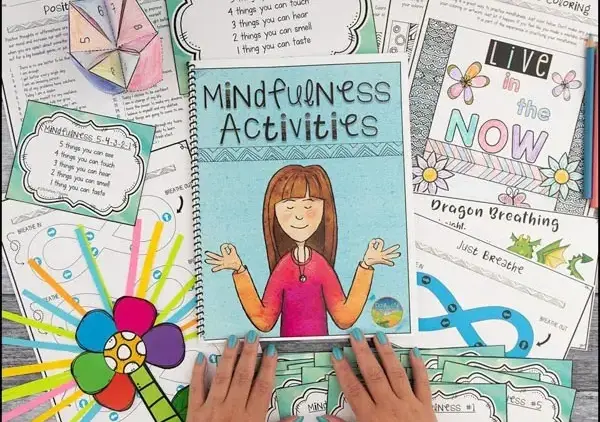
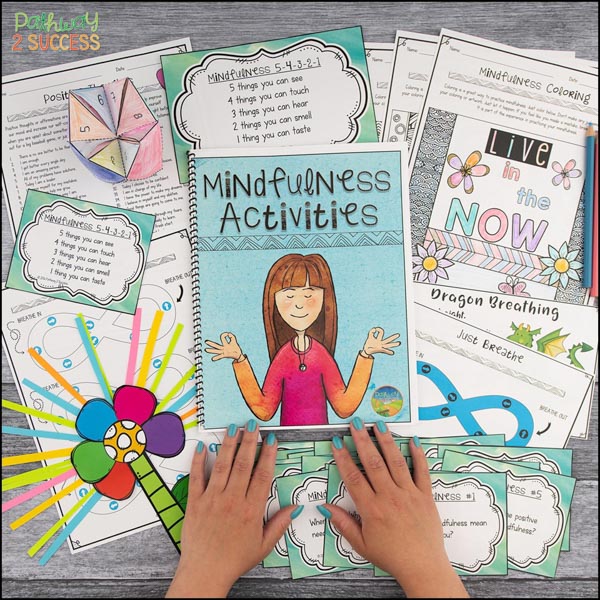
To facilitate this integration, educators frequently utilize structured mindfulness lessons and SEL-focused activities designed specifically for youth. These comprehensive resources often include hands-on exercises, reflective crafts, discussion prompts, and visual posters that can be revisited repeatedly across an academic year. Literature also serves as an accessible gateway, with numerous picture books and narrative texts providing natural springboards for discussions around emotional awareness and self-regulation among older students as well as younger children.
Foundational practices like mindful breathing offer a portable strategy that youth can employ independently in virtually any setting. By adopting a comfortable posture and focusing intently on the physical sensations of inhalation and exhalation, learners anchor themselves in the present moment. More engaging breathing variations, such as structured shape breathing or imaginative visualization exercises, often double as effective cognitive brain breaks between rigorous academic tasks.
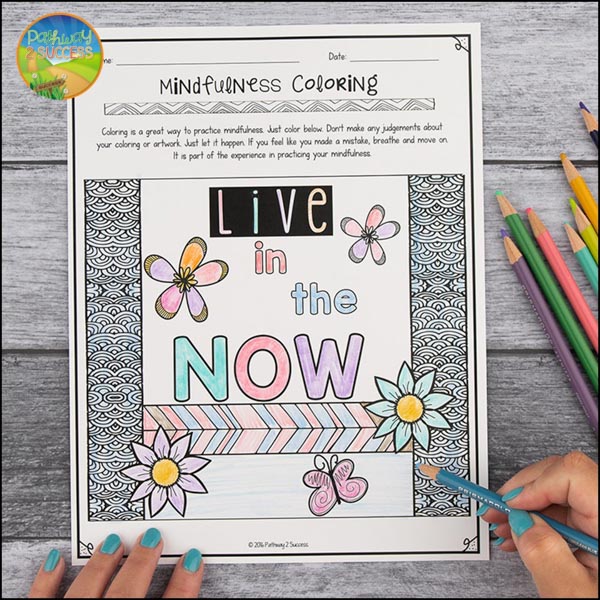
Additional approaches include mindful coloring, which directs all attention toward the physical act of coloring rather than the perfection of the final product, and yoga-based stretching movements that integrate somatic awareness with controlled breathing. Mindful journal writing offers another avenue for expression, prompting students to reflect on internal thoughts through guided prompts or free-form writing at the start of the day.
Outdoor mindfulness activities—ranging from nature walks and gardening to observing wildlife or cloud formations—leverage natural environments to maintain engagement and provide an endless array of immediate sensory focal points. Similarly, morning routines can incorporate mindful affirmations, where learners repeat calming phrases to build internal resilience, or mindful observance exercises, which require students to study a single everyday object, such as a pen or water bottle, paying close attention to its specific textures, colors, and forms to strengthen their overall concentration skills.