MONTPELIER, Vt. — Vermont has officially made legislative history for its medical and patient advocacy communities. On May 13, 2026, the Vermont Legislature successfully passed H.46, landmark legislation establishing a permanent Rare Disease Advisory Council (RDAC). The bill was signed into law by Governor Phil Scott, marking the culmination of a multiyear grassroots movement designed to give patients, families, and medical professionals living and working with rare conditions a formal, institutionalized voice within state government.
The newly formed Vermont RDAC arrives as a vital mechanism to address an intricate web of medical, social, and economic hurdles. While individual rare conditions affect small numbers of people, collectively they represent a massive population. In Vermont alone, an estimated 64,000 residents live with a rare disease. Nationally and statewide, these communities have historically faced daunting systemic challenges, ranging from diagnostic delays and specialized provider shortages to complex insurance hurdles and a severe lack of coordinated health care policies tailored to their unique circumstances.
A Rare Disease Advisory Council functions as an official state advisory body, established either through state statute or executive authority, to bridge the gap between the rare disease community and state leadership. By bringing together a diverse cross-section of stakeholders—including patients, family caregivers, practicing physicians, medical researchers, and allied health professionals—these councils meet regularly to evaluate pressing systemic challenges, identify critical gaps in local health services, and formulate actionable policy solutions. With the enactment of H.46, Vermont has formally aligned itself with a powerful and growing national movement dedicated to ensuring that the rare disease population is never again overlooked in policy deliberations.
What distinguishes the newly established Vermont RDAC is its thoughtful, state-specific structural design, which ensures it is exceptionally well-equipped to serve the local population. Rather than operating in an administrative vacuum, the council is strategically housed within the Vermont Department of Health. This crucial placement grants the RDAC immediate, direct access to the state agency’s extensive resources, specialized staff, and deep data networks, all of which align directly with the complex landscape of rare disease care. Furthermore, the council’s statutory membership mandates the inclusion of key institutional appointees from prominent local health organizations, such as the Vermont Medical Society and the Vermont Pharmacists Association, ensuring robust clinical and professional representation.
Beyond advisory duties, the legislation grants the Vermont RDAC a wide spectrum of functional abilities. Most notably, the council possesses the official authority to conduct public hearings across the state and directly receive public comments from individuals, families, and advocacy groups. This direct line of communication will enable the council to systematically identify gaps in state services, evaluate the availability of specialized treatments, and deliver informed recommendations directly to the governor and the state legislature.
A Victory Years in the Making
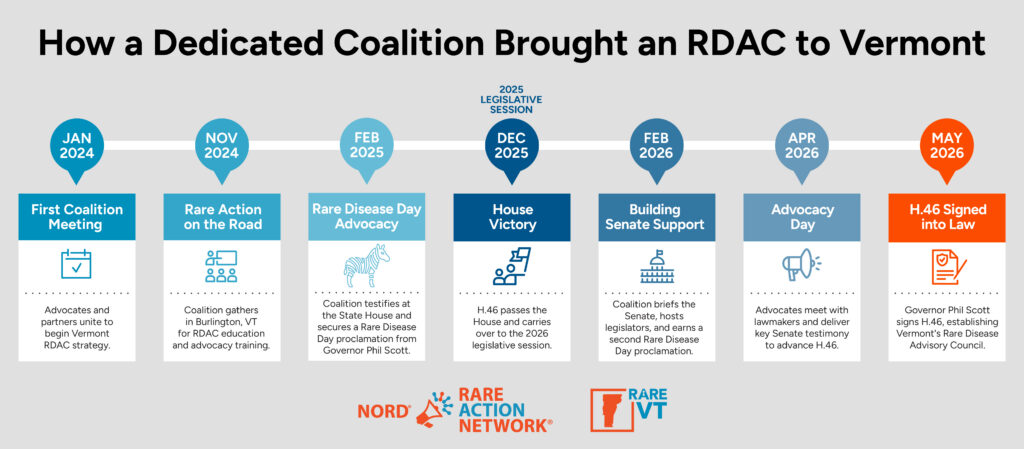
The passage of H.46 was far from an overnight political occurrence; it represents the defining triumph of a persistent, multiyear grassroots campaign. The foundation of this legislative victory was laid by the Vermont RDAC Coalition, an organized body spearheaded by the National Organization for Rare Disorders (NORD). This coalition brought together a deeply committed network of patients, family members, caregivers, clinical experts, and specialized advocacy organizations who shared a single, unwavering vision: securing a permanent, formal voice for Vermonters impacted by rare health conditions.
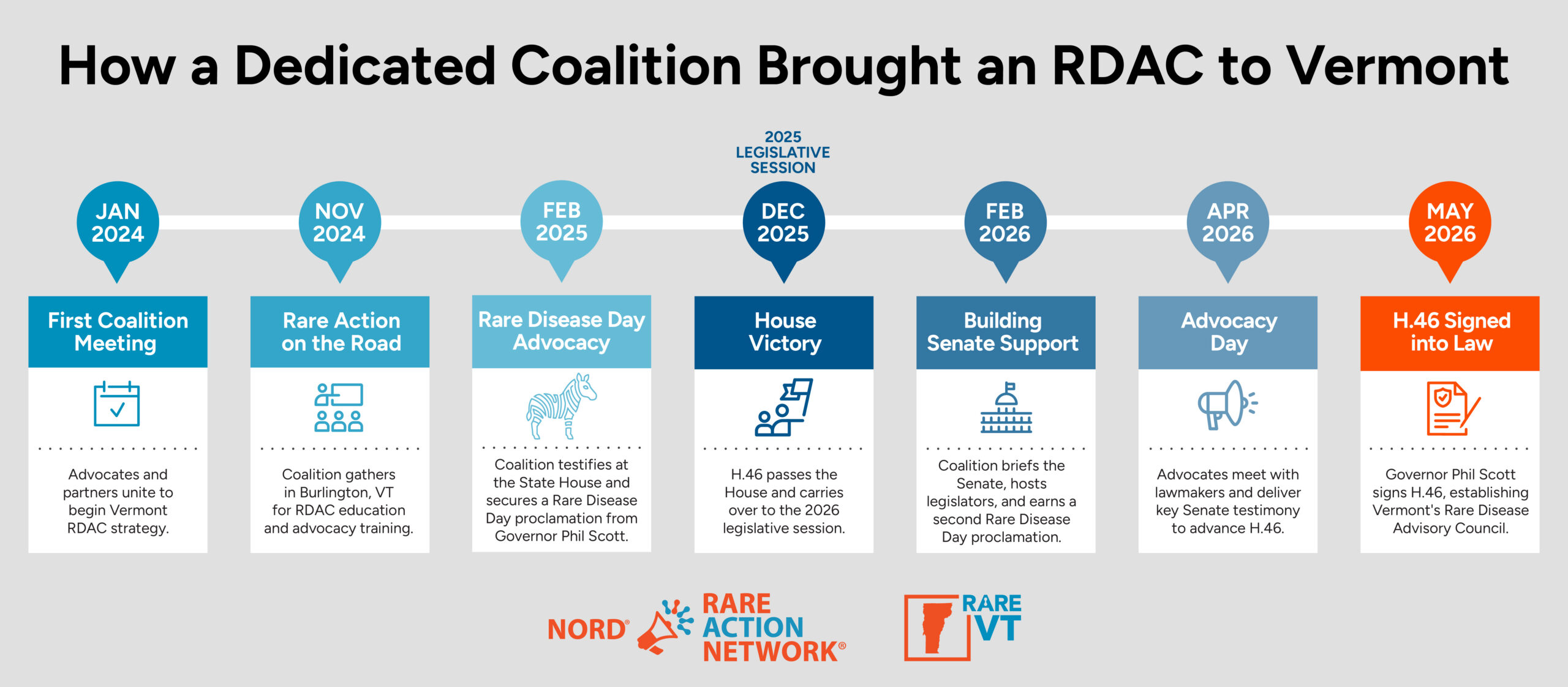
The coalition’s journey began in earnest with its inaugural meeting in January 2024. From that initial gathering, NORD worked hand-in-hand with local advocates to design and execute a comprehensive, highly coordinated grassroots strategy. Over the course of more than two years, members of the coalition maintained an active and visible presence throughout the state. They traveled to Montpelier and across Vermont’s diverse communities to share deeply personal narratives, deliver compelling legislative testimony, participate in dedicated advocacy days at the Statehouse, and drive public awareness initiatives during annual Rare Disease Day activities.
This sustained campaign was defined by relationship-building, public education, and persistent engagement with lawmakers from across the political spectrum. The culmination of these tireless efforts arrived on May 13, 2026, when Governor Phil Scott officially signed H.46 into law. State leaders and advocates alike noted that the bill’s passage was not the result of a single pivotal conversation or a solitary lobbying day, but rather the cumulative product of years of dedicated collaboration. Together, the coalition demonstrated the profound efficacy of grassroots organizing, securing a historic formal investment in the health and well-being of Vermont’s rare disease community.
Personal Stories That Drove Change
At the core of this legislative victory were the courageous individuals who stepped forward to share their personal realities with lawmakers. Legislative proceedings can often be dominated by cold statistics and complex administrative language, but the inclusion of firsthand personal testimony profoundly humanized the debate. By speaking candidly about the daily triumphs and struggles of living with rare conditions, advocates transformed abstract policy discussions into relatable human stories, illustrating precisely why a permanent advisory voice in state government is so urgently needed.
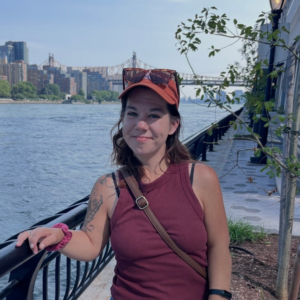
Reflecting on their experiences testifying before legislative committees, several coalition members shared the profound personal impact of their advocacy.
Sarah E. recalled the initial apprehension of addressing state leaders, noting that the experience ultimately revitalized her lifelong dedication to helping others. "While it seemed daunting to hold the attention, even briefly, of our state’s leaders, giving my testimony on rare disease to the House Human Services committee in February of 2025 was an enriching and empowering experience that reignited the passion for helping others that I’ve always held close to my heart," she shared. She added that the committee’s warm encouragement reinforced her belief that every individual possesses inherent value and a vital perspective to offer their community.
For Katie P., the journey of sharing her personal story proved to be a transformative exercise in vulnerability and self-discovery. "The most memorable part of sharing my testimony was knowing how much I have grown as a person, knowing how much my story could have encouraged someone else, and allowing myself to be vulnerable," she explained. Despite initial nervousness, Katie described a profound shift as she began to speak, noting that her fears quickly gave way to a deep sense of empowerment. "My biggest takeaway is that using your voice is powerful and that sharing your testimony is freeing, courageous, and from that we can create connections and inspire others."
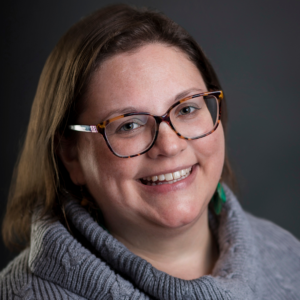
Sharon R., who lives with the rare autoimmune condition Pemphigus Vulgaris, found her time before the Vermont State Senate Health Committee to be similarly validating. Describing the atmosphere as remarkably receptive, Sharon recounted a memorable moment during her hearing. "Speaking before the Vermont State Senate Health Committee was empowering for me as a person with a rare disease," she said. "My favorite part was when I had finished my two-minute prepared statement, and they said to me, ‘Tell us more.’ So I did!"
Take Action Today
The successful enactment of H.46 stands as a clear testament to the reality that sustained, passionate grassroots advocacy can successfully reshape public policy and drive meaningful, lasting change for vulnerable populations. Organizers emphasize that individuals do not need to be career policy experts or seasoned lobbyists to make a tangible difference in the legislative process.
The rare disease community continues to welcome individuals who wish to lend their time, professional talents, and personal voices to ongoing advocacy efforts. Whether through participating in public awareness campaigns, sharing personal experiences with lawmakers, or supporting state and national advocacy organizations, everyday citizens retain the power to influence the future of health care policy in Vermont and beyond.