
Squats and lunges alone will not save an aging parent’s independence. For years, family caregivers and health professionals have turned to standard lower-body exercises to combat physical decline in older adults. Yet, if a routine walk to the local grocery store leaves an aging loved one utterly exhausted, the problem is frequently misattributed to general aging or weak knees. According to recent clinical findings, the actual culprit is sitting right at their feet.
The relationship between ankle mobility and aging has emerged as a critical yet consistently overlooked factor in modern eldercare. Groundbreaking research reveals that the aging process fundamentally rewires the biomechanics of the ankle. Rather than a simple loss of muscle mass, the aging nervous system silently sacrifices mechanical efficiency in a desperate bid to prevent falls. This biological trade-off ultimately restricts a senior’s mobility, diminishes their walking speed, and slowly chips away at their long-term independence.
The Science of Wasted Effort: Ankle Mechanics in Older Adults
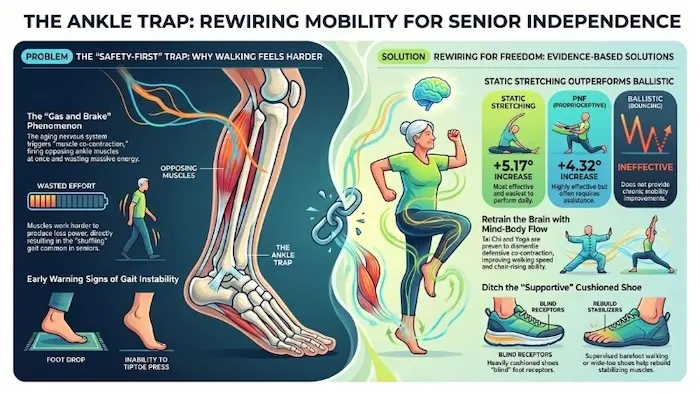
A study published in the Journal Gait & Posture sheds light on how the aging nervous system adopts a rigid, safety-first strategy to cope with perceived instability. Instead of allowing muscles to function smoothly and dynamically, the body triggers a phenomenon known as muscle co-contraction. In this state, opposing muscles around the ankle joint activate simultaneously, effectively pressing the gas and the brake at the exact same time.
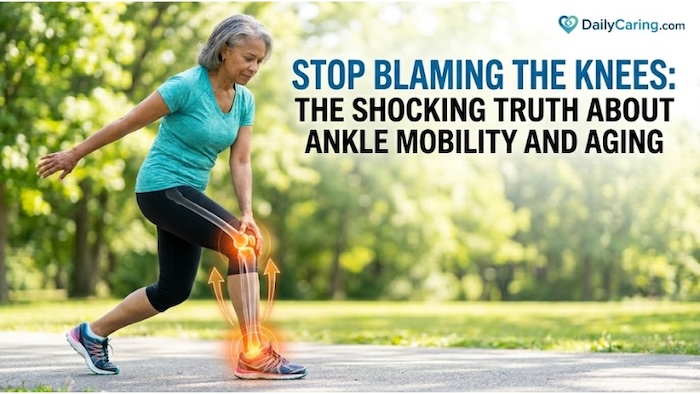
This constant muscular tug-of-war stiffens the joint to improve balance the moment the foot strikes the ground. However, the physiological cost of this defensive mechanism is massive wasted effort. The muscles in the lower leg work significantly harder, yet they generate only a fraction of the push-off power required for efficient forward motion. Consequently, strides shorten, walking speeds drop, and routine physical activity becomes an exhausting endeavor.
This biomechanical inefficiency explains why older adults often experience disproportionate fatigue during short walks or face an escalating risk of falling as they age. In essence, they are burning a tremendous amount of energy simply fighting their own muscle contractions with every step they take.
Expert Insights on Ankle Mobility and Aging
Medical professionals emphasize that modern physical routines must evolve to address these hidden nervous system patterns. Dr. Kristie Leong points out that outdoor activities like hiking serve as exceptional tools for comprehensive mobility training. Uneven terrain naturally challenges the ankles, hips, feet, and internal balance systems to adapt continuously, optimizing real-world movement capacity while offering mental relaxation.

Furthermore, experts highlight the underappreciated value of footwear choices. Transitioning to barefoot shoes or spending safe periods walking barefoot offers distinct advantages. These choices allow the foot to spread out naturally while actively recruiting the small, often neglected stabilizing muscles situated within the feet.
Identifying the Warning Signs of Gait Instability
Waiting for a catastrophic fall before initiating a formal evaluation is a dangerous gamble for families and caregivers. The nervous system typically provides clear, observable physical warning signs long before an emergency occurs, signaling that defensive ankle co-contraction has taken over the body’s movement patterns.
Caregivers are urged to observe their elderly family members closely during everyday movements. A common red flag is the tendency to shuffle feet across the floor rather than lifting them cleanly with each step. Another indicator is "foot drop," where an individual frequently catches their toes on area rugs, door thresholds, or uneven pavement. Additionally, asking a loved one to reach for an item on a high shelf can reveal underlying deficits; if they are unable to smoothly press up onto their tiptoes, they have already lost critical push-off power.

Recognizing these early warning signs of gait instability allows families and healthcare providers to intervene proactively, potentially preventing a severe fall and an inevitable hospital visit.
Fall Prevention for Seniors Requires Rewiring the Nervous System
Standard strength training regimens frequently miss this crucial mechanical puzzle entirely. Optimizing fall prevention strategies and supporting long-term independence requires helping older adults retrain their nervous systems to abandon the habit of defensive co-contraction.
Clinical biomechanics data indicates that restoring ankle efficiency relies on movements that target proprioception, tendon strength, and joint mobility. Rather than simply building raw muscle bulk, exercises such as single-leg balance holds, eccentric calf raises, and targeted ankle flexibility drills retrain the brain to release joint stiffness and trust the ankle’s natural range of motion.
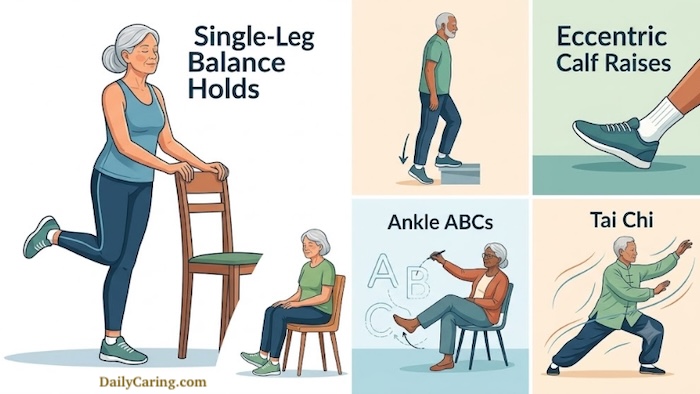
Dynamic practices like Tai Chi also play a proven role in reducing ankle co-contraction. The continuous, fluid movements force opposing muscles to fire sequentially rather than simultaneously, thereby restoring mechanical efficiency and preserving active mobility.
Ditch the Clunky Sneakers: The Case for Barefoot Walking
Many aging adults inadvertently compound their mobility loss by wearing heavily cushioned, ultra-supportive orthopedic shoes. Modern thick-soled footwear often functions much like a cast, completely blinding the foot’s sensory receptors and destroying proprioception—the body’s innate ability to sense its position in physical space.
To properly execute balance exercises and rebuild genuine mobility, the foot needs direct sensory feedback from the ground. When circumstances are entirely safe and practical, supervised barefoot walking inside the home can encourage better stability, provided caregivers monitor closely to avoid any slip-and-fall hazards. For outdoor use or daily wear, wide-toe, zero-drop barefoot shoes offer a viable alternative, allowing the foot to spread and naturally engage the stabilizing muscles that conventional supportive orthopedics tend to deactivate.
Prioritizing Ankle Mobility and Aging Workouts Today
The aging process forces an involuntary compromise between movement speed and physical stability. When caregivers focus exclusively on generic leg workouts while ignoring targeted balance and ankle training, an older adult’s nervous system may continue to lock down their joints, gradually stripping away their freedom of movement.
By shifting attention toward ankle mechanics, families can help their loved ones maintain their physical independence and navigate the world safely. Ensuring that daily routines incorporate practices that dismantle defensive muscle co-contraction represents a vital step in comprehensive eldercare and fall prevention.



