
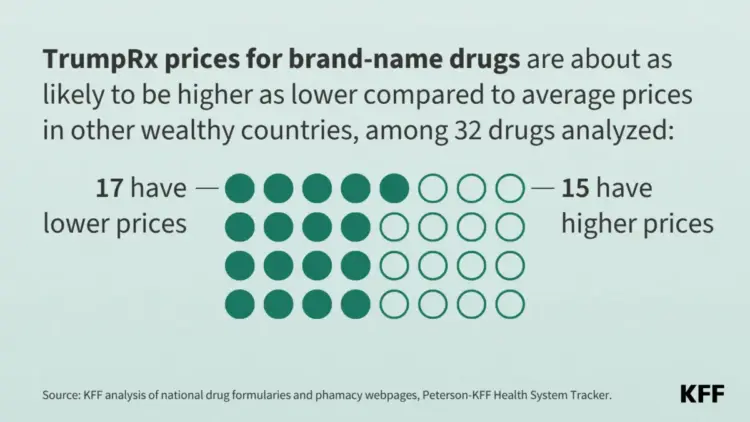
Consumers purchasing brand-name prescription drugs without an available generic or biosimilar through the newly launched TrumpRx website face a financial reality that may not live up to its ambitious billing, according to a comprehensive new analysis released by KFF. The study reveals that Americans utilizing the platform are about as likely to pay more as they are to pay less for these medications when compared directly to the publicly listed prices available in other comparatively wealthy nations.
The Trump administration has heavily promoted the TrumpRx platform as a revolutionary portal designed to secure the lowest prescription medication prices in the world for everyday consumers. This initiative relies on voluntary pricing agreements forged directly with pharmaceutical manufacturers, with the overarching goal of establishing "Most Favored Nation" pricing standards for American patients. For many of the high-profile brand-name drugs featured on the website, the mechanism essentially directs consumers to manufacturer-sponsored discount coupons. These coupons allow patients to acquire the medications directly at a local pharmacy counter without routing the transaction through traditional health insurance coverage.
To evaluate the real-world impact and effectiveness of these voluntary agreements, the new Peterson-KFF Health System Tracker analysis conducted a rigorous head-to-head comparison. Researchers examined the prices of 32 brand-name prescription drugs currently listed on the TrumpRx website against the corresponding prices found in a broad basket of peer nations. Specifically, the study evaluated prices in Australia, Austria, Belgium, Canada, France, Germany, Japan, the Netherlands, Sweden, Switzerland, and the United Kingdom.
The scope of the analysis was intentionally focused. It evaluated brand-name drugs listed on the TrumpRx site as of August 25, 2026, that currently lack generic or biosimilar alternatives available on the U.S. market, and which also possessed publicly available benchmark prices in at least one of the aforementioned foreign countries. Crucially, the analysis does not compare the prices available through TrumpRx today to the baseline prices that may have been accessible to American consumers prior to the platform’s official launch.
Conducting international comparisons of pharmaceutical pricing involves navigating a complex landscape, as there is no single, unified global database for drug costs. In many of the foreign nations included in the analysis, the publicly listed prices utilized by researchers represent the negotiated rates paid directly by a government’s national health system, a single-payer authority, or a similar centralized entity. Consequently, these figures do not necessarily reflect the exact out-of-pocket expenses that an individual resident living within that specific country and covered by its domestic health insurance system would personally encounter at the pharmacy counter.
Beyond the raw price comparisons, the Peterson-KFF Health System Tracker analysis takes a broader look at the structural and systemic factors that contribute to wide variations in prescription drug pricing across international borders and through domestic alternative purchasing models like TrumpRx. A central element driving these differences is the distinct role that governments play in regulating, negotiating, or directly setting pharmaceutical prices. While many high-income nations utilize centralized government price controls or health technology assessments to cap the cost of medications, the United States health system has traditionally relied on a decentralized market-driven approach involving complex negotiations among manufacturers, pharmacy benefit managers, insurers, and consumers.
The Peterson-KFF Health System Tracker operates as a specialized online hub dedicated to monitoring, measuring, and evaluating how effectively the broader U.S. health system is operating by examining critical cost and quality performance metrics. This latest assessment adds to a growing body of research examining transparency initiatives and alternative pricing mechanisms aimed at alleviating the heavy financial burdens that high prescription drug costs place on American households. As policymakers, industry leaders, and consumers continue to debate the most effective strategies for lowering medication expenditures, analyses examining real-world price parity with international benchmarks provide vital context for assessing the true impact of these administration-led initiatives.



