
The regulatory landscape governing state Medicaid programs is undergoing a profound transformation as evolving presidential priorities reshape how states utilize Section 1115 demonstration waivers. These critical federal mechanisms allow state governments to test innovative healthcare delivery approaches that deviate from standard federal statutes, provided the Department of Health and Human Services (HHS) Secretary determines the initiatives successfully promote the overarching objectives of the Medicaid program.
Nearly every state currently operates at least one active Section 1115 waiver, with many managing multiple demonstrations concurrently. These waivers reflect not only individual state policy priorities but also sharp shifts in administrative direction from Washington. Recent policy changes enacted under successive administrations have introduced new complexities around eligibility criteria, benefit structures, and social determinants of health initiatives, leaving state health officials to navigate a rapidly evolving regulatory environment.
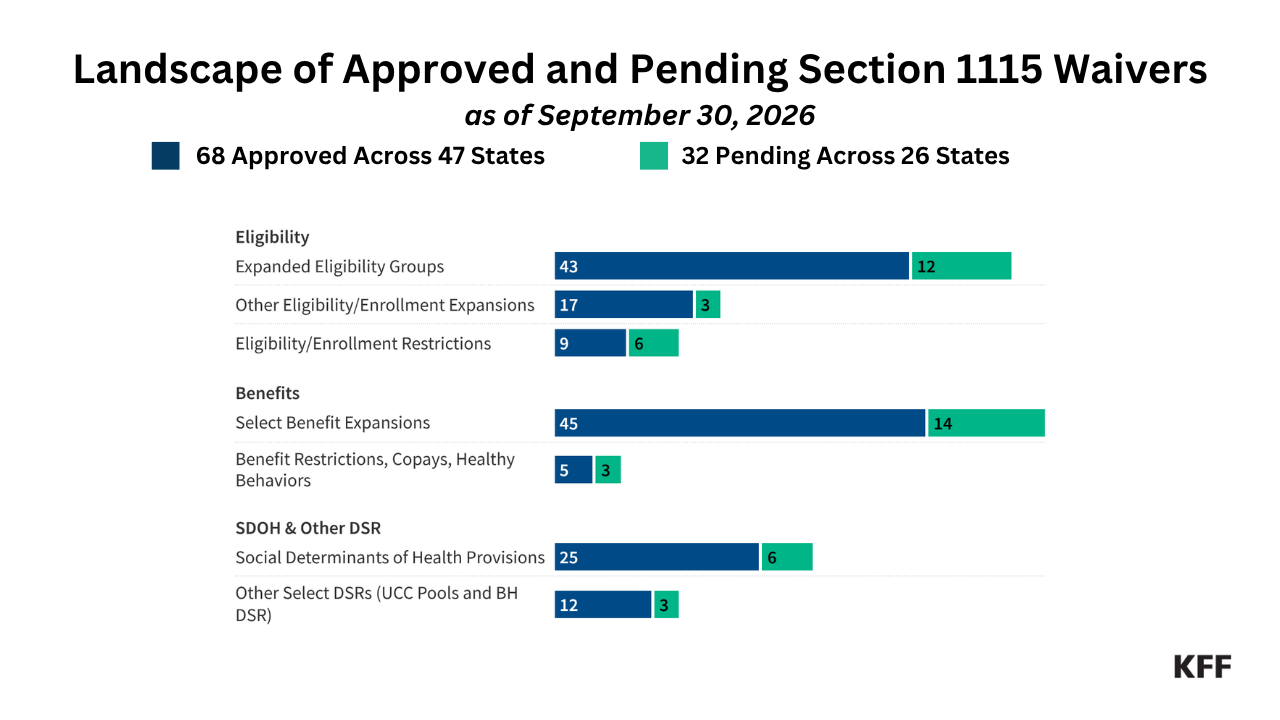
Overview of Approved and Pending Waiver Trends
Section 1115 waivers serve as a primary vehicle for states seeking flexibility beyond standard federal rules. Historically, administrations have used these demonstration authorities to champion distinct policy agendas. Under the Biden administration, federal priorities heavily favored expanding coverage stability, addressing health-related social needs, and smoothing care transitions for vulnerable populations. Conversely, the return of the Trump administration has introduced new regulatory parameters, including the rescission of specific framework guidance and the introduction of stricter federal mandates surrounding eligibility and work requirements.
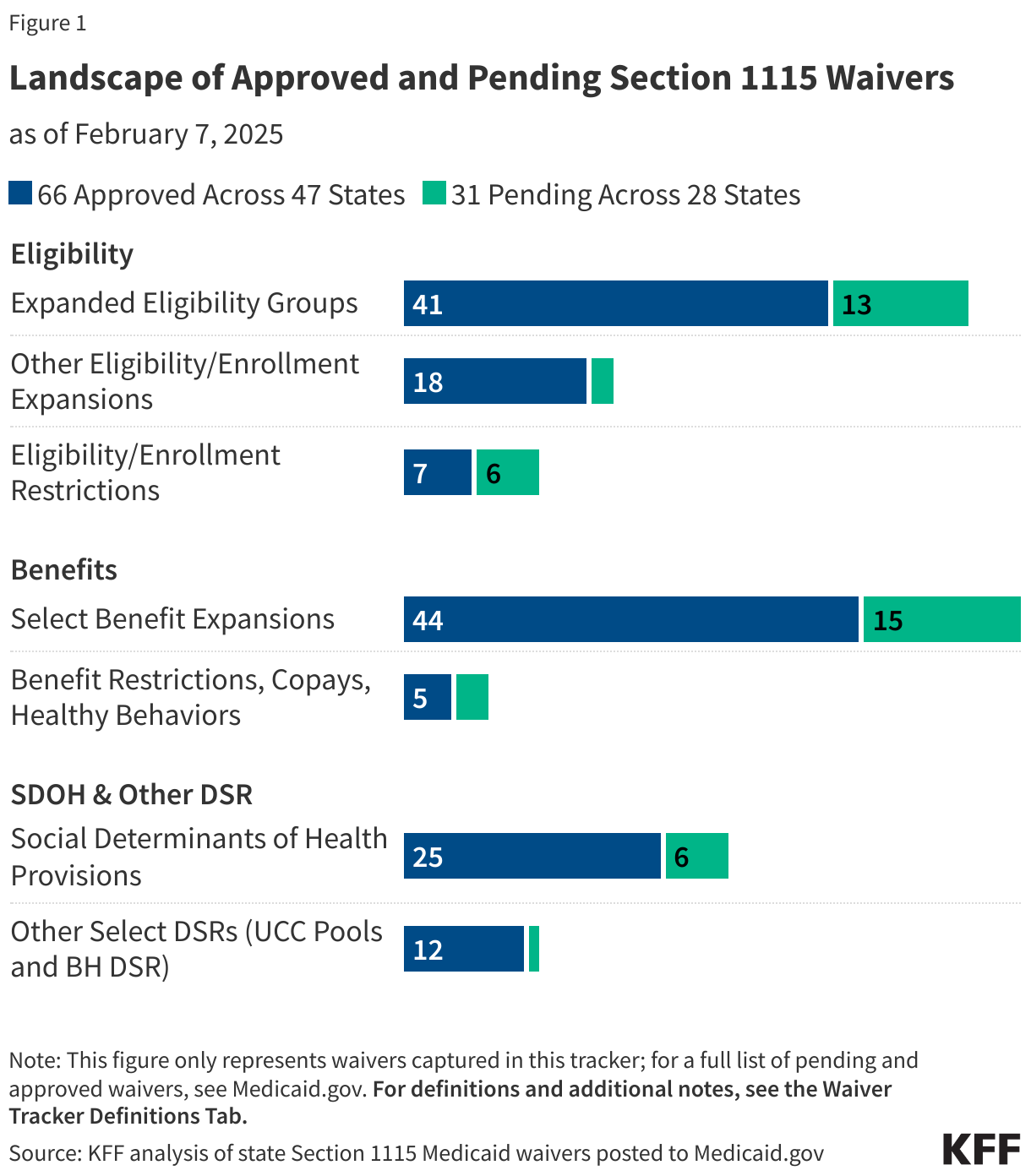
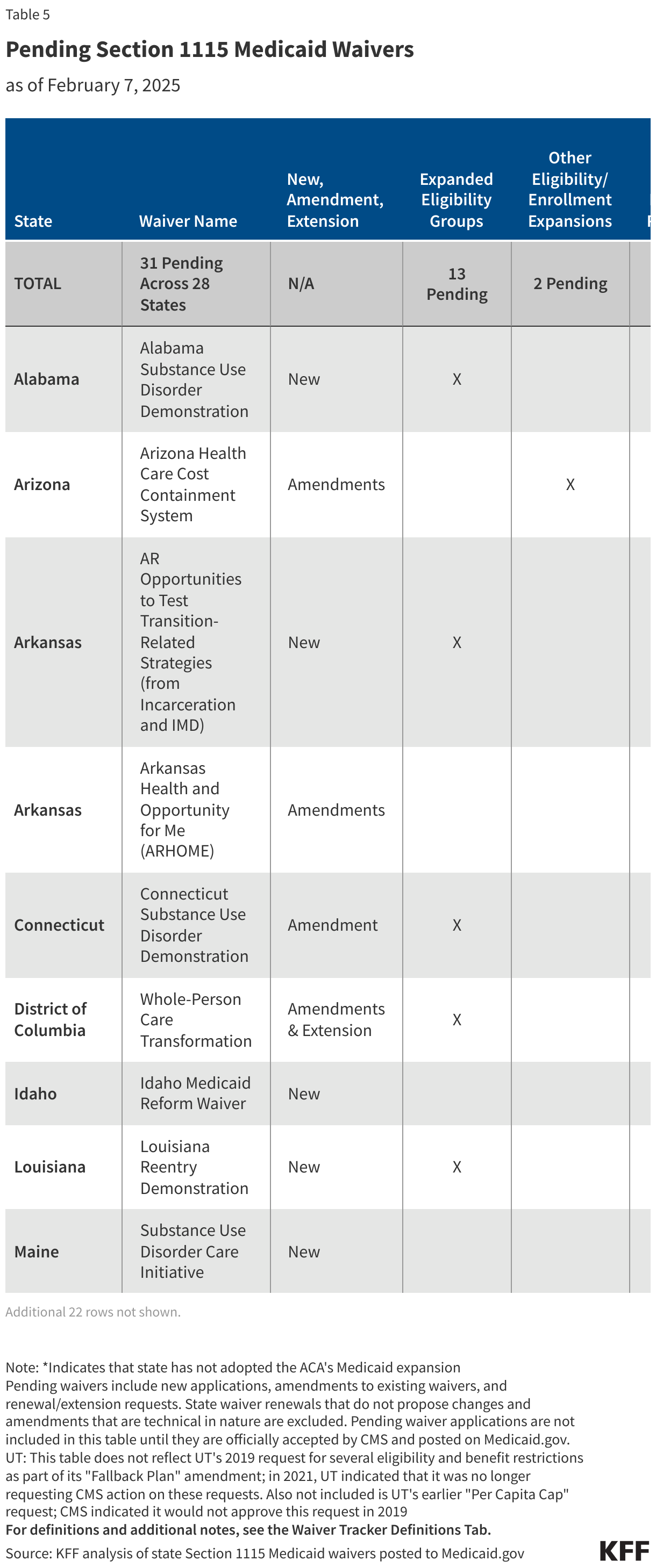
States tracking these changes utilize comprehensive waiver databases to monitor approved and pending provisions related to eligibility expansions and restrictions, benefit modifications, and delivery system reforms. While some states have pursued aggressive expansions in coverage and support services, others have focused on implementing restrictive enrollment policies, premium structures, and mandatory compliance frameworks.
Waivers Involving Eligibility Changes and Restrictions
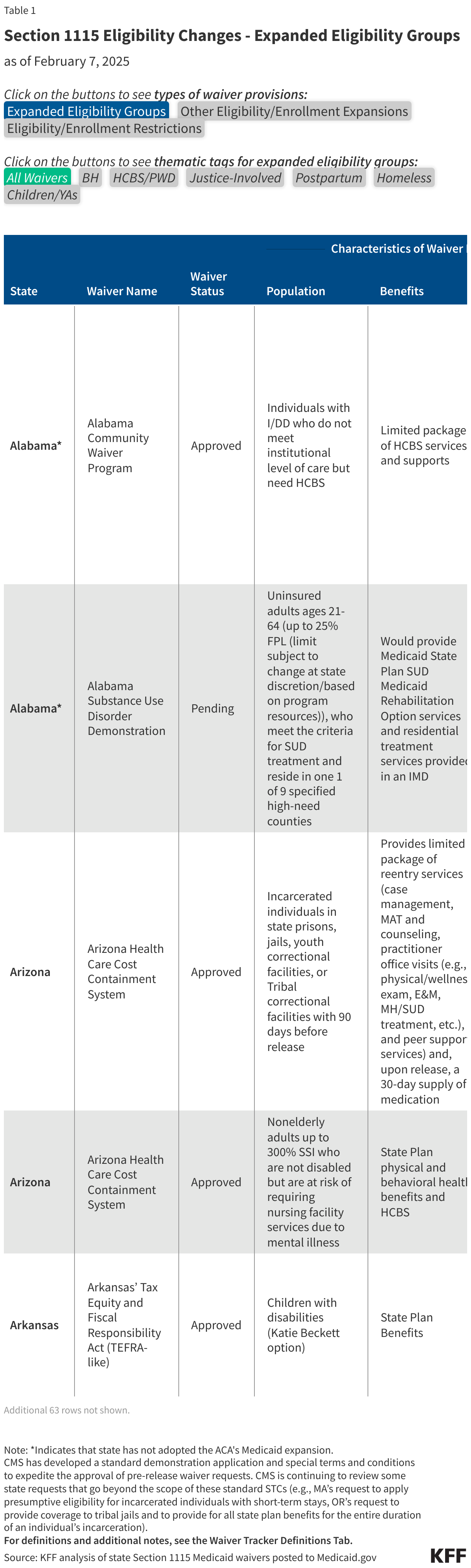
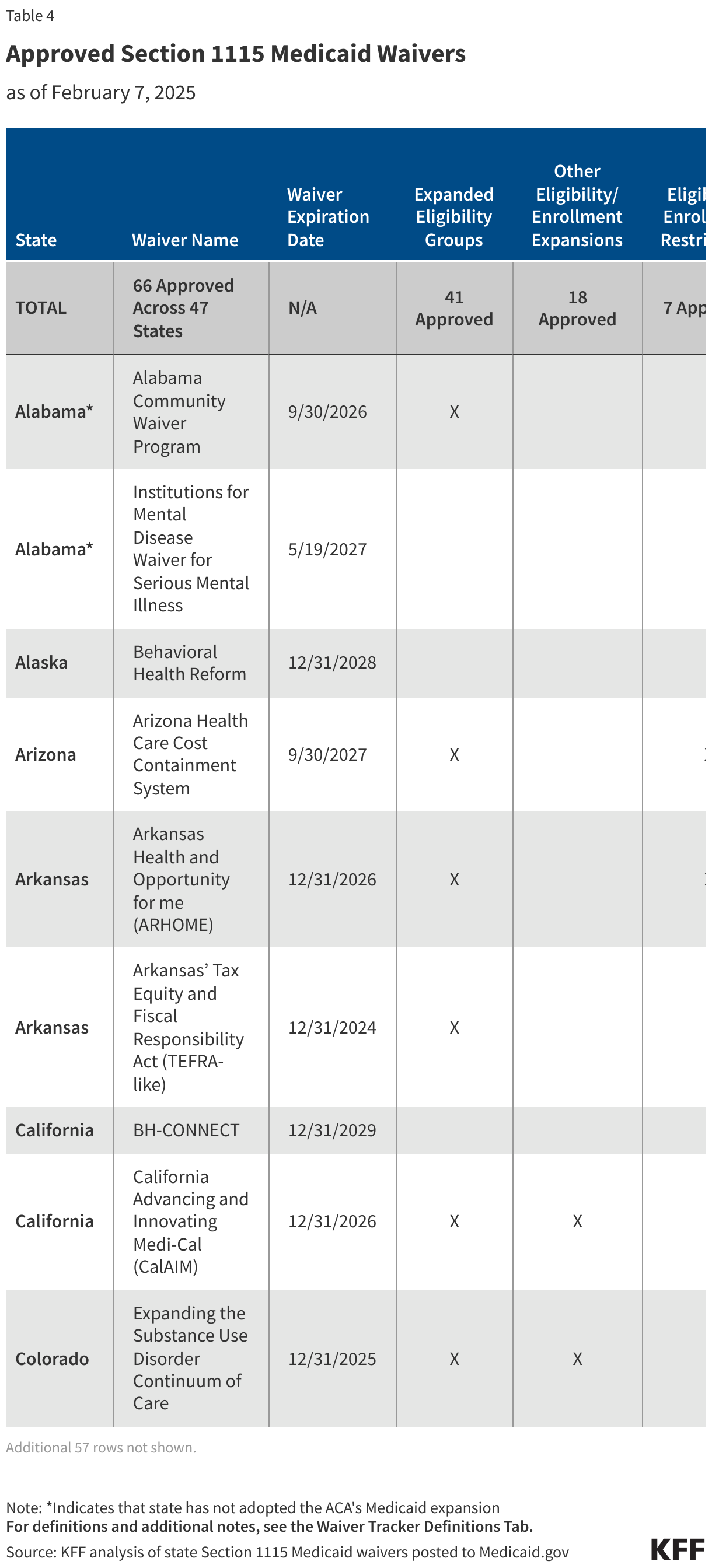
Eligibility policies under Section 1115 demonstrations have long been a focal point of partisan and administrative debate. These waivers encompass a wide array of provisions, including expanded eligibility groups, enrollment expansions, and restrictive measures such as premiums, shortened retroactive eligibility periods, and work requirements.
Under current federal statutory schedules, significant changes are on the horizon. The federal tax and spending legislation passed in 2025 includes provisions that fundamentally alter retroactive eligibility and premium policies while introducing mandatory work requirements for adults covered under the Affordable Care Act (ACA) expansion group. Specifically, these federal changes take effect beginning in 2027 for shortened retroactive eligibility and mandatory work requirements, followed by premium prohibitions in 2028.
Regarding premium policies, federal rules are set to prohibit states from requiring enrollment fees or premiums for ACA expansion adults beginning in October 2028. This follows prior administrative efforts by the Biden administration to phase out or withdraw previously approved premium requirements in states such as Arkansas, Michigan, Montana, and Wisconsin.
Retroactive eligibility is similarly undergoing structural shifts. While traditional Medicaid policy provides three months of retroactive coverage across most eligibility groups, current 1115 authorities have allowed several states to alter or waive these timelines. Furthermore, federal rules scheduled to take effect on January 1, 2027, will permanently limit retroactive coverage to one month prior to application for ACA expansion enrollees and two months prior for traditional enrollees. Beyond these broad adjustments, certain states maintain unique waiver authorities, such as Maryland waiving retroactive eligibility for targeted low-income children, and Utah waiving it for demonstration enrollees receiving premium subsidies for employer-sponsored insurance or COBRA coverage.
Legal battles continue to shape the implementation of these eligibility waivers at the state level. For instance, a notable federal court ruling in June 2024 saw the U.S. District Court for the District of Columbia vacate federal approval for Indiana’s "Healthy Indiana Plan 2.0" waiver. That decision stripped the state of its authority to charge premiums exceeding standard federal limits, waive retroactive eligibility, and suspend the provision of non-emergency medical transportation. The Indiana Family and Social Services Administration subsequently appealed that ruling to the D.C. Circuit Court.
The Evolution of Work Requirements in Medicaid
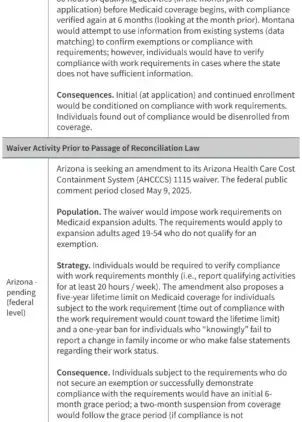
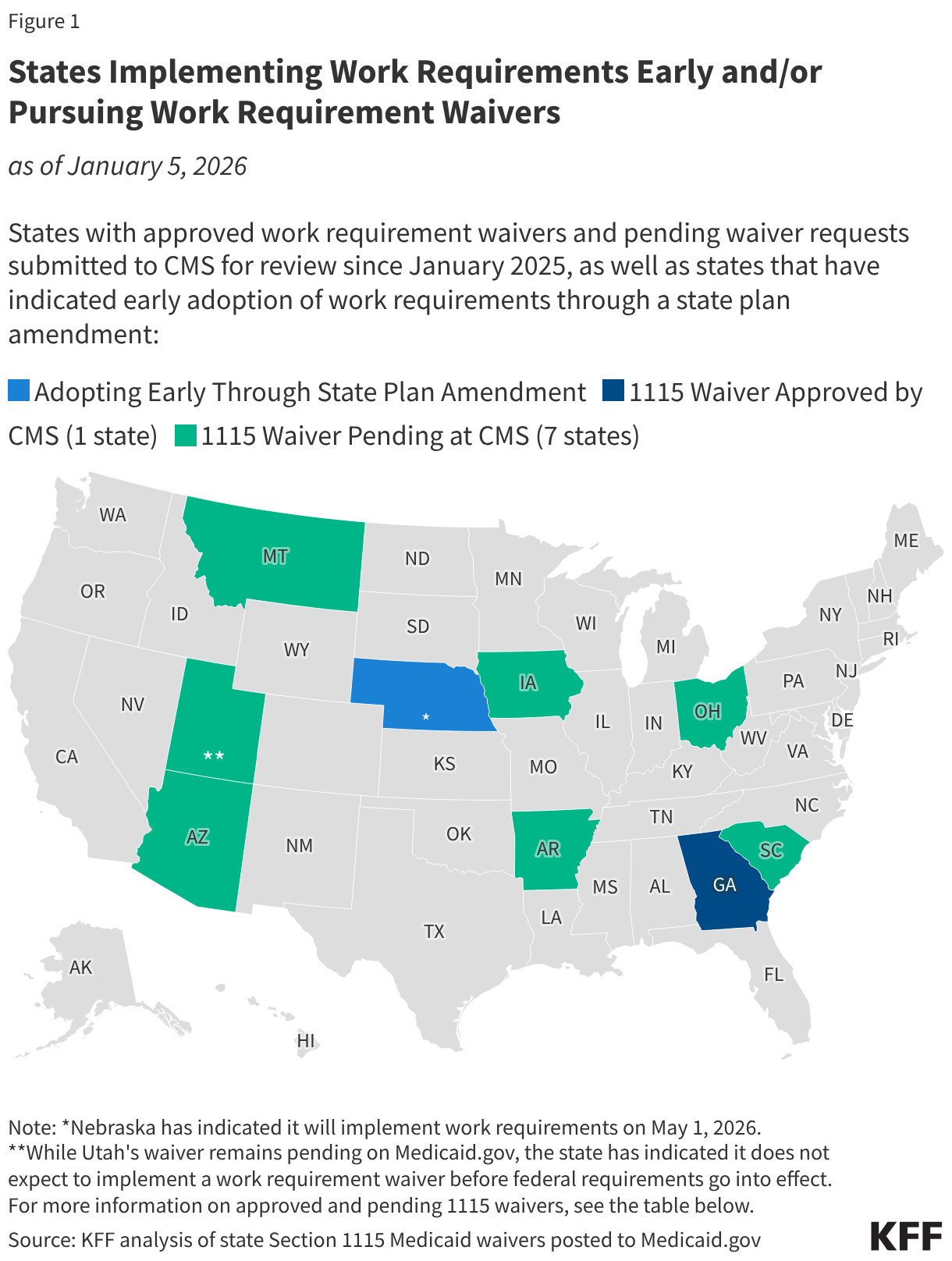
Work requirements have emerged as one of the most prominent and contested areas of Medicaid policy. The 2025 federal budget reconciliation law mandates that all states condition Medicaid eligibility for ACA expansion adults on meeting specific work requirements beginning January 1, 2027. However, the legislation provides states with the option to implement these requirements earlier through a state plan amendment or an approved Section 1115 waiver.

In response to the federal legislation, several states have announced plans for early implementation via state plan amendments rather than traditional 1115 waivers. Nebraska was the first state to announce early enforcement, scheduling a start date of May 1, 2026. Montana and Iowa are similarly planning implementation dates prior to January 2027, set for July 1 and December 1, 2026, respectively. Meanwhile, Arkansas announced a soft launch of work requirements scheduled for July 1, 2026, with formal disenrollments withheld until the mandatory federal start date in January 2027.
While multiple states submitted work requirement waivers following the start of the second Trump administration, most states are bypassing the traditional 1115 waiver process in favor of the expedited state plan amendment path now authorized by federal statute. Georgia remains a notable exception as the sole state with a functioning Medicaid work requirement waiver in place, having survived protracted litigation regarding the Biden administration’s attempts to halt it. Georgia’s waiver is scheduled to expire on December 31, 2026, after which the state must fully transition to compliance with the nationwide federal requirements.
Benefit Changes and Health-Related Social Needs
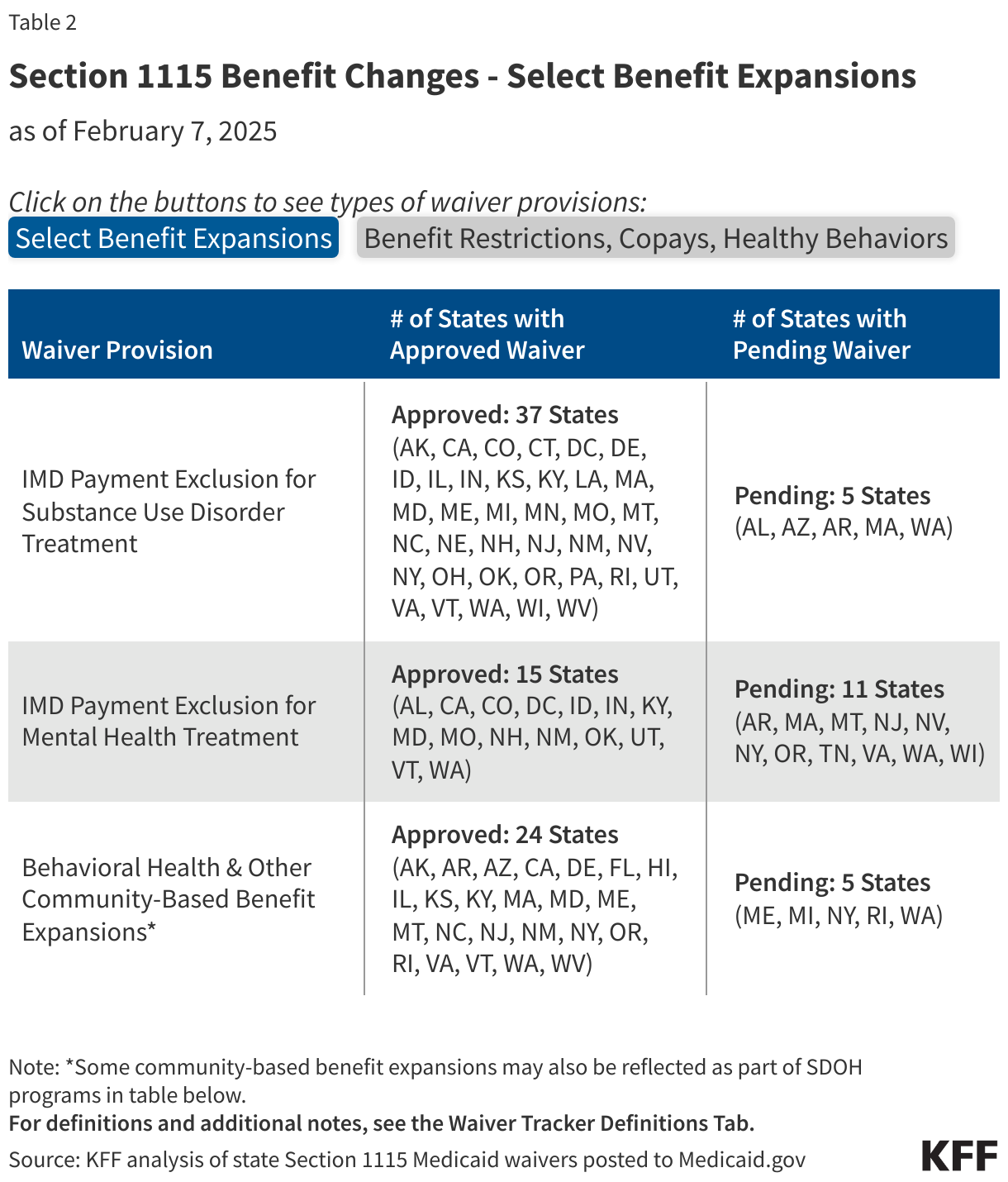
Beyond eligibility, Section 1115 demonstrations frequently target benefit designs and service delivery models. States have historically used these waivers to pilot expanded service packages, behavioral health enhancements, and targeted supports for high-need populations.
A major focus of recent waiver activity has centered on addressing health-related social needs (HRSN), such as housing instability, homelessness, and nutrition insecurity. In 2022 and 2023, the Biden administration rolled out a comprehensive HRSN framework and accompanying informational bulletins, encouraging states to integrate non-medical supports into their Medicaid programs. Numerous states successfully secured approvals to provide targeted housing and nutrition services under this guidance.
However, federal policy direction shifted markedly in March 2025 when the Trump administration formally rescinded the Biden-era HRSN guidance. While federal officials emphasized that this rescission does not nullify existing, previously approved HRSN waivers, CMS announced it would evaluate new state applications and requests for services previously covered under the HRSN framework on a strict, case-by-case basis.
Additional federal shifts have impacted broader delivery system reforms. In April 2025, the Trump administration announced the gradual phase-out of federal funding for Designated State Health Programs embedded within waivers. Furthermore, guidance issued in July 2025 signaled that federal authorities will no longer approve new multi-year continuous eligibility waivers or extend existing ones for children and adults, signaling a retreat from policies designed to curb coverage churn. Concurrently, CMS announced the phase-out of initiatives aimed at strengthening the Medicaid workforce across primary care, behavioral health, dental care, and home- and community-based services.
Pre-Release Services for Incarcerated Individuals and Continuous Coverage
Despite broader contractions in federal waiver approvals, certain bipartisan initiatives have maintained traction across state lines. In April 2023, the federal government issued guidance inviting states to apply for demonstration waivers allowing partial exceptions to the longstanding "inmate exclusion policy," which traditionally prohibits Medicaid from paying for healthcare services delivered during incarceration.
These pre-release coverage waivers are designed to support community reentry, improve care transitions, ensure continuity of health coverage, and reduce recidivism rates among justice-involved populations. Pursued by governors across the political spectrum, the Biden administration ultimately approved 19 state reentry waivers. The momentum continued into late 2026 when the Trump administration approved an additional four reentry waivers, signaling that updated demonstration guidance would follow.

Conversely, efforts to secure multi-year continuous eligibility for children—such as maintaining coverage from birth to age six—have faced regulatory roadblocks. While the Consolidated Appropriations Act of 2023 permanently mandated 12-month continuous eligibility for children nationwide beginning in January 2024, the Biden administration had previously approved nine waivers allowing extended multi-year periods to combat coverage churn. With the release of restrictive federal guidance in mid-2025 halting the approval and extension of multi-year continuous eligibility demonstrations, the future of these extended pediatric coverage initiatives remains limited.
As states continue to adapt to shifting federal oversight, Section 1115 waivers remain a dynamic barometer of national healthcare policy. State health leaders must continuously balance local health priorities against the evolving framework of federal approvals, ensuring their programs remain compliant while seeking innovative ways to serve vulnerable populations.



