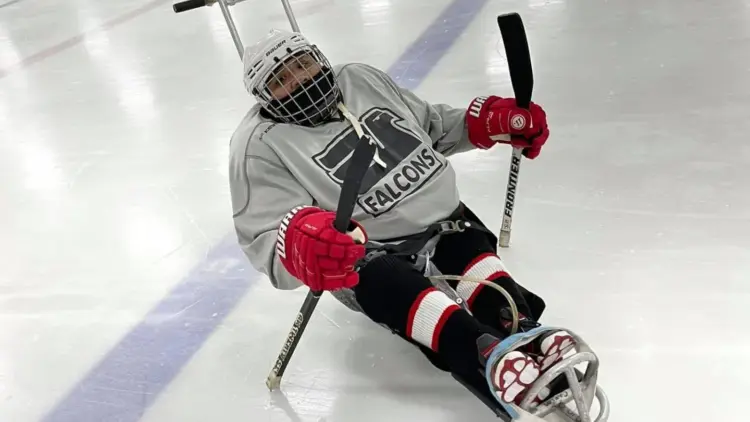
For Carlos Murillo, living with a disability has never meant settling for a quiet or restricted life. At 32 years old, the Illinois native is using his 30s to demonstrate that physical limitations do not dictate the boundaries of personal ambition, adventure, or purpose.
Born with spina bifida, a congenital birth defect involving the spinal cord, Murillo received his first wheelchair at three years old. Rather than allowing his mobility needs to define his scope of possibilities, he has built a life centered on high-adrenaline sports, stadium tours, and nationwide travel.
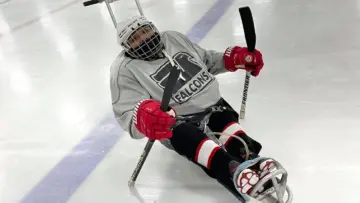
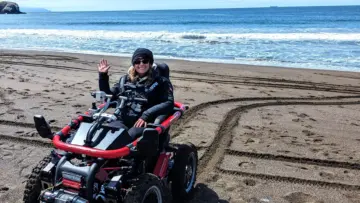
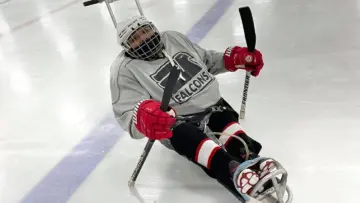
Over the years, Murillo has checked off a daunting array of activities that many able-bodied individuals never attempt. His athletic resume includes zip-lining, waterskiing, kayaking, snow skiing, scuba diving, go-kart racing, sled hockey, wheelchair rugby, archery, horseback riding, rock climbing, hand-cycling, and paramotoring.
Yet, for Murillo, these achievements represent only the beginning. His active bucket list includes NASCAR track experiences, supercar rides, adaptive paragliding, skydiving, helicopter flights, parasailing, adaptive surfing, whitewater rafting, adaptive mountain biking, and expanded international travel.
Through a combination of adaptive sports programs, detailed travel logistics, and personal determination, Murillo is challenging broader public perceptions of what individuals with disabilities can accomplish.
Origin Story and Mindset
Murillo’s journey into the world of adaptive athletics began nearly two decades ago. His initial introduction occurred in 2007 during a holiday party, where he tried wheelchair basketball through the Great Lakes Adaptive Sports Association (GLASA). That single event opened the door to a vast ecosystem of adaptive sports organizations and possibilities.
While he remained involved in adaptive activities over the years, his decision to systematically compile and pursue an aggressive adventure bucket list took shape roughly two years ago.
"The bucket list started about two years ago because there were a lot of things I wanted to do," Murillo explained. "I just didn’t know how to go about it, so that’s why I made my bucket list."
The transition into his 30s brought a renewed sense of focus and enthusiasm for seeking out unfamiliar experiences. Murillo notes that his current decade has proven far more fulfilling and expansive than his 20s, largely because he actively seeks out new venues and activities rather than waiting for opportunities to present themselves.
When facing the inevitable friction, technical learning curves, or physical fatigue associated with high-intensity sports, Murillo maintains a straightforward mental approach. He resists dwelling on anxiety or potential setbacks, operating under a philosophy that frames every experience as a step forward.
"I don’t have doubts or regrets," Murillo said. "I have lessons!"
Conquering the Limits of Adaptive Sports
Navigating the transition from one sport to another requires flexibility, as each discipline utilizes specialized equipment designed to accommodate distinct functional needs. Across his varied athletic pursuits, Murillo has learned to adapt quickly to different gear, whether balancing on an adaptive waterski, securing into a sit-ski for snow sports, or managing the physical demands of contact sports like wheelchair rugby and sled hockey.
Despite the technical complexity of these activities, Murillo notes that mastering new equipment rarely involves complex theoretical preparation. Instead, he relies on direct experience and practical trial and error.
"I really don’t have any techniques," Murillo observed. "It just takes a few tries to get the hang of each sport."
Of all the activities he has attempted, zip-lining stood out as the most surprising breakthrough. For a long time, Murillo assumed that zip-lining was inherently off-limits due to a lack of accessible harness setups and landing facilities. Discovering that adaptive programs existed for zip-lining opened his eyes to how much the field of adaptive recreation had evolved.
Conversely, hand-cycling presented some of his toughest physical challenges. Pushing a hand-cycle up steep gradients demands immense upper-body strength and endurance, making uphill ascents one of the most grueling efforts he has tackled.
On the water and in the air, Murillo found immediate passions. High-speed pursuits like waterskiing and paramotoring offered an instant sense of freedom and excitement, quickly becoming activities he knew he wanted to repeat.
Much of Murillo’s progress has been made possible by a network of specialized non-profit organizations and adaptive athletic programs. Groups such as GLASA, H2O Adaptive Sports, Diveheart, the Shirley Ryan AbilityLab, and Wisconsin Adaptive Ski provide the training, adaptive equipment, and safety infrastructure necessary for participants to engage in high-level sports.
For newcomers entering these environments for the first time, Murillo emphasizes that the atmosphere is defined by camaraderie rather than intimidation. Engaging with fellow athletes and coaches creates a supportive space where first-time participants can experiment with new sports safely.
Bucket List and What’s Next
Murillo’s forward-looking agenda remains heavily weighted toward high-speed, high-adrenaline experiences. His desire to try NASCAR driving experiences and adaptive paragliding is driven by a simple motivation: the thrill of speed and acceleration.
"I love the adrenaline rush they give me," Murillo said.
When evaluating potential additions to his bucket list, Murillo carefully considers the practical pros and cons of each activity, assessing how visually and physically appealing the sport appears before committing time and resources to it. Once an goal is completed, he turns to online research and adaptive forums to identify his next objective.
While he embraces thrill-seeking pursuits, Murillo acknowledges that different sports evoke different emotional responses. He eagerly anticipates supercar driving experiences and parasailing, but admits to feeling a natural degree of nervousness regarding disciplines involving dynamic, unpredictable natural elements, such as adaptive surfing and whitewater rafting.
Skydiving remains one of the highest-priority items left on his current agenda, standing out as a ultimate benchmark for his personal drive toward aerial adventure.
Sports Fandom and the Stadium Tour
Parallel to his participation in adaptive sports, Murillo is an avid sports fan pursuing an extensive tour of athletic venues across North America. He has made a point of visiting stadiums and arenas across Major League Baseball (MLB), the National Hockey League (NHL), the National Basketball Association (NBA), the National Collegiate Athletic Association (NCAA), the National Women’s Soccer League (NWSL), professional rugby, and minor league baseball.
His passion for visiting stadiums stems from a deep love for sports culture and live game environments. Minor league baseball venues hold a special place in his itinerary, offering intimate stadium atmospheres and unique fan interactions.
Murillo frequently reaches out directly to front offices before traveling, pitching his story and requesting ticketing arrangements. Minor league teams across the Midwest and South—including stops in Kenosha, Schaumburg, South Bend, Midland, and San Antonio—have routinely welcomed him.
Evaluations of stadium accessibility vary widely across regions and sports leagues. Among the numerous venues Murillo has visited, the home park of the Schaumburg Boomers in Illinois stood out as an exemplary model for physical accessibility, seating sightlines, and ease of navigation for wheelchair users.
With dozens of venues already checked off, Murillo notes that his stadium wishlist continues to grow as new teams, leagues, and sports facilities emerge across the country.
Accessible Travel
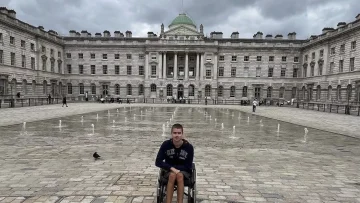
Murillo’s sports pursuits and stadium visits have taken him across vast stretches of the United States, including extensive trips through California, Texas, Florida, Michigan, Indiana, Minnesota, and Wisconsin, as well as international destinations in Canada and Mexico.
Traveling as a full-time wheelchair user requires meticulous advance logistics. Beyond booking flights and standard accommodations, Murillo must verify roll-in shower availability, door frame clearances, accessible ground transportation, and terrain conditions at every planned destination.
His travels have highlighted significant variations in public infrastructure. Within the United States, states like California and Texas earn high marks from Murillo for their broad adherence to accessibility standards, well-maintained curb ramps, and accessible public venues.
By contrast, international destinations present distinct physical hurdles. In historic regions of Mexico, for example, traditional cobblestone streets and non-adapted footpaths present persistent mobility barriers that require extra effort and reliance on careful route planning.
Looking ahead to his next major journey, Murillo is preparing for an international cruise that will take him through Honduras, the Bahamas, and Mexico, expanding his footprint in maritime travel.
When asked what commercial travel resources often fail to communicate to the public, Murillo offers a candid assessment grounded in real-world experience: accessible travel guides frequently sanitize realities, failing to mention that standard facilities often remain unadapted despite listed accessibility claims.
His primary advice for wheelchair users contemplating their first independent travel venture is straightforward and uncompromising.
"Just do it," Murillo advised. "Be fearless."
Advocacy and Message
Through his visible presence in adaptive sports and long-distance travel, Murillo hopes to serve as an example for both the disability community and the broader public.
He emphasizes that accessibility programs for extreme sports, water sports, and winter sports exist widely across the country, but individuals must actively seek them out. For those who are newly injured or adjusting to life in a wheelchair, Murillo cautions against assuming that an active, adventurous lifestyle is no longer achievable.
Supported by coaches, family, and his own personal drive, Murillo refuses to allow intimidation or fear of failure to derail his ambitions.
"My coaches and myself keep me motivated, because giving up is not an option," Murillo said.
Reflecting on his journey from receiving his first wheelchair as a toddler to tackling high-adrenaline sports in his 30s, Murillo’s central takeaway remains simple: life-changing experiences require effort, initiative, and a willingness to step outside one’s comfort zone.
"Don’t be afraid to try new things," Murillo said. "Just send it."