The landscape of long-term care financing is facing significant transformation following major policy shifts embedded in federal legislation. Under the 2025 federal budget reconciliation law, sweeping eligibility and financing changes to Medicaid were enacted, prompting the Congressional Budget Office (CBO) to estimate a staggering reduction in federal Medicaid spending of $911 billion between 2025 and 2034. A substantial portion of these projected reductions stems from new, stringent restrictions placed on Medicaid state-directed payments (SDPs) affecting hospitals, nursing homes, and other essential health care services.
While states are generally prohibited from directly dictating how managed care organizations (MCOs) pay for care, federal rules allow states to implement SDPs that require MCOs to increase provider rates or establish minimum payment floors for specified Medicaid services. Initially authorized by the Centers for Medicare and Medicaid Services (CMS), these mechanisms were designed to help states improve patient access to care and bolster provider participation. Many states that contract with MCOs rely on SDPs to execute uniform rate increases that function similarly to traditional supplemental payments found in fee-for-service Medicaid.
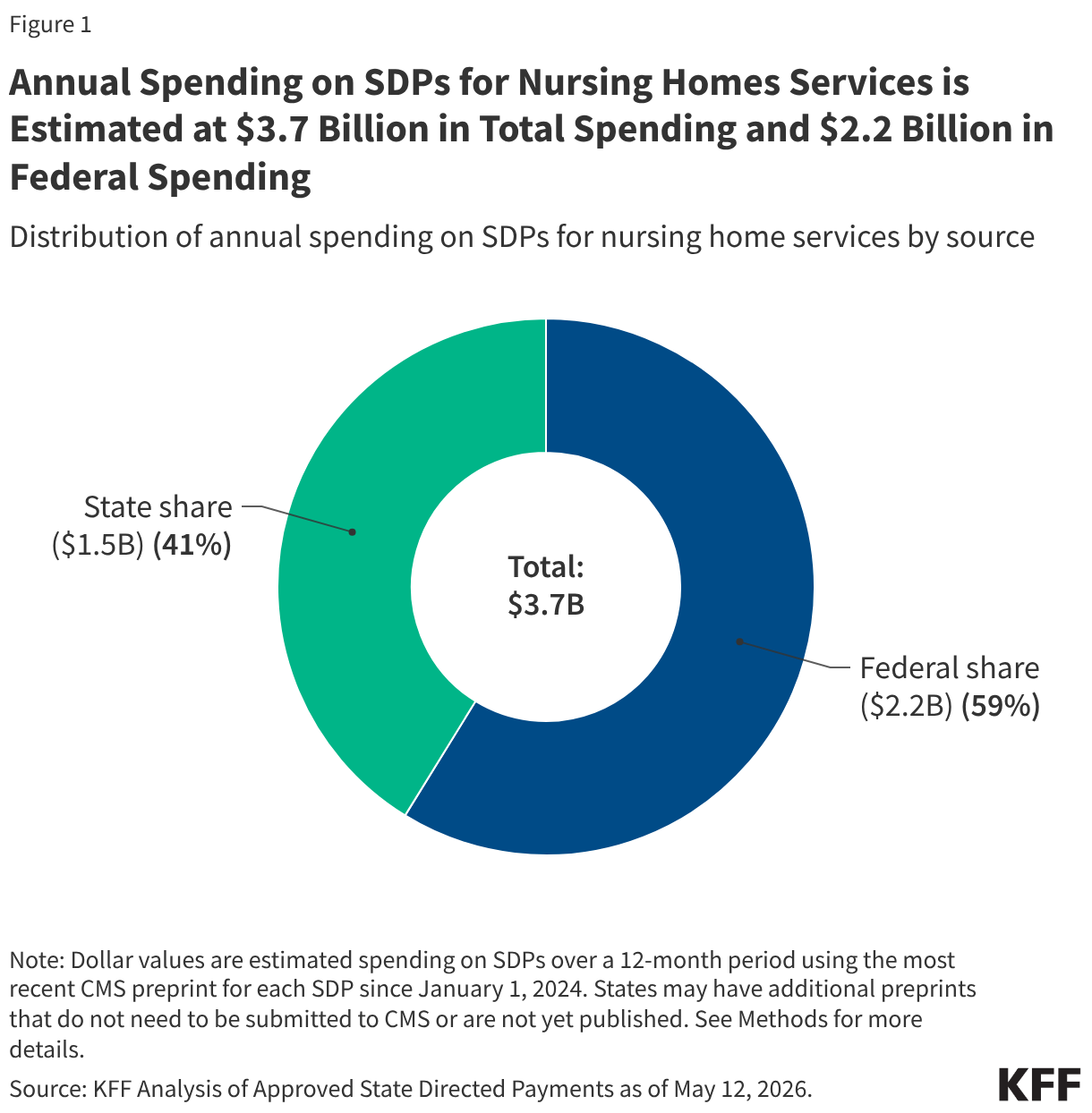
A closer examination of these mechanisms reveals that annual spending on SDPs specifically targeting nursing home services is estimated at $3.7 billion in total spending, which includes $2.2 billion in federal funding. Despite this sizable figure, nursing home SDPs account for only about 2% of total federal SDP spending nationwide, with the vast majority—roughly 84%—directed heavily toward hospital services.
Projected spending data submitted through state preprints indicates that the federal government covers approximately 60% of total spending on SDPs for nursing home services. The remaining balance is financed through the state share of funding, determined by standard Medicaid matching formulas that reflect each state’s federal medical assistance percentage. States assemble their share of these funds through a variety of revenue streams, including general fund revenues, provider taxes, and intergovernmental transfers. Among the 15 states currently utilizing SDPs for nursing home services, 11 rely on provider taxes to finance part or all of their state share, while four states utilize intergovernmental transfers.
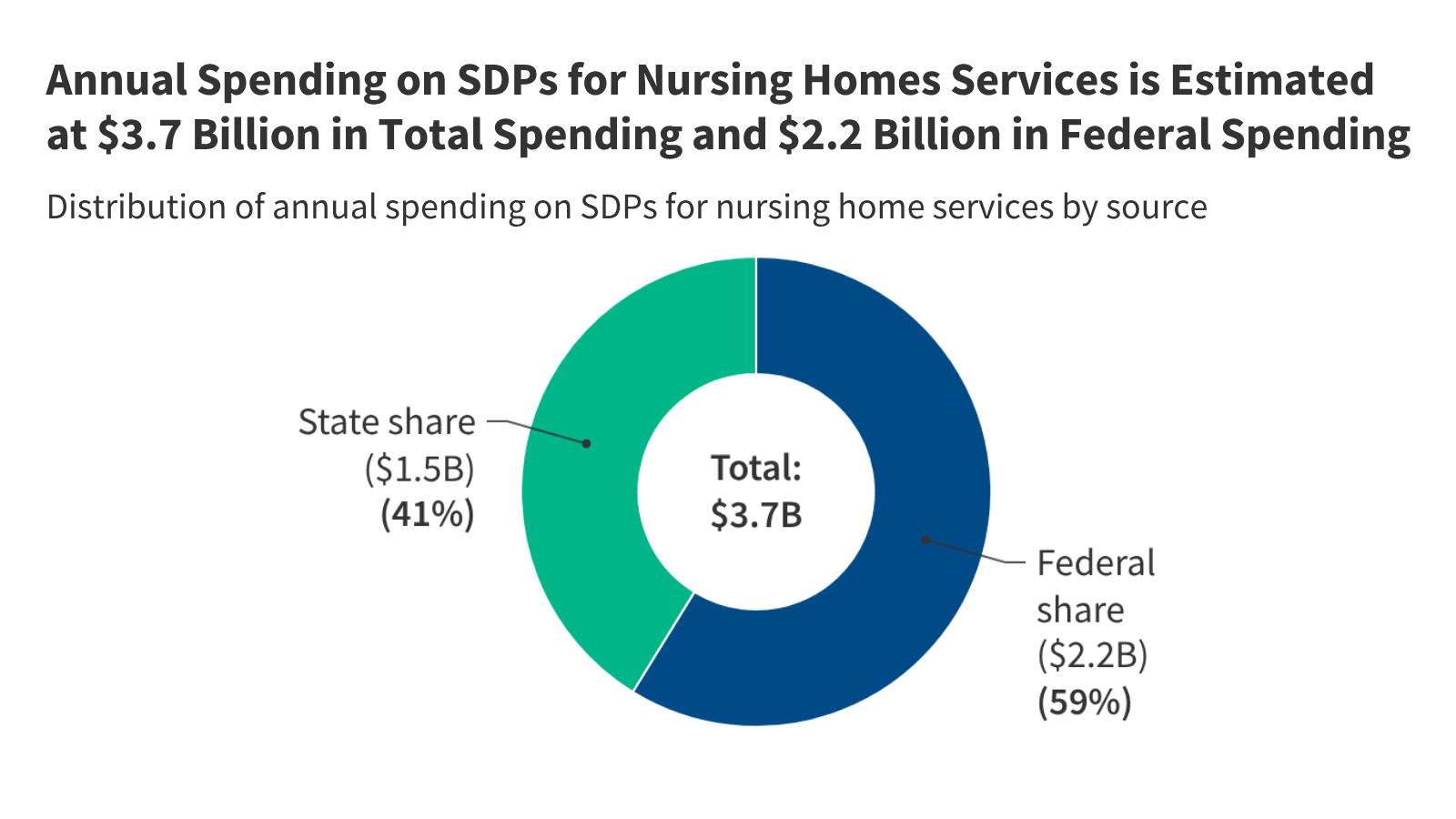
The $2.2 billion in federal spending dedicated to nursing home SDPs represents 2.4% of all federal SDP expenditures. However, this spending trajectory is expected to decline in coming years due to new statutory limits established by the 2025 reconciliation law. Under these updated guidelines, total payment amounts under an SDP cannot exceed 100% of the Medicare payment rate in states that have adopted the Affordable Care Act Medicaid expansion, and are capped at 110% of the Medicare rate in non-expansion states. For services lacking an applicable Medicare benchmark, payment rates are restricted strictly to Medicaid fee-for-service levels.
Certain pre-existing SDPs are initially grandfathered in, allowing them to continue temporarily, but total payment amounts must be reduced by 10 percentage points each year starting January 1, 2028, until they align with the newly mandated Medicare-related payment ceilings.
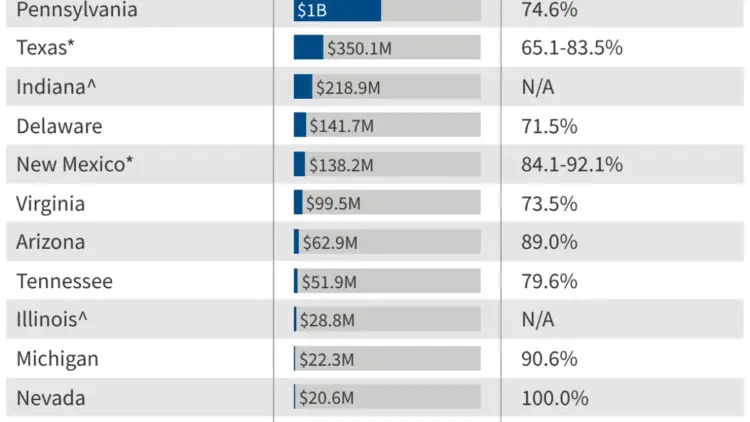
When examining how states structure these payments, data shows that of the 15 states with publicly available SDPs for nursing home services, 13 benchmark their payment rates using average commercial rates. Among this group, 12 states rely exclusively on average commercial rates when establishing SDP payment rates for facilities. Pennsylvania alone accounts for nearly half—47%—of the $2.2 billion in federal spending on nursing home SDPs, setting its payment rates at 74.6% of average commercial rates. Rhode Island utilizes two distinct SDPs for nursing home services, paying out at 88.3% of average commercial rates for one while relying on standard Medicaid rates for the other. Conversely, Indiana and Illinois avoid average commercial rate benchmarking entirely; Illinois ties its nursing home SDP to Medicaid rates, while Indiana benchmarks one program to Medicare and leaves the benchmark unspecified in the other.
Uncertainty remains regarding the exact extent to which payment rates must drop to achieve compliance with the new statutory limits. While research involving hospital and physician services demonstrates that average commercial rates consistently exceed Medicare rates, comparable data tracking how average commercial rates for nursing homes align with Medicare or Medicaid benchmarks is largely absent. This data gap complicates national projections regarding the financial impact on long-term care providers. While individual state agencies may possess internal data, a lack of public transparency leaves considerable variance across the country.
In its regulatory analysis of proposed rules concerning SDPs, CMS assumed that baseline Medicaid payment rates sat at roughly 80% of Medicare rates for nursing home services, with average commercial rates reaching 150% of Medicare levels, though agency officials explicitly highlighted considerable uncertainty. CMS noted a general lack of comprehensive pricing information for nursing facilities, pointing out that services covered by Medicare frequently differ significantly from those covered by private payers and Medicaid. This finding mirrors conclusions from a 2023 analysis by the Medicaid and CHIP Payment and Access Commission, which found that base Medicaid nursing home payment rates varied widely and generally lagged behind Medicare rates, though comparisons remain complex due to fundamental differences in resident care needs.
Individual nursing homes will likely experience vastly different operational consequences as SDP funding decreases. The ultimate impact on a specific facility will depend heavily on its current reliance on SDP revenues, the scale of its revenue decline, and its geographic location. Because states frequently target SDPs toward a subset of facilities—or occasionally a single nursing home—and scale payments based on Medicaid patient volume, the fallout will vary significantly both across and within state borders.
Facilities operating with healthy profit margins may absorb the revenue adjustments with relative ease. However, nursing homes operating on tight financial margins could be forced to adapt in ways that directly threaten access to care for vulnerable Medicaid enrollees, potentially leading to reductions in available Medicaid beds or complete facility closures.
This ongoing analysis relies on official administrative data published by the Centers for Medicare and Medicaid Services, specifically drawing from approved state-directed payment preprints submitted by states. These forms document how state agencies instruct managed care plans to compensate providers above standard base rates. Because these preprints represent the primary national data source for tracking SDP utilization, researchers continuously monitor submissions to evaluate policy shifts, though reporting lags and occasional data gaps require rigorous methodological adjustments to standardize spending totals and benchmark metrics across jurisdictions.