As the landscape of public health continues to shift in the wake of the COVID-19 pandemic and changing political administrations, a comprehensive series of tracking polls and surveys from KFF highlights a complex reality: while individual doctors remain the gold standard for reliable health guidance, public trust in federal health agencies, government officials, and institutional science is increasingly fragmented by partisanship, education, and access to care. At the same time, the rising reliance on social media and artificial intelligence, coupled with widespread uncertainty regarding unproven health claims, presents new challenges for public health communication.
Trusted Sources of Health Information
When Americans seek reliable guidance on health issues, they overwhelmingly turn to their personal physicians and healthcare providers. A large majority of adults express at least a fair amount of trust in their doctor, cutting across virtually all demographic lines and political affiliations. This enduring confidence makes healthcare professionals the most resilient anchor in an otherwise turbulent information environment.
In contrast, trust in government health agencies and officials is starkly divided. About half of U.S. adults report trusting federal entities like the Centers for Disease Control and Prevention (CDC) or the Food and Drug Administration (FDA) for reliable health information. However, trust in specific political figures and state-level officials falls even lower, with fewer than half of the public expressing confidence in state government leaders, HHS Secretary Robert F. Kennedy Jr., or President Trump.
Partisanship heavily influences these dynamics, particularly regarding political leadership. Roughly six in ten Republicans—rising to at least seven in ten among MAGA-supporting Republicans—express trust in Secretary Kennedy or President Trump for reliable health information. Conversely, three in ten or fewer independents and Democrats say the same. Meanwhile, Democrats demonstrate higher levels of trust in state government officials compared to Republicans, though both parties share similar baseline levels of trust in legacy federal agencies like the CDC and FDA. Across all political groups, individual healthcare providers remain the undisputed top choice.
Demographic variations also emerge regarding institutional trust. White adults and college-educated individuals are more likely to express trust in their doctors, a trend that may point to underlying disparities in healthcare access and utilization. Education levels also correlate with trust in the CDC and state government officials, with college-educated adults reporting higher confidence in these sources. Additionally, White adults are more likely than their peers to express trust in Secretary Kennedy and President Trump for health information.
Confidence in Federal Health Agencies
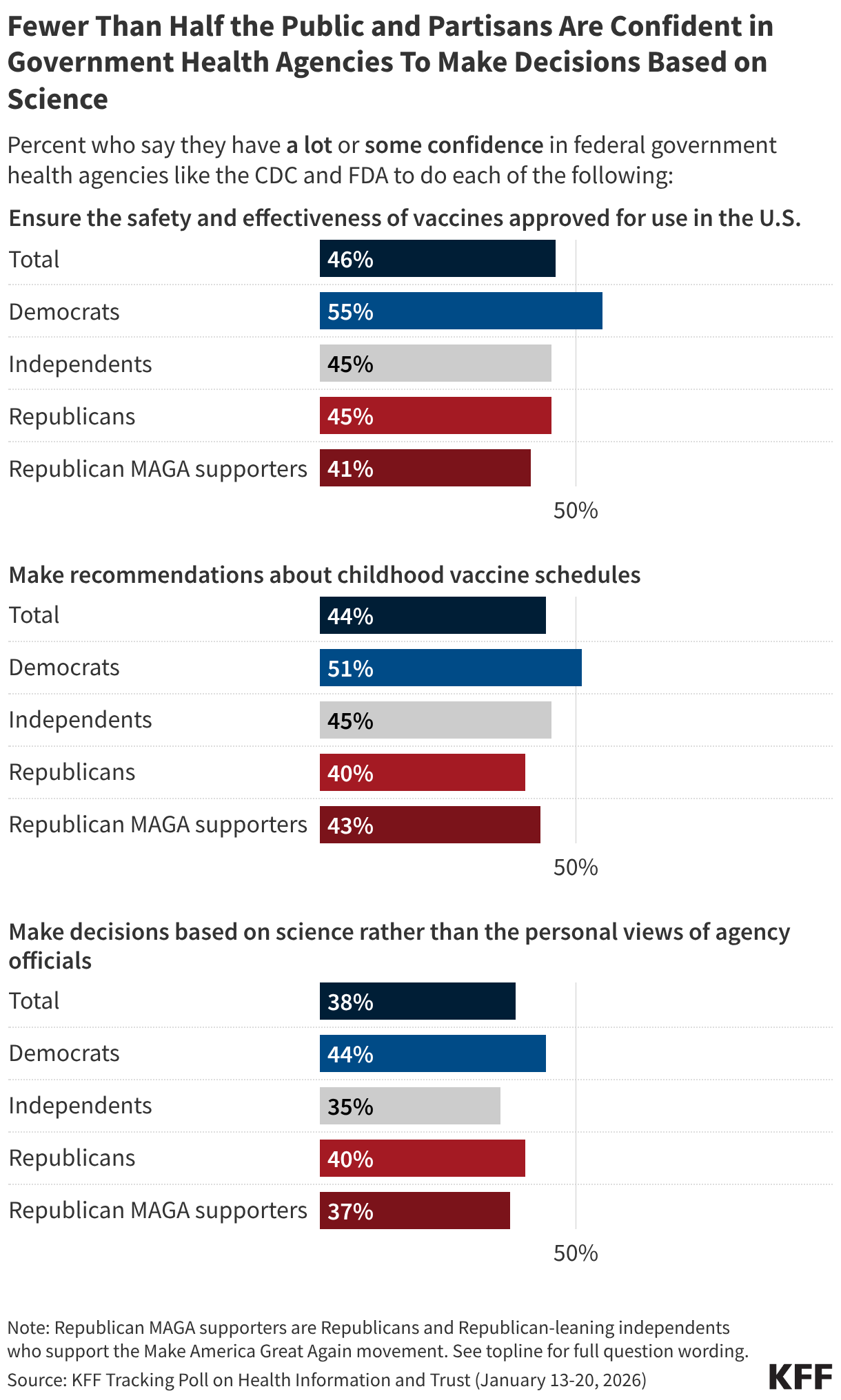
Beyond individual sources, public confidence in federal health agencies to carry out their core responsibilities remains tepid. While Democrats are somewhat more likely than Republicans to harbor confidence in agencies like the CDC to ensure vaccine safety, manage childhood vaccine schedules, and make science-based decisions, fewer than half of all partisans combined express faith that these decisions are strictly rooted in science.
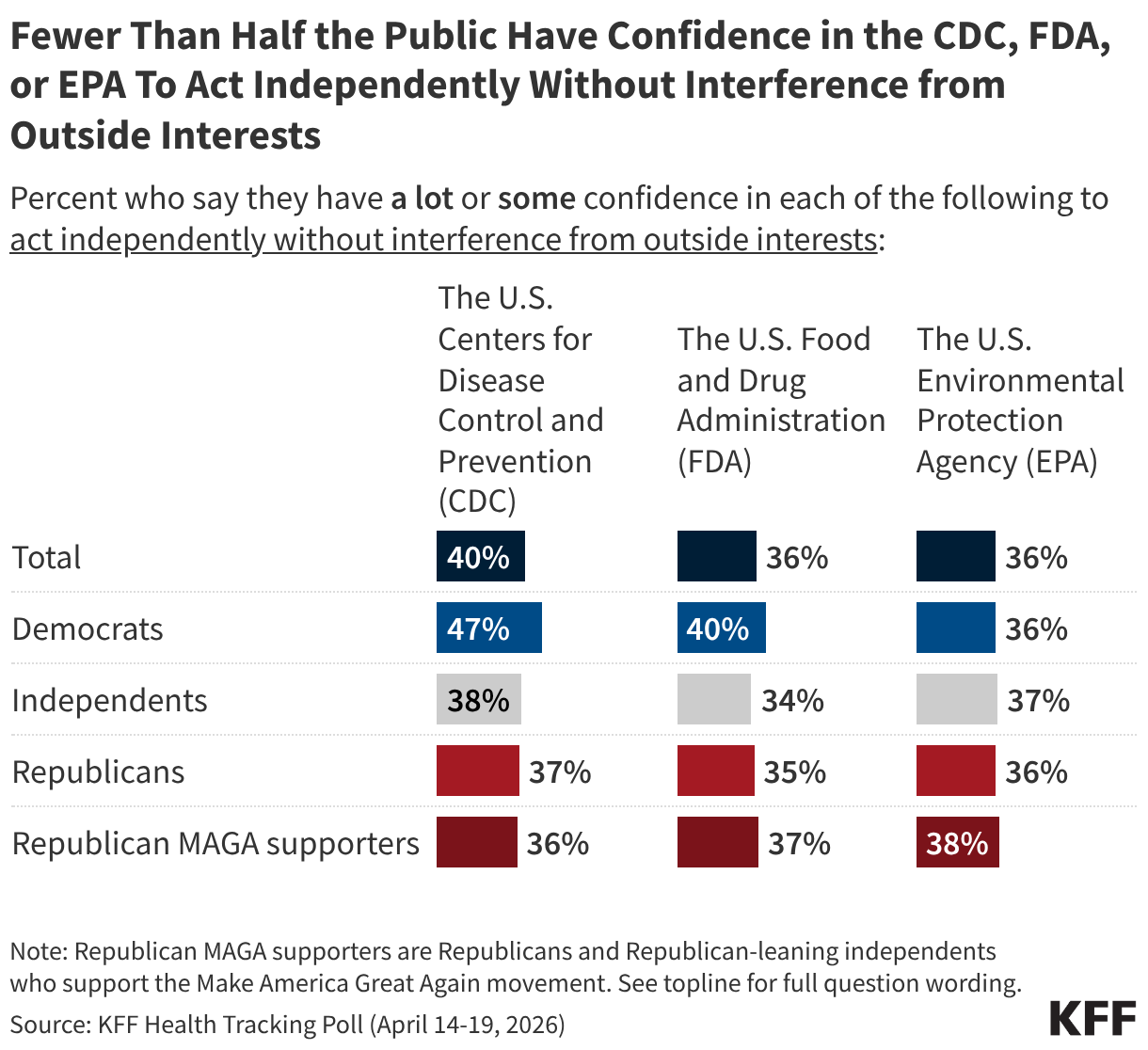
This skepticism extends to institutional independence. Less than half of the public and partisans express confidence that the CDC, FDA, or EPA can act independently without interference from outside interests. While nearly half of Democrats express confidence in the CDC’s independence, four in ten or fewer adults across the political spectrum hold similar faith in the FDA or the EPA.
These figures reflect a dramatic evolution since the early days of the COVID-19 pandemic, which initially saw high levels of bipartisan trust in the CDC. Trust subsequently eroded amid widening political divisions and notable drops among Republicans. More recently, Democratic trust in the agency has also declined following political shifts, including President Trump’s reelection and the confirmation of Robert F. Kennedy Jr. as HHS Secretary. Similar downward trends have affected trust in vaccine information from the FDA, state government officials, and local public health departments.
Among parents of children under age 18, pediatricians retain the highest level of trust for reliable vaccine information. Majorities also look to local public health departments, the CDC, and the FDA. Over half of parents turn to friends and family for advice, while far fewer trust Secretary Kennedy, pharmaceutical companies, or wellness influencers. Even among parents, political alignment plays a role; while a majority of MAGA and MAHA (Make America Healthy Again) parents express trust in Secretary Kennedy for vaccine information, larger shares still place their confidence in their child’s pediatrician.
Social Media and Artificial Intelligence
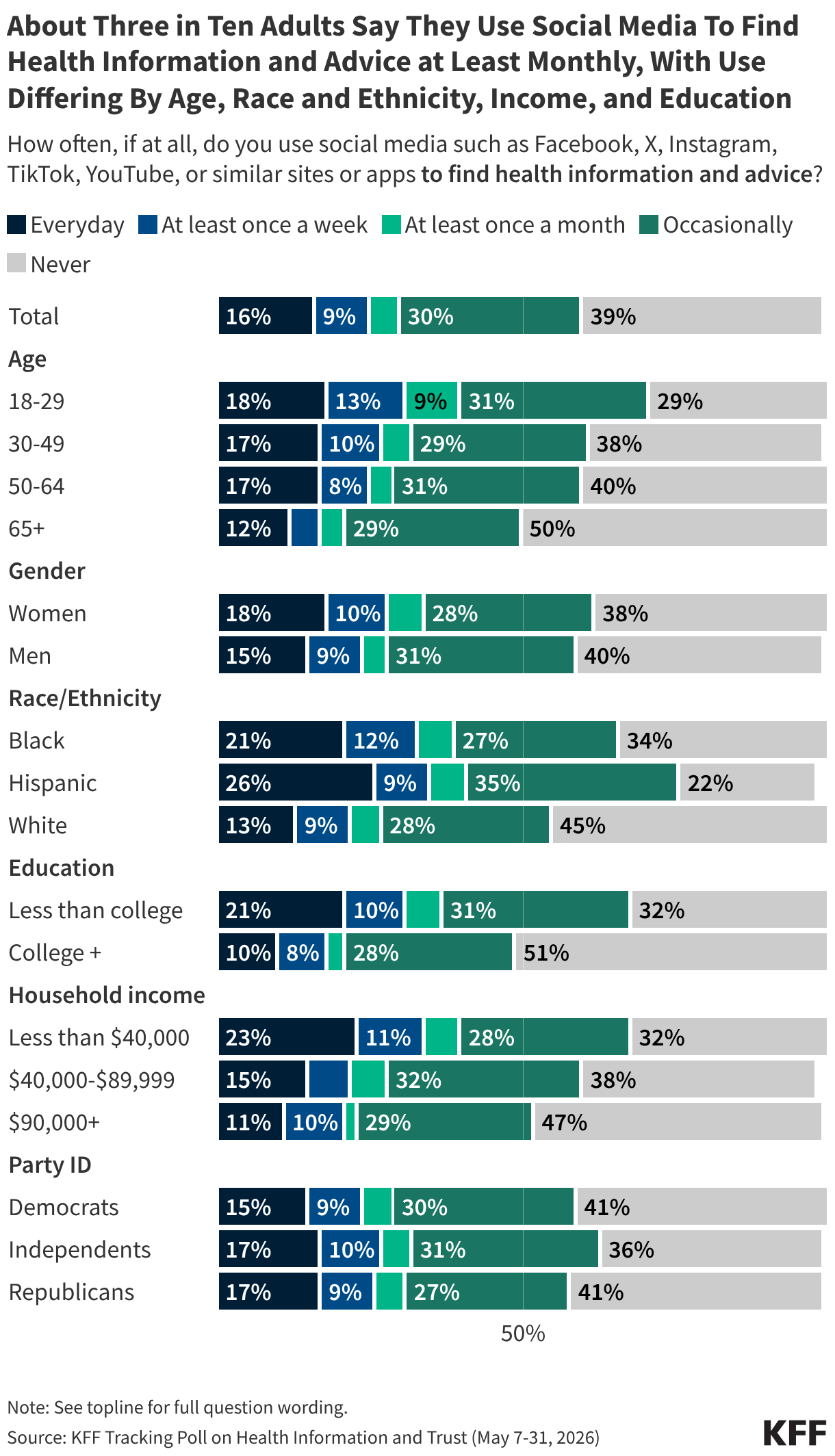
As traditional institutional trust wavers, significant portions of the population are turning to digital platforms for health guidance. Approximately three in ten adults report using social media to find health information and advice at least monthly. This usage is particularly pronounced among younger adults, Black and Hispanic individuals, lower-income earners, and those with lower educational attainment.
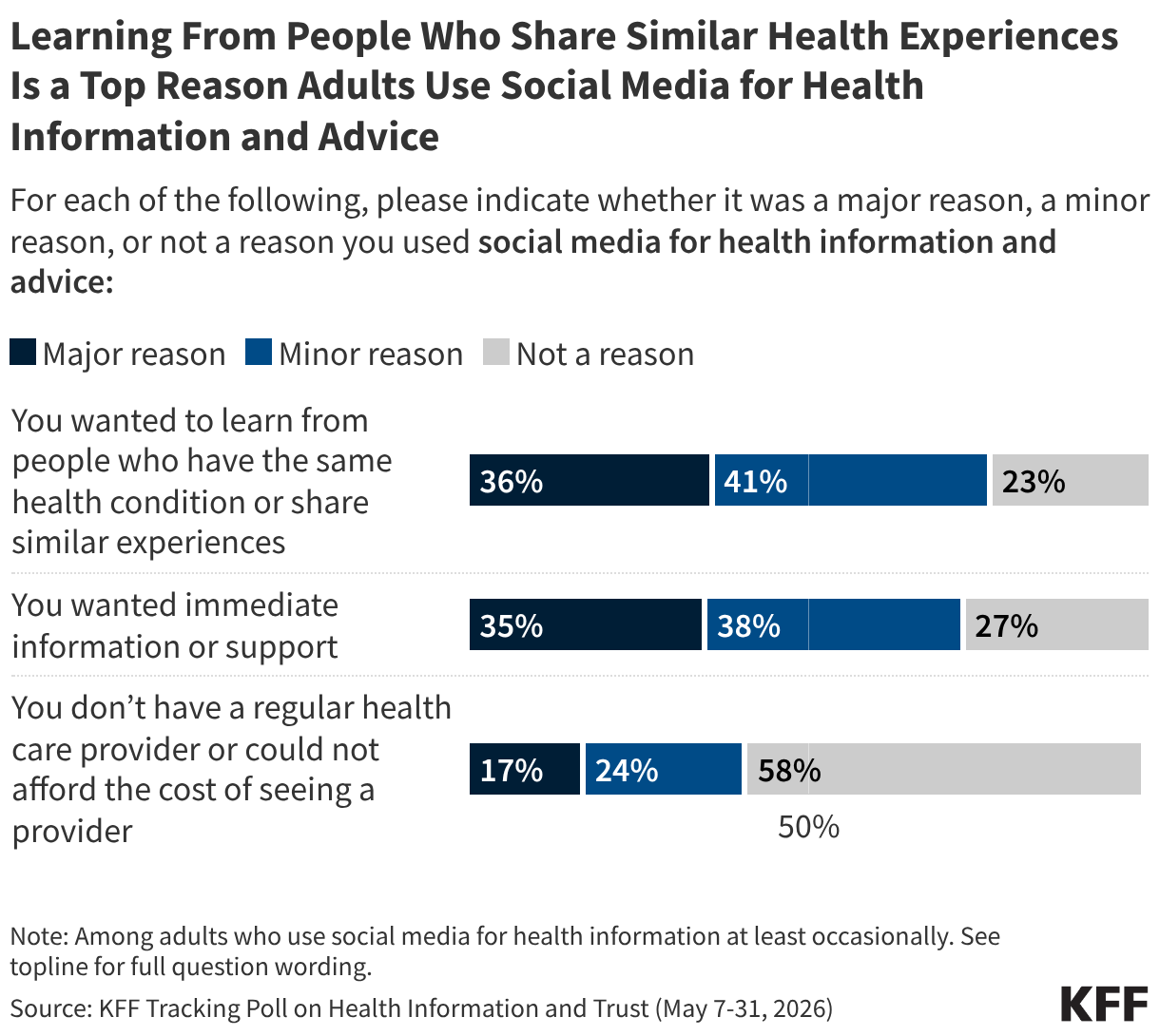
For many users, digital exploration is driven by necessity. About one-third of social media users seeking health advice cite a desire to learn from people with similar lived experiences or a need for immediate support. Roughly one in six point directly to difficulties in accessing or affording traditional healthcare.
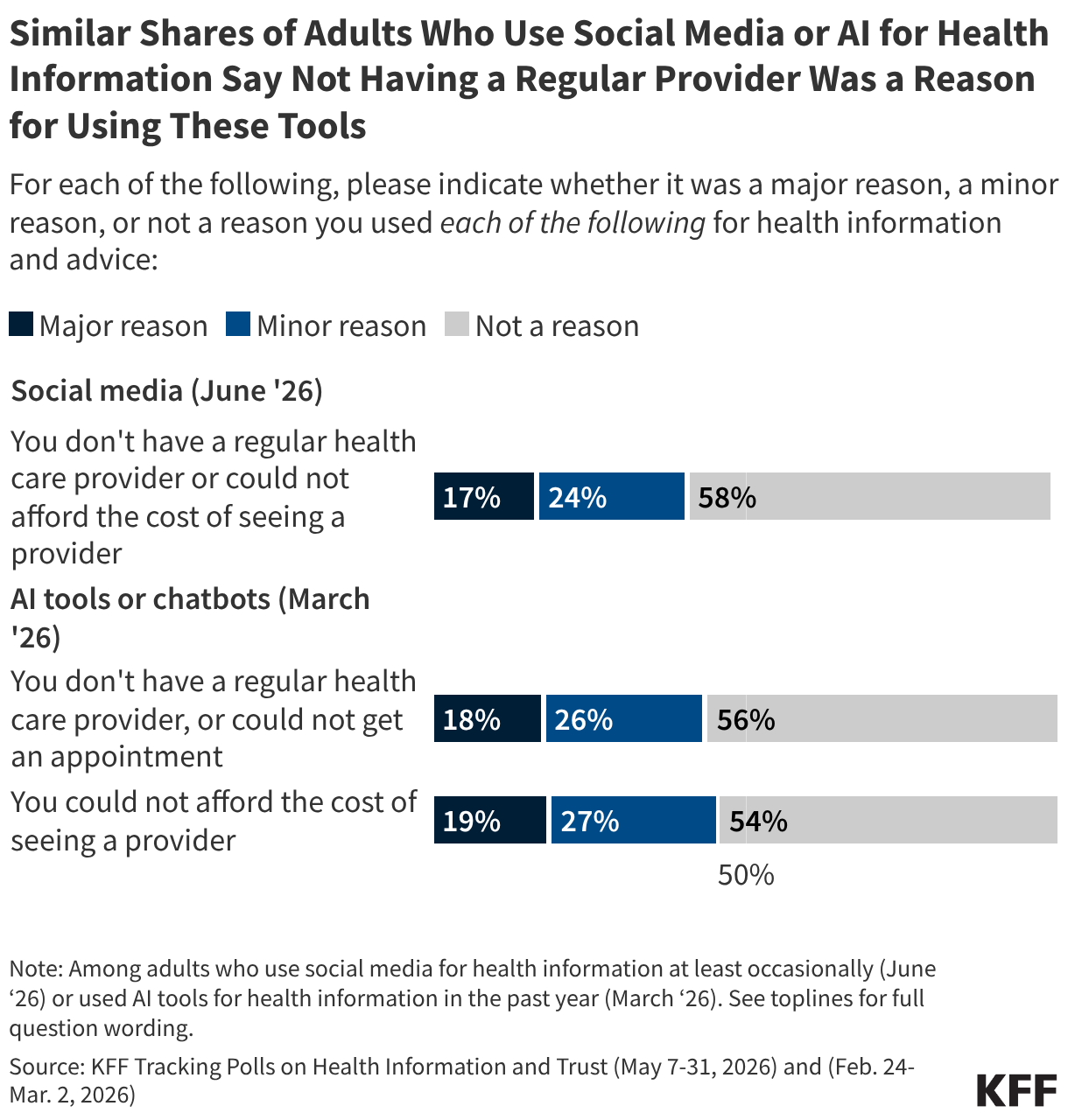
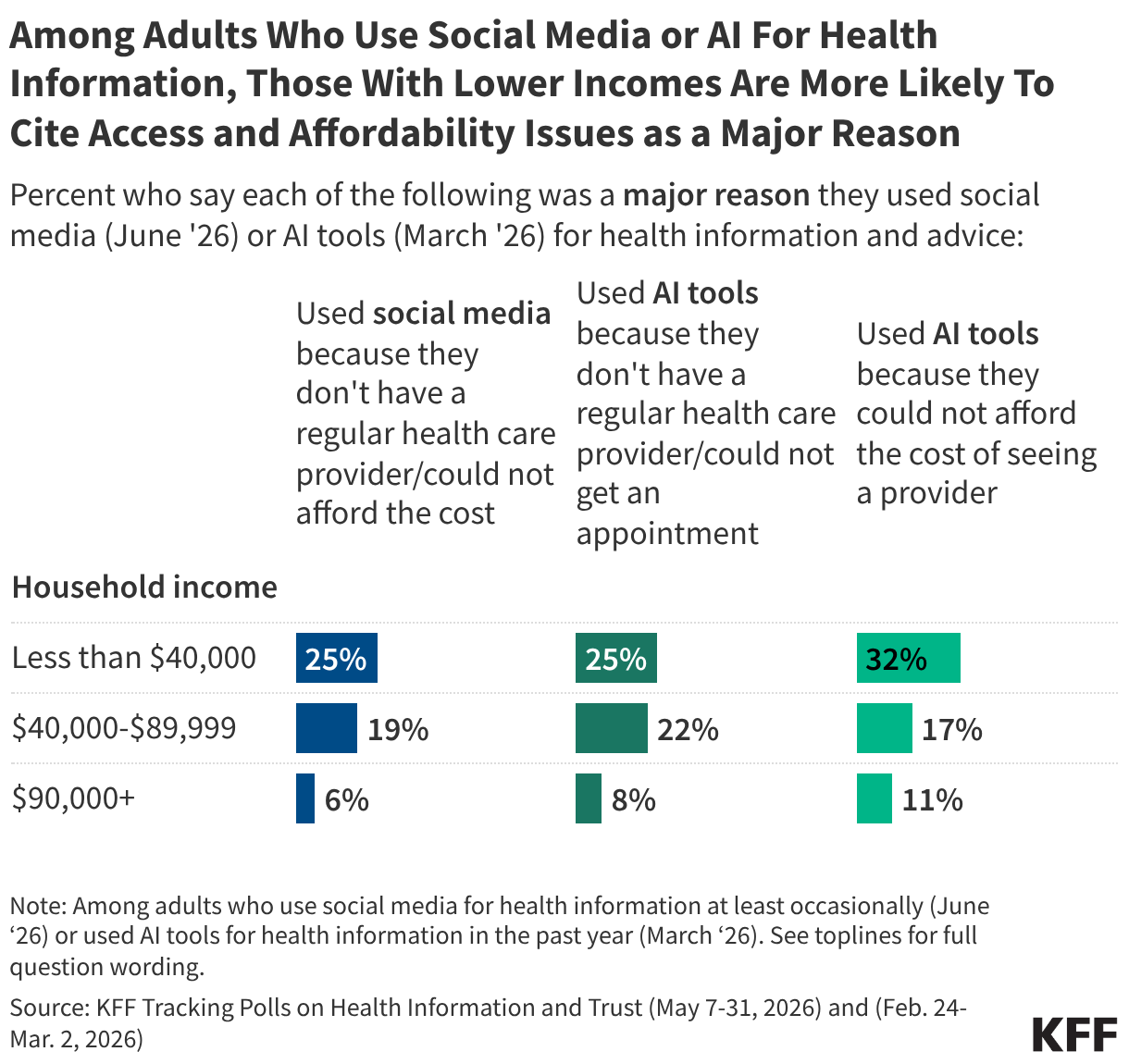
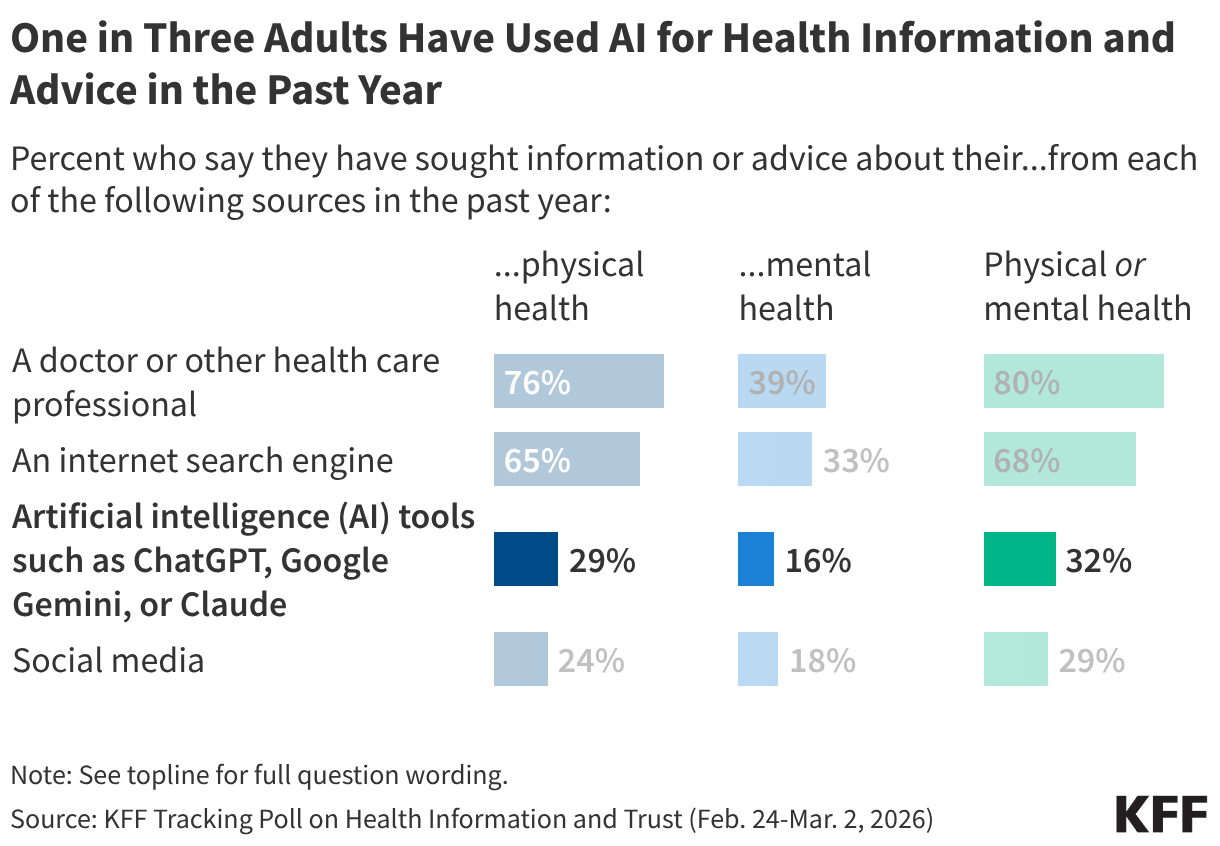
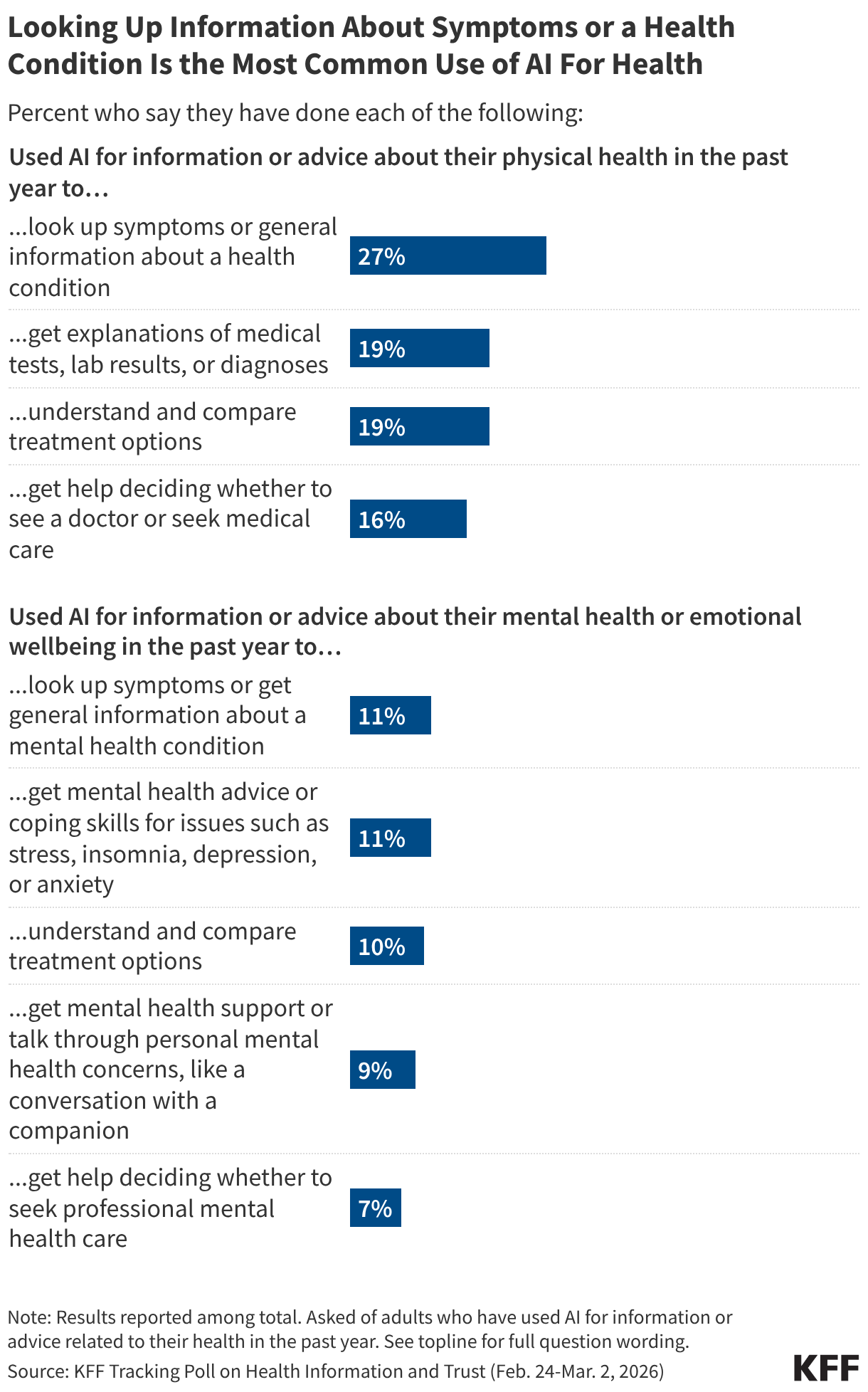
These access barriers are even more pronounced among users of artificial intelligence tools. About a third of the public reports turning to AI chatbots for health information and advice in the past year, rivaling social media as a resource. This includes roughly three in ten adults who have used chatbots for physical health inquiries and one in six who have turned to them for mental health guidance. Younger adults are far more likely to utilize AI for these purposes, while uninsured adults and Black and Hispanic adults turn to AI for mental health advice at higher rates than insured adults and White individuals.
Similar to social media users, a notable share of AI users cite a lack of a regular provider, high healthcare costs, or logistical hurdles as major reasons for utilizing these tools to look up symptoms or general medical conditions. While the broader public remains skeptical of AI’s reliability, those who actively use AI chatbots for health advice frequently express trust in the information they receive.
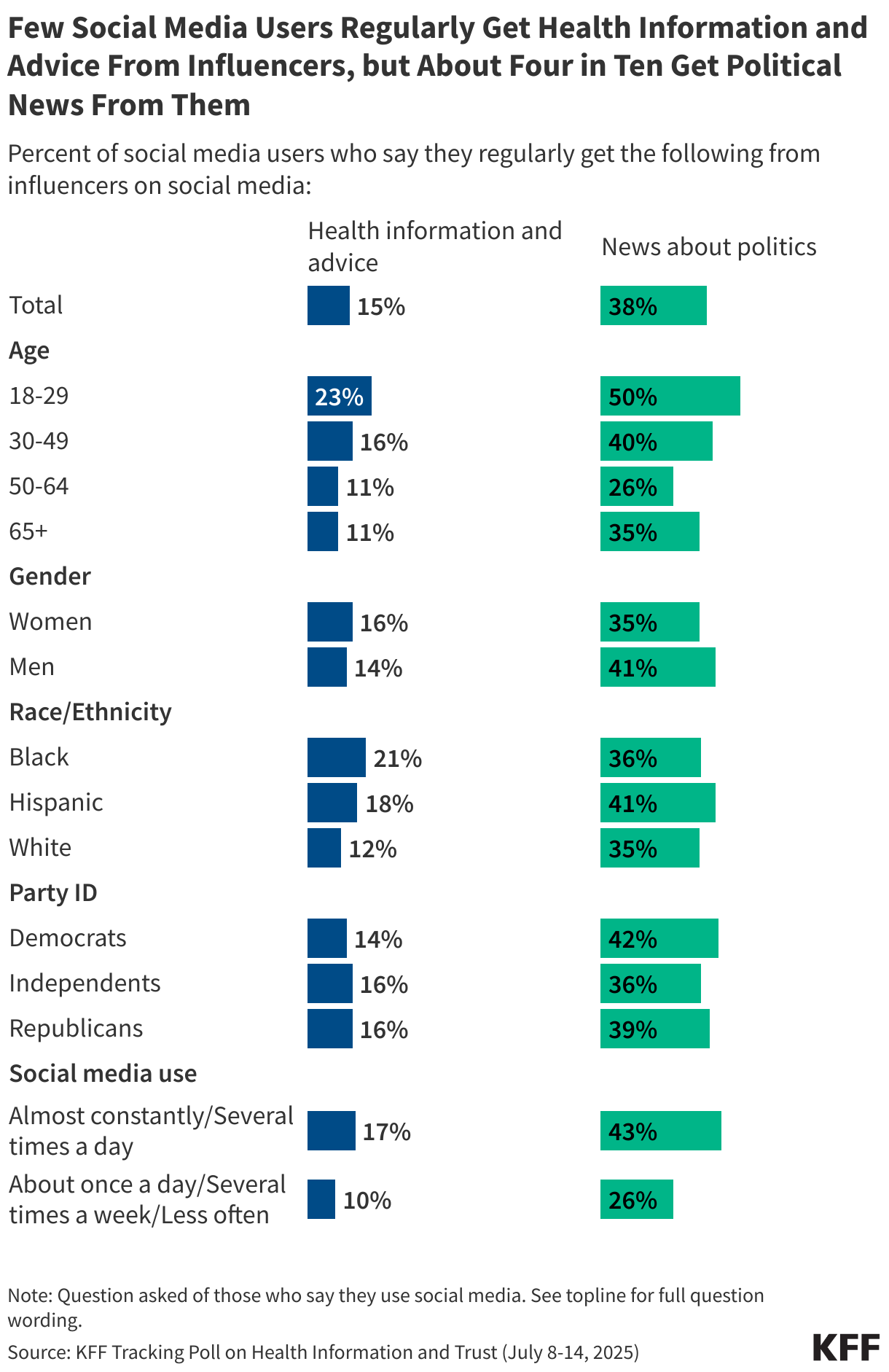
When it comes to social media influencers, however, the dynamic differs from political and cultural spheres. While four in ten social media users regularly consume political and news content from influencers, only 15% turn to them for health advice, though younger adults, Black adults, and heavy social media users are more likely to do so. Overall, fewer than half of users find health information on major social media platforms like TikTok, YouTube, Instagram, and Reddit to be trustworthy, though younger users generally display higher trust than older cohorts.
False or Unproven Health Claims
The widespread availability of digital information also exposes the public to a continuous stream of unproven or false health claims. While exposure is high, KFF polling reveals that relatively few adults express absolute certainty that these myths are true. Instead, at least half of the public falls into what researchers term the "malleable middle"—individuals who characterize these claims as either "probably true" or "probably false." This widespread uncertainty highlights a critical opportunity for targeted educational interventions.
Exposure levels vary depending on the topic and the prominence of media coverage. Among recent claims, the assertion that taking Tylenol during pregnancy increases the risk of autism—a claim amplified during high-profile political press conferences—stands out as one of the most widely heard.
Belief patterns are heavily shaped by partisanship, education, and information habits. Republicans and adults without a college degree are consistently more likely to believe or lean toward believing vaccine-related myths compared to Democrats and college-educated adults. Age, race, and ethnicity also play a role, with adults aged 30 to 49 and Black adults more frequently expressing belief in certain false claims compared to older or White adults. Furthermore, individuals who frequently rely on social media or AI for health information, as well as those lacking a trusted regular healthcare provider, are more susceptible to misinformation.
Vaccine Attitudes and Safety Perceptions
Public attitudes toward vaccination reflect these underlying divisions. Most U.S. adults maintain confidence in the safety of routine childhood vaccines such as MMR, polio, and hepatitis B, while older adults largely trust pneumonia and shingles vaccines. However, views on COVID-19 and flu vaccines remain deeply polarized, with Democrats expressing significantly higher confidence than Republicans.
Among parents, majorities continue to ensure their children receive routine immunizations, and most express strong confidence in polio and MMR safety. Yet, skepticism persists regarding newer technologies and seasonal shots. Roughly two-thirds of parents consider flu vaccines safe for children, while fewer than half say the same about COVID-19 vaccines. Support for the MAHA movement, younger age, and minority demographics also correlate with lower confidence in routine vaccine safety.
While about one in six parents report having skipped or delayed at least one childhood vaccine, those who do so are twice as likely to entertain false claims regarding diseases and immunizations. This direct correlation underscores how misinformation actively shapes parental decision-making.
Meanwhile, innovative vaccine technologies, such as mRNA platforms, remain largely obscure to the broader public. While few view the technology as inherently unsafe, about half of U.S. adults state they simply do not know enough about mRNA to form an opinion, leaving a vast educational gap for public health institutions to address moving forward.