October 2026 Update:
In the wake of sweeping structural changes to federal public health funding, the Centers for Disease Control and Prevention (CDC) released supplemental health department funding on September 3, 2026, totaling $91 million. This final allocation represents a sharp 24 percent decrease from the $120 million originally anticipated in earlier award announcements. While 30 health departments ultimately received the funding amounts they originally expected, 14 jurisdictions experienced funding reductions of 25 percent or more. Most alarming to public health advocates, six of those departments faced cuts exceeding 40 percent.
To maintain previous funding baselines established under the prior PS21-2102 grant mechanism, health departments would now need to allocate an average of 46 percent of this new supplemental funding directly to community-based organizations (CBOs). However, the required allocation varies widely across jurisdictions, complicating local budgeting efforts. Furthermore, five eligible health departments—representing Alaska, Arkansas, Idaho, Tennessee, and Wyoming—were completely shut out of supplemental funding. Notably, two of these neglected states, Arkansas and Tennessee, are home to CBOs that previously relied on direct federal support to execute vital grassroots prevention work.
This ongoing financial contraction stems from a foundational shift in federal policy. Earlier in the year, it was reported that the CDC would not renew its flagship, five-year HIV prevention grant program dedicated specifically to community-based organizations, known formally as grant number PS21-2102. For decades, CBOs have stood at the absolute frontlines of the nation’s HIV response. As outlined in the original grant announcement, community organizations have historically been recognized as vital partners due to their exceptional accessibility, deep-rooted history, and hard-earned credibility within the populations they serve. They have long excelled at providing comprehensive, high-impact HIV prevention services that traditional clinical settings often struggle to reach.
Grantees under the expiring PS21-2102 program have traditionally utilized these federal dollars to execute a wide array of integrated prevention activities. These essential services include routine HIV and other sexually transmitted infection (STI) testing, active linkage-to-care efforts for newly diagnosed individuals, Pre-Exposure Prophylaxis (PrEP) navigation, and comprehensive partner services, alongside numerous other community-tailored initiatives. The loss of this dedicated funding stream threatens to dismantle extensive infrastructure that has taken decades to build.
In tandem with phasing out direct CBO grants, the CDC made alternative supplemental funding available exclusively to state and local health departments under a separate, preexisting grant mechanism designated as PS24-0047. Health departments across the country were invited to apply for these funds. Under the guidelines of this separate mechanism, recipient health departments are strongly encouraged, though notably not required, to engage community-based partners in their spending plans. Higher suggested allocations are directed toward organizations operating within jurisdictions designated under the federal "Ending the Epidemic" (EHE) initiative.
Although these supplemental grants are not designed to replace the direct-to-CBO funding model of the past, they represent a potential, albeit uncertain, lifeline for some community groups. Ultimately, authority rests with individual health departments, which will make disparate decisions regarding how much, if any, money trickles down to grassroots groups. This new approach introduces severe financial vulnerability for community-based organizations, threatening the operational budgets and long-term sustainability of entities that are already operating with limited financial reserves. More broadly, the shift marks a historic departure from how the CDC has conducted its HIV prevention mission, effectively ending direct federal funding to CBOs—a practice that has remained continuous since the late 1980s.
The structural overhaul has triggered widespread alarm among public health advocates and members of Congress, who report that the decision was instituted at the direct behest of the Office of Management and Budget (OMB). This policy pivot coincides with broader questions concerning the federal government’s long-term commitment to domestic HIV prevention. The current administration has consistently sought to eliminate CDC HIV prevention funding altogether in its budget requests, though Congress has repeatedly intervened to reject those proposed cuts.
Simultaneously, the administration has pursued various executive actions aimed at limiting or terminating federal funding and programming specifically targeting LGBTQ+ health issues and racial and ethnic health disparities. According to available federal award data from USAspending.gov, a significant portion of the CBOs funded under the expiring program focused their efforts precisely on these marginalized communities. Their work prioritized ensuring that vital prevention resources successfully reached Black, Latino, and transgender populations—demographics that continue to be disproportionately impacted by the HIV epidemic in the United States.
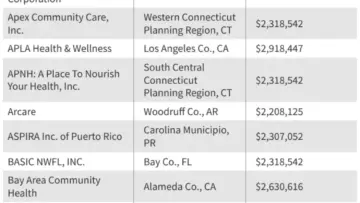
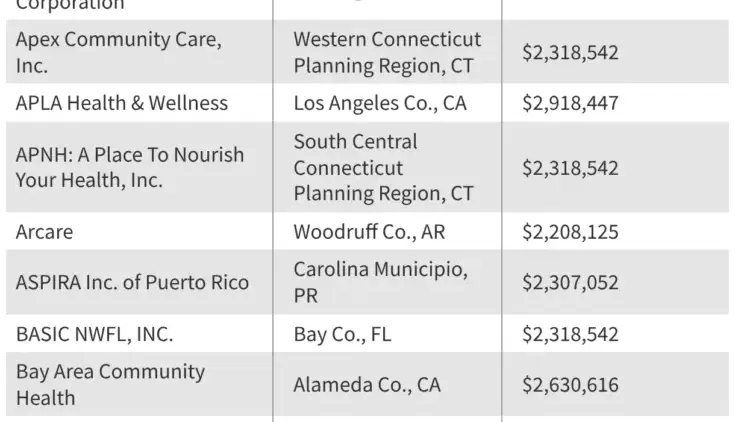
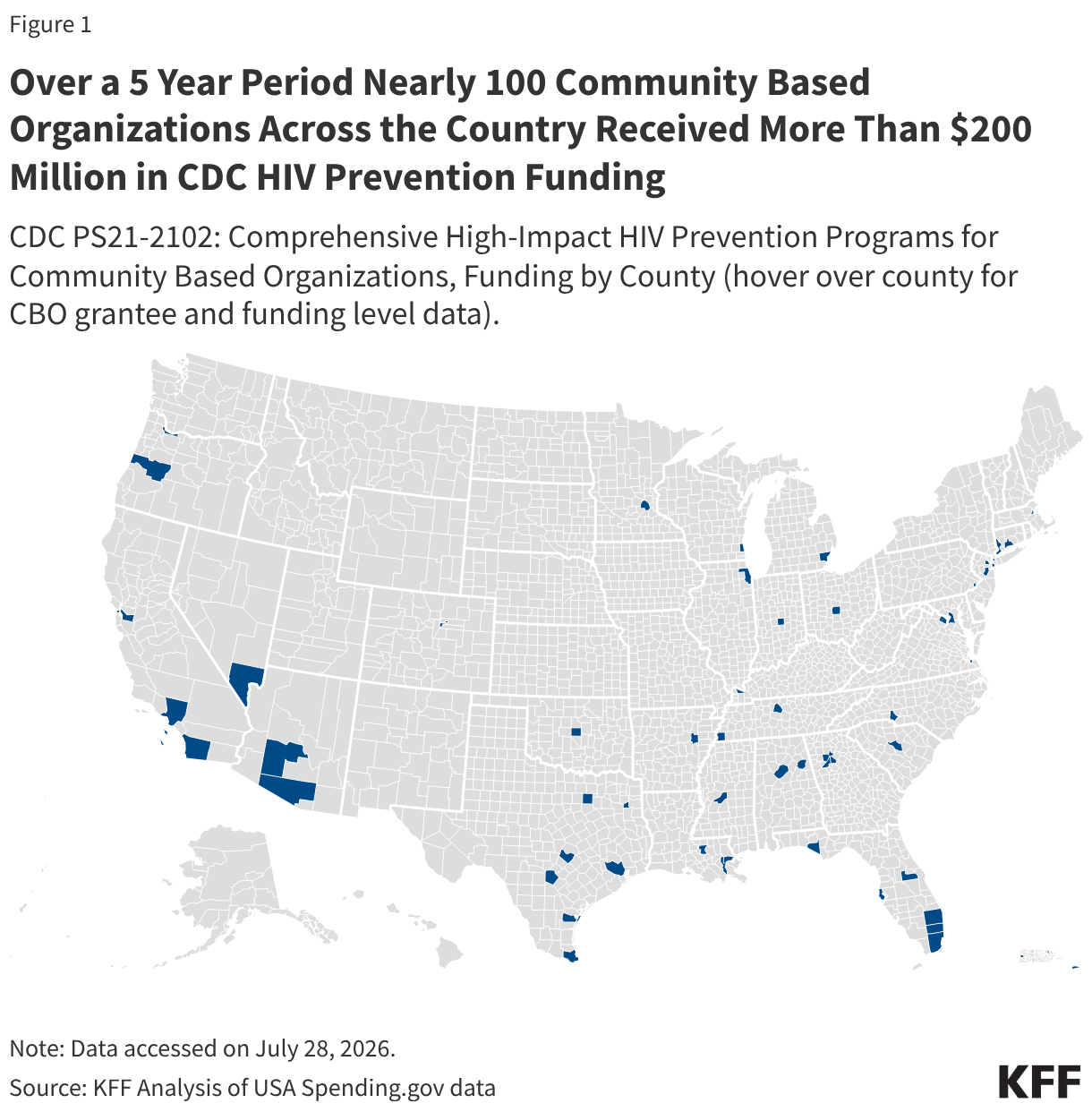
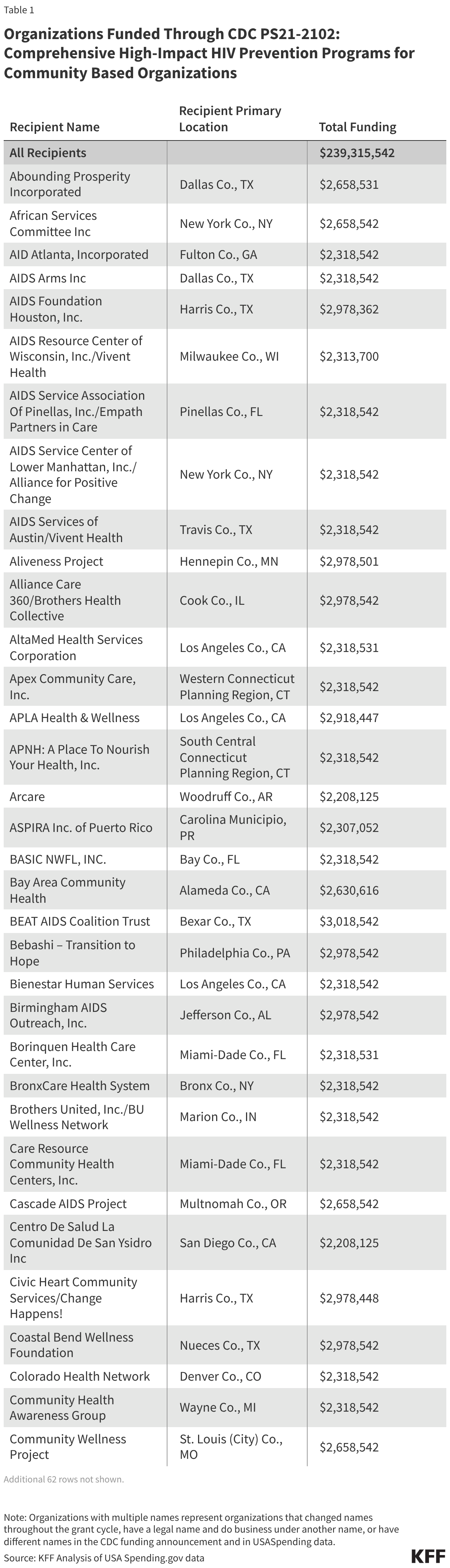
To quantify the magnitude of this transition, independent analyses utilizing federal data from USAspending.gov offer a clear snapshot of where, to whom, and at what funding levels the original CBO grants were historically distributed. The data reveals that community-based organizations stand to lose vast amounts of vital funding, with more than $230 million in total resources at stake. Geographically, the largest concentration of these impacted organizations is located in the American South, a region that consistently records the greatest number of new HIV diagnoses nationwide.
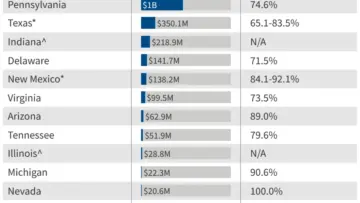
While the precise scope of local health department spending remains unclear—including which agencies successfully applied for supplemental funds and what exact share they will distribute to community groups—early projections are concerning. Analyses indicate that even if health departments choose to fund CBOs at the absolute minimum recommended levels, overall funding flowing to community groups will plummet in many regions, with some areas experiencing catastrophic drops. Deprived of adequate resources, organizations will find themselves severely constrained in their ability to deliver or support frontline prevention programs. Public health experts warn that this localized erosion of services could weaken the nation’s broader HIV response, leaving vulnerable communities increasingly exposed to rising infection rates.
The methodological parameters underlying these financial assessments draw directly from federal data sources. Historical funding totals for the PS21-2102 program were extracted from USAspending.gov, capturing the full five-year grant lifecycle spanning from 2021 through 2025, inclusive of base year allocations, revision amounts, and continuation funding provided in 2026. State and county designations mirror those officially recorded in the federal database.
To evaluate the transition to the new framework, estimated supplemental funding levels were derived from the CDC’s updated guidance for Notice of Funding Opportunity CDC-RFA-PS-24-0047. That federal announcement identified 60 health departments as eligible to apply for the new supplemental awards. Among the 96 organizations previously funded directly through the expiring CBO grants, all but two—located in Tennessee—operated within those eligible jurisdictions, spanning 36 of the 60 health department regions.
Assessing the financial impact required comparing estimated one-year supplemental allocations against the final year of baseline CBO funding. The CDC’s guidance encourages health department grantees to dedicate a minimum of 10 percent of their supplemental funding to support partnerships with community-based organizations, scaling that minimum expectation up to 25 percent for designated EHE jurisdictions. Because the exact proportion of funds designated for EHE initiatives under the new grants has not yet been finalized by federal officials, analysts applied blanket 10 percent and 25 percent allocation scenarios to estimate a realistic range of minimum anticipated community funding. Because the new supplemental funding is authorized as a one-year award, the comparative analysis isolates the final fiscal year baseline amounts from the former grant cycle.
With the distribution process underway, the long-term impact on the nation’s grassroots public health infrastructure remains an open question. As state and local health agencies finalize their subgranting decisions, community organizations across the country are left navigating an uncertain financial landscape, striving to maintain essential prevention services amid rapidly shifting federal priorities.