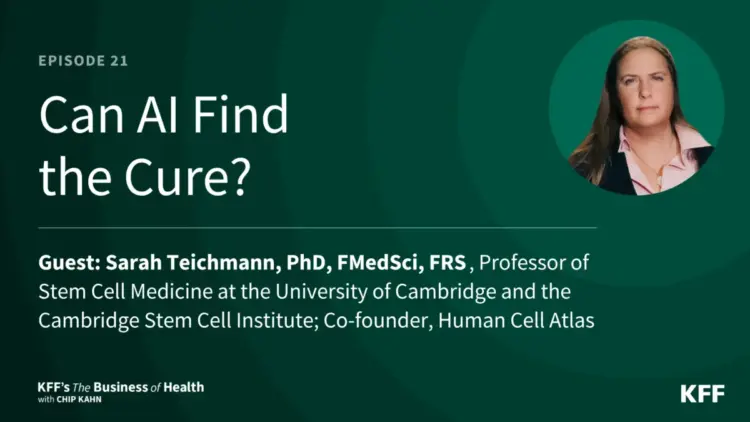
Medicine has long relied on cartography to understand the human body, turning to historical anatomical maps and the groundbreaking genetic blueprint provided by the Human Genome Project. Today, however, medical science is entering an entirely new frontier. A massive, global scientific undertaking known as the Human Cell Atlas is leveraging advanced artificial intelligence to construct comprehensive reference maps of every cell type in the human body. This monumental effort aims to fundamentally transform how researchers understand human health, opening unprecedented pathways to diagnose, monitor, and treat complex diseases.
In the latest installment of The Business of Health with Chip Kahn, host Charles N. Kahn III sits down with renowned scientist Dr. Sarah Teichmann, co-founder of the Human Cell Atlas initiative, to explore the profound implications of this technology for modern medicine, drug discovery, and potential cures. The episode delves deeply into how artificial intelligence is accelerating biomedical research and reshaping the future of healthcare.
About This Episode: Decoding the Cellular Universe
Episode 21 of the special artificial intelligence series of The Business of Health focuses heavily on the convergence of cellular biology and computational intelligence. Traditional medical research often examines tissue and organs at a macro level or looks at the broad genetic code. However, understanding the intricate ways individual cells operate, interact, and organize themselves within tissue architecture remains one of the greatest frontiers in modern science.
During the conversation, Dr. Teichmann discusses how the Human Cell Atlas is tackling this challenge head-on. By drawing on the collaborative efforts of thousands of scientists worldwide, the initiative uses cutting-edge artificial intelligence and machine learning tools to map the cellular landscape of the human body. These digital reference maps allow researchers to visualize cellular diversity in unprecedented detail, shedding light on how immune systems develop, how tissues maintain their structure, and how cellular anomalies trigger disease processes.
The conversation also highlights the immense potential these cellular maps hold for the pharmaceutical industry. By pinpointing the exact cellular targets affected by various conditions, drug discovery can become significantly more precise. Instead of broad-spectrum treatments that may cause widespread side effects, future therapies could theoretically target specific cellular populations or repair malfunctioning cellular pathways, bringing humanity closer to cures for currently intractable diseases.
The Host: Charles N. Kahn III
Guiding the discussion is Charles N. Kahn III, a prominent figure in health policy and economics who serves as a senior visiting fellow at KFF. With a distinguished career spanning numerous prestigious institutions, Kahn brings a wealth of analytical depth to the podcast. In addition to his role at KFF, he is a visiting senior fellow at the American Enterprise Institute and a nonresident senior scholar at the University of Southern California’s Schaeffer Center for Health Policy and Economics. Furthermore, Kahn lends his expertise internationally as the co-chair of the Future of Health collaborative, positioning him uniquely to examine the intersection of business, policy, and emerging healthcare technologies.
Through The Business of Health, Kahn connects the dots between the fast-moving business of healthcare, evolving government and institutional policies, and the ultimate impact these factors have on patients. The podcast’s ongoing series on artificial intelligence specifically seeks to demystify how AI is fundamentally altering the healthcare landscape by featuring leading voices who are actively deploying these technologies, managing their systemic consequences, and designing the policy frameworks required to govern them responsibly.
Guest Profile: Dr. Sarah Teichmann
The episode’s featured guest, Dr. Sarah Teichmann, PhD, FMedSci, FRS, brings an extraordinary pedigree of academic and industry leadership to the discussion. Currently serving as a professor of Stem Cell Medicine at the University of Cambridge and the Cambridge Stem Cell Institute, as well as holding the position of Vice President of Translational Research at GlaxoSmithKline (GSK), Dr. Teichmann sits at the very nexus of academic research and commercial biomedical translation.
Dr. Teichmann’s academic journey began with her PhD at the prestigious MRC Laboratory of Molecular Biology in Cambridge, UK, followed by a Beit Memorial Fellow position at University College London. In 2001, she established her own research group back at the MRC Laboratory of Molecular Biology, where her foundational work yielded critical discoveries, including the finding that protein assembly pathways are stereotypical and conserved across living organisms.
In 2013, Dr. Teichmann transitioned to the Wellcome Genome Campus, achieving a notable milestone by becoming the first and, to date, the only faculty member appointed jointly across both the EMBL-European Bioinformatics Institute and the Wellcome Sanger Institute. By 2016, she was named Head of the Cellular Genetics program at the Wellcome Sanger Institute, around the same time she helped conceptualize and co-found the Human Cell Atlas initiative. Her leadership in the scientific community expanded further in April 2024 when she assumed her current chair in Stem Cell Medicine at the University of Cambridge within the Department of Medicine and the Cambridge Stem Cell Institute.
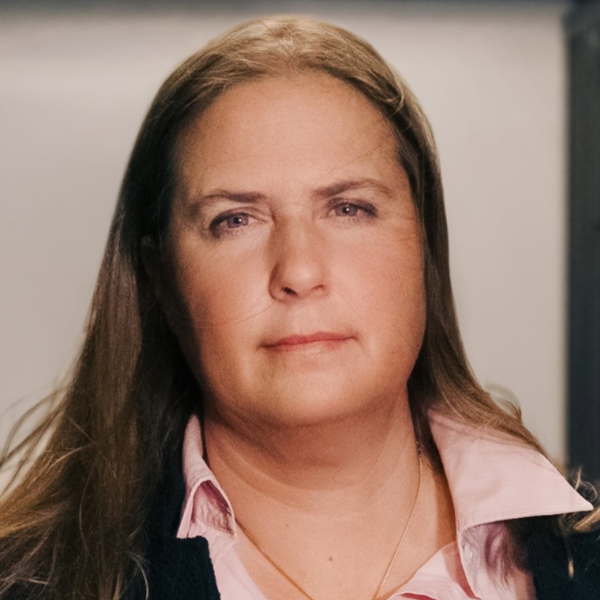
Beyond her academic appointments, Dr. Teichmann actively bridges the gap between public research and private innovation. She dedicates a portion of her time to GlaxoSmithKline, serves as a non-executive director at 10x Genomics, and has successfully co-founded two startup companies. Within her own research lab, her team focuses heavily on developing and applying cell atlas technologies to decode human tissue architecture, examining how cellular diversity naturally arises within the immune system and throughout human development.
The Broader Impact of AI on Health Care
The conversation between Kahn and Dr. Teichmann forms part of a broader, ongoing examination by The Business of Health into the transformative power of artificial intelligence within the medical sector. As health systems grapple with rising costs, administrative burdens, and the constant demand for better patient outcomes, artificial intelligence has emerged as a critical tool across multiple domains.
While many discussions surrounding AI in healthcare focus on operational efficiencies, diagnostic imaging, or electronic health record management, the collaboration between AI and genomics—exemplified by the Human Cell Atlas—represents a deeper scientific revolution. By processing vast petabytes of single-cell sequencing data, machine learning algorithms can identify subtle cellular patterns that the human eye or traditional statistical methods would inevitably miss.
As the weekly podcast continues to release episodes featuring innovators, policymakers, and industry leaders, listeners gain a comprehensive view of how technology is reshaping not just the business side of medicine, but the very biological definitions of health and disease. Through expert-led dialogues like the one between Chip Kahn and Dr. Sarah Teichmann, the medical community continues to chart a course toward a future where precision medicine is guided by the most detailed maps of the human body ever created.