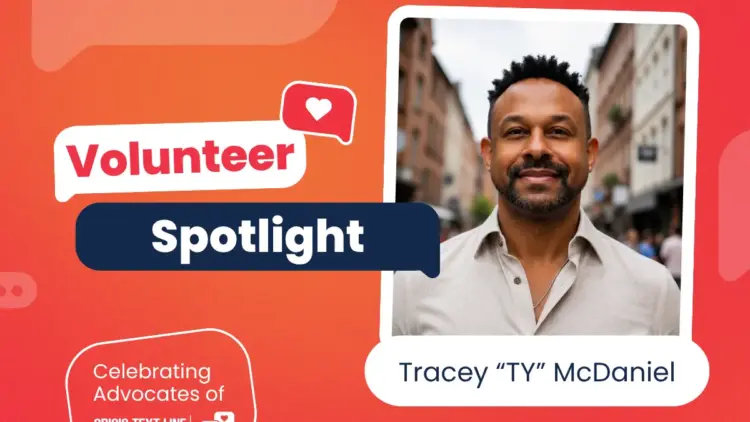
Behind every text message sent to a crisis intervention hotline is a volunteer who chose to show up, listen, and offer a safe harbor during a storm. For organizations like Crisis Text Line, these individuals form the backbone of a vital mental health infrastructure that operates around the clock. This month, the organization is shining its volunteer spotlight on Tracey “TY” McDaniel, an advocate whose journey into crisis counseling began with a deeply personal promise to a grieving friend and has since evolved into a dedicated mission to dismantle the stigma surrounding mental health.
McDaniel’s path to becoming a volunteer Crisis Counselor is rooted in tragedy and resilience. He first encountered Crisis Text Line after a dear friend experienced the unimaginable loss of her son to suicide. In the wake of that profound grief, McDaniel made a pact with his friend to help in any way he could, ultimately translating that commitment into direct action by signing up to support others navigating their own dark moments.
However, McDaniel’s connection to the cause extends even further. Having been personally impacted by suicide more than once throughout his life, the weight of those experiences never truly left him. Recognizing a persistent need to get involved and make a tangible difference, he realized that supporting people in distress was not just an altruistic pursuit, but a deeply personal responsibility. In his view, if being present for someone during their lowest point can even slightly alter the trajectory of their day or their life, the investment of time is more than worthwhile.
When discussing the realities of crisis intervention, McDaniel often works to dispel common misconceptions about what a volunteer Crisis Counselor actually does. Many prospective volunteers hesitate because they fear they will not have the right answers or the professional training to solve a stranger’s deeply rooted problems. Yet, as McDaniel points out, callers and texters rarely reach out expecting a miracle cure or an exhaustive roadmap for their lives. Instead, they are frequently searching for something much simpler, yet infinitely harder to find in a moment of isolation: a shoulder to cry on, a nonjudgmental presence, and someone willing to listen without rushing to fix them.
By offering perspective, guidance, and a steady anchor, a volunteer can act as a light at the end of a tunnel, quietly reminding a struggling individual that they are not alone in the world.
This philosophy of compassionate listening has naturally bled into McDaniel’s professional life as well. Serving as a people leader in his everyday career, mental health and awareness remain constantly at the forefront of his approach to management. He makes it a regular practice to check in with his direct reports on a weekly basis, creating a dedicated space for them to discuss not only their professional workloads but also their personal well-being. By simply asking how someone is doing and genuinely listening to the response, McDaniel believes leaders can foster an environment of trust and understanding that extends far beyond the confines of a formal counseling chat.
Among the numerous conversations he has managed as a volunteer, one particular interaction from the start of a school year has remained etched in his memory. A young student reached out to the text line because they were experiencing severe bullying at school. Having endured bullying himself during his own school years, McDaniel immediately recognized the all-consuming, suffocating nature of that pain. Drawing upon his own past, he took a deep breath and focused entirely on creating a safe, validating space where the student felt truly heard and acknowledged.
After listening carefully and offering steady support, McDaniel gently encouraged the student to speak with a teacher or a school administrator, reassuring them that there was zero reason to feel embarrassed or ashamed of what they were going through. That specific exchange stayed with him because it crystallized the profound necessity of having someone in your corner precisely when the world feels like it is closing in around you.
Reflecting on the broader state of mental health today, McDaniel does not sugarcoat the realities of modern existence. He points out that contemporary life is laden with relentless stressors spanning homes, schools, and workplaces, making the ability to genuinely disconnect and recharge an increasingly elusive luxury. With limited personal time pitted against constant demands on human attention—magnified heavily by the pervasive influence of social media—people are routinely left feeling overwhelmed, isolated, and, in severe cases, entirely hopeless.
This accumulation of daily pressure is precisely why accessible, nonjudgmental crisis intervention is so critical. McDaniel sees his role as holding a safe space for individuals who are drowning in those stressors, providing a momentary pause that can help someone realize a way forward exists, even if it is obscured by the fog of the immediate crisis.
For individuals who feel called to volunteer with organizations like Crisis Text Line but hesitate out of fear that they lack the necessary professional qualifications, McDaniel offers a reassuring perspective. He emphasizes that if a person possesses genuine compassion in their heart and a true desire to help others, the specific mechanics and tools of crisis intervention can be effectively taught. Volunteers are not expected to arrive with a comprehensive playbook for every imaginable scenario; rather, what truly matters is a willingness to learn, adapt, and stand beside someone in their time of need.
Ultimately, McDaniel’s advocacy centers on a foundational truth that he believes society must embrace more openly: mental health is every bit as critical as physical health. In his view, normalizing the act of asking for help—and feeling comfortable enough to utter the simple words, “I’m not okay”—is an essential cultural shift. Asking for support, he stresses, is a definitive demonstration of strength rather than a sign of weakness, reinforcing the fundamental principle that no one should ever have to shoulder life’s heaviest moments entirely alone.