
Editorial Note: Originally published on July 16, 2025, this report has been updated over time to incorporate new data, reporting, and tracking metrics regarding the implementation of the Rural Health Transformation Program.
When President Trump signed a sweeping budget reconciliation bill—frequently dubbed the "One Big Beautiful Bill" during its legislative journey—on July 4, 2025, it enacted a massive overhaul of federal tax and spending policies. Among its most consequential provisions were dramatic reductions in federal health care financing. According to comprehensive KFF analyses of Congressional Budget Office estimates released shortly after the legislation’s passage, the law is projected to slash federal Medicaid spending by $911 billion over a ten-year window.
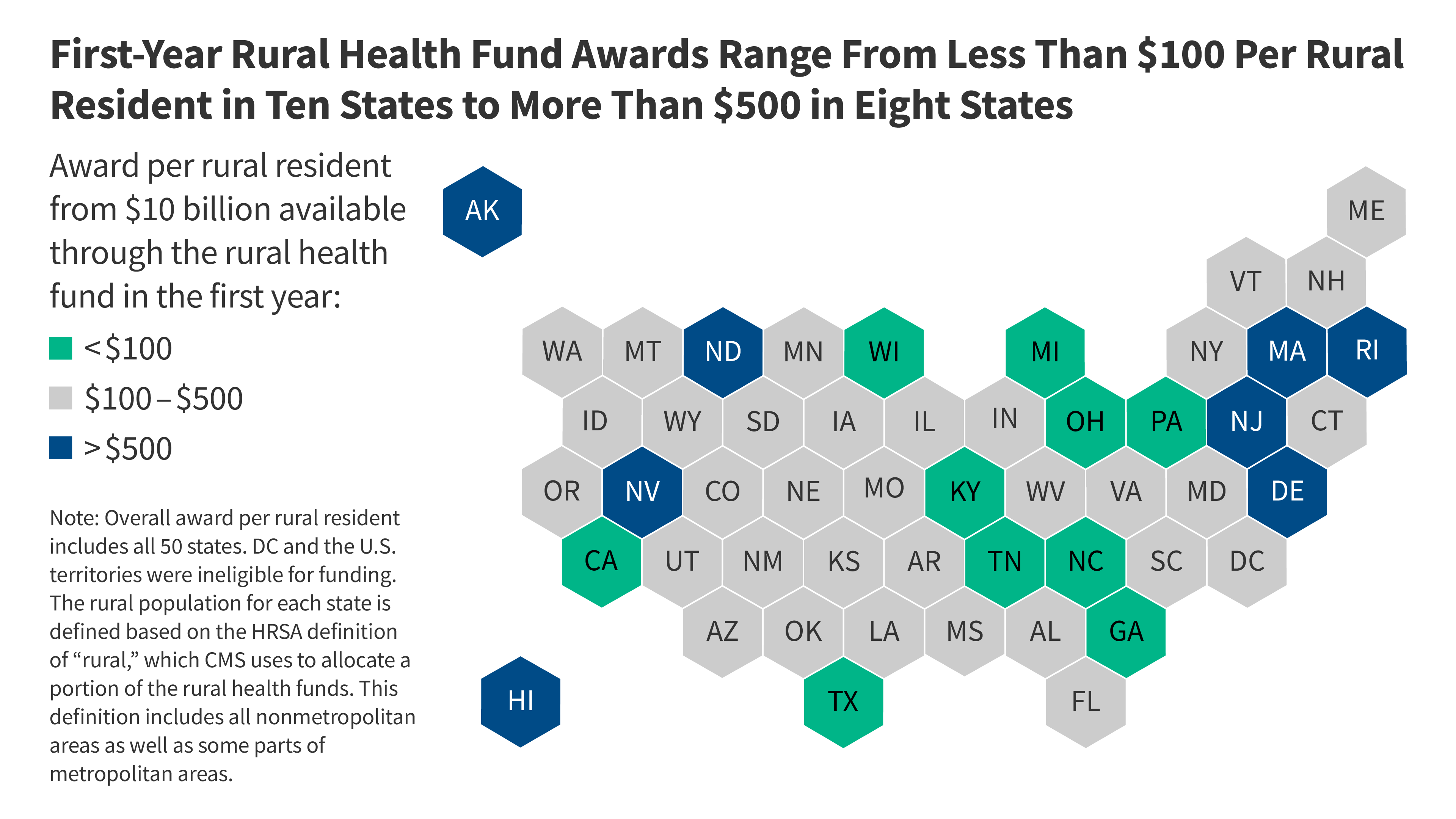
Of that total, an estimated $137 billion in cuts will fall directly on rural healthcare systems across the country. In a late-stage legislative compromise aimed at easing anxiety among rural lawmakers and hospital advocates, the reconciliation bill established the Rural Health Transformation Program. Commonly referred to as the rural health fund, this initiative injects $50 billion in federal grants to states from 2026 through 2030 to bolster struggling rural health networks. However, as states roll out their initial programs and federal regulators begin tracking the money, health policy analysts note that the temporary infusion falls far short of matching the scale and persistence of the Medicaid reductions.
Program Structure and Oversight
The rural health fund is designed to disburse $50 billion in direct state grants over a five-year period, operating through fiscal years 2026 to 2030. The program materialized during frantic Senate negotiations in June 2025 as lawmakers scrambled to shield rural medical facilities from the brunt of looming federal health spending rollbacks. Despite its origins as a safeguard for hospitals, the program’s statutory framework is intentionally broad, supporting a wide array of systemic transformations rather than acting as a direct operating subsidy for inpatient facilities.
Under the statutory guidelines, the Centers for Medicare & Medicaid Services (CMS) oversees the entire enterprise. To manage the immense portfolio, CMS established a dedicated Office of Rural Health Transformation, granting federal officials substantial leeway in determining state allocations, establishing program terms, and expanding permitted uses. Funding is channeled through cooperative agreements, a contractual mechanism that mandates active, ongoing federal involvement in project management even after grants are awarded.
CMS distributes $10 billion annually to approved states. While states are given flexibility to expend their awards through the end of the subsequent fiscal year—with federal authorities redistributing unspent money over time—all allocated dollars must be fully drawn down and spent by the end of fiscal year 2032.
Every U.S. state applied during the one-time application window and successfully secured approval, granting them baseline eligibility for all five years of the program. Yet, this eligibility comes with stringent federal oversight. CMS retains the authority to withhold, reduce, eliminate, or claw back funding if a state falls out of compliance, fails to demonstrate satisfactory progress, or if federal officials decide continued funding is no longer in the government’s best interest. Crucially, the statute bars any administrative or judicial review of these high-stakes federal funding decisions.
The administrative timeline has proven exceptionally brisk. Following a Notice of Funding Opportunity published in September 2025, states had less than two months to craft applications that would ultimately dictate the scope of their programs for the life of the initiative. CMS announced the first-year awards in December 2025. States then faced a tight countdown to finalize strategic plans through federal consultations, establish local application mechanisms, distribute funds to sub-recipients, and submit their initial annual progress reports. Because state administrative capacities vary widely, the pace of fund deployment has been uneven across the nation.
Permitted Uses and Strategic Goals
The overarching mission of the rural health fund is to modernize healthcare delivery in isolated communities, driving long-term improvements in access, quality, and clinical outcomes. CMS has repeatedly emphasized that it expects states to invest in sustainable structural reforms rather than temporary band-aids or perpetual operating subsidies.
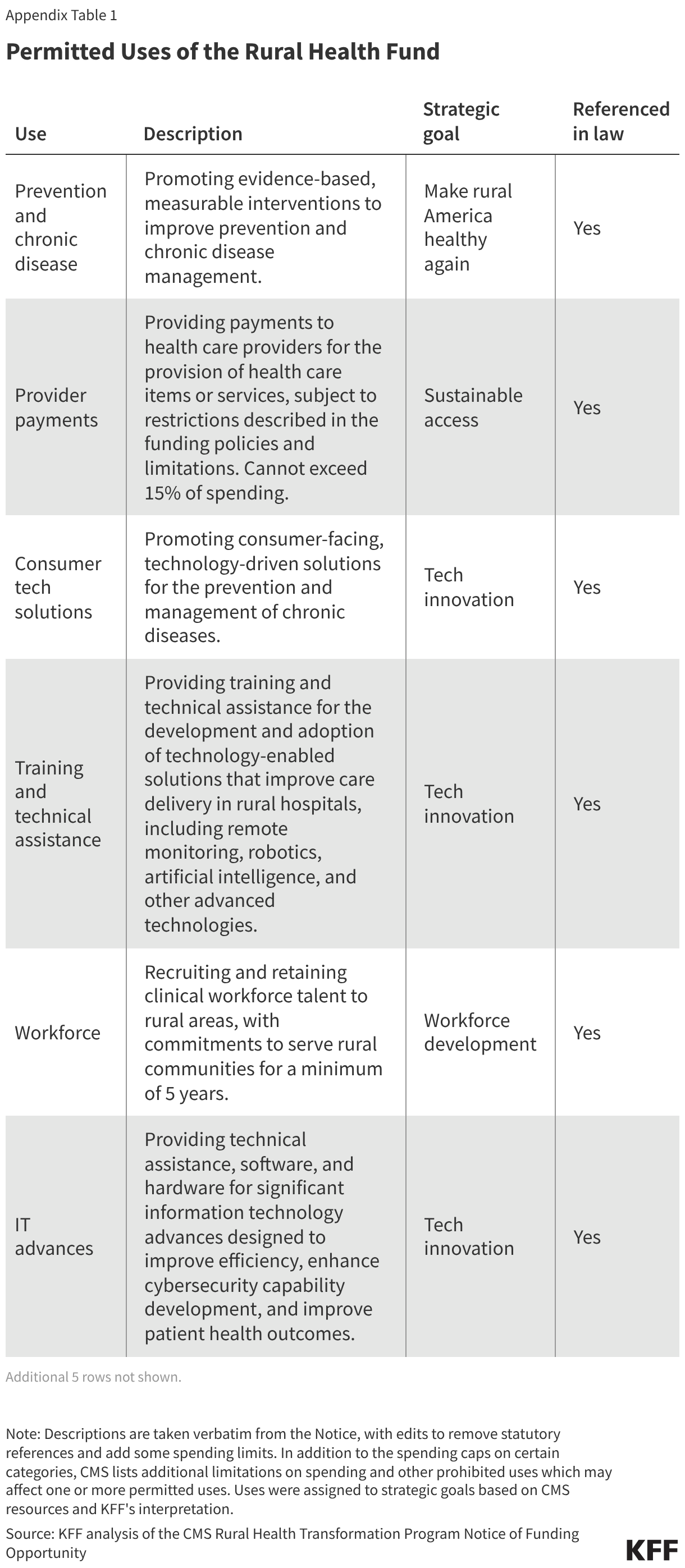
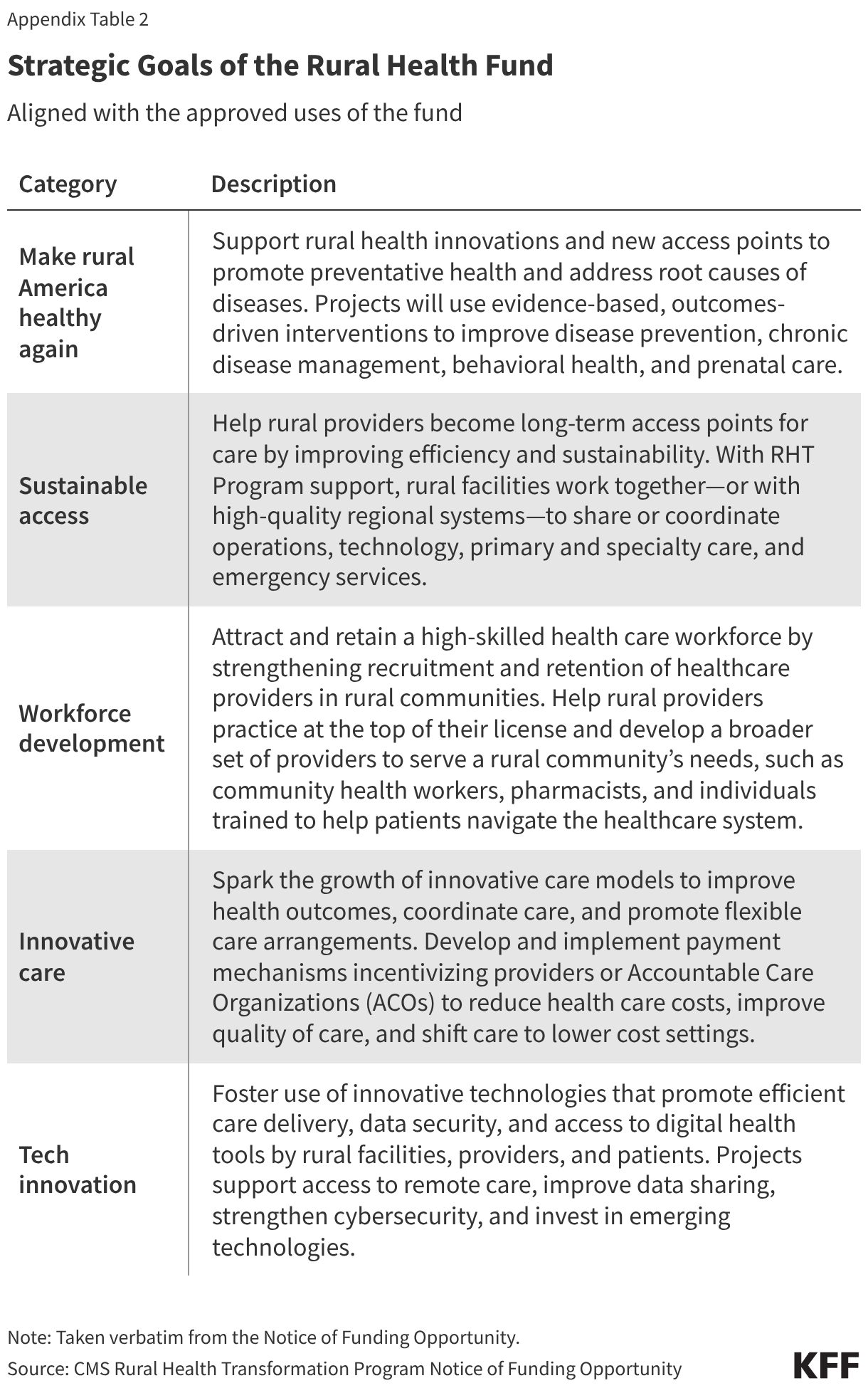
Federal guidance outlines eleven distinct statutory purposes for the funds, aligned with five core strategic goals: revitalizing rural health, ensuring sustainable patient access, fostering workforce development, pioneering innovative care delivery models, and advancing health technology. States are currently implementing a diverse mix of initiatives under this broad umbrella. Common strategies include chronic disease management programs, administrative and clinical service-sharing among rural facilities, regional health system partnerships, targeted recruitment bonuses for clinical staff, and telehealth expansion. Other states are leveraging funds to integrate artificial intelligence diagnostics, upgrade aging physical infrastructure, right-size hospital service lines, and accelerate the adoption of value-based care and alternative payment models.
While hospitals represent a primary focus for many local advocates, the funds are not exclusively earmarked for inpatient facilities. States hold considerable discretion over how money is divided among rural hospitals, outpatient clinics, technical assistance contractors, academic institutions, urban health systems collaborating with rural providers, and health technology vendors. Furthermore, non-rural entities can receive funding provided the expenditures directly benefit rural populations.
Permitted hospital-focused investments include capital improvements to existing facilities, administrative consolidation, and value-based payment transitions. However, strict federal guardrails prohibit using the money for routine operating expenses, debt service, non-rural facility construction, or direct subsidization of uncompensated care losses.
The Gap Between Funding and Medicaid Cuts
The economic reality facing rural health providers remains challenging, primarily because the $50 billion rural health fund is substantially smaller than the estimated federal Medicaid cuts contained within the same legislation. KFF analyses indicate that the $50 billion program will offset roughly 37 percent of the $137 billion in estimated federal Medicaid spending reductions hitting rural areas over ten years, and only about 5 percent of the broader $911 billion Medicaid reduction nationwide.
This calculation excludes additional revenue pressures resulting from the expiration of enhanced Affordable Care Act marketplace subsidies and tighter marketplace integrity rules, which are driving up uninsured rates in rural communities and driving up uncompensated care burdens for local facilities.
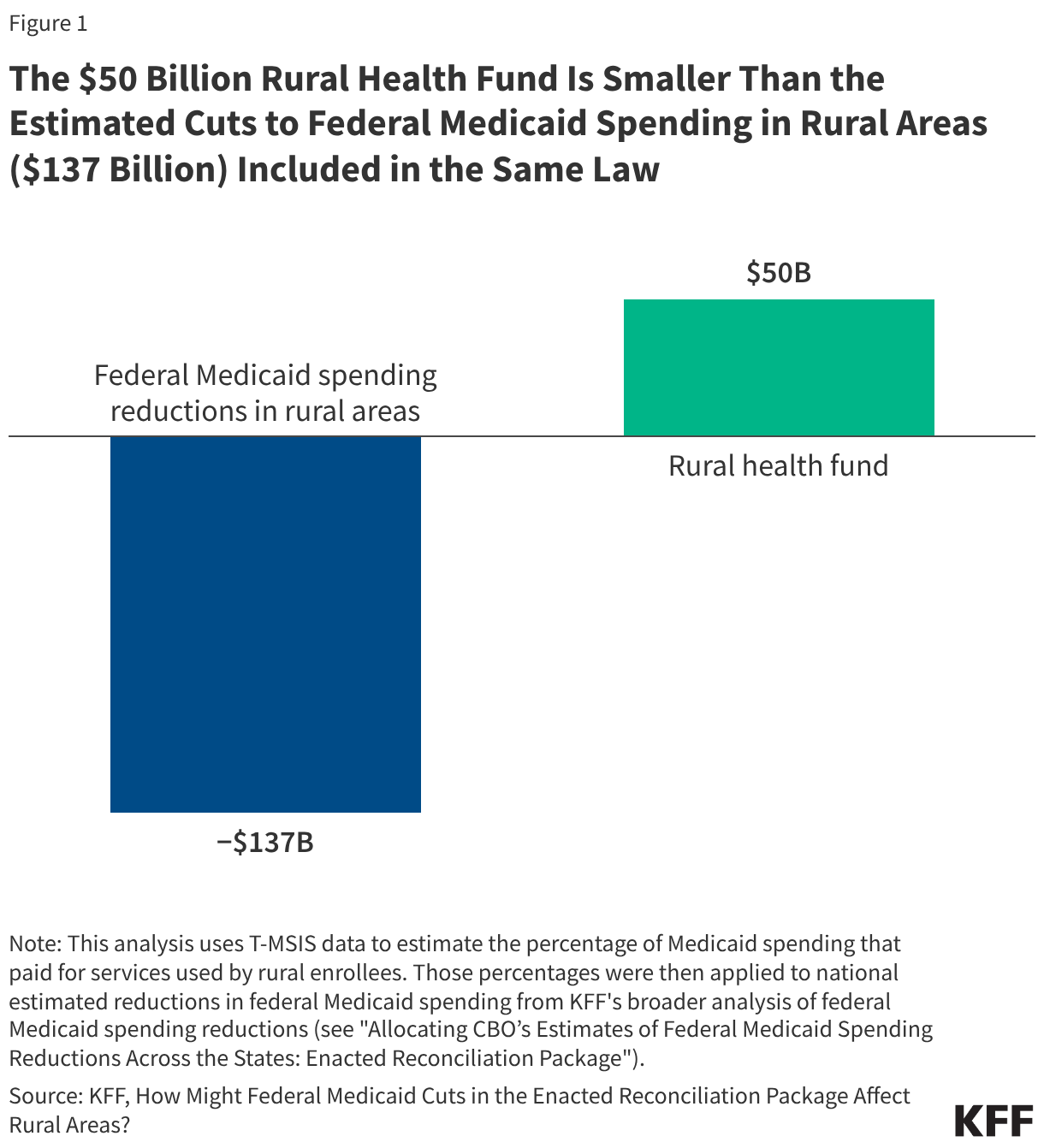
Compounding the funding disparity is a stark temporal mismatch. The rural health fund is heavily front-loaded, distributing its $10 billion annual installments entirely between 2026 and 2030, with a final liquidation deadline of 2032. Conversely, the majority of the reconciliation bill’s health care spending cuts are backloaded. Nearly two-thirds of the ten-year Medicaid reductions are projected to materialize after 2030, persisting indefinitely after the temporary rural health grants have expired. Unless Congress enacts fresh legislation, rural providers face a looming fiscal cliff once the federal program concludes.
Distribution Across and Within States
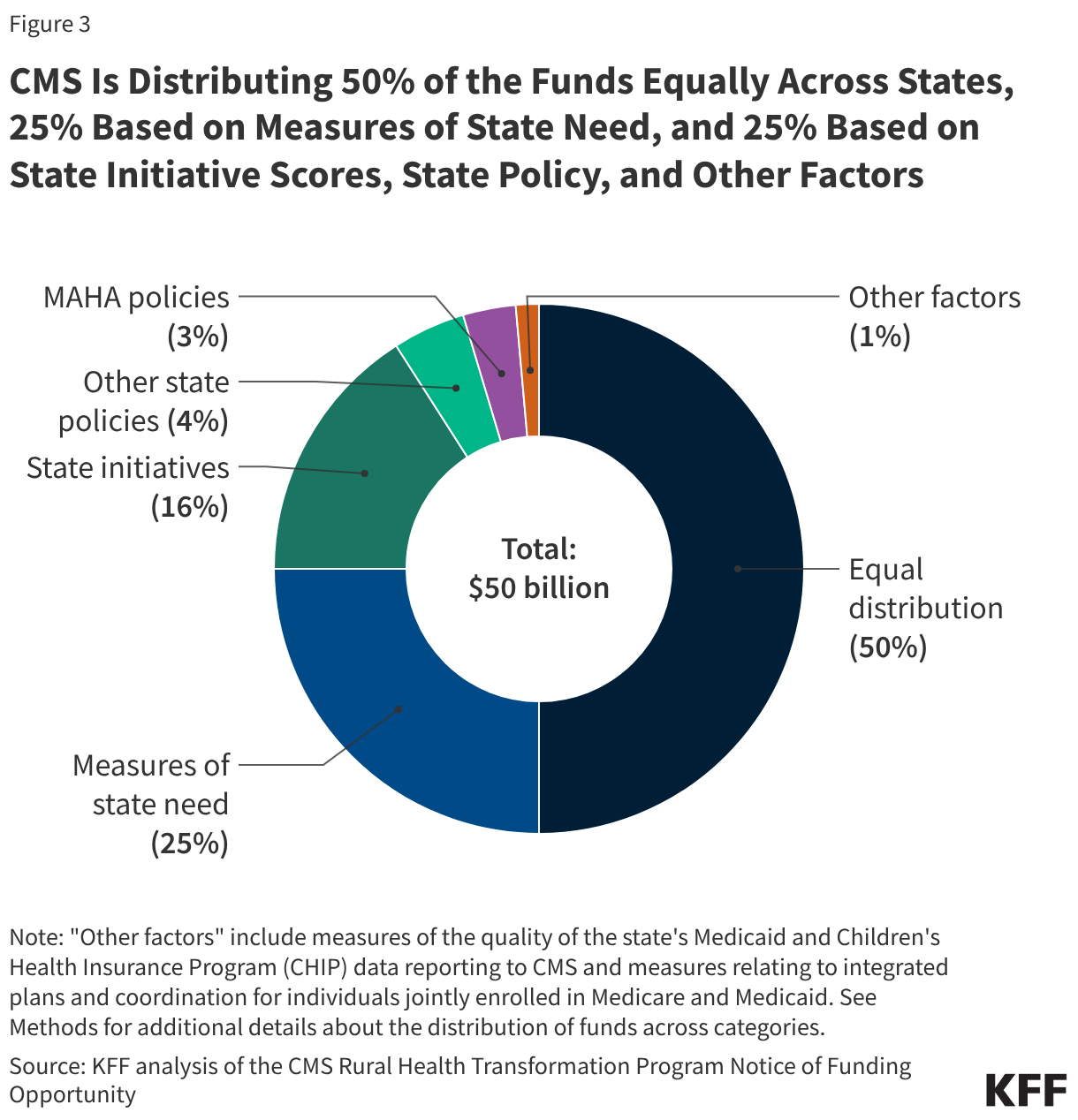
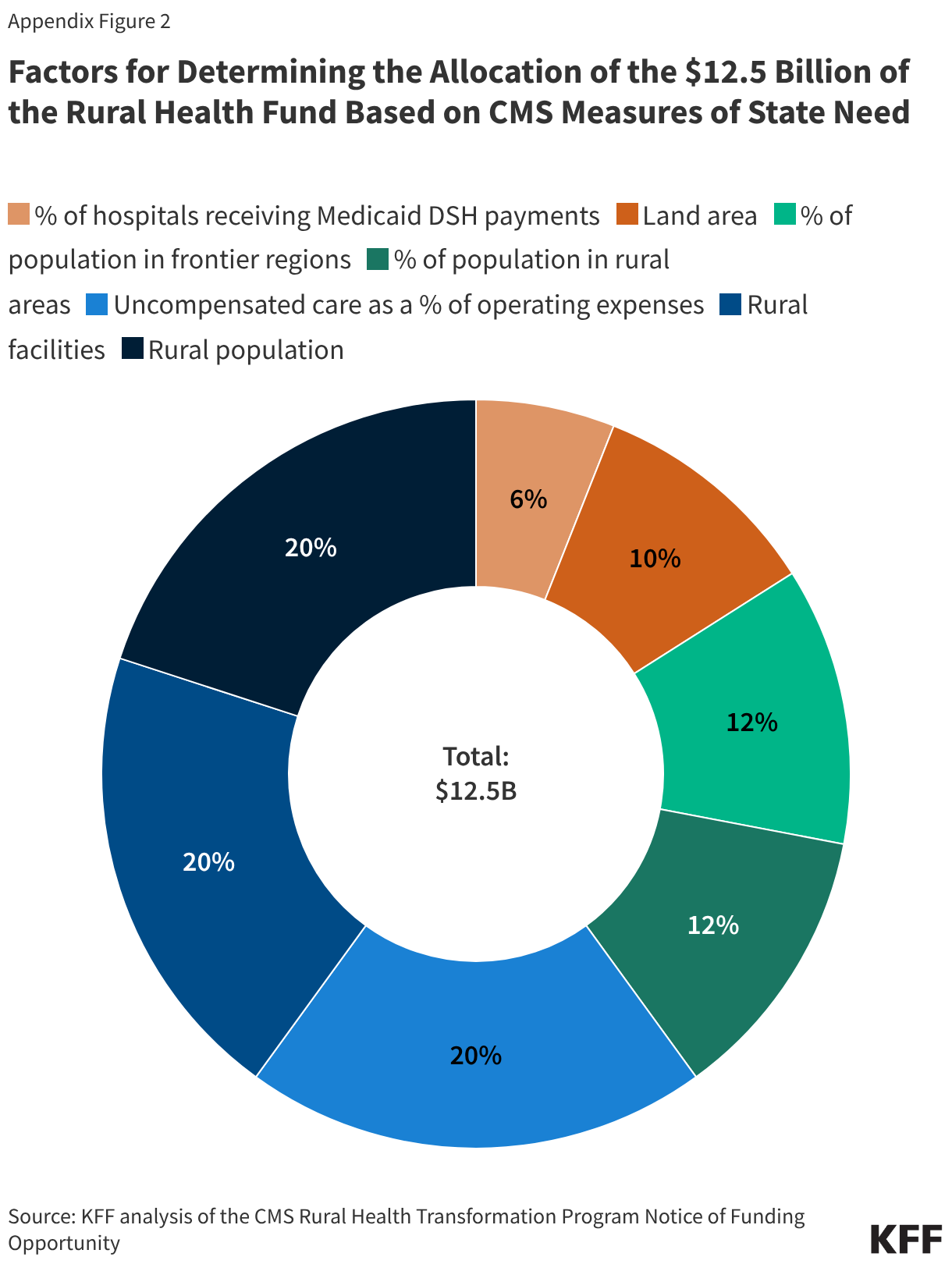
CMS employs a hybrid formula to distribute the funds. Half of the $50 billion is allocated equally as baseline funding to all approved states, ensuring every state receives a predictable floor regardless of geographic size or rural population density. The remaining half is treated as workload funding, distributed according to 23 weighted factors encompassing measures of state need, local policy actions, and initiative scores.
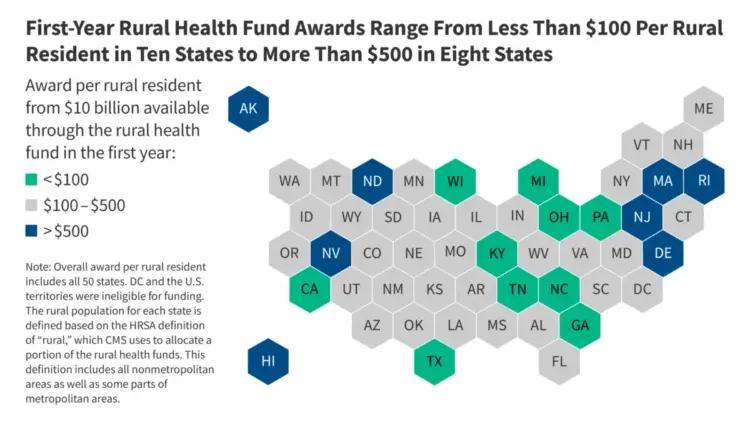
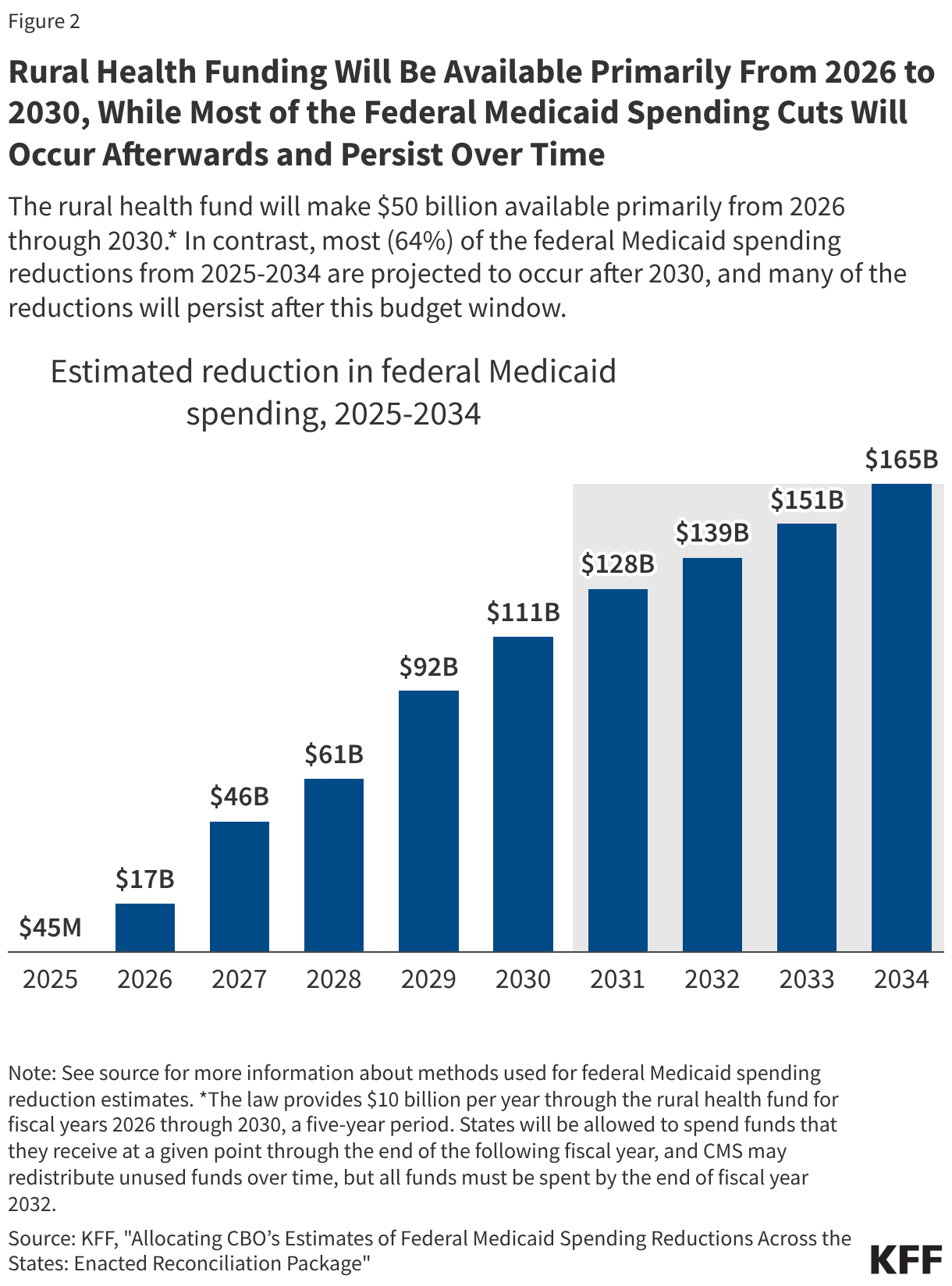
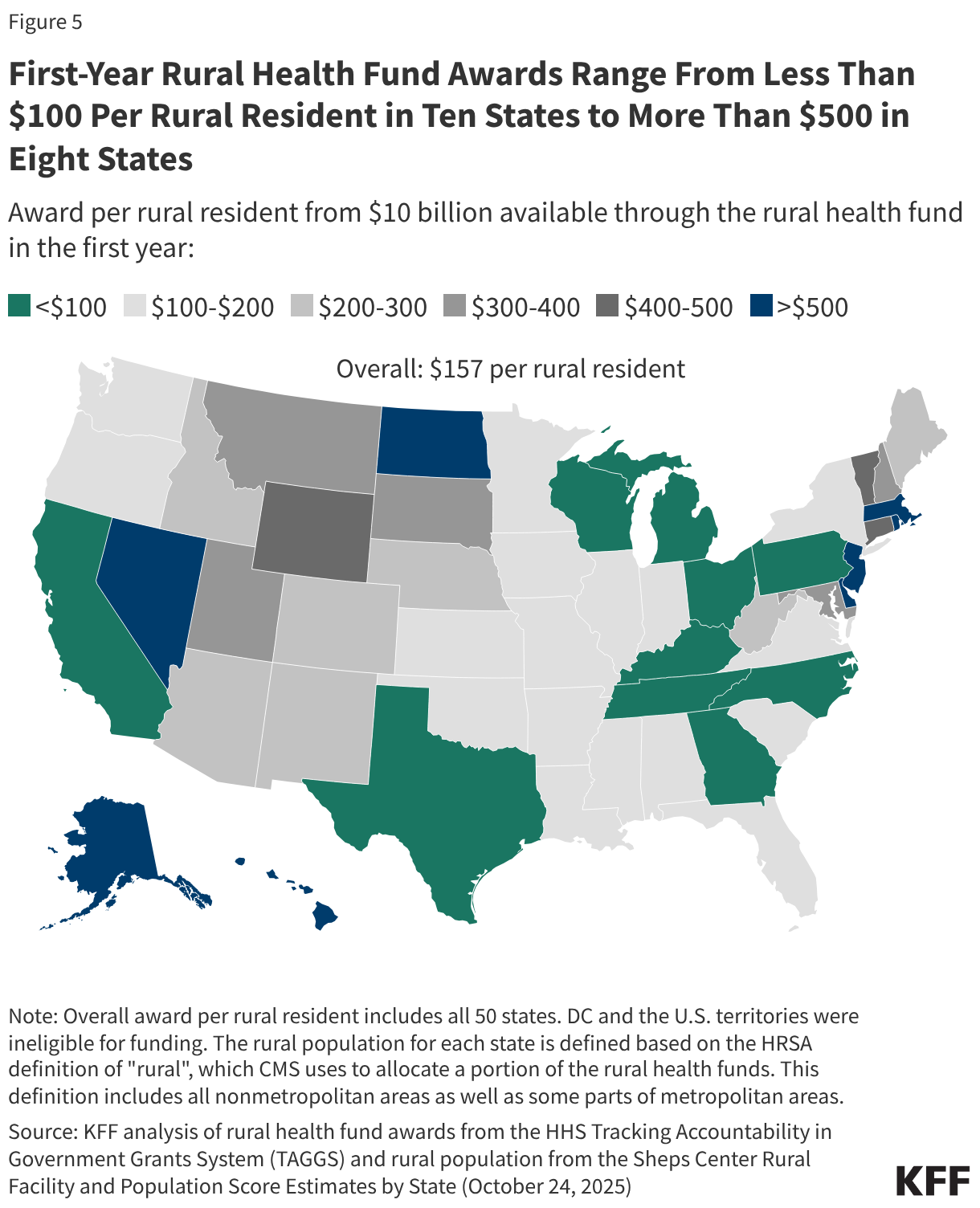
First-year state awards averaged $200 million, stretching from $147 million in New Jersey to $281 million in Texas. Because half of the total fund is distributed equally, per-capita allocations vary wildly across the country. States with massive rural populations, such as Texas, received relatively modest awards on a per-resident basis—amounting to $66 per rural resident in Texas—while smaller states or those benefiting from land-area weightings saw much higher per-capita figures. Alaska, bolstered by land-area provisions and high initiative scores, and smaller eastern states like Rhode Island recorded substantially higher per-resident funding marks.
As states navigate the program’s lifecycle, transparency remains a central issue for researchers, policymakers, and industry groups. While CMS collects granular data on how states obligate and cascade funds downstream to local providers, public reporting is currently limited to progress reports obtainable primarily through formal requests. Stakeholders from the hospital industry and public policy organizations continue to urge federal regulators to establish public-facing online dashboards to track the flow of dollars, evaluate recipient outcomes, and ensure that resources successfully reach the communities most vulnerable to federal spending rollbacks.



