
State budgets across the United States are facing a challenging fiscal crossroads, driven by slowing revenue growth, shrinking pandemic-era reserves, and impending federal policy changes that threaten to squeeze health care funding. As states grapple with these converging pressures, lawmakers are increasingly forced to weigh difficult choices regarding public services, with Medicaid standing squarely in the crosshairs of future budget debates.
Medicaid remains the single largest program providing comprehensive health care and long-term services to one in five Americans. Accounting for nearly one out of every five dollars spent on health care nationwide, the program is administered individually by states under broad federal guidelines. It is jointly funded through a matching program with no spending cap, where the federal government typically covers roughly two-thirds of the total costs while states shoulder the remaining third, though exact matching rates vary across jurisdictions.
Beyond its monumental role in public health, Medicaid serves as a massive engine for state fiscal policy. It functions simultaneously as a major budget expenditure item and the single largest source of federal revenue flowing into state treasuries. According to data compiled by the National Association of State Budget Officers (NASBO), Medicaid accounted for 31 percent of total state spending across all budget items in state fiscal year 2025. While it represented just 17 percent of expenditures drawn directly from state-generated funds, such as general funds and specialized state accounts, it accounted for a striking 57 percent of all expenditures financed by federal funds.
However, the broader financial foundation supporting these state operations is tightening significantly. State fiscal conditions have cooled rapidly following the record-breaking revenue and spending growth witnessed during the immediate post-pandemic recovery. A combination of intentional state tax cuts, persistent inflationary pressures, stock market volatility, and shifting consumer spending patterns has led to a sustained slowdown in state revenue growth spanning several fiscal cycles.
Although many states managed to close fiscal year 2026 with revenues exceeding baseline projections, estimated total revenue growth slowed to roughly 2 percent, a sharp descent from the 5 percent growth recorded in fiscal year 2025. Numerous states even experienced outright declines in revenue collections. Looking ahead, enacted state budgets for fiscal year 2027 are predicated on modest projected revenue growth of just 2 to 3 percent. Recent data and looming federal policy shifts suggest that this long-term fiscal weakness will continue to challenge state policymakers for years to come.
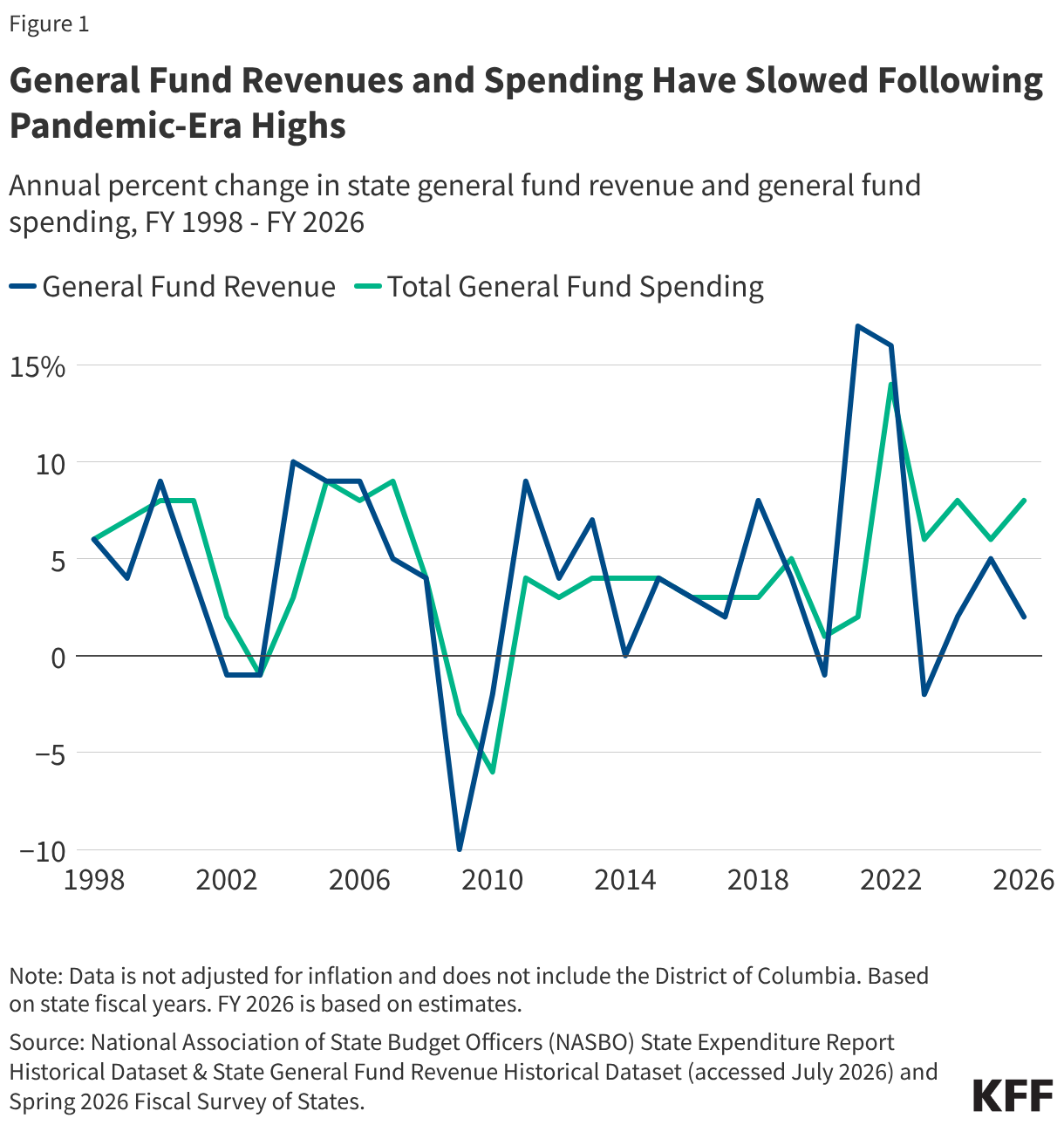
General fund spending growth has mirrored these cooling revenue trends, governed by the constitutional or statutory requirement that states maintain balanced budgets. After peaking at an extraordinary 14 percent growth rate in fiscal year 2022, spending growth moderated steadily through fiscal year 2026. Estimated total general fund spending growth reached 8 percent in fiscal year 2026, while newly enacted budgets for fiscal year 2027 project spending growth hovering between 2 and 3 percent. Rather than expanding public services or launching ambitious new initiatives, recently enacted state budgets are heavily focused on funding core operations and making targeted adjustments to maintain a precarious balance between recurring revenues and ongoing expenditures.
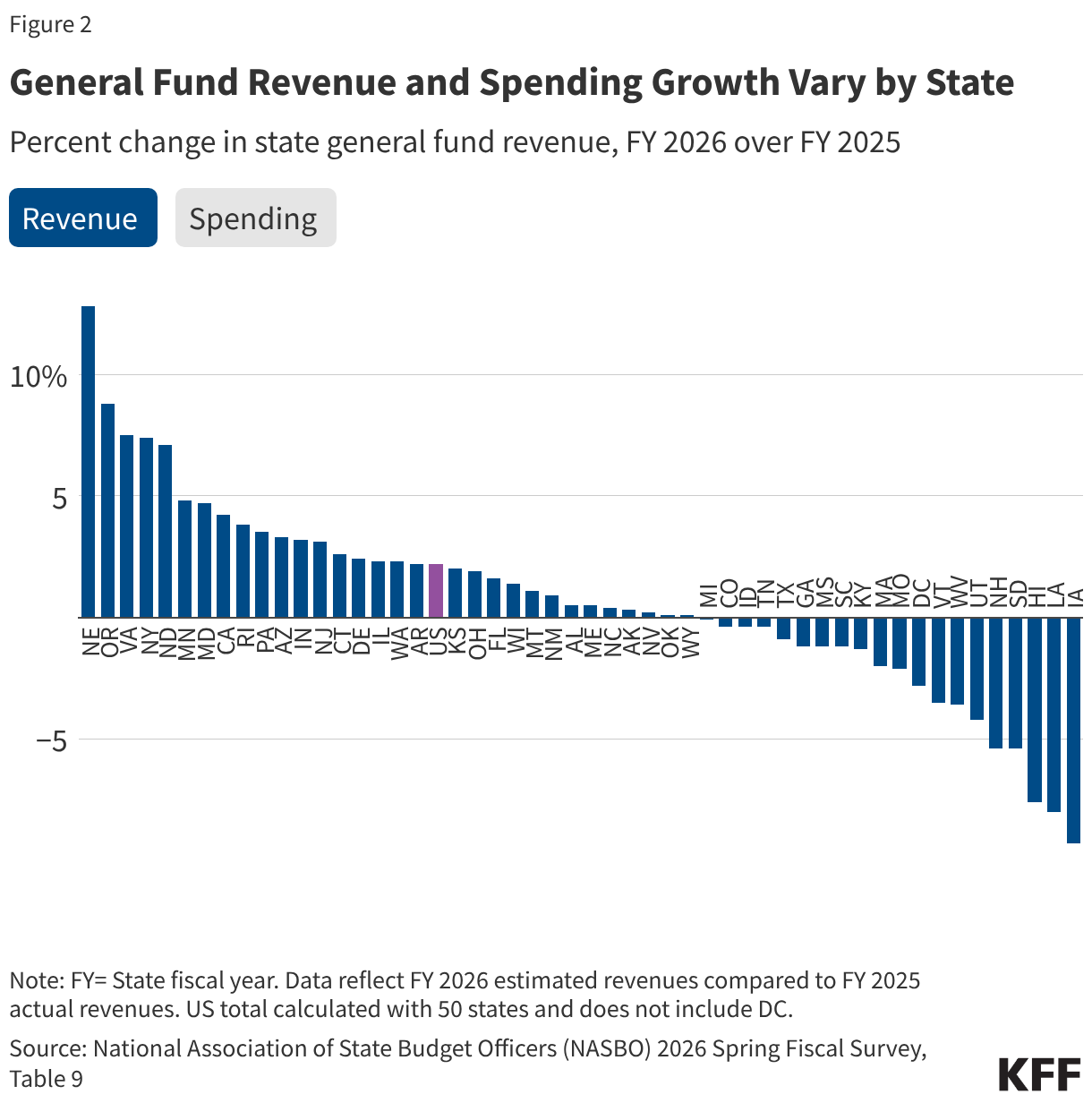
These national averages mask a considerable degree of variation across individual states. In fiscal year 2026, twenty states experienced outright revenue declines, while thirty states saw modest revenue increases below 10 percent, and only a single state recorded growth exceeding 10 percent. Because state general fund revenues rely heavily on personal income, corporate income, and sales taxes, overall performance depends heavily on individual state tax policies and economic structures. While strong collections from personal income taxes have driven what modest growth has occurred, multiple states have recently enacted income tax cuts that could further constrain future revenue streams.
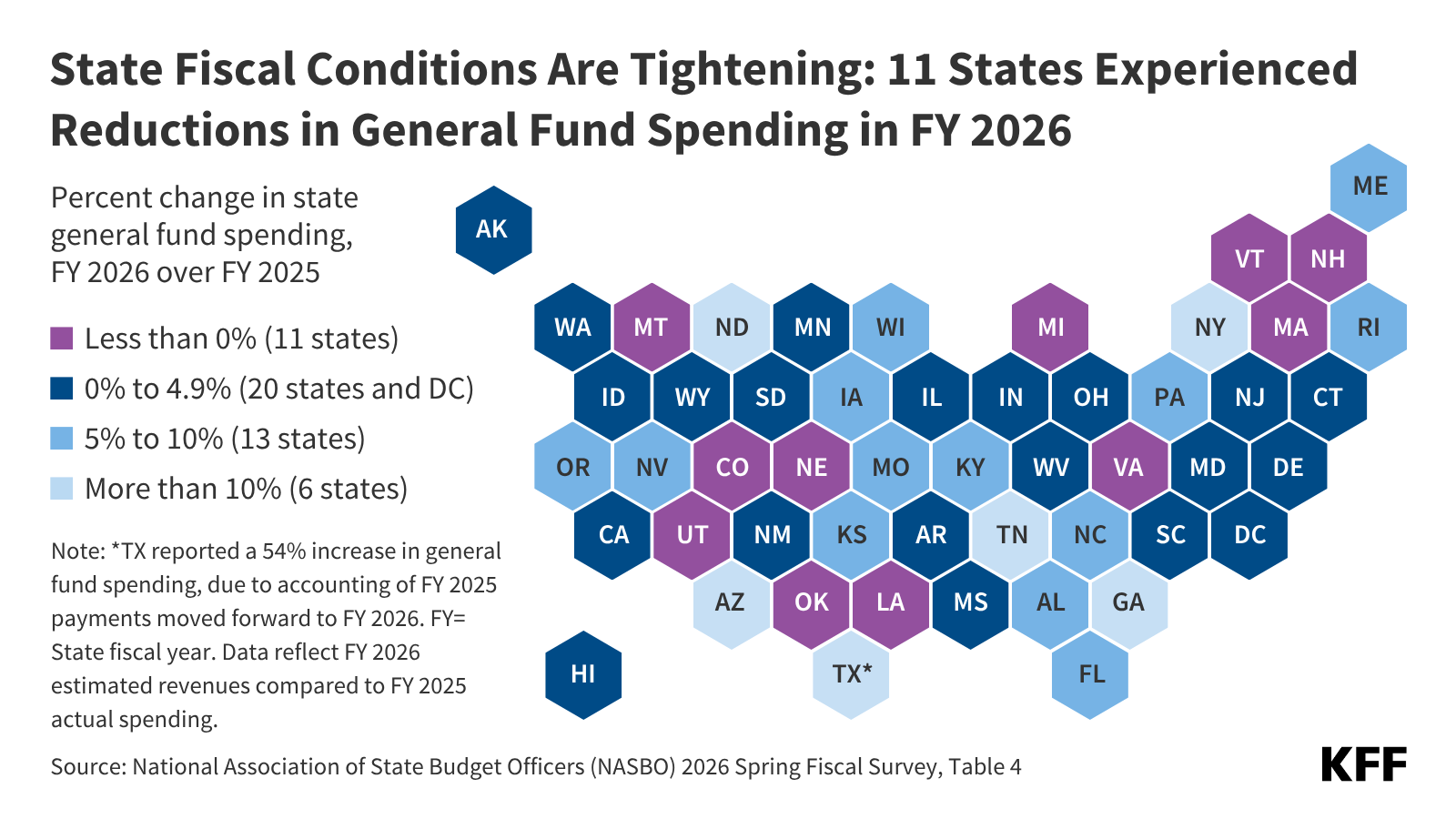
Spending trends have shown a similar divergence. Eleven states experienced reductions in general fund spending during fiscal year 2026, a notable indicator that policymakers have been forced to implement targeted spending cuts or rely on aggressive budget maneuvers to keep pace with rising operational costs driven by high inflation. Five states were compelled to enact mid-year budget cuts during fiscal year 2026 to avert severe shortfalls—a small fraction overall, but the highest number of states taking such emergency measures since fiscal year 2021. The majority of states maintained modest spending growth below 10 percent, while enacted budgets for fiscal year 2027 point toward even broader reliance on cost-containment strategies and spending rollbacks.
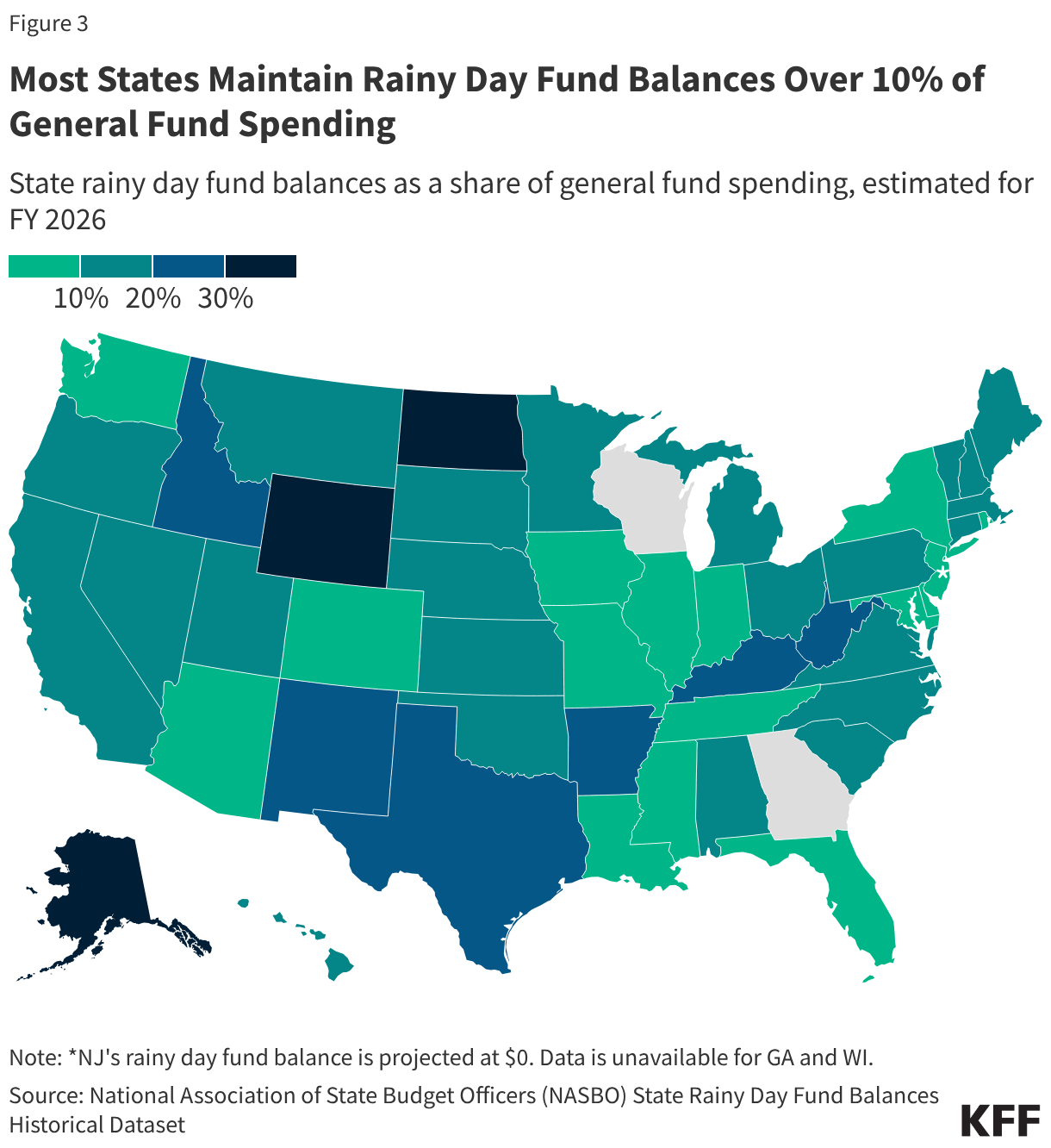
To cushion against these fiscal shocks, many states built up substantial rainy day funds during the multi-year revenue surges of the pandemic era. However, these reserve balances have begun to drift downward from their historic peaks. As revenues moderated, states frequently drew upon surplus funds to finance one-time expenditures or bridge short-term budget gaps. By fiscal year 2026, while most states maintained rainy day fund balances exceeding 10 percent of general fund spending, overall reserves declined, diminishing the capacity of states to rely on accumulated savings moving forward. General fund ending balances and total available balances are projected to continue shrinking as states exhaust prior-year surpluses.
Looking toward fiscal year 2027 and beyond, state budget priorities are primed for potential shifts following midterm elections. As everyday constituents continue to feel the pinch of high living costs, state legislatures may face intense pressure to deliver relief through enhanced social supports or additional tax cuts. At the same time, states are confronting mounting spending demands across multiple fronts, including employee health care, public education, affordable housing, disaster response, and Medicaid. Furthermore, gubernatorial elections in dozens of states will bring fresh administrations, new agency leadership, and shifting policy agendas into the legislative process.
Adding to this complex landscape are broader economic uncertainties and federal policy changes, most notably the implementation of the 2025 federal reconciliation law. This legislation introduces significant alterations to the tax code alongside deep federal funding cuts impacting major programs like Medicaid and the Supplemental Nutrition Assistance Program. Implementing these sweeping federal changes will require costly administrative and technological overhauls for state agencies already grappling with strained resources.
Caught between tightening domestic fiscal conditions, fluctuating consumer spending, and the contraction of federal support, states face mounting pressure to reduce Medicaid spending. The practical impact of the 2025 reconciliation law will vary significantly depending on whether a state expanded Medicaid under the Affordable Care Act and how heavily it relies on provider taxes and state-directed payments.
Because states possess limited flexibility to absorb deep federal funding cuts, their options for balancing budgets are constrained. While raising alternative revenues or slashing funding across other government sectors remains theoretically possible, such moves are exceedingly difficult in a tightening fiscal climate. Consequently, analysts warn that states may increasingly resort to restricting Medicaid provider reimbursement rates, narrowing covered benefits, or tightening eligibility rules to curb state-level spending. A handful of states have already enacted or proposed Medicaid spending cuts, signaling that broader program restrictions could accelerate as the full provisions of the federal reconciliation law take effect.



