
The rapid integration of artificial intelligence into modern healthcare has sparked intense debate among regulators, physicians, and policymakers. As machine learning models and adaptive algorithms begin to influence diagnostics, treatment plans, and administrative workflows, the question of how to govern these dynamic tools has taken center stage.
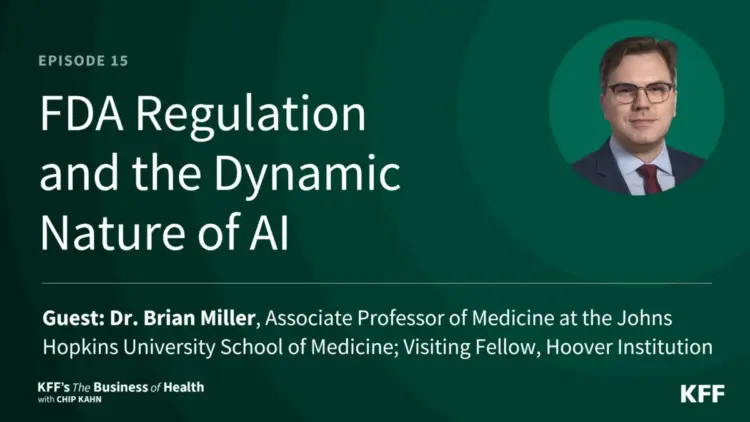
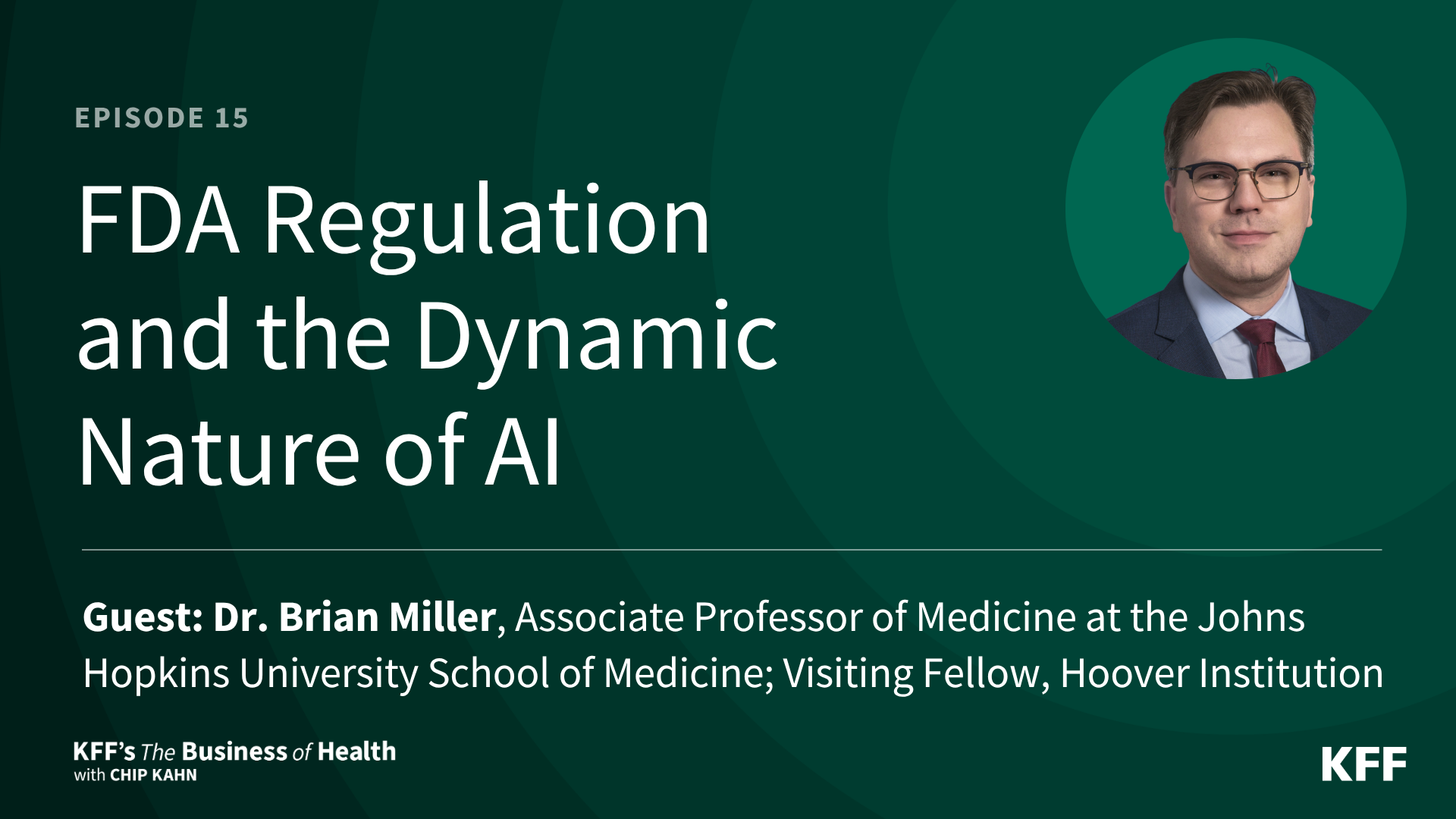
In the latest installment of The Business of Health with Chip Kahn, host Charles N. Kahn III sits down with Dr. Brian Miller to explore the complex intersection of federal oversight, technological innovation, and patient safety. Titled "AI Series: Episode 15," the discussion tackles a central dilemma facing modern healthcare: What happens when the U.S. Food and Drug Administration (FDA) attempts to apply a regulatory framework designed in 1976 to adaptive artificial intelligence technologies that continuously learn and change?
About This Episode
Dr. Brian Miller brings a unique and multifaceted perspective to the discussion of medical technology regulation. As a practicing hospitalist at the Johns Hopkins Hospital, a former official across multiple federal health and regulatory agencies, and an associate professor at Johns Hopkins University, Miller has observed the healthcare ecosystem from nearly every possible vantage point. At Johns Hopkins, he leads a dedicated research group focused on market-driven approaches to FDA regulatory policy and Medicare payment policy.
During the episode, Miller and Kahn examine the fundamental challenges of overseeing software that evolves over time. Traditional medical devices—whether a pacemaker, an orthopedic implant, or a static piece of hospital machinery—are typically manufactured to fixed specifications. Their safety and efficacy can be evaluated through predictable, standardized clinical trials before market entry. Artificial intelligence, however, often operates differently. Machine learning models can update, refine their algorithms, and adapt based on new data streams, rendering traditional, static pre-market approval processes structurally misaligned with the technology’s core nature.
Yet, Miller offers an observation that may challenge conventional wisdom: the manual, human-driven system of medicine practiced today is already significantly less safe and far less consistent than most patients and policymakers assume. Medical errors, diagnostic variability, and systemic inefficiencies remain persistent challenges across healthcare institutions. From Miller’s perspective, the primary danger facing the healthcare sector is not necessarily the unprecedented speed at which artificial intelligence is developing. Instead, what keeps him up at night is the distinct risk that fear-driven, overly restrictive regulation will stifle innovation, ultimately costing society the immense opportunities and life-saving efficiencies that AI offers.
The conversation between Kahn and Miller was recorded shortly before the FDA released a vital discussion paper outlining potential new regulatory pathways for AI and machine learning in medical devices, while actively inviting stakeholder feedback from across the medical, technological, and patient communities. To provide immediate context for listeners, host Chip Kahn offers his own analysis and weighs in on the implications of the FDA’s discussion paper at the conclusion of the episode.
The Host
Charles N. Kahn III, known professionally as Chip Kahn, serves as a senior visiting fellow at KFF, one of the nation’s premier independent health policy research organizations. In addition to his work with KFF, Kahn maintains influential roles across the academic and policy landscape. He is a visiting senior fellow at the American Enterprise Institute and a nonresident senior scholar at the University of Southern California’s Schaeffer Center for Health Policy & Economics.
Furthermore, Kahn contributes his expertise internationally as the co-chair of the Future of Health collaborative, a global initiative focused on navigating the long-term structural evolution of healthcare delivery, finance, and technology. Through The Business of Health, Kahn leverages his extensive background in health policy to connect the dots between the complex business realities of the healthcare sector, regulatory frameworks, and the ultimate impact on patients.
Guest: Dr. Brian Miller
Dr. Brian Miller, MD, MBA, MPH, is deeply immersed in both the clinical and regulatory dimensions of modern American healthcare. As a practicing hospitalist at the Johns Hopkins Hospital, he confronts the day-to-day realities of patient care, bedside decision-making, and institutional workflows. Academically, he serves as an Associate Professor of Medicine and holds a courtesy appointment in business at Johns Hopkins University, while also acting as a Visiting Fellow at the Hoover Institution.
Dr. Miller directs a multidisciplinary research group comprising approximately twenty professionals who analyze market-driven solutions within FDA regulatory policy and Medicare payment policy. His extensive resume of public service includes regulatory and analytical experience at the Centers for Medicare & Medicaid Services (CMS), the Federal Trade Commission (FTC), the Federal Communications Commission (FCC), and the FDA itself. This broad federal background has given him firsthand familiarity with complex regulatory domains, ranging from corporate merger reviews and software evaluations to medical device product oversight and federal payment policy.

Beyond his academic and research responsibilities, Dr. Miller holds significant leadership and advisory roles that directly influence national health programs. He serves as a Commissioner on the Medicare Payment Advisory Commission (MedPAC), an independent legislative branch agency that provides critical advice and policy recommendations to Congress regarding the $1 trillion Medicare program. Additionally, he serves as a Trustee for the North Carolina State Health Plan, a $4.5 billion comprehensive healthcare program providing coverage to more than 750,000 state employees, dependents, and retirees. A resident of Washington, D.C., Miller frequently acts as an advisor to members of Congress and other elected officials on matters pertaining to health economics, regulatory reform, and medical innovation.
The Broader Context: AI in Healthcare
The dialogue between Kahn and Miller forms a core component of The Business of Health podcast series dedicated entirely to artificial intelligence in healthcare. As healthcare organizations nationwide race to adopt digital tools, administrative automation, and clinical decision-support systems, policymakers face the urgent task of catching up with rapid technological deployment.
The podcast series is designed to illuminate the profound ways in which artificial intelligence is reshaping the healthcare landscape. By bringing together clinicians who utilize these tools in daily practice, healthcare executives managing institutional consequences, and policy architects designing the rules of the road, the series provides a comprehensive look at the future of medicine. As federal agencies deliberate on how best to safeguard patients without obstructing progress, discussions like the one between Kahn and Miller offer vital insights into balancing rigorous safety standards with the undeniable momentum of technological innovation.



