
Managed care remains the dominant delivery mechanism for the nation’s Medicaid population, with over three-quarters of all beneficiaries currently enrolled in comprehensive managed care organizations (MCOs). These private plans account for half of total national Medicaid spending as of fiscal year 2024, wielding immense influence over healthcare access, network adequacy, and state budgets. However, the operational and financial landscape for these insurers is shifting dramatically. The implementation of the 2025 federal budget reconciliation law is introducing profound rate-setting challenges for state officials and actuaries alike, as sweeping policy changes to program financing, stringent work requirements, and more frequent eligibility redeterminations for expansion adults take effect across the country.
These regulatory and policy adjustments threaten to introduce deep uncertainty regarding future enrollment volumes and overall member health risk—known in the industry as acuity—as states develop their capitation rates. Amid this brewing financial volatility, major market shifts are already underway. Executives from Elevance Health announced during a July earnings call that the corporation plans to exit Washington, D.C.’s Medicaid market and expects to pull out of additional state markets in the near future. Shortly after that announcement, the Louisiana Department of Health confirmed that an Elevance Health plan will formally exit its state Medicaid program at the conclusion of 2026.
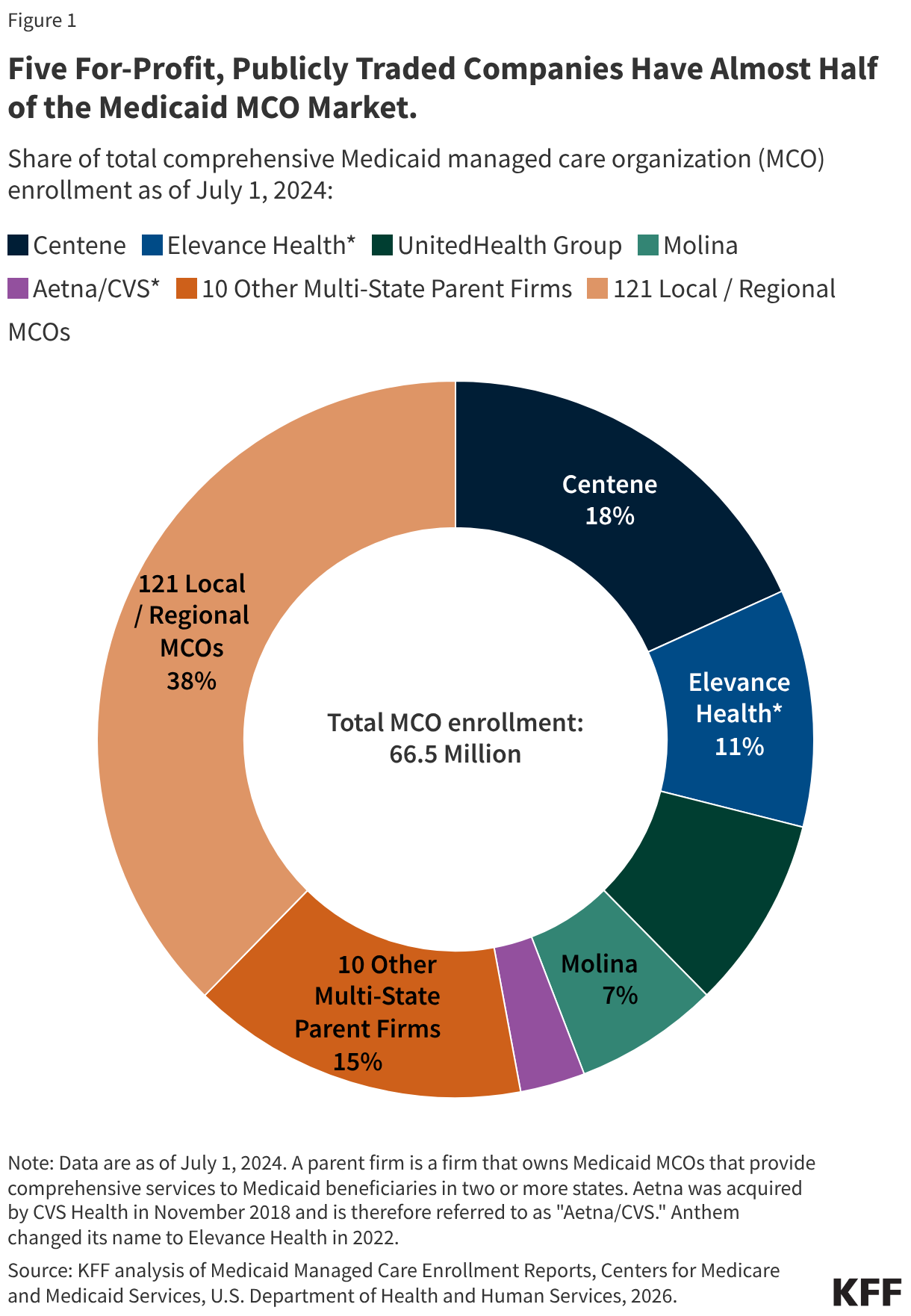
While individual market entries and exits are a standard feature of the managed care ecosystem, strategic decisions by Elevance Health and other dominant multi-state parent firms carry profound implications. Because a handful of massive corporations control nearly half of all national MCO enrollment, any large-scale contraction in their market participation reverberates across state agencies, vulnerable enrollees, and local healthcare providers.
States and Plans Anticipate Complex Rate-Setting Hurdles Under the 2025 Reconciliation Law
Managed care organizations operate under a financial model where they assume full financial risk for the services covered under their state contracts. In exchange, they receive a prospective per member per month capitation payment. These rates must be actuarially sound and are typically locked in for a 12-month rating period, meaning plans must absorb unforeseen fluctuations in healthcare costs or patient utilization once the rates are finalized. To manage this inherent risk and protect against payments that are either excessively high or unlivable, states frequently employ various risk-mitigation strategies. These include risk-sharing arrangements, risk and acuity adjustments, medical loss ratio caps, and performance-based incentive structures.
In KFF’s 2025 Medicaid budget survey, numerous states expressed acute concern over their ability to accurately project the financial and operational fallout of new federal mandates. Specifically, officials pointed to the difficulties of forecasting the impacts of newly enacted work requirements and accelerated eligibility redeterminations for expansion adults. These provisions directly influence both the total number of enrolled individuals and the average health status of the remaining risk pool. Furthermore, upcoming caps and reductions tied to provider taxes and state-directed payments are expected to compound these rate-setting complexities.
These impending hurdles arrive on the heels of a turbulent financial period for Medicaid insurers. During the nationwide unwinding of the pandemic-era continuous enrollment provision, millions of beneficiaries were disenrolled, leading to a leaner and notably sicker population remaining on the rolls. As higher member risk and heightened utilization patterns crystallized by late 2023, numerous states rushed to seek federal approval for mid-cycle rate adjustments throughout fiscal years 2024 and 2025.
Data compiled from the National Association of Insurance Commissioners highlights the financial strain of this period. The average medical loss ratio—the share of premium revenues spent directly on medical care—for the Medicaid managed care market climbed sharply from 88 percent in 2023 to 91 percent in 2024. This marked the highest average medical loss ratio observed across any major health insurance market, including group coverage, individual plans, and Medicare Advantage, and represented the peak for the Medicaid managed care sector over the past decade. A higher medical loss ratio inherently signals a tighter margin for administrative costs and a potential compression of corporate profitability.
Despite these historical pressures, opinions vary regarding future acuity shifts. While some plans saw dramatic spikes in medical complexity as enrollment dropped during the unwinding, executives from several large multi-state parent firms have noted on recent earnings calls that future acuity changes driven by work requirements and frequent redeterminations may not be as dramatic. This is primarily because these specific policy mechanisms target expansion adults rather than the entirety of the Medicaid demographic.
Concentration Among For-Profit Insurers Amplifies Market Vulnerability
The national Medicaid managed care market is heavily consolidated, with just five for-profit, publicly traded companies—Centene, Elevance Health, UnitedHealth Group, Molina Healthcare, and CVS Health through Aetna—accounting for nearly half of all MCO enrollment. These corporate giants maintain an extensive geographic footprint, with each operating managed care plans in 13 or more of the 42 states that utilize comprehensive MCO programs.
This high degree of market concentration magnifies the impact of any single company’s strategic retreat. In July 2026, leadership at Elevance Health signaled a deliberate shift in strategy, informing investors that the company intends to exit select Medicaid markets over the next 12 to 18 months. Executives stated they are actively reviewing their broader Medicaid portfolio and will pull out of geographic regions where prevailing economics no longer support sustainable financial performance.
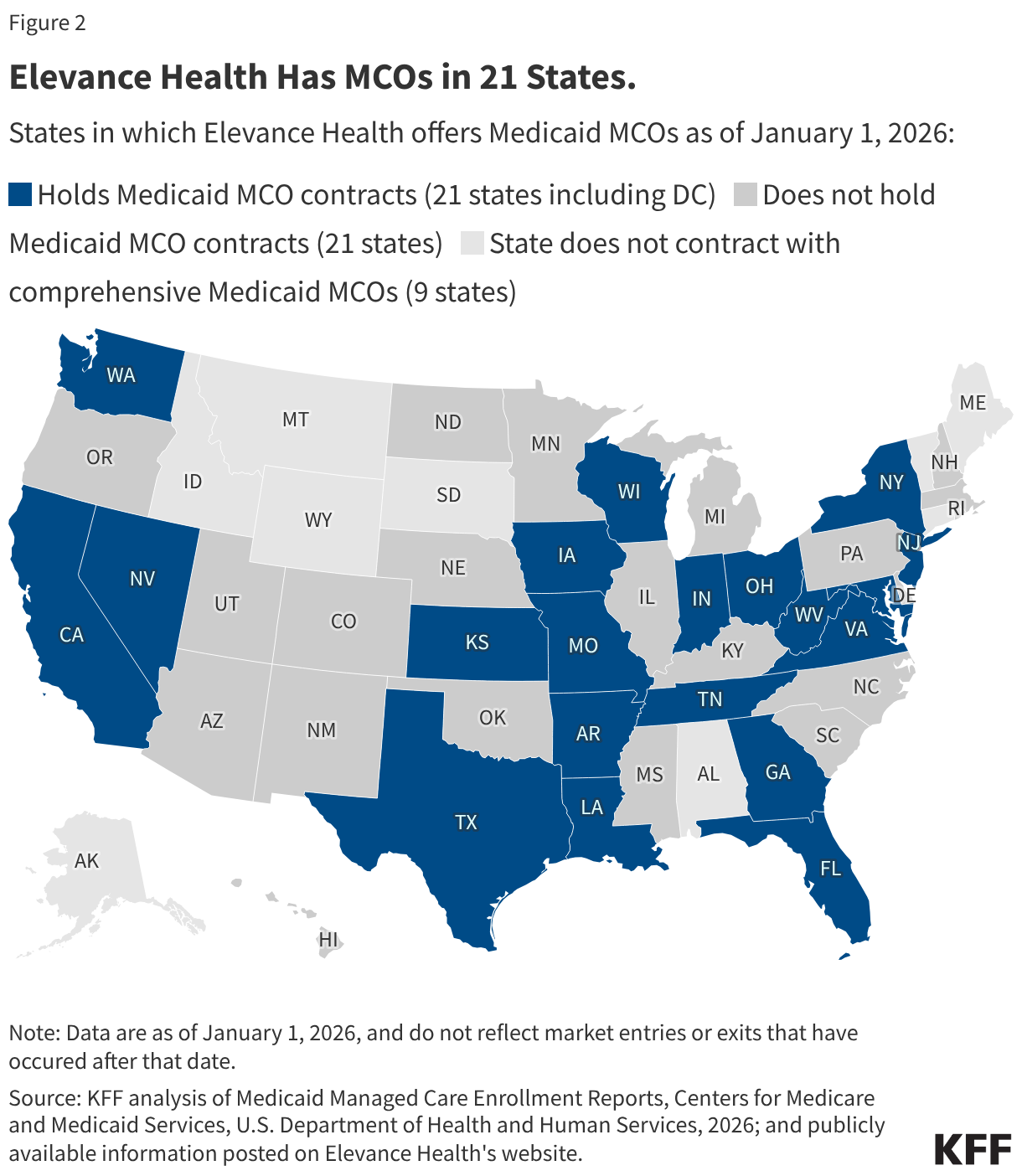
While Elevance executives did not publicly enumerate every target state or disclose the exact number of enrollees who will ultimately be impacted, the company currently maintains MCO operations across 21 states. Its individual market share within those states ranges widely from 6 percent to 44 percent, and Medicaid revenue accounts for roughly 20 percent of the firm’s total medical membership. Elevance leadership noted that although overall acuity shifts are beginning to moderate and state rates are slowly catching up to historical experience, patient utilization remains stubbornly elevated compared to pre-pandemic baselines. Consequently, the company projects a full-year 2026 operating margin for its Medicaid line of -1.75 percent, alongside expectations for incremental acuity pressure extending into 2027.
The practical effects of this strategy are already materializing. Wellpoint DC, an Elevance subsidiary formerly known as Amerigroup, officially exited the District of Columbia’s Medicaid program on August 1, 2026, following what officials described as a mutual agreement with the local Department of Health Care Finance. That contract, originally awarded in 2022 after a heavily contested procurement battle, was initially slated to run through January 2028. Shortly thereafter, in September 2026, the Louisiana Department of Health announced that Elevance’s Healthy Blue plan would similarly depart the state’s Medicaid landscape when its current contract expires at the end of 2026.
While other dominant for-profit operators like Centene, Molina, UnitedHealth, and CVS did not announce sweeping market exits during their respective second-quarter earnings calls in 2026, localized contractions are already surfacing elsewhere. Centene has reportedly disclosed plans to withdraw from Arkansas’s Medicaid expansion program in 2027, which relies on Medicaid funds to subsidize private Marketplace coverage, pointing directly to persistent funding challenges.
Potential Consequences for Providers, Enrollees, and Market Stability
The departure of major managed care plans from state Medicaid programs carries immediate administrative and clinical consequences. For healthcare providers, plan transitions create substantial operational burdens. Medical practices must navigate changing network agreements, update credentialing, and process new administrative workflows at the exact moment many providers are already stretched thin helping patients understand and comply with complex new eligibility and work-reporting rules.
For enrollees, sudden plan exits frequently trigger disruptions in care. Patients may discover that their trusted primary care physicians or specialists are no longer in-network under a new plan, or they may face delays while attempting to secure fresh prior authorizations for ongoing medical treatments. Such disruptions can carry severe clinical consequences, particularly for vulnerable populations, including pregnant individuals and patients undergoing active courses of treatment for chronic or acute conditions.
Federal regulations establish baseline requirements for managed care enrollment processes and continuity of care, while state contract requirements provide an additional layer of protection. States possess the regulatory authority to mandate that departing plans provide advance notice within strict timeframes and seamlessly transfer member data to state agencies and incoming insurers. Furthermore, states can compel newly contracted plans to honor existing prior authorizations granted by a patient’s previous insurer and require temporary out-of-network access to ensure uninterrupted treatment.
Looking toward the long term, large-scale plan exits could fundamentally reshape the competitive dynamics of state insurance markets. On one hand, the exit of consistently underperforming or financially unstable plans could theoretically elevate the overall quality of care within a market. On the other hand, a reduction in the number of participating insurers within an already concentrated marketplace risks diminishing healthy competition. Such a contraction can yield negative long-term consequences regarding healthcare costs, network breadth, and patient access. To mitigate these risks, state policymakers increasingly rely on strategic procurement rules and program design to maintain robust competition and safeguard quality across their Medicaid managed care programs.



