As voters across the United States cast their ballots in the 2026 midterm elections, reproductive rights emerged as a defining issue at the polls. A comprehensive new analysis from KFF, utilizing supplemental survey data from the NORC Civic Health and Elections Project, highlights the profound impact that abortion-related ballot measures played in shaping voter turnout and electoral outcomes in four high-profile states: Idaho, Missouri, Nevada, and Virginia.
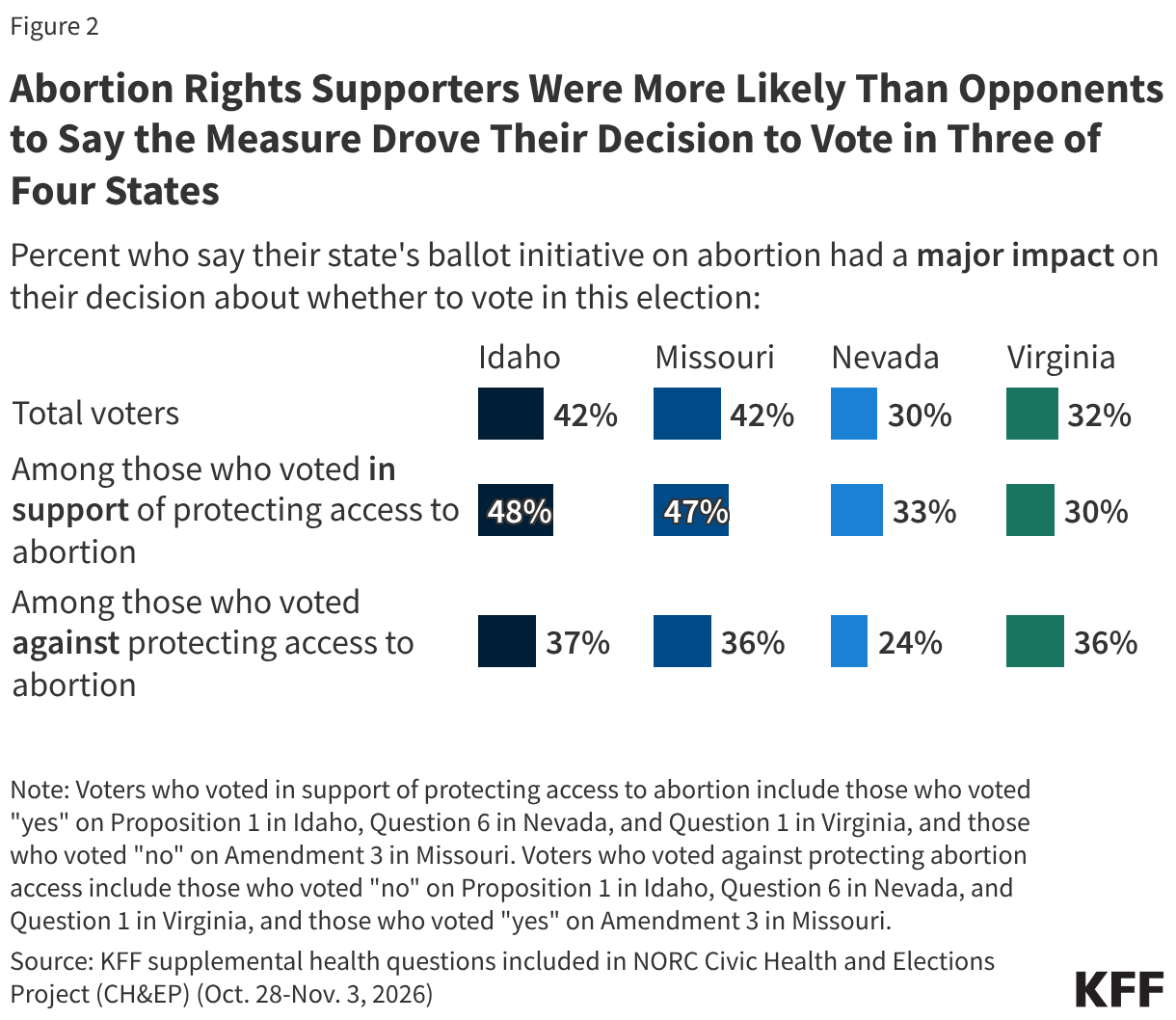
The nationwide survey, conducted by NORC at the University of Chicago among approximately 95,000 registered voters from late October through the close of polls on November 3, 2026, provides a detailed look at how electorate attitudes mapped onto state-level initiatives. Across Idaho, Missouri, Nevada, and Virginia, at least three in ten voters stated that their state’s abortion ballot measure had a "major impact" on their ultimate decision to vote.
The Evolving Landscape of State Abortion Ballot Measures
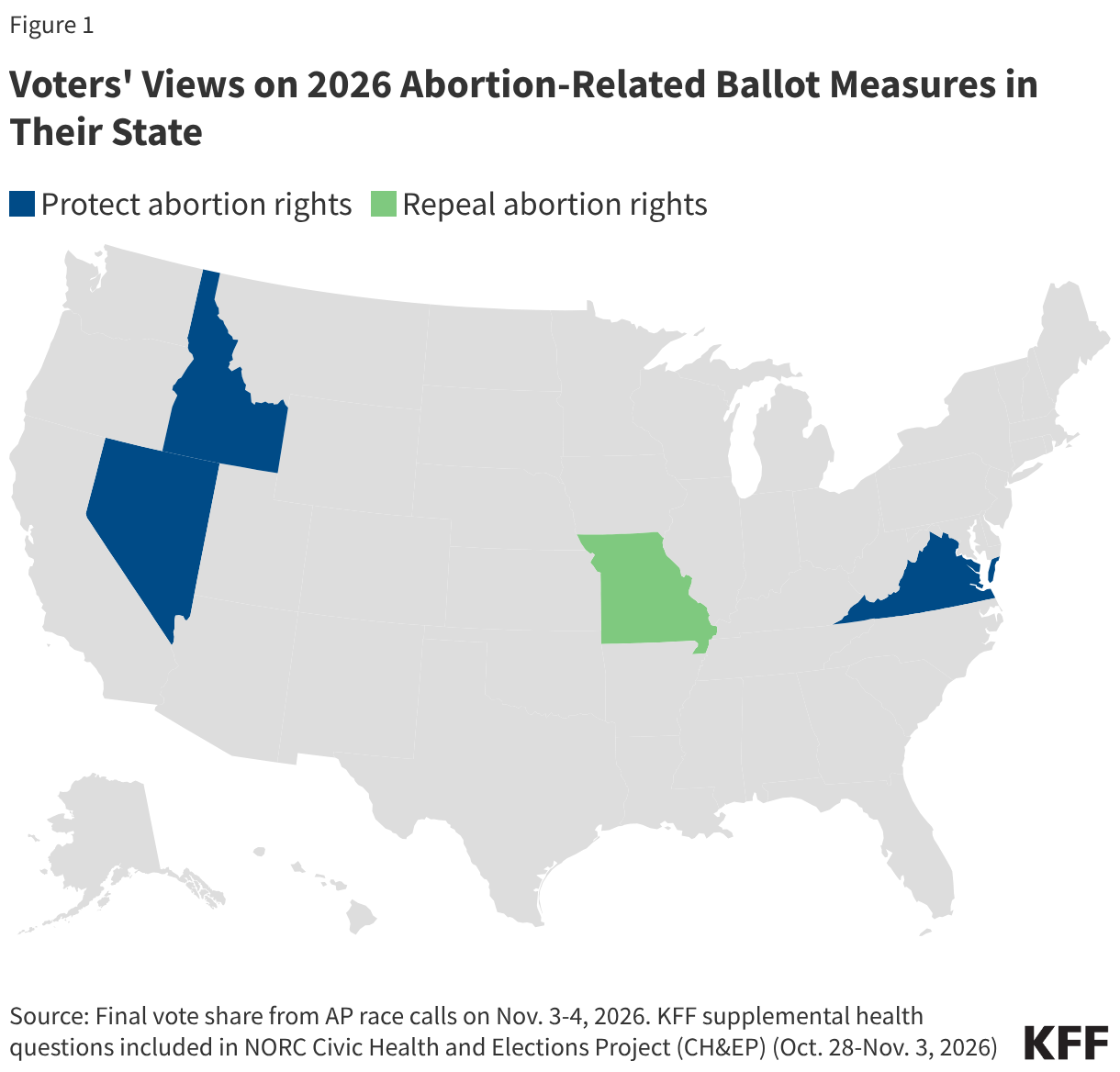
The 2026 midterms featured diverse legislative and citizen-led strategies regarding reproductive healthcare. In three of the four focal states—Idaho, Nevada, and Virginia—the measures were designed to establish or protect abortion rights. Meanwhile, in Missouri, the Republican-majority legislature advanced an initiative aimed at repealing a constitutional right to abortion that voters had approved just two years prior in 2024, while simultaneously introducing a strict constitutional prohibition on gender-affirming care for minors.
Ultimately, voters in three of the four states chose to protect or expand abortion access, while the measure in Idaho failed, maintaining that state’s strict regulatory framework. The dynamic nature of these battles demonstrated how deeply polarized and mobilized the electorate remained following the shifting legal landscape established in recent years.
Missouri Weighs Dual Healthcare Provisions on Amendment 3
Missouri served as one of the most complex battlegrounds of the 2026 midterms. In 2024, Missouri voters had successfully passed Amendment 3, a citizen-initiated measure that embedded a right to reproductive freedom—including abortion up to fetal viability—directly into the state constitution. Seeking to reverse this, the legislature placed a new measure, also designated as Amendment 3, on the 2026 ballot.
Had the 2026 measure succeeded, it would have repealed the 2024 constitutional amendment, effectively banning abortion except in narrow circumstances involving medical emergencies, fetal anomalies, or cases
of rape and incest up to 12 weeks of pregnancy. Furthermore, it would have empowered the state legislature to enact additional restrictions and written a permanent constitutional ban on surgical and hormonal gender-affirming care for minors into state law.
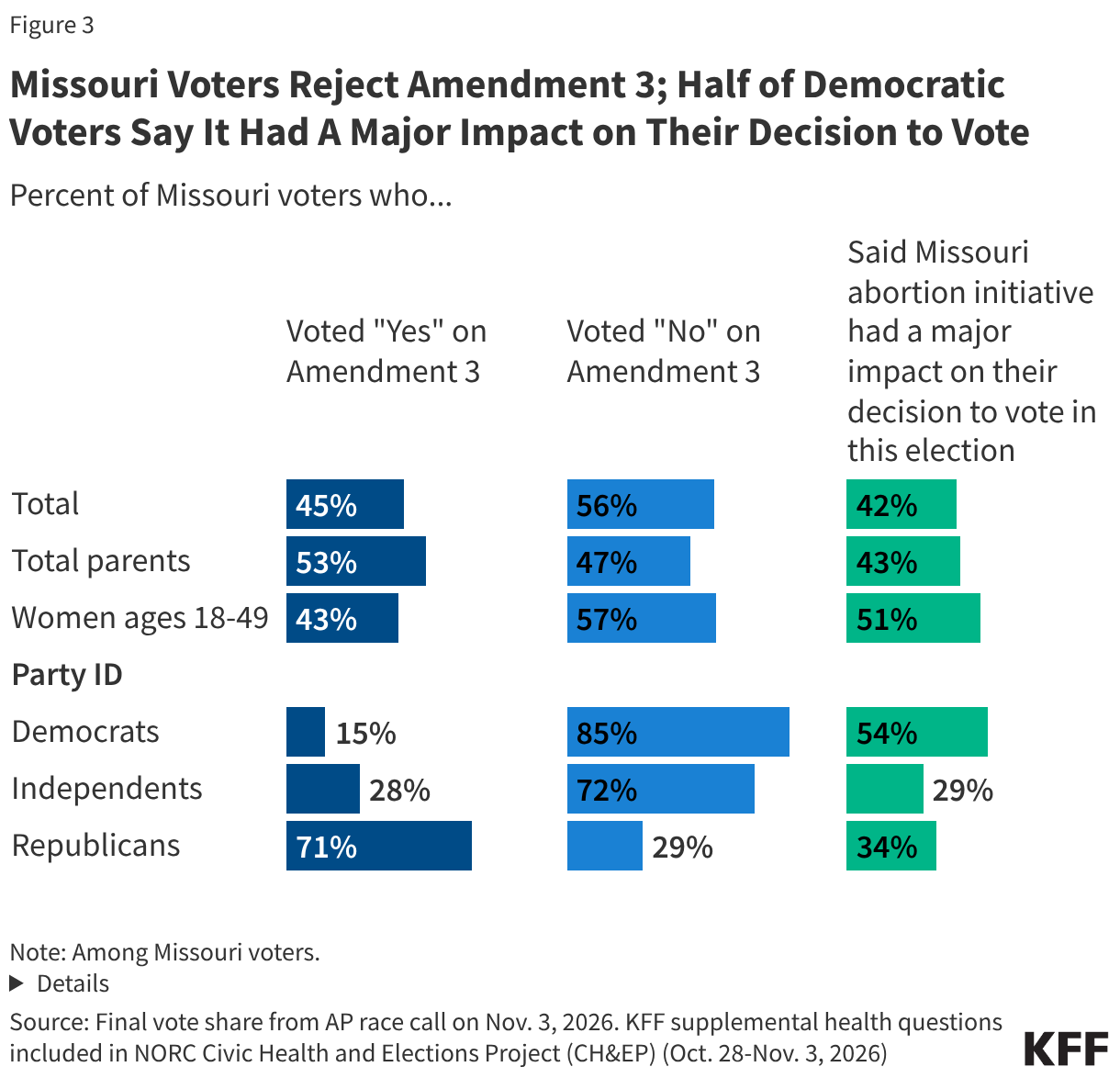
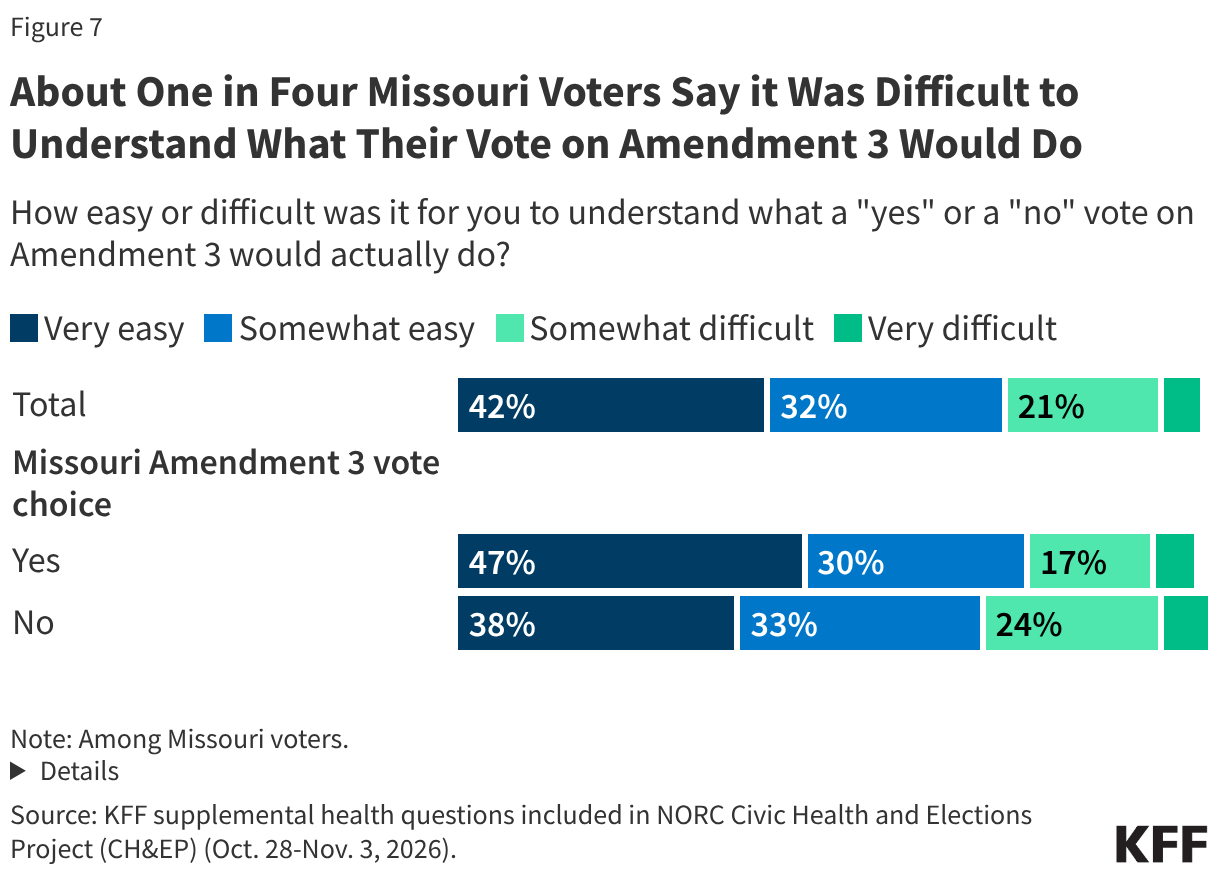
Despite these efforts, Missouri voters rejected the new Amendment 3, with 56 percent casting "no" votes to preserve the constitutional abortion rights secured in 2024. The partisan divide was sharp: approximately 71 percent of Republicans supported the repeal measure, whereas 85 percent of Democrats and 72 percent of independents voted against it. Notably, fewer than half—43 percent—of women of reproductive age supported the measure that would have reinstated the state’s abortion ban. Overall, about four in ten Missouri voters reported that the measure significantly influenced their decision to turn out, a figure that rose to 51 percent among women of reproductive age and 54 percent among Democratic voters.
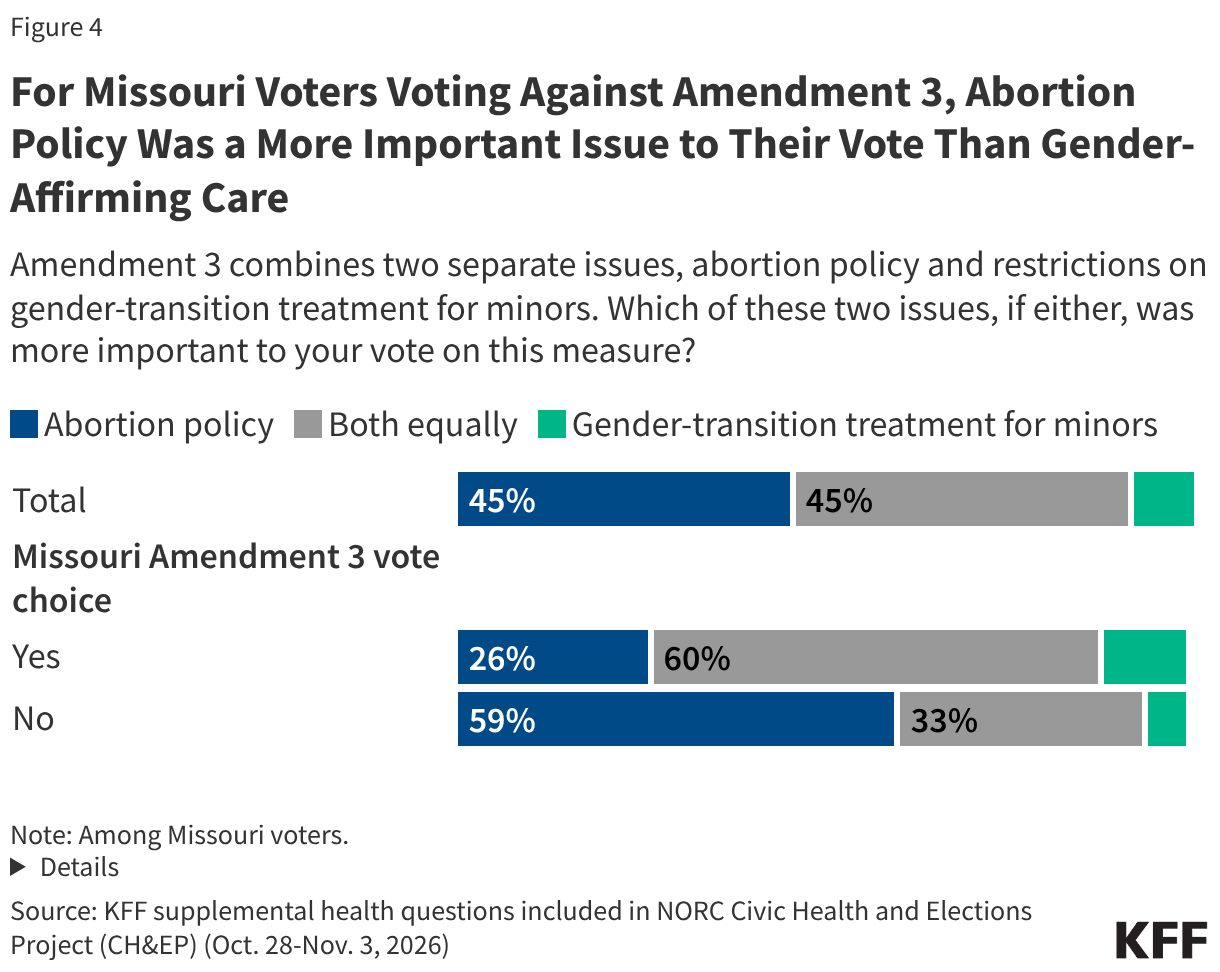
The dual nature of Amendment 3 forced voters to weigh two separate and controversial policy questions within a single ballot choice. When surveyed about which issue carried more weight for their vote, 45 percent of Missouri voters pointed to abortion policy as the primary factor, compared to just 8 percent who named gender-affirming care for minors. Another 45 percent felt both issues were equally important.
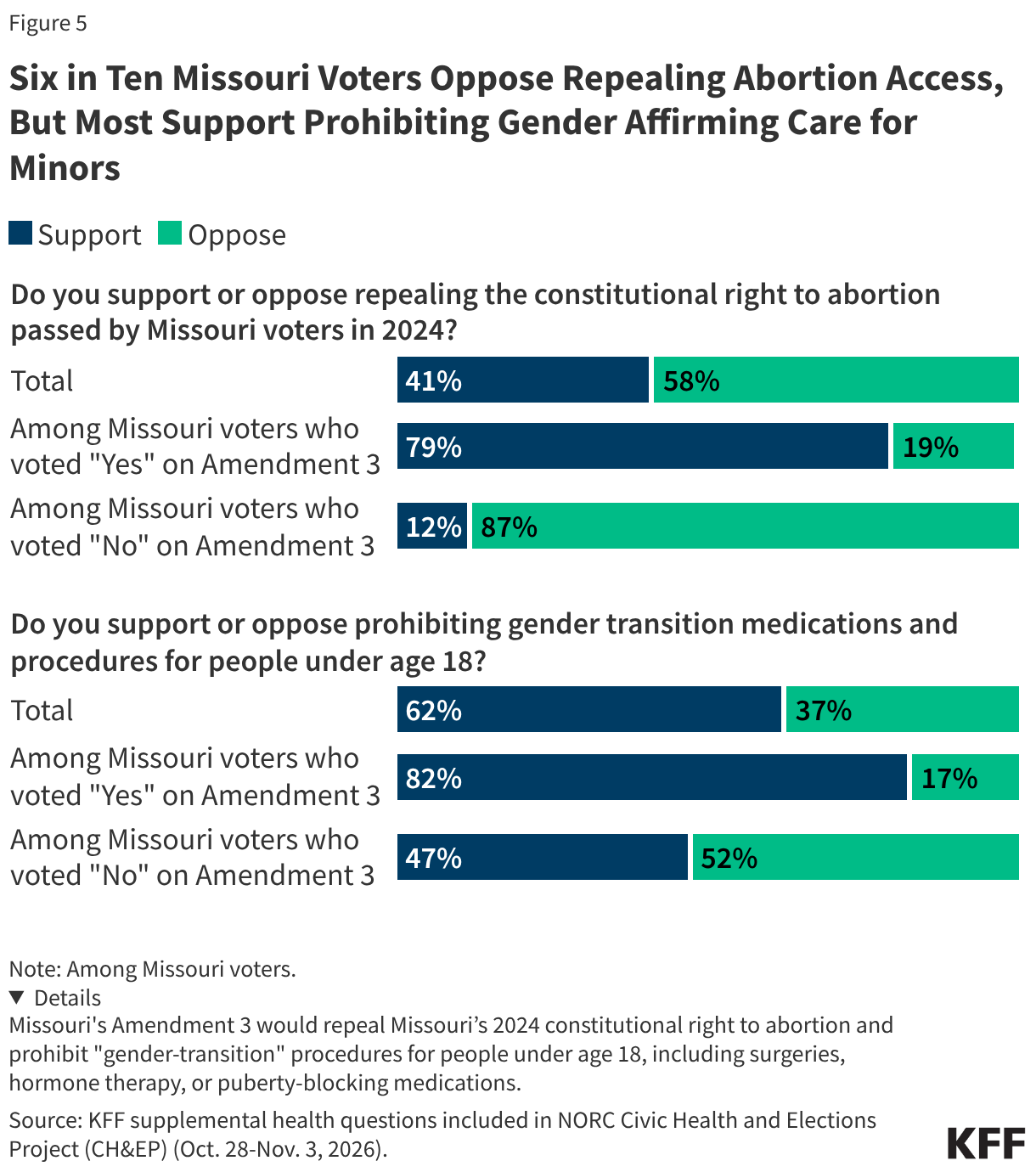
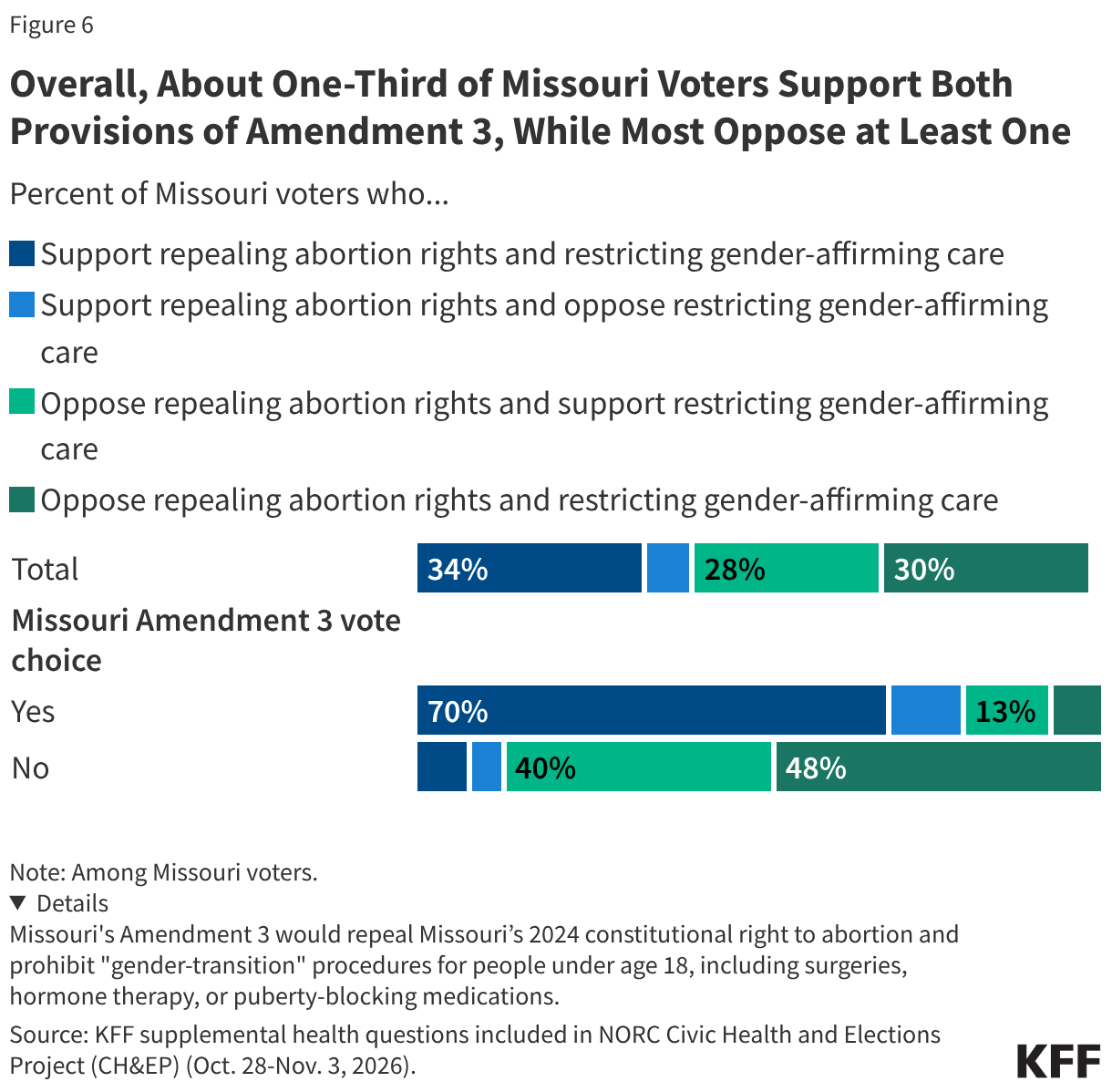
For opponents of the measure, abortion policy was overwhelmingly the more salient concern; 59 percent of "no" voters stated abortion was the more critical issue. Conversely, 60 percent of those who voted "yes" on the amendment felt both issues carried equal weight. When asked about the provisions individually, 58 percent of Missouri voters opposed repealing the 2024 abortion rights amendment, while 62 percent expressed support for prohibiting gender-affirming care for minors. This complex interplay meant that a substantial number of voters held cross-pressured views, such as the nearly three in ten voters who opposed repealing abortion rights yet supported restrictions on gender-affirming care for minors.
Idaho Proposition 1 Defeated, Keeping Restrictive Laws in Place
In Idaho, a state characterized by some of the most stringent abortion statutes in the nation, voters considered Proposition 1, the Reproductive Freedom and Privacy Act. This citizen-initiated statute sought to establish a fundamental right to reproductive freedom, encompassing abortion access prior to fetal viability and post-viability exceptions for medical emergencies. It also aimed to protect privacy regarding contraception, fertility treatments, miscarriage management, and comprehensive prenatal and postnatal care.
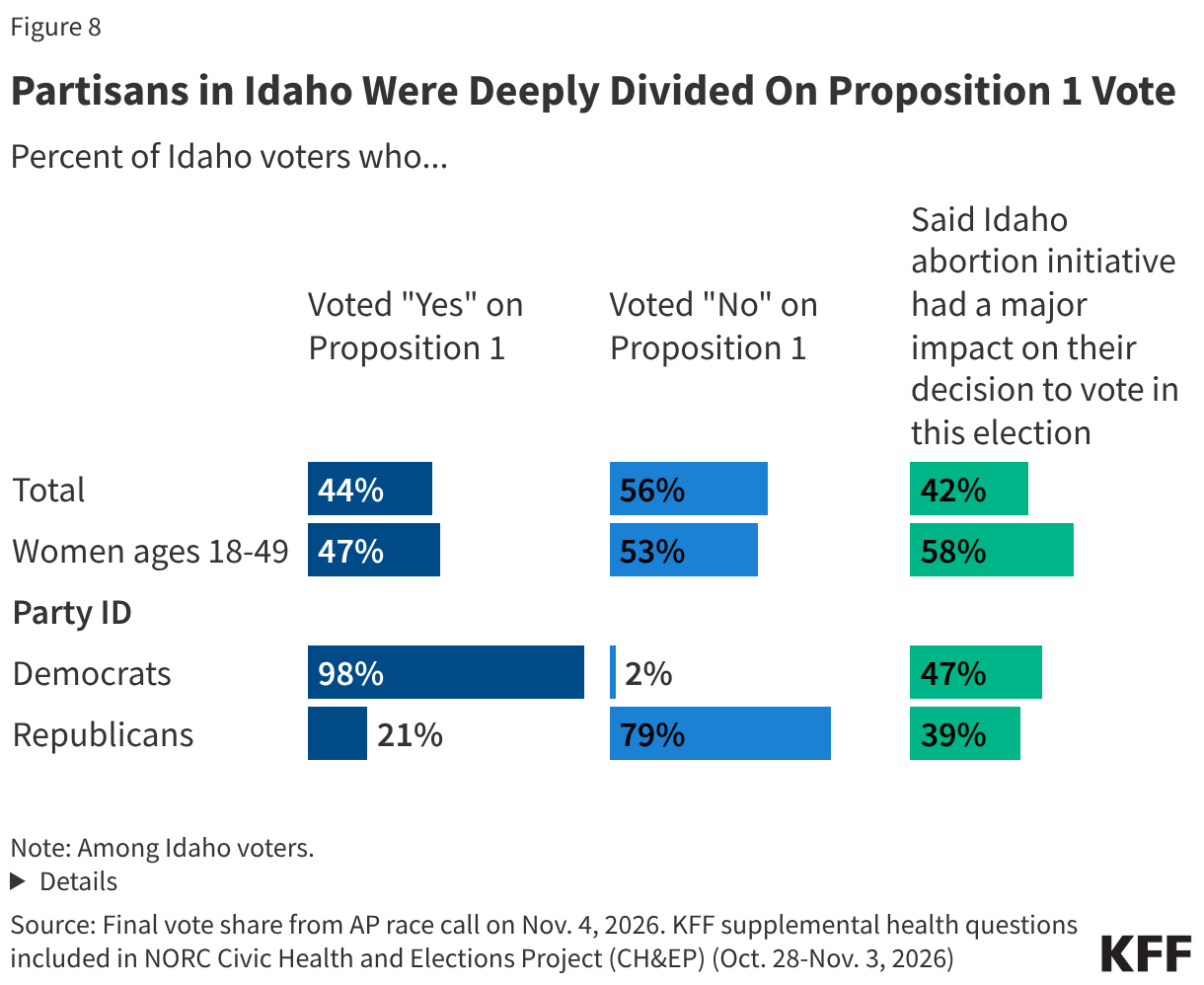
Idaho voters ultimately rejected Proposition 1, with 56 percent voting "no." The initiative drew predictable partisan splits, gaining backing from 98 percent of the state’s Democrats, while approximately 79 percent of Republicans voted against it. Women of reproductive age in Idaho were closely divided on the proposition, with 47 percent voting to expand access and 53 percent voting to reject it. Roughly four in ten Idaho voters stated the measure had a major impact on their turnout, climbing to nearly six in ten among women of reproductive age.
The issue also intersected with the state’s gubernatorial race. Democratic candidate Terri Pickens campaigned in support of Proposition 1, whereas incumbent Republican Governor Brad Little—who signed the state’s restrictive 2020 abortion ban—opposed it. Data showed that about one in five voters who cast a ballot for Governor Little also voted "yes" on Proposition 1, highlighting instances of split-ticket calculus among Idahoans.
Nevada Reaffirms Abortion Protections via Question 6
Nevada voters faced a decisive moment regarding Question 6, the Right to Abortion Initiative, marking the second consecutive general election the measure appeared on the ballot. Because Nevada law mandates that citizen-initiated constitutional amendments must pass in two successive general elections, the 2026 vote was the final hurdle. Voters had previously approved the measure in 2024 with 64 percent support.
Question 6 successfully crossed the finish line, passing with 63 percent of the vote. The initiative officially enshrines a constitutional right to abortion up to fetal viability, with necessary protections for the life and health of the pregnant person post-viability. Support was robust across key demographics, including nine in ten Democrats, nearly half of Republicans, and 83 percent of women of reproductive age.
The initiative unfolded alongside a competitive gubernatorial election. Democratic Attorney General Aaron Ford endorsed Question 6, while Republican Governor Joe Lombardo maintained that abortion rights should remain in the hands of voters, having previously signed a 2023 law safeguarding out-of-state patients traveling to Nevada for care. Among those who voted for Governor Lombardo, 44 percent also cast a "yes" vote on Question 6, illustrating broad bipartisan undercurrents supporting reproductive access in the state.
Virginia Enshrines Reproductive Freedom in the Constitution
In Virginia, voters decided on Question 1, a constitutional amendment placed on the ballot by the General Assembly after securing approval across two consecutive legislative sessions. The amendment successfully codified the right to reproductive freedom into the state constitution, covering prenatal care, childbirth, contraception, abortion, miscarriage management, and fertility treatments, while allowing regulations during the third trimester unless the life or health of the pregnant person is endangered.
The measure passed comfortably, with 62 percent of Virginia voters supporting the amendment. Over nine in ten Democrats (94 percent) and roughly one-third of Republicans (35 percent) voted in favor. Furthermore, three-quarters of women of reproductive age in Virginia supported protecting access through the constitutional change.
The vote coincided with a high-stakes U.S. Senate election featuring Democratic incumbent Senator Mark Warner and Republican challenger Bert Mizusawa. Among voters who supported Mizusawa, about 31 percent also voted in favor of Question 1, while 92 percent of Warner’s supporters backed the constitutional amendment, reinforcing the broad electoral coalition that coalesced around the measure.
Methodology
The insights on the 2026 midterm electorate are derived from the Civic Health and Elections Project, administered by NORC at the University of Chicago. Beginning October 28 and concluding as polls closed on November 3, 2026, the survey engaged approximately 95,000 registered voters nationwide and across all 50 states. The methodology combined random samples drawn directly from state voter files with nonprobability approaches and interviews from NORC’s probability-based AmeriSpeak panel to ensure demographic representation. The project was supported by a consortium of sponsors, including KFF, with NORC retaining final editorial control over the questionnaire content.