Carlos Murillo has spent his life proving that physical disability does not equate to a limited existence. The 32-year-old Illinois resident, who was born with spina bifida and began using his first wheelchair at age three, has transformed his 30s into an ongoing masterclass in adaptive adventure, relentless goal-setting, and accessible exploration.
From high-octane adaptive sports like para-motoring, waterskiing, and wheelchair rugby to an ambitious stadium-hopping tour and multi-state travel itineraries, Murillo’s journey is built on a simple premise: obstacles exist to be navigated, not to define what is possible. Through determination, thorough planning, and an unwavering drive to test his personal limits, Murillo continues to prove that courage and preparation can unlock experiences once thought impossible.
Origin Story and Mindset
Murillo’s entry into the world of adaptive sports was far from planned. His journey began in 2007 during a holiday gathering organized by GLASA Adaptive Sports (Great Lakes Adaptive Sports Association).
“I started adaptive sports in 2007 at a Christmas party, playing basketball with GLASA Adaptive Sports,” Murillo recalled.
That initial exposure to adaptive basketball planted a seed, but it was not until much later that his desire for diverse experiences coalesced into a structured mission. About two years ago, Murillo decided to turn his personal ambitions into a concrete bucket list.
“The bucket list started about two years ago because there were a lot of things I wanted to do,” he said. “I just didn’t know how to go about it, so that’s why I made my bucket list.”
Entering his 30s provided a renewed sense of purpose and exploration that far exceeded his earlier years. “I’m finding so much more in my 30s than I ever did in my 20s,” Murillo reflected.
When asked whether he experienced moments of self-doubt or hesitation early in his journey, Murillo expressed a philosophy centered on resilience and personal growth: “I don’t have doubts or regrets. I have lessons!”
Adaptive Sports: Pushing Physical Boundaries
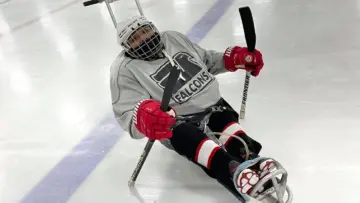
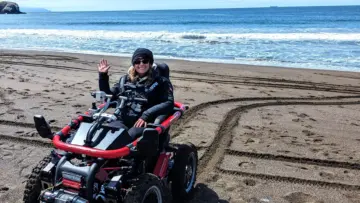
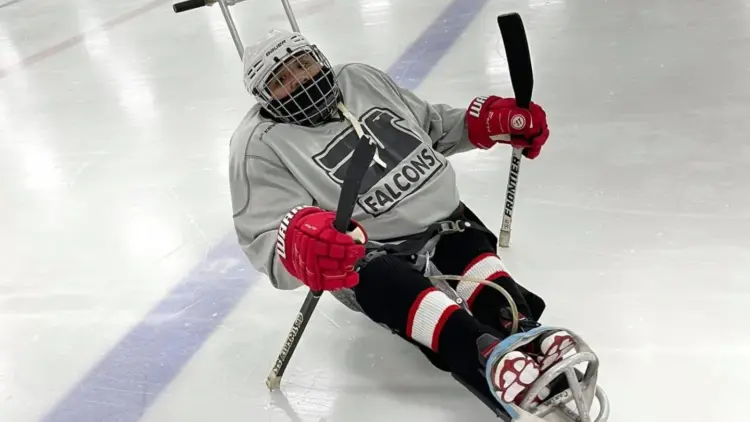
Over the years, Murillo has assembled an extraordinary resume of athletic pursuits. He has taken part in zip-lining, waterskiing, kayaking, snow skiing, scuba diving, go-kart racing, sled hockey, wheelchair rugby, archery, horseback riding, rock climbing, cycling, and para-motoring.
Among those pursuits, some activities yielded immediate surprises. For Murillo, finding out that high-wire adventure could be made accessible was a revelation.
“Zip-lining [surprised me most], because I didn’t think there was an adaptive program out there,” Murillo explained.
While some sports offered instant thrill, others presented intense physical challenges. Cycling, in particular, tested his strength and endurance.
“Cycling was hard because going uphill was very challenging,” Murillo noted. “Pushing a bike uphill is not the greatest.”
Despite the vast technical differences between sports as distinct as scuba diving, rock climbing, and sled hockey, Murillo relies less on complex strategies and more on adaptability and repetition.
“I really don’t have any techniques! It just takes a few tries to get the hang of each sport,” he said.
Certain activities immediately resonated with him, securing a permanent spot among his favorite endeavors. “Zip-lining, para-motoring, and waterskiing,” Murillo said when highlighting the activities he fell in love with right away.
Much of his success has been made possible through dedicated community organizations, including GLASA Adaptive Sports, H2O Adaptive Sports, Diveheart, Shirley Ryan AbilityLab, and Wisconsin Adaptive Ski. For newcomers stepping into these adaptive programs for the first time, Murillo emphasized that the environment is welcoming and invigorating.
“It’s actually really fun when you start interacting with different athletes and trying different sports,” he said.
The Bucket List and Future Adventures
Murillo’s appetite for new challenges remains unsated, with his current bucket list leaning heavily toward high-speed, high-adrenaline experiences. Next on his agenda are NASCAR driving experiences and adaptive paragliding.
“I love the adrenaline rush they give me,” Murillo stated regarding his draw toward high-speed activities.
His broader wishlist includes supercar rides, adaptive paragliding, helicopter flights, parasailing, adaptive surfing, whitewater rafting, adaptive mountain biking, and skydiving.
While Murillo eagerly anticipates many of these upcoming challenges, he acknowledges that different activities evoke different emotional responses. “I’m excited about supercar rides and parasailing, and nervous about adaptive surfing and whitewater rafting,” he admitted.
Selecting which experiences make the cut requires a practical evaluation process. “I look at the pros and cons, and also at what looks more appealing to do,” Murillo explained.
Once an adventure is completed and checked off the list, replacing it is a matter of continuous exploration. “Just by searching the web and thinking of new ideas,” he said.
Sports Fandom and the Stadium Tour
Alongside his participation in adaptive athletics, Murillo is an avid sports spectator with a goal to visit as many sports venues as possible. His venue-collecting journey covers stadiums across Major League Baseball (MLB), the National Hockey League (NHL), the National Basketball Association (NBA), the National Collegiate Athletic Association (NCAA), minor league baseball, rugby, and the National Women’s Soccer League (NWSL).
“I really love sports, so honestly, I just wanted to go to as many stadiums as possible,” Murillo said.
Minor league baseball parks hold a special place on his itinerary, with stops including host cities like Kenosha, Schaumburg, South Bend, Midland, and San Antonio. The appeal of minor league venues comes down to practical factors and direct community outreach.
“The cost of the games,” Murillo cited as a key draw. “I also usually email the teams to ask for complimentary tickets.”
Evaluating venue accessibility across different sports leagues has given Murillo firsthand insight into how stadium design impacts wheelchair users. Among the stadiums he has visited, one minor league facility left a particularly positive impression: “The Schaumburg Boomers’ stadium,” Murillo highlighted as a venue that stood out for its accessibility.
With dozens of stadiums already checked off, Murillo maintains an open-ended goal for future ballpark visits. “There are a lot on the list. I couldn’t pick just one,” he said.
The Realities of Accessible Travel
Murillo’s travels have taken him across North America, including extensive trips throughout California, Texas, Florida, Michigan, Indiana, Minnesota, and Wisconsin, as well as international travel to Mexico and Canada. Managing travel as a full-time wheelchair user requires meticulous advance work.
“There is a lot of planning involved, such as hotels and accommodations, transportation, and wheelchair-accessible things to do,” Murillo explained.
Different regions offer vastly different structural conditions for travelers with physical disabilities. In Murillo’s experience, domestic infrastructure often leads the way in universal accessibility.
“Texas and California stood out the most accessibility-wise,” Murillo noted. On the other hand, historic infrastructure abroad presents unique obstacles: “The country that fell short was Mexico, just because of the cobblestones.”
When evaluating a new travel destination or venue, Murillo remains focused on his primary aspirations rather than getting bogged down by extensive checklists. “I don’t have a personal checklist. I just really want to go skydiving,” he shared.
Reflecting on the broader landscape of travel resources for individuals with disabilities, Murillo noted a key truth that guidebooks often downplay: “That not everything is wheelchair accessible.”
For wheelchair users who may be hesitant to undertake their first solo journey or adventure trip, Murillo’s advice is straightforward and uncompromising: “Just do it. Be fearless.”
Looking ahead, his travel itinerary continues to expand globally. His next major voyage involves international waters: “I’m going on a cruise to Honduras, the Bahamas, and Mexico next year.”
Advocacy, Purpose, and Personal Motivation
Through his visibility in adaptive sports and accessible travel, Murillo hopes to break down misconceptions regarding what individuals with spina bifida and other mobility limitations can achieve. He stresses that adaptive sports opportunities are far more widespread than most people realize.
“That it is out there; you just have to look for it,” Murillo said regarding what he wishes the public understood about adaptive recreation.
To individuals who have recently acquired a disability or started using a wheelchair and worry their days of outdoor adventure are over, Murillo offers direct encouragement: “Don’t be afraid to try new things. Just send it.”
By sharing his ongoing journeys, Murillo aims to inspire both disabled individuals and the broader public to reexamine their assumptions about physical potential. “I want people to see that they can go out there and try new things,” he said.
For those unsure of how to locate adaptive programs in their home regions, Murillo advises using basic online research tools to make the first connection. “Just start searching the web. Eventually, you will find something.”
When facing intimidation before attempting a new, high-risk sport, Murillo draws strength from internal drive and external mentorship. “My coaches and myself, because giving up is not an option,” he affirmed.
Among all his accomplishments, completing a zip-line course holds a particularly deep emotional resonance for him. “Zip-lining [stuck with me], because I thought I would never get to do it since I couldn’t find an adaptive program,” he reflected.
Looking back on a lifetime of defying expectations, Murillo takes quiet pride in every single milestone he has achieved along the way. “I’m proud of everything I’ve done,” Murillo said. “If I weren’t, I wouldn’t have done it.”
Reflecting on the advice he would give his younger self at the start of his journey, Murillo summarized the core lesson of his life so far: “That a lot of things are possible. You just have to work for them.”