
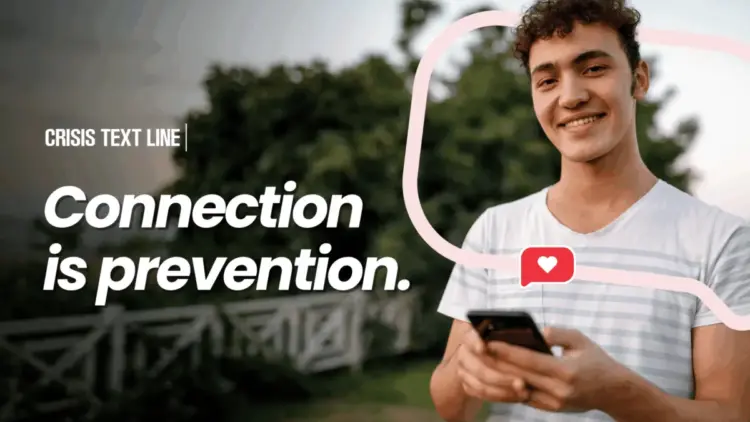
As communities across the United States observe National Suicide Prevention Month this September, leading mental health organizations are focusing their advocacy and outreach on a fundamental premise: that simple, everyday human interaction can serve as a vital protective barrier against tragedy. Crisis Text Line, a prominent provider of free, 24-hour mental health support, has anchored its campaign for this year around the core message that "Connection is Prevention."
The nationwide initiative extends through World Mental Health Day on October 10, highlighting a concept that mental health professionals say is often overlooked in traditional clinical settings. While intensive medical interventions, hospital care, and professional therapy remain critical components of healthcare infrastructure, advocates emphasize that the vast majority of suicide prevention actually occurs much earlier, in ordinary moments when an individual feels genuinely seen, heard, and supported by someone in their personal life.
Throughout September, the organization is encouraging individuals to proactively reach out, check in on friends, family members, and colleagues, and foster meaningful dialogues. According to mental health experts, even a brief, low-pressure conversation can act as a significant lifeline during a difficult night, helping to bridge the gap between isolation and safety. For anyone currently experiencing immediate distress, crisis support remains accessible at all hours by texting the keyword CONNECT to 741741, connecting individuals with a live, trained volunteer Crisis Counselor free of charge, confidentially, and without judgment.
Understanding the Roots of Suicide Prevention Month
National Suicide Prevention Month takes place annually every September, serving as a concentrated period for public awareness campaigns, educational events, and community mobilization across the United States. The observance brings together advocates, survivors, healthcare providers, and community leaders to destigmatize conversations surrounding mental health, promote available resources, and remember those lost to suicide.
The urgency surrounding mental health advocacy remains pronounced as global and domestic stressors continue to impact everyday well-being. Insights drawn from annual trend reports underscore the persistent need for accessible intervention resources, the importance of recognizing subtle warning signs, and the vital necessity of maintaining dependable lifelines. Every day, support systems handle a wide array of complex emotional challenges, demonstrating that timely intervention can instill a renewed sense of hope and alter the trajectory of someone experiencing a severe crisis.
How Connection Acts as a Protective Factor
Extensive research into suicide risk and prevention points to social connectedness as a primary protective factor. Strong, dependable relationships significantly influence how an individual navigates overwhelming distress. While clinical interventions are essential during acute emergencies, everyday social bonds help mitigate the accumulation of severe stress before a crisis point is ever reached.
People who maintain meaningful connections with family members, friends, or local communities are statistically less likely to experience profound isolation and more likely to seek help when difficulties arise. Interpersonal connection fundamentally changes how a person holds on during turbulent times, serving as an anchor against despair.
Conversely, the subjective experience of loneliness remains a pervasive challenge that transcends physical surroundings. Mental health professionals note that loneliness is not strictly defined by physical solitude. An individual can experience profound isolation in a crowded room, within a household of people who do not truly understand them, or while possessing a digital contact list filled with names but no one to actually call. Addressing this experience is vital, as feelings of isolation are among the most common and treatable hurdles in mental health care.
Overcoming the Barrier of Hesitation
One of the most common obstacles preventing individuals from reaching out to someone they care about is the fear of saying the wrong thing. Many people hesitate because they believe effective support requires a specialized script or professional training. However, mental health advocates stress that perfection is entirely unnecessary. A simple expression of care, such as checking in with a casual message or asking how someone is holding up, can carry substantial weight.
Furthermore, effective support does not require waiting for someone to explicitly ask for help or use specific terminology regarding self-harm. Individuals who are struggling internally often withdraw rather than reach out. They may quietly cancel social plans, pull back from group conversations, or exhibit subtle shifts in communication patterns. Recognizing these understated warning signs and initiating contact regardless of uncertainty can make a profound difference. Mental health advocates emphasize that taking the initiative to check in—even if a person turns out to be fine—is infinitely preferable to remaining silent and wondering later.
The Significance of Visibility and Community Action
As part of the annual observance, official awareness campaigns utilize specific symbols and visual markers to foster open dialogue. The designated colors for National Suicide Prevention Month are purple and teal. These colors appear widely on awareness ribbons, digital graphics, and community displays, serving as a visible reminder that suicide is preventable and that confidential support is readily available. Wearing or sharing these colors helps normalize conversations surrounding mental health that might otherwise remain unspoken.
Community members looking to participate in awareness efforts can engage through various advocacy initiatives, educational outreach, and supportive community actions designed to amplify the message that no one has to carry emotional burdens alone. Contributions and donations directly sustain continuous, round-the-clock text-based counseling services, ensuring that individuals navigating dark moments retain immediate access to compassionate support.
Anyone in need of immediate assistance can text CONNECT to 741741 to reach a live, trained volunteer Crisis Counselor at any time of day or night.



