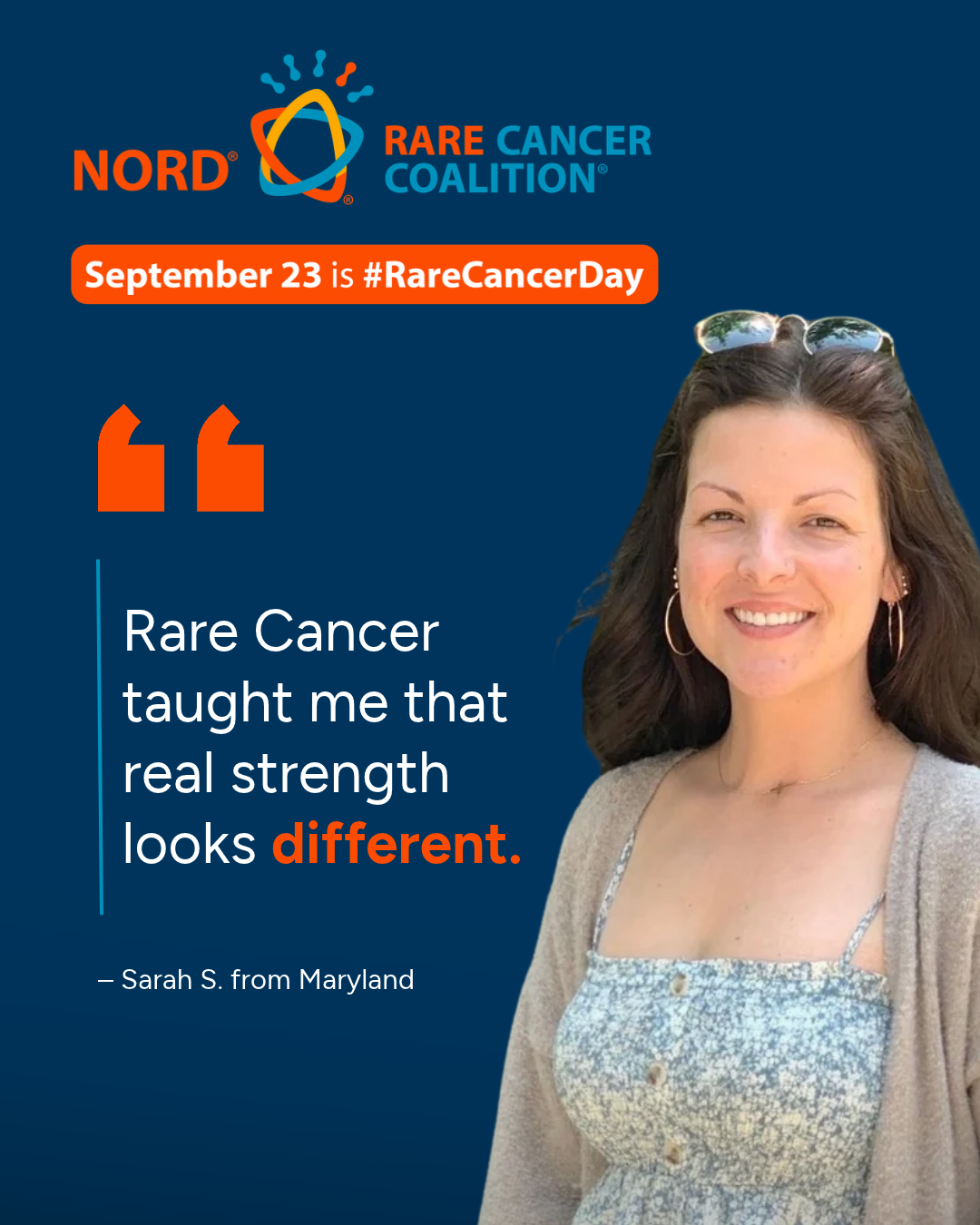
In recognition of Rare Cancer Day, the National Organization for Rare Disorders (NORD) has shared the powerful, deeply personal story of Sarah S. from Maryland, whose life changed forever when routine surgery unexpectedly uncovered a hidden, stage 4 neuroendocrine cancer of the appendix. Her journey highlights the profound challenges faced by rare cancer patients, the critical importance of being heard by medical professionals, and how true resilience is forged in the absence of absolute certainty.
The Surgery That Changed Everything
In January 2023, Sarah believed she was finally reclaiming her health after years of feeling that her body was in open rebellion. For a long time, she had lived with extreme abdominal pain, stabbing cramps that frequently dropped her to the floor, fainting spells, overwhelming fatigue, and a debilitating inability to eat. Within just a few months, she lost forty pounds without trying, suffered through excruciating menstrual cycles, missed work and precious time with her family, and made countless emergency room visits.
What hurt almost as much as the physical symptoms, however, was not being believed by the medical establishment. That isolating dynamic shifted only when she finally saw a female physician who took the time to listen. Following a careful evaluation, Sarah was diagnosed with adenomyosis and endometriosis. For the first time, she felt a profound sense of relief knowing someone was taking her pain seriously.
Her hysterectomy was subsequently scheduled for January 28, 2023. Sarah went into the operating room expecting it to mark the conclusion of a long, painful chapter of her life, having no idea that it would instead open an entirely new and daunting one.
During the procedure, her surgeon noticed that her appendix appeared abnormal. While Sarah remained under anesthesia, the surgeon contacted her husband, Andy, to request permission to remove it. Andy agreed without hesitation—a decision that ultimately saved her life.
A Diagnosis That Arrived Quietly
On February 3, a MyChart notification delivered the news that upended her world: Sarah was diagnosed with neuroendocrine cancer of the appendix. The diagnosis arrived as a digital message on a screen, devoid of warning or preparation.
Prior to the operation, no diagnostic scans had detected the malignancy, no routine blood tests had raised alarms, and no preliminary pathology reports had suggested that cancer was even a remote possibility. The malignancy was discovered solely because an exploratory surgery brought a skilled surgeon face-to-face with tissue that did not belong.
Just five days later, on February 8—the day before her thirty-eighth birthday—Sarah and Andy met with Dr. Armando Sardi, an internationally recognized expert in rare abdominal cancers. Dr. Sardi delivered a devastating assessment, informing them that Sarah had stage 4 disease and that there was no known cure.
The news left Sarah feeling completely stunned, as though the air had been entirely evacuated from the room. In less than a week, she had transitioned from planning her postoperative recovery to directly confronting her own mortality.
Dr. Sardi outlined a complex procedure known as CRS/HIPEC—cytoreductive surgery combined with hyperthermic intraperitoneal chemotherapy—an intensive surgical intervention designed to remove all visible cancer and treat the abdominal cavity directly. While not curative, the procedure offered a critical chance to significantly extend her life.
When Sarah worried aloud about having to cancel an upcoming family vacation, Dr. Sardi reached across the desk, took her hands, and looked her directly in the eyes. “Go on your trip with your beautiful family,” he told her. “You’re not dying tomorrow, my friend.” That grounded moment reminded Sarah that, despite the grim prognosis, she was still very much alive.
Living with What Can’t Be Seen
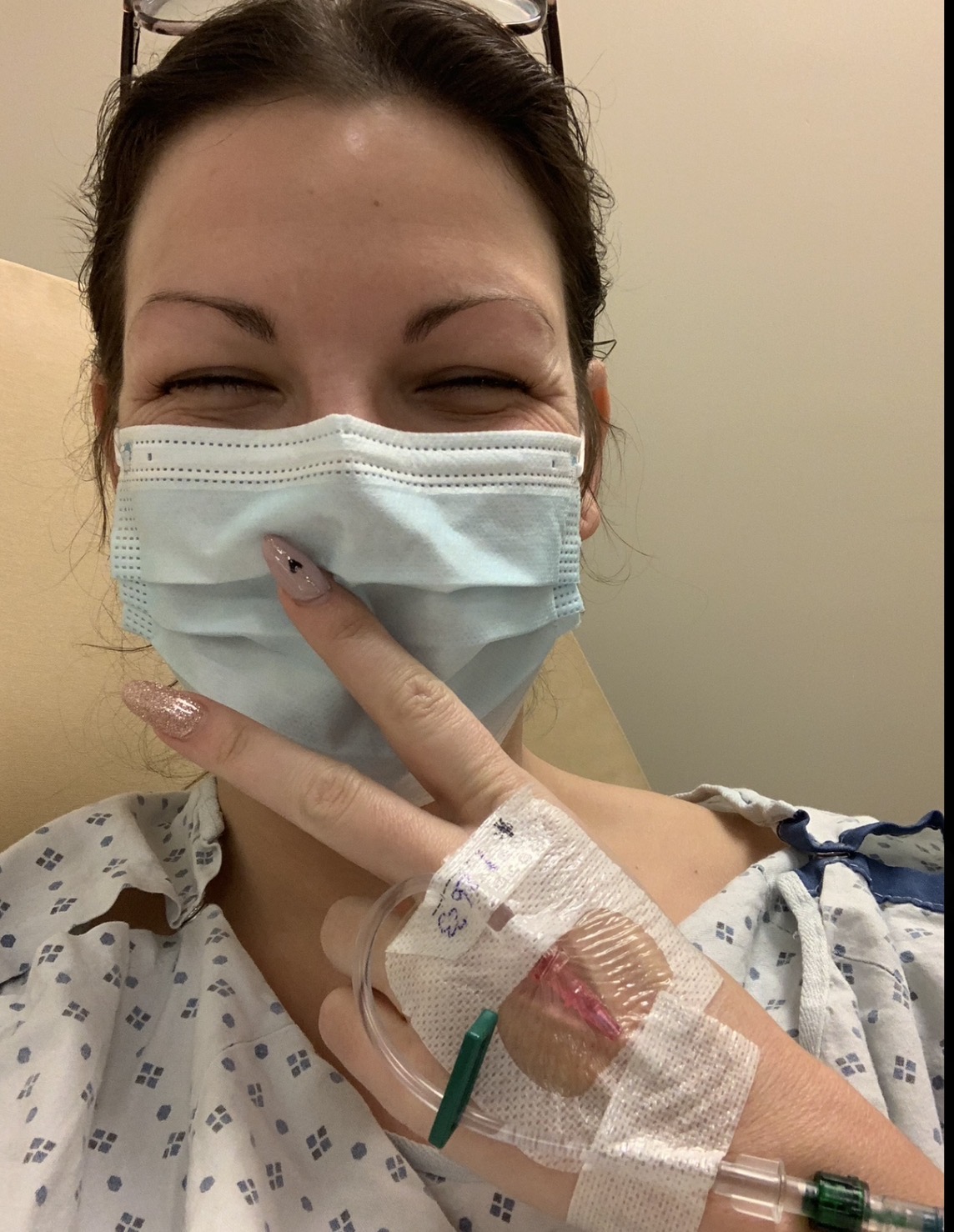
Following their return home, Sarah’s complex surgery was officially scheduled for April 20, 2023. During the operation, Dr. Sardi successfully removed all visible disease, excising everything that could be detected with the naked eye. Sarah woke up physically exhausted, profoundly sore, and deeply grateful.
Despite the successful surgery, the reality of her condition remains complex. Prior pathology reports had never revealed visible cancer preoperatively, though cancer cells were present at a microscopic level—far too small to be identified by standard imaging scans or blood tests. This microscopic elusiveness is where Sarah’s ongoing anxiety resides.
A decade earlier, in 2013, another surgeon had remarked to Sarah and Andy that she must be “one tough cookie,” theorizing at the time that she had likely suffered from appendicitis and simply fought through the discomfort. Because no cancer was suspected or detected then, her appendix was left intact.
Today, when Sarah experiences physical illness—which happens frequently—she must navigate a complicated reality. She endures episodes fifteen to twenty times a day that leave her feeling incredibly ill, yet diagnostic tests show no clear signs of recurrence. She lives permanently in the tense space between “nothing shows” and “nothing showed last time either.” That pervasive uncertainty carries a heavy psychological toll, yet it has also reshaped her perspective in unexpected ways.
Redefining Strength
For many years, Sarah equated personal strength with simply pushing through adversity, ignoring physical pain, and proving her capacity to handle hardship. Cancer fundamentally challenged and changed that definition.
Today, she understands that true strength looks entirely different. Strength means listening to your body when something feels fundamentally wrong. It means advocating relentlessly for your own health when medical professionals fail to listen. It means allowing fear to exist without permitting it to steal the present moment.
Despite everything she has lost, Sarah remains resilient. Cancer forced her to relinquish her career as a public school educator—a profession she spent years building. After joining the Air Force in 2004 to earn the G.I. Bill, she met Andy, eventually completed her master’s degree in 2016, and spent eight years teaching history, civics, geography, and language to children. Letting go of that professional identity was devastating. Yet, while cancer took her career, it did not extinguish her dedication to service.
Sarah continues to show up for others. She shares the lessons of her journey and supports fellow patients navigating similar medical landscapes—particularly those who feel dismissed, unseen, or terrified by the invisible nature of rare diseases. As an active volunteer with the Abdominal Cancers Alliance, she works to raise vital awareness about rare and advanced abdominal malignancies.
Choosing Hope Without Certainty
Sarah does not live in denial; rather, she lives in radical awareness. She acknowledges that her cancer may never show itself clearly on a scan and that fear may always remain a close neighbor. At the same time, she recognizes that she is not powerless.
She consciously chooses to live fully within the moments she is given, prioritizing human connection over isolation, presence over panic, and advocacy over silence. For anyone newly diagnosed, grappling with scan anxiety, or carrying the quiet burden of a disease that refuses to follow conventional rules, Sarah offers a message of solidarity and reassurance.
She reminds patients that experiencing fear does not make them weak, and needing emotional reassurance does not mean they are failing. Most importantly, she emphasizes that they are not alone.
Hope, Sarah demonstrates, does not require absolute certainty. Often, hope is simply the quiet, courageous act of keeping forward momentum, even when the path ahead remains obscured. Her journey began with ignored pain and an invisible cancer, and it continues forward anchored in gratitude, resilience, and an unwavering belief in the power of being truly seen and believed.