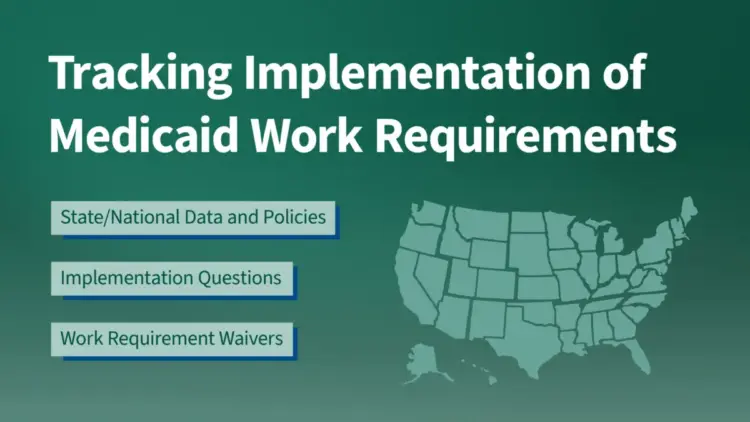
As policy debates surrounding healthcare access and public assistance continue to evolve across the United States, healthcare research organizations are stepping up efforts to provide lawmakers, analysts, and the public with comprehensive data. KFF, a prominent independent source for health policy research, polling, and journalism, has compiled an extensive collection of resources and analyses examining the ongoing implications, historical implementation efforts, and public opinion surrounding Medicaid work requirements.
The comprehensive resource hub offers a deep dive into the multifaceted landscape of Medicaid eligibility policies, highlighting how federal and state initiatives intersect with low-income individuals’ employment status, health outcomes, and overall economic stability. By consolidating decades of research, state-level case studies, and public polling data, the collection serves as a vital reference point for understanding the complex dynamics of tying public health insurance to labor force participation.
Work Requirements Overview
At the center of the ongoing national conversation are Medicaid work requirements, which mandate that certain non-elderly, non-disabled adult beneficiaries participate in a specified number of hours of work, community service, job training, or educational activities to maintain their health coverage. Proponents of these policies argue that employment promotes personal independence, improves financial well-being, and transitions individuals toward private-sector insurance coverage.
However, health policy analysts and opponents point out that the vast majority of Medicaid adults who can work are already employed, often in low-wage or service-sector jobs that do not offer employer-sponsored health benefits. Critics caution that administrative hurdles, complex reporting mechanisms, and strict compliance rules often result in eligible individuals losing their healthcare coverage not because they are unemployed, but because of paperwork barriers. The broad overview materials compiled by KFF outline these competing perspectives, mapping out the fundamental arguments that have defined the policy debate for years.
Medical Frailty Exemption
A critical component of any discussion surrounding Medicaid work mandates involves protections for vulnerable populations. The medical frailty exemption is designed to safeguard individuals who face significant physical, mental, or cognitive barriers that prevent them from maintaining steady employment.
Under these provisions, individuals who are categorized as medically frail are exempt from mandatory work hours, ensuring they do not lose access to essential medical treatments, prescription drugs, and specialist care. Determining who qualifies for this exemption, however, often involves rigorous clinical assessments and administrative evaluations. Research highlighted in the KFF resources examines how different states define and apply medical frailty, the challenges physicians face in documenting these conditions, and the potential risks of eligible patients slipping through the cracks of complex exemption processes.
Implementation of Work Requirements
Translating federal and state policy concepts into operational reality has historically proven to be a formidable administrative challenge. The implementation of Medicaid work requirements involves extensive coordination between state Medicaid agencies, department of labor databases, and external electronic reporting portals.
Implementation analyses within the KFF collection detail the logistical hurdles states encounter when attempting to verify employment hours, process exemptions, and communicate policy changes to transient or low-income populations. Administrative costs frequently skyrocket as states build or upgrade data-tracking infrastructure, hire additional eligibility workers, and launch public awareness campaigns. Furthermore, studies on implementation underscore a recurring trend: a significant portion of coverage losses during past rollout periods were attributed to procedural disenrollment rather than a failure to meet actual work thresholds.
50-State Survey of Medicaid Eligibility and Enrollment Policies
Understanding the national landscape requires granular data from individual jurisdictions. KFF maintains a comprehensive 50-state survey of Medicaid eligibility and enrollment policies that tracks how state approaches vary across the country.
This extensive data collection allows researchers and policymakers to compare baseline eligibility criteria, enrollment renewal processes, premium structures, and special policy provisions state by state. By examining these variations, analysts can observe how different regional political climates and economic conditions influence healthcare access for low-income residents, providing a clear empirical foundation for cross-state comparisons.
Research and Analysis on Medicaid and Work
Beyond immediate implementation logistics, a substantial body of empirical research explores the broader relationship between Medicaid coverage and labor market outcomes. Scholars and policy experts frequently ask whether having health insurance improves a person’s ability to secure and retain employment, or conversely, whether work requirements effectively incentivize labor force attachment.
The research and analysis section of the KFF resource hub compiles peer-reviewed studies, economic evaluations, and policy briefs. These documents evaluate whether conditioning public health benefits on employment achieves its stated goals or if it primarily introduces administrative churn, disrupts continuity of care, and creates financial strain for safety-net hospitals and clinics that absorb uncompensated care costs.
1115 Work Requirement Waivers
Section 1115 of the Social Security Act grants the federal government the authority to approve experimental, pilot, or demonstration projects that promote the objectives of the Medicaid program. Over the years, numerous states have submitted 1115 waiver applications seeking permission to implement work and community engagement requirements as a condition of eligibility.
The KFF compilation tracks the evolution of these federal waivers, detailing which states have pursued them, how federal approval guidelines have shifted across different presidential administrations, and the subsequent legal challenges that have frequently blocked or delayed implementation. These waivers represent the primary legal and administrative vehicle through which states attempt to reshape their Medicaid programs.
Work Requirements Implications and State Experience
Real-world evidence from states that have attempted to put work policies into practice provides invaluable insight into the theory versus practice of Medicaid restructuring. The implications and state experience data analyze what happens when policies move from legislative halls to everyday healthcare settings.
Reports in this category examine the ripple effects on beneficiary health, financial stability, and state budgets. By evaluating administrative data alongside qualitative accounts from beneficiaries and healthcare providers, these materials offer a grounded assessment of how mandatory work policies impact communities over the medium and long term.
Arkansas Work Requirement Experience
Much of the empirical discussion surrounding Medicaid work mandates centers on Arkansas, which became the first state in the nation to implement such a requirement under an 1115 waiver. The Arkansas experience is heavily scrutinized by researchers because it provided the first large-scale look at the operational consequences of these policies.
Data and retrospective analyses of the Arkansas initiative revealed that over 18,000 adults lost their Medicaid coverage during the initial months of implementation, largely due to difficulties navigating online reporting systems rather than a lack of employment. The Arkansas case study remains a cornerstone of policy analysis, frequently cited by both critics warning of coverage losses and proponents advocating for refined administrative safeguards.
KFF Polling on Work Requirements
Public perception plays a major role in shaping the political viability of healthcare policies. KFF polling data embedded within the resource hub offers a detailed look at what the American public thinks about tying Medicaid coverage to work.
Survey findings consistently show broad public support for the general concept of encouraging work among able-bodied adults. However, polling also reveals significant nuance, showing that public backing often declines when respondents learn about the potential for eligible individuals to lose coverage due to administrative hurdles, or when they consider the associated administrative costs for state governments.
Beyond the Data by KFF CEO Drew Altman
Offering a high-level executive perspective, the resource collection features commentary and analysis from KFF President and CEO Drew Altman. Through his "Beyond the Data" series, Altman translates complex empirical findings and shifting political landscapes into accessible insights for a broader audience.
His analyses bridge the gap between cold statistics and the human reality of health policy, contextualizing how ongoing battles over Medicaid eligibility directly affect millions of Americans who rely on the program for their daily health and financial security.