For millions of low-income Americans, individuals with disabilities, and residents of rural areas with sparse public transit options, getting to a routine doctor’s appointment, dialysis treatment, or pharmacy can present a monumental logistical hurdle. To bridge this gap, state Medicaid programs are federally mandated to provide a crucial lifeline known as non-emergency medical transportation (NEMT). This benefit ensures that vulnerable enrollees who lack reliable, affordable personal or public transportation can still access necessary health care services. Yet, while NEMT accounts for less than 1% of total nationwide Medicaid spending, it has recently landed at the center of intense federal policy discussions, navigating a complex tug-of-war between program integrity concerns, rising utilization, and the essential health needs of millions.
Recent policy debates have increasingly focused on potential overuse and fraud within state NEMT programs. This heightened scrutiny is creating a wave of additional administrative tasks for state agencies and health care service providers, particularly those operating in areas classified by federal regulators as high risk. The Centers for Medicare & Medicaid Services (CMS) has formally flagged NEMT as a high-risk service, drawing specific attention to programs in states such as California, New York, and Minnesota.
The oversight momentum continued to accelerate when majority staff on the House Energy and Commerce Committee released a comprehensive report identifying NEMT as one of several Medicaid services exhibiting high rates of fraud. The report explicitly noted that states like Colorado, Minnesota, and New York have officially designated NEMT providers as high-risk entities regarding overall program integrity. Shortly after the release of the report, Committee Republicans introduced a targeted package of Medicaid program integrity legislation. Among these proposals is the Strengthening Tools for Oversight to Prevent (STOP) Medicaid Fraud Act, which seeks to expand electronic visit verification (EVV) requirements—systems currently used to track home care and personal care services via computers and mobile devices—directly to NEMT trips.
While proponents of these measures argue that increased oversight is vital to curbing inappropriate spending and eliminating fraud, health policy experts and patient advocates warn of potential unintended consequences. The introduction of new administrative burdens and heightened regulatory scrutiny could deter providers from participating in the program. This shrinkage in provider networks risks limiting crucial health care access for the very Medicaid enrollees who rely on transportation benefits to manage their chronic conditions and maintain their overall health and daily well-being.
What is NEMT and How Is It Administered?
Because individuals facing severe financial hardship or significant physical disabilities often struggle to arrange independent transportation to medical facilities, federal rules require state Medicaid programs to offer NEMT. However, states retain substantial flexibility regarding how they design, structure, and administer the benefit. The specific type of transportation provided typically depends on an enrollee’s geographic location, personal physical needs, and state policy choices. For instance, urban enrollees frequently utilize public transit systems, whereas rural residents more commonly rely on local taxis or mileage reimbursements for the use of personal vehicles. Meanwhile, enrollees facing severe mobility limitations often require specialized transportation, such as wheelchair-accessible vans or stretcher vans. Crucially, enrollees are permitted to use NEMT to travel to any Medicaid-covered medical appointment or health service, including trips to and from local pharmacies.
State Medicaid agencies have broad flexibility to administer NEMT using one or a combination of three distinct delivery models. Under federal regulations, states must specify their chosen approach: a fee-for-service model where the state pays transportation providers directly; a managed care model where the state pays a managed care organization to administer benefits; or a brokerage model where a specialized third-party broker manages the transportation network. Direct fee-for-service payments grant states maximum control and ease coordination with non-Medicaid transportation programs. Conversely, brokerage models leverage specialized industry expertise, and managed care models help states maintain predictable spending while seamlessly coordinating transportation with broader health services for enrollees. Recent data indicates that states utilize these models to varying degrees, with many employing a hybrid approach tailored to local needs.
Furthermore, states hold the discretion to claim NEMT financial reimbursement as either an administrative expense or a medical service expense. Claiming the benefit as an administrative cost grants states greater flexibility in system design, though it typically carries a lower federal matching rate. States must explicitly outline their chosen reimbursement path within their official Medicaid state plans. The vast majority of states historically report claiming NEMT under medical service expenses, administrative expenses, or a combination of both categories on their federal expenditure filings.
How Much Does Medicaid Spend on NEMT?
Evaluating the financial footprint of NEMT has recently been enhanced by public federal transparency initiatives. The Department of Health and Human Services released a comprehensive dataset detailing provider-level spending across the country, capturing crucial metrics such as billing identifiers, procedure codes, monthly claim counts, and total payments. These figures encompass both fee-for-service outlays and payments made by managed care organizations to health care providers, offering a clearer picture of utilization trends.
Medicaid spending and utilization for NEMT have experienced a steady upward trajectory in nearly every year following the disruptions of the COVID-19 pandemic. In 2020, widespread pandemic-related lockdowns and health system adjustments triggered dramatic declines in overall health care utilization across the nation, resulting in a sharp, temporary drop in NEMT spending. As health care services rebounded, NEMT utilization and expenditures steadily grew. By 2024, national Medicaid spending on NEMT reached $4.65 billion. Despite this multi-year growth, NEMT continues to represent a remarkably small fraction of total overall Medicaid expenditures, consistently accounting for less than 1% of the program’s total budget.
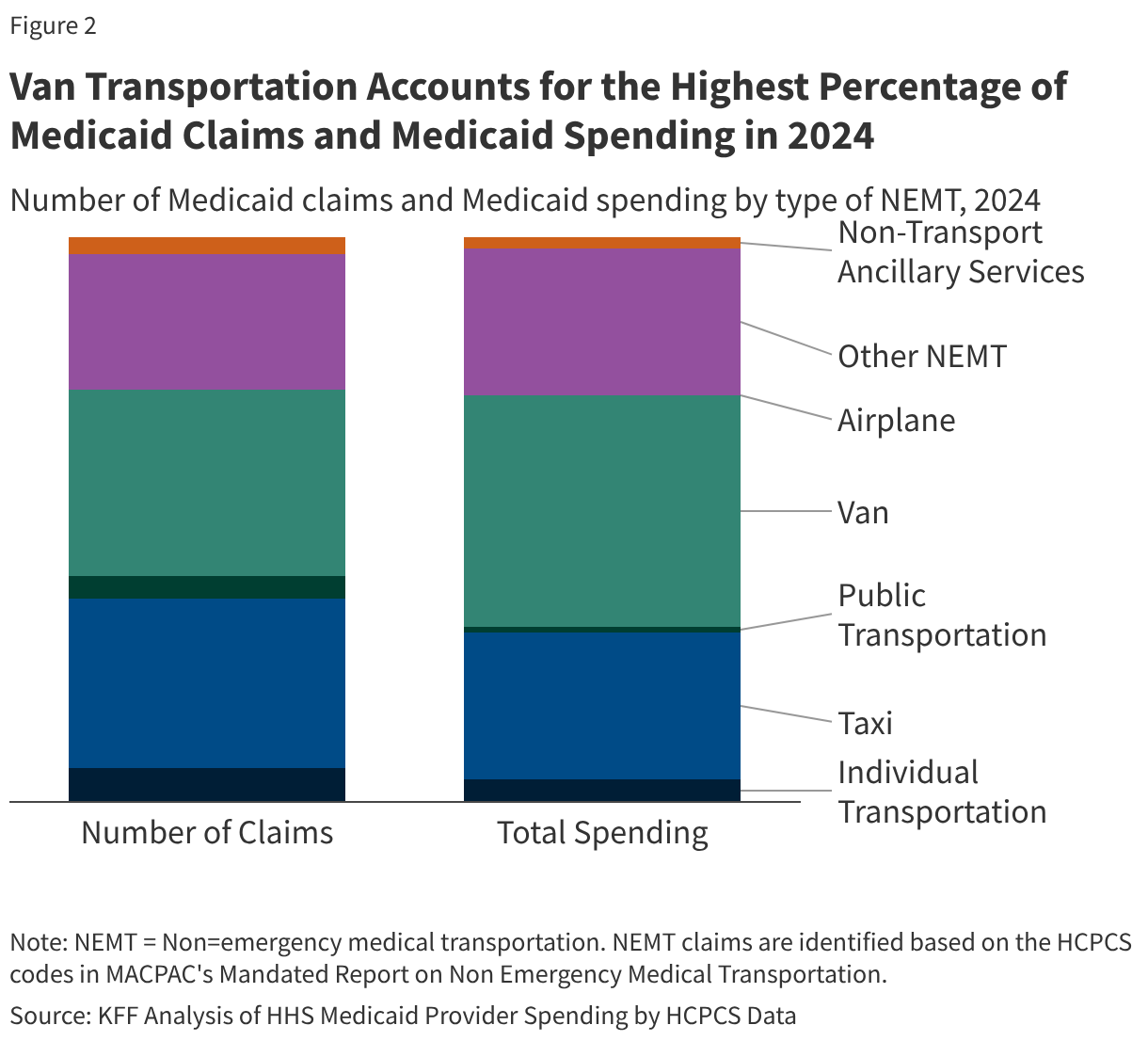
A detailed breakdown of public spending data reveals that van and taxi services capture the vast majority of financial resources. In 2024, van and taxi transportation accounted for roughly two-thirds of both total Medicaid NEMT spending and overall trip utilization. A secondary category encompassing case workers, patient attendants, escorts, and per diems represents the next largest share of resources. The remaining categories—which include individual personal vehicle transportation, public transit, airplanes, and non-transport ancillary services—combine to make up a minor portion of total NEMT spending and utilization.
Who Uses NEMT?
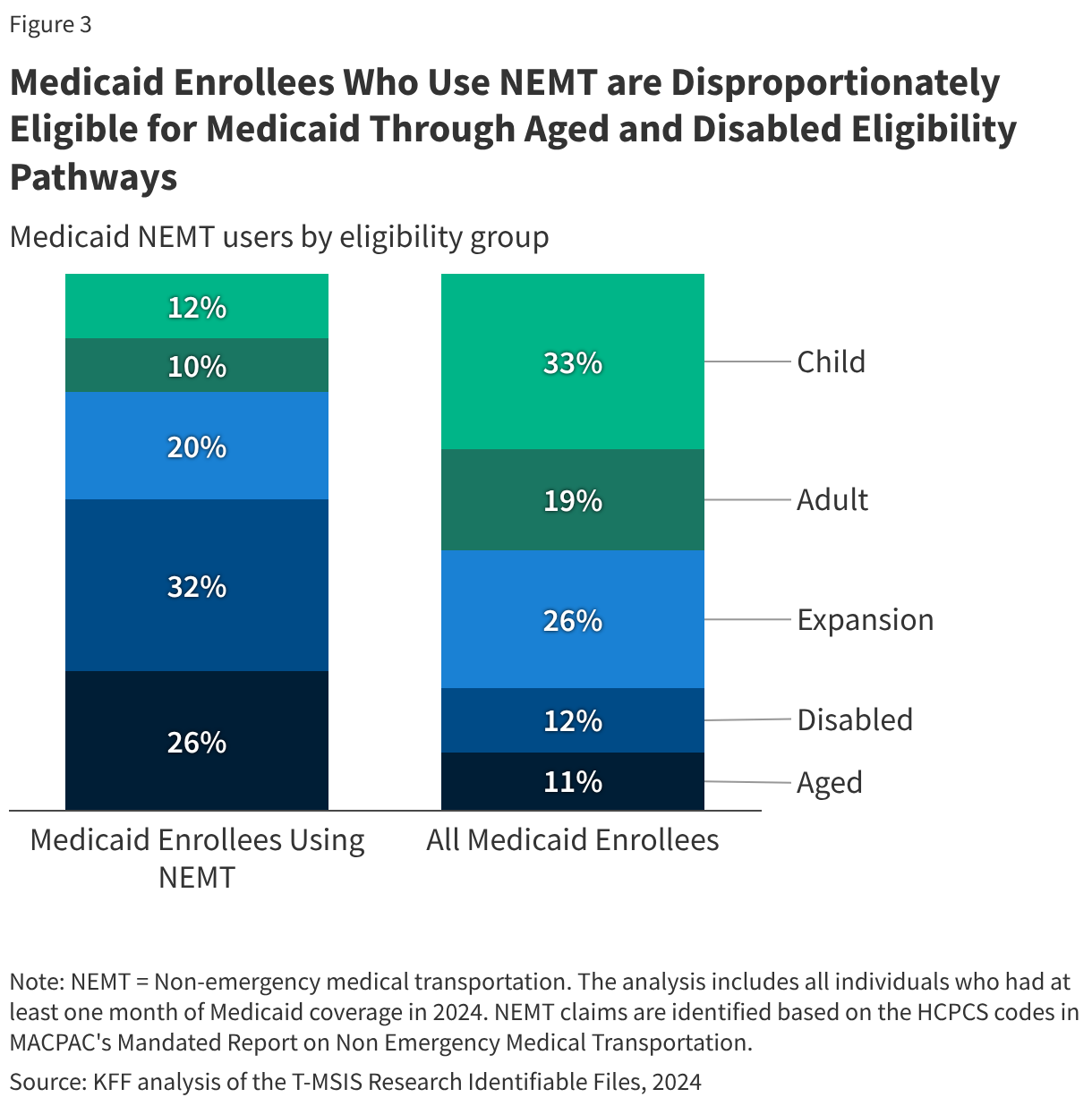
To fully understand the human impact of the transportation benefit, researchers frequently analyze Transformed Medicaid Statistical Information System claims data. This analysis reveals that NEMT users possess distinct demographic and clinical profiles that set them apart from the broader Medicaid population. Most notably, a disproportionate share of NEMT beneficiaries qualify for Medicaid on the basis of a long-term disability or because they are age 65 or older. While older adults and individuals with disabilities make up roughly one in five enrollees across the entire Medicaid program, they represent more than half of all individuals who utilize NEMT services. Conversely, children constitute a significant portion of overall Medicaid enrollment but account for a much smaller share of NEMT users, reflecting the higher frequency of medical care and specialized travel assistance required by older and disabled populations.
The intersection between public health insurance programs is also pronounced among NEMT beneficiaries. More than one in three NEMT users are dually eligible for both Medicare and Medicaid, compared to a much smaller percentage of the general Medicaid population. While traditional Medicare generally does not cover non-emergency transportation, and supplemental coverage through Medicare Advantage plans varies widely, Medicaid steps in to ensure these vulnerable dual-eligible individuals can physically reach their medical appointments, even when Medicare serves as the primary payer for the underlying clinical care.
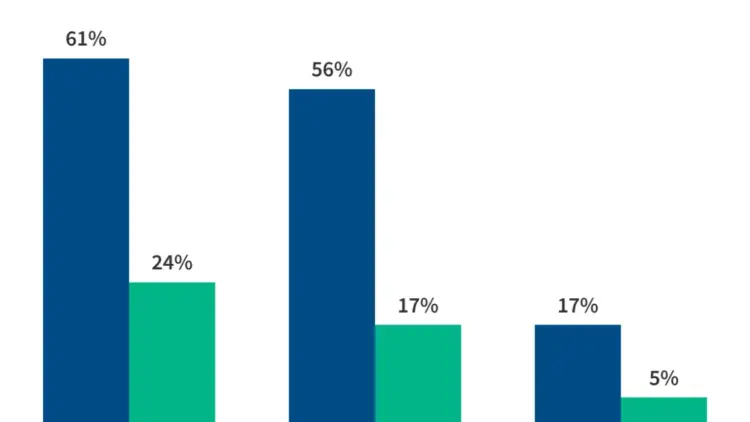
The clinical profile of NEMT users underscores their reliance on continuous access to the health care system. Nearly nine in ten Medicaid enrollees who utilize NEMT live with at least one chronic health condition, a stark contrast to the general Medicaid population where fewer than four in ten enrollees face chronic diagnoses. High rates of physical health conditions, behavioral health needs, and cognitive health conditions are prevalent among NEMT users. For individuals managing complex, ongoing conditions—such as chronic kidney disease requiring regular dialysis or significant developmental disabilities requiring routine specialized therapy—reliable transportation is not merely a convenience, but an essential component of clinical management. KFF’s analysis of national survey data emphasizes this reality, revealing that millions of adult Medicaid enrollees under age 65 continue to miss critical medical appointments, work commitments, and daily living necessities simply due to a lack of reliable transportation.