Introduction
As of 2024, approximately 28.5 million individuals aged five and older across the United States live with limited English proficiency (LEP). The federal government classifies people with LEP as those who do not speak English as their primary language and possess a limited ability to read, write, speak, or understand English—frequently described as speaking English "less than very well." These individuals disproportionately encounter systemic gaps in health insurance coverage and experience poorer overall health outcomes, driven in large part by persistent language access barriers. Because people of color are statistically more likely than White individuals to have limited English proficiency, these obstacles can further compound existing racial and ethnic disparities in health status and the delivery of health care services.
A comprehensive brief released by KFF provides an in-depth overview of individuals aged five and older who have LEP, examining their health coverage patterns through an analysis of the 2024 American Community Survey (ACS) data. The analysis also integrates findings regarding health access and outcomes among adults with LEP from the 2023 KFF Survey on Racism, Discrimination, and Health. Within this framework, individuals with LEP are defined as anyone aged five or older who reports speaking a language other than English at home and speaking English less than "very well."

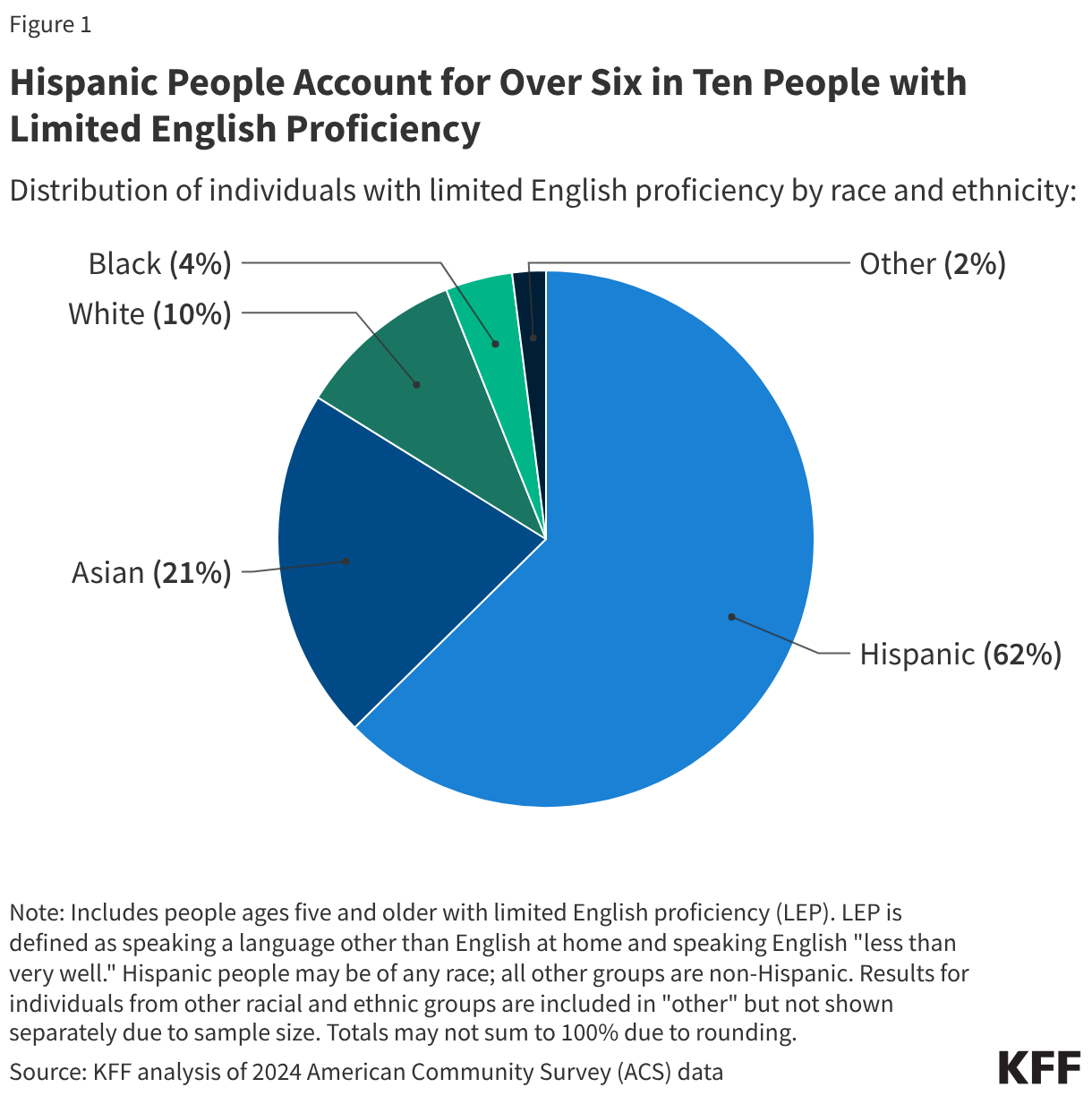
Statistical updates show that by 2024, nearly one in ten people—specifically 28.5 million residents aged five or older living in the United States—had LEP, marking an increase from 25.7 million, or 8%, recorded in 2021. The demographic composition of this population is predominantly Hispanic and Spanish-speaking. Hispanic individuals account for more than six in ten, or 62%, of all people with LEP, while Asian individuals represent about one in five, or 21%. Other racial and ethnic groups make up smaller, remaining shares of the total population.
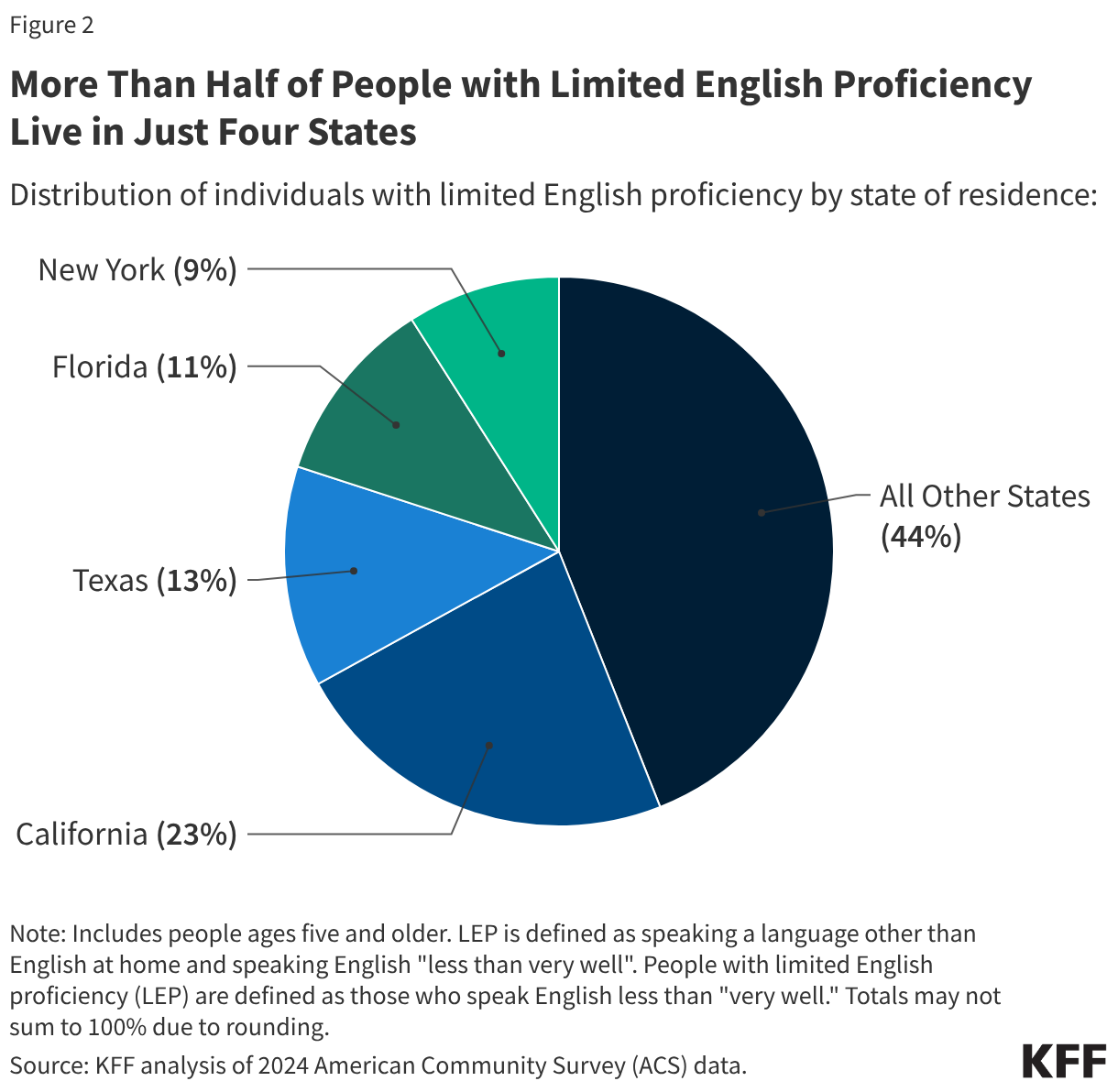
Reflecting this broad racial and ethnic distribution, Spanish stands as the primary language spoken among people with LEP at 63%, followed by Chinese at 7%, Vietnamese at 3%, Tagalog at 2%, and Arabic at 2%. Although individuals with LEP reside across all regions of the country, more than half—precisely 56%—are concentrated in just four states: California accounts for 23%, Texas for 13%, Florida for 11%, and New York for 9%. The remaining 44% of the population is dispersed across the rest of the nation.
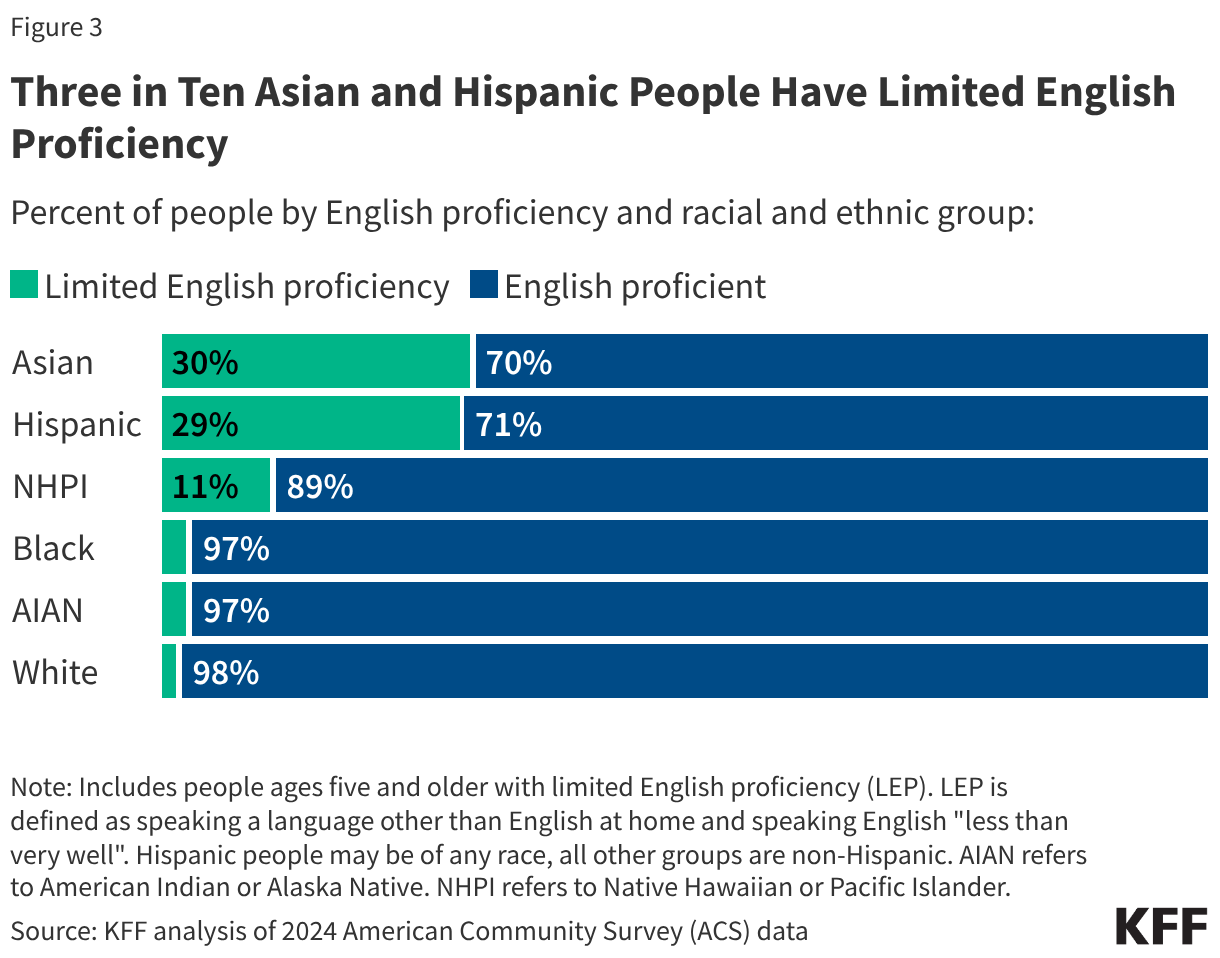
Disparities in LEP rates are also pronounced across specific demographic segments. Asian and Hispanic adults experience the highest rates of LEP among racial and ethnic groups, with roughly three in ten Asian (30%) and Hispanic (29%) individuals possessing limited English proficiency. Conversely, these rates are substantially lower for Native Hawaiian or Pacific Islander individuals at 11%, Black individuals at 3%, American Indian or Alaska Native individuals at 3%, and White individuals at 2%.
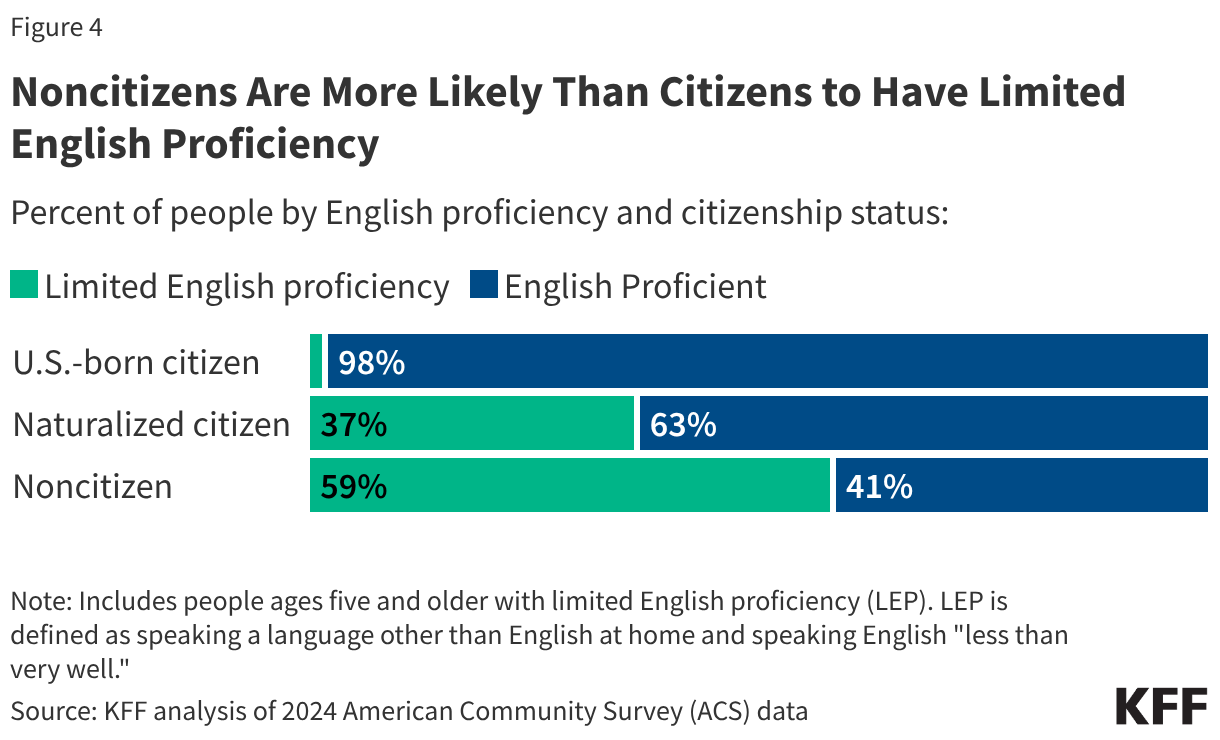
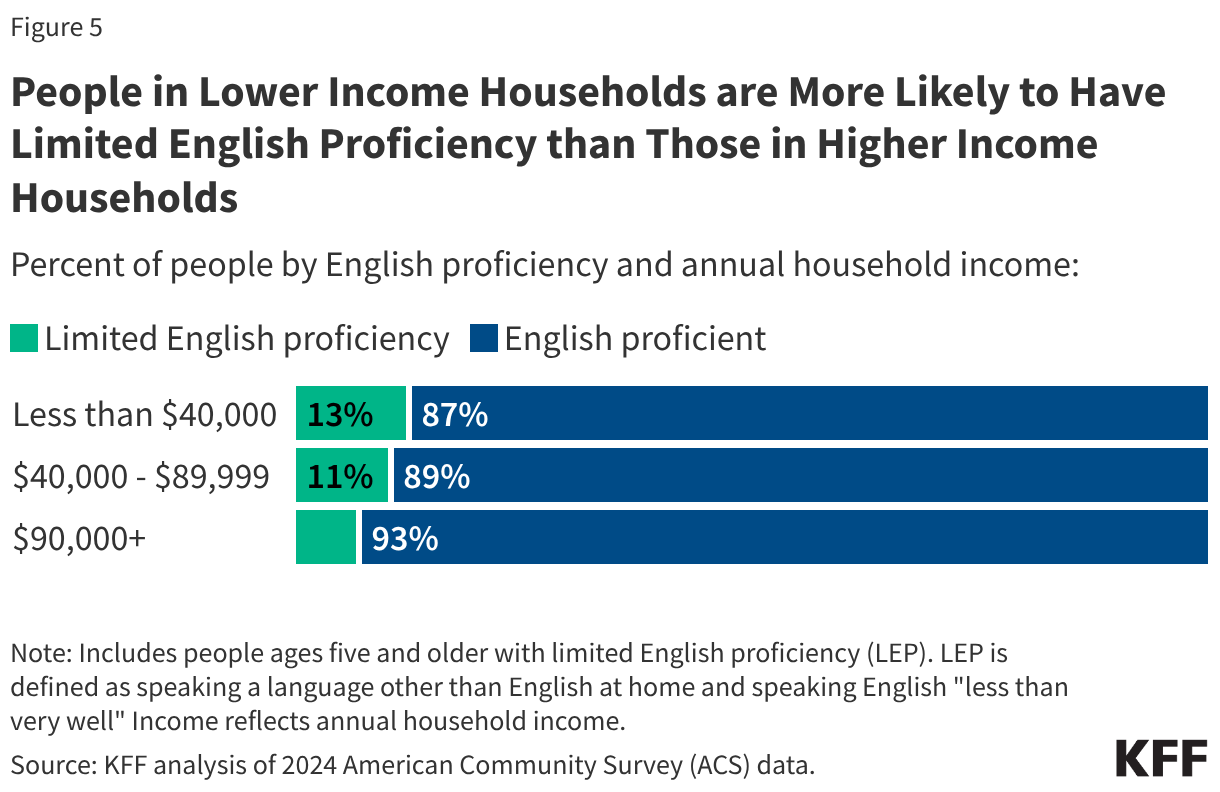
Furthermore, noncitizen immigrants are significantly more likely than citizens to report having LEP. Nearly six in ten, or 59%, of noncitizen immigrants have LEP, compared to over a third, or 37%, of naturalized citizens and just 2% of U.S.-born citizens. Limited English proficiency is also noticeably more common among individuals residing in lower-income households. More than one in ten, or 13%, of individuals living in households with an annual income below $40,000 have LEP, compared to 7% of those in households earning an annual income of $90,000 or more.
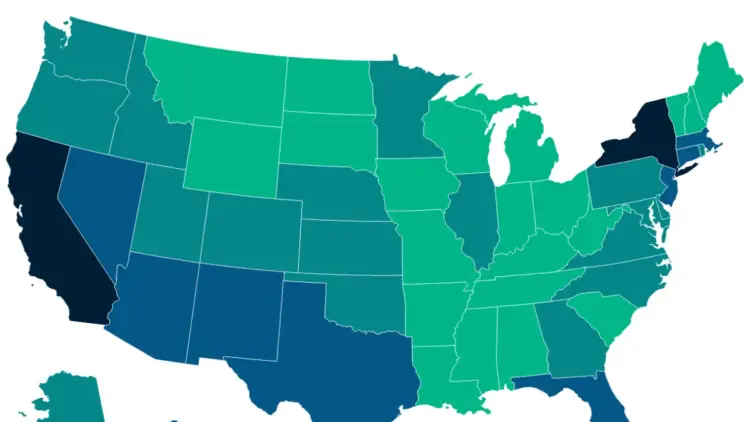
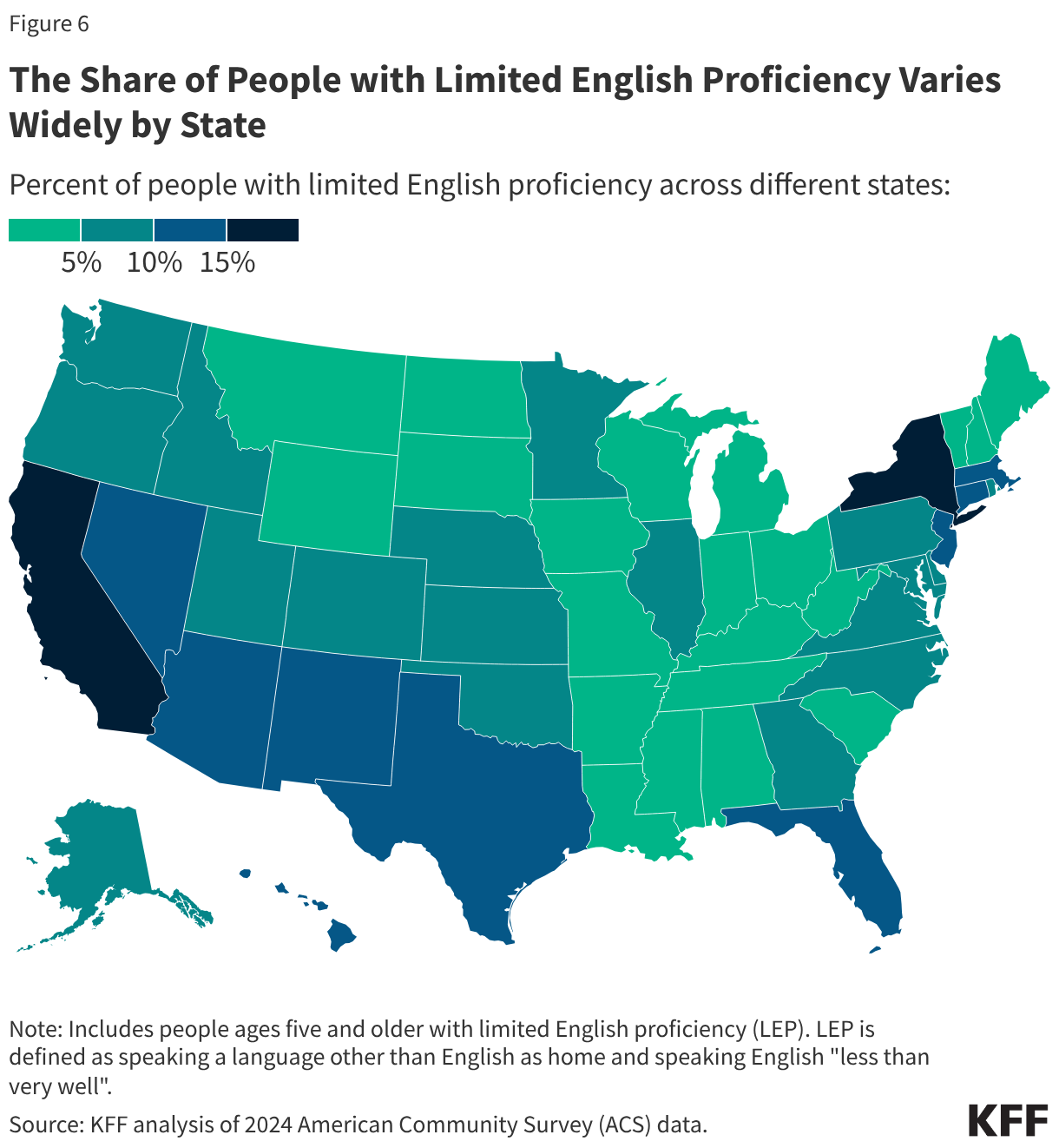
Geographically, the proportion of people with LEP varies dramatically across individual states, ranging from less than 1% in West Virginia to a striking 18% in California. Other states reporting elevated shares of residents with LEP include New York at 15%, New Jersey at 14%, Florida at 14%, Texas at 13%, Nevada at 12%, Hawaii at 11%, and Massachusetts at 10%. These geographic concentrations closely track the higher shares of Hispanic residents, Asian residents, and immigrant populations residing within those specific states.
Health Coverage Among People with LEP
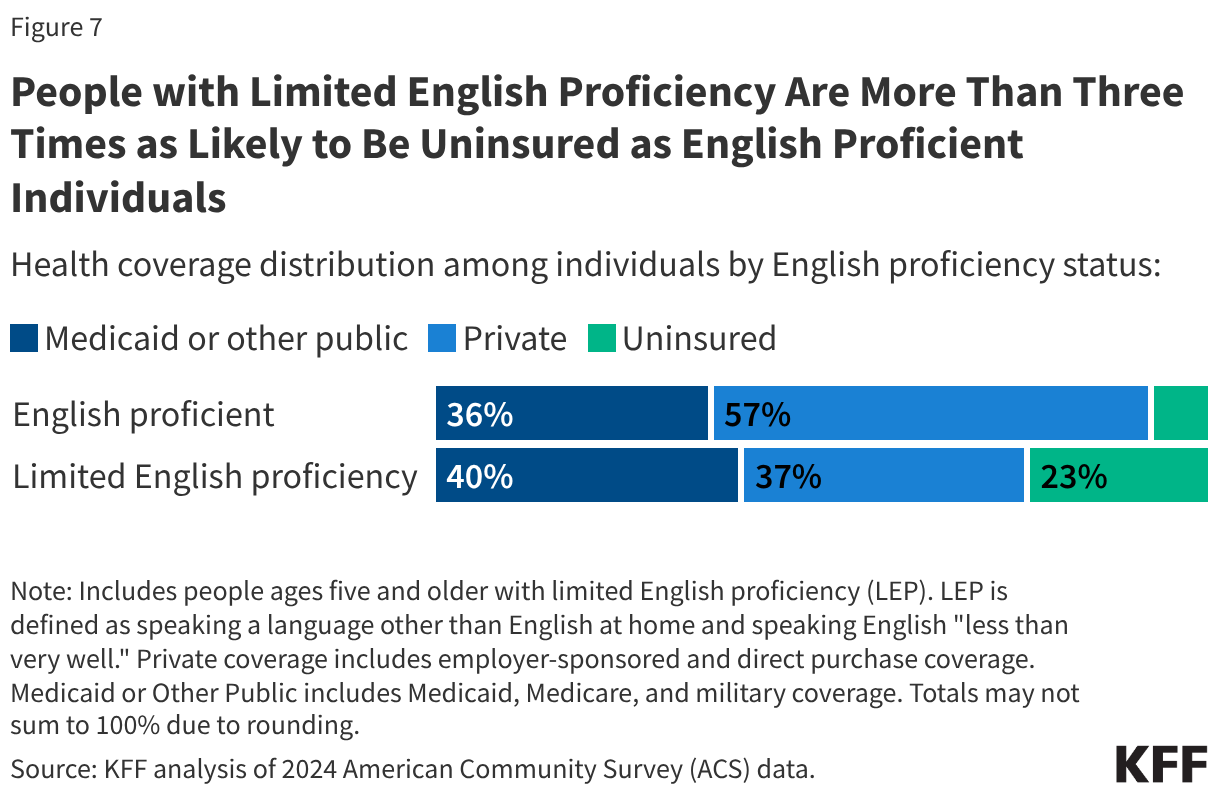
The structural challenges faced by individuals with LEP extend directly into their ability to secure and maintain health insurance coverage. Data demonstrates that individuals with LEP are more than three times as likely to be uninsured as those who are proficient in English, with uninsured rates standing at 23% versus 7%, respectively.
This widening uninsured rate is primarily propelled by a notable deficit in private health coverage. Just over a third, or 37%, of people with LEP possess private insurance, compared to nearly six in ten, or 57%, of English-proficient individuals. Analysts note that this gap likely mirrors the disproportionate share of people with LEP who are employed in lower-income jobs and industries that are historically less likely to offer employer-sponsored health coverage options. While public programs like Medicaid help absorb some of this coverage deficit, they do not completely eliminate the divide, leaving residents with LEP consistently more vulnerable to lacking insurance than their English-proficient counterparts.
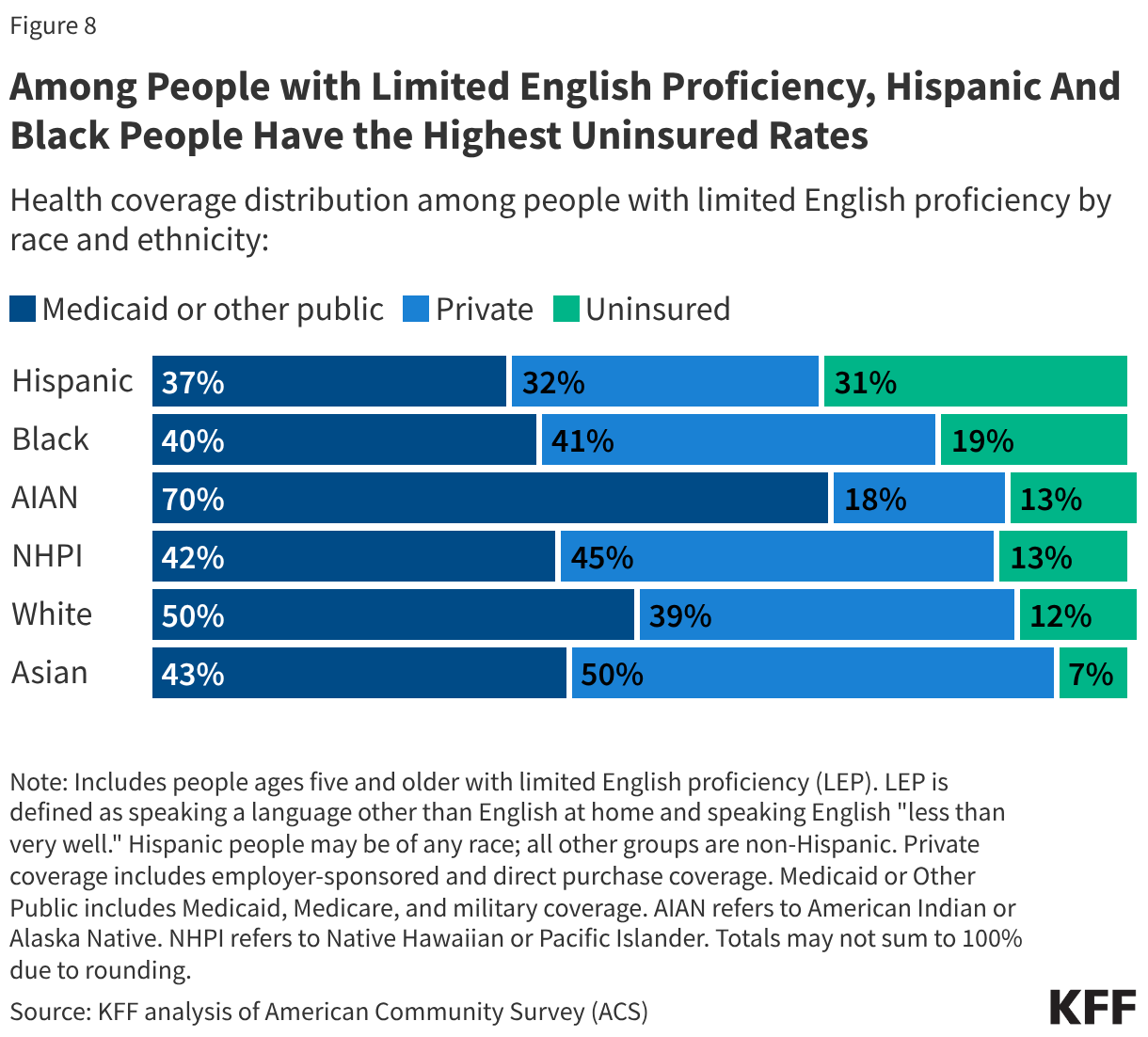
Within the LEP population itself, coverage rates diverge significantly along racial and ethnic lines. Among individuals with LEP, Hispanic and Black people face higher uninsured rates—at 31% and 19%, respectively—than their White counterparts, who experience an uninsured rate of 12%. In contrast, Asian individuals with LEP report the highest rate of private coverage at 50% and the lowest uninsured rate at 7% across all racial and ethnic groups. These internal disparities are consistent with broader coverage patterns observed across the entire U.S. population and are believed to stem from a complex mix of factors, including varying access to private employment-based insurance, household income levels, and legal citizenship status.
Challenges and Barriers to Care for People with LEP
Adults living with limited English proficiency consistently report more constrained access to medical services, lower utilization rates of routine care, and worse overall health outcomes when compared to English-proficient individuals. Findings from the 2023 KFF Survey on Racism, Discrimination, and Health reveal that adults with LEP are notably less likely to have visited a health care provider within the past three years, with 86% reporting a recent visit compared to 95% of English-proficient adults. They are also less likely to maintain a usual source of medical care outside of an emergency room, at 74% compared to 88%.
Compounding these utilization gaps, more than one in three adults with LEP—or 34%—rate their physical health as fair or poor, a stark contrast to the 19% of English-proficient adults who report the same. External academic literature mirrors these findings. A 2024 systematic review determined that individuals with LEP are less likely to access ambulatory care services, timely hospitalizations, critical cancer screenings, chronic disease management programs, and general health evaluations. Furthermore, having LEP is directly associated with a reduced utilization of preventative health services and an increase in health behaviors linked to the development of chronic illnesses.
Beyond primary care utilization, specialized studies illustrate severe clinical impacts. A 2025 review focusing on cardiovascular disease found that patients with LEP and heart failure experienced higher rates of hospital readmissions and emergency care utilization compared to English-proficient patients diagnosed with heart failure. Similar reductions are documented across oncology, where language barriers correlate directly with depressed rates of cancer screenings.
Language hurdles also create formidable obstacles when individuals attempt to enroll in public health coverage, even when they meet all eligibility criteria. Successfully navigating health coverage enrollment requires a thorough understanding of complex plan options, eligibility rules, and extensive application paperwork—all of which become exceptionally difficult to complete without adequate translation and interpretation services. A 2022 KFF analysis evaluating state Medicaid websites discovered that while 39 out of 50 states provided a translated PDF application online, only 13 of those states offered translations in a language other than Spanish. This left the vast majority of LEP applicants who speak alternative native languages entirely without in-language resources.
State-managed call centers, which frequently serve as the primary operational lifeline for prospective enrollees, exhibited comparable structural gaps. Although 40 states offered customer assistance in an alternative language, 31 restricted that assistance exclusively to Spanish. These systemic deficiencies in language access further jeopardize continuous coverage, making it markedly harder for eligible individuals to retain their benefits during renewal periods. For instance, data from Medicaid enrollees in Illinois revealed that individuals with LEP were more than five times more likely to be disenrolled from coverage than English-proficient enrollees. Among those affected, 85% reported needing assistance simply to read their renewal notices, and 94% stated they required outside help to properly complete the required enrollment forms.
Once enrolled, language barriers continue to obstruct day-to-day interactions within health care settings. Data from the 2023 KFF survey indicate that approximately half of all adults with LEP—around 50%—encountered at least one major language barrier in a medical setting over the preceding three years. Specific hurdles included difficulty filling out intake and administrative forms for a provider (34%), communicating effectively with medical office staff (33%), comprehending a physician’s or nurse’s discharge instructions (30%), filling a prescription or understanding correct medication usage (27%), and scheduling necessary medical appointments (25%).
These persistent barriers directly influence the perceived quality of clinical care. Adults with LEP are notably less likely than English-proficient adults to report that their health care provider explained medical conditions and treatments in a way they could easily understand, at 81% versus 89%. They are also less likely to feel that providers spent adequate time with them during clinical visits (68% versus 76%) or actively involved them in shared decision-making regarding their ongoing treatment plans (63% versus 82%).
Conversely, systemic access to medical providers who share a patient’s preferred primary language substantially mitigates these hurdles and dramatically improves overall health care experiences. Data from the 2023 KFF survey show that adults with LEP who reported having at least half of their medical encounters with a language-concordant provider were significantly less likely to encounter a language barrier, standing at 40% compared to 60% among those with fewer concordant visits. These patients were also more inclined to report that their provider understood and respected their cultural values—87% versus 76%—and were more likely to report that their clinician actively inquired about critical social needs, such as stable housing, food security, or transportation assistance, at 29% compared to just 15% for those with limited language-concordant care.
Looking ahead, ongoing federal policy shifts are expected to introduce additional hurdles for individuals with LEP attempting to secure necessary health coverage and clinical care. The Trump administration previously designated English as the official language of the United States, a policy shift that carries the potential to reduce the availability and funding of public language access services. Furthermore, individuals with LEP may face complex navigation challenges under new Medicaid eligibility requirements implemented via recent federal reconciliation laws, which introduce stringent work requirements and mandate more frequent eligibility redeterminations. These changes pose heightened risks if administrative outreach and notices are not fully translated and distributed in native languages.
Lawfully present immigrants with LEP may also confront compounding challenges stemming from reduced health coverage eligibility under budget legislation and heightened immigration-related fears within the current socio-political environment. Despite these emerging administrative and policy challenges, foundational legal protections remain in place to safeguard individuals with LEP. Title VI of the Civil Rights Act and Section 1557 of the Affordable Care Act strictly prohibit discrimination based on national origin, which encompasses an individual’s primary language and ability to communicate in English. Under the mandates of these statutes, covered entities—including state Medicaid administrative agencies and participating health care providers—are legally obligated to take reasonable steps to ensure meaningful access for applicants and enrollees with limited English proficiency. However, recent regulatory shifts by the federal government have eliminated disparate impact claims under Title VI, altering the framework for administrative enforcement, even as core requirements under Section 1557 remain active.