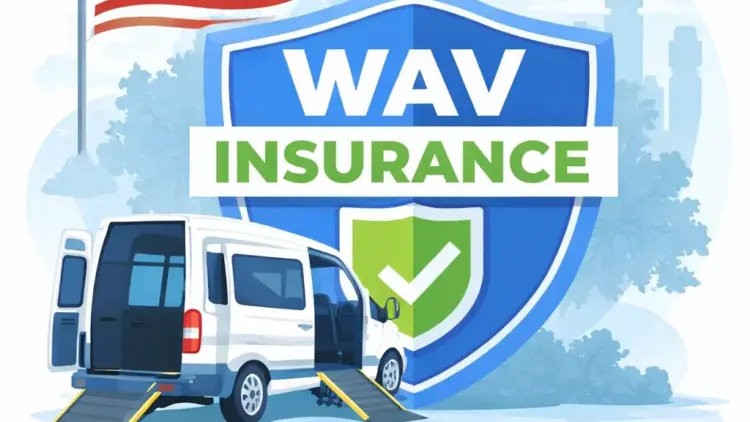
For thousands of travelers with physical disabilities visiting or journeying across the United States, renting a wheelchair-accessible van represents an essential gateway to personal independence, flexibility, and stress-free mobility. Being able to secure an adapted vehicle equipped with specialized equipment allows individuals and families to explore destinations on their own terms without relying entirely on public transit or specialized shuttle services. However, beneath the promise of an open road lies a complex administrative challenge that frequently catches travelers off guard: securing adequate rental insurance for a wheelchair-accessible van is often significantly more difficult, restrictive, and complicated than insuring a standard passenger rental car.
The stark disconnect between renting a standard vehicle and securing a wheelchair-accessible van stems primarily from how adapted vehicles are classified within the insurance and automotive rental industries. While a standard sedan or SUV can be reserved and insured at almost any airport rental counter with a few clicks, wheelchair-accessible vans are designated as modified vehicles. Because these vehicles incorporate complex structural alterations and specialized mechanical equipment, major accessible van rental operators frequently require renters to present their own transferable, full-coverage auto insurance before driving off the lot. Compounding the challenge, several major specialized rental companies do not offer or sell rental insurance directly at the counter, leaving travelers to navigate a maze of policy definitions, exclusions, and third-party coverage rules on their own.
Why Insurance for a WAV Rental Is So Complicated
The technical complexity and financial value of modified vehicles explain much of why the insurance landscape for wheelchair-accessible van rentals remains so intricate. A typical wheelchair-accessible van is far more than a standard minivan with seats removed; it undergoes extensive structural engineering to accommodate wheel-mounted mobility devices safely and comfortably.
These modifications often include heavily lowered vehicle floors to increase interior headroom, manual or motorized side and rear ramps, heavy-duty floor tie-down systems, specialized occupant securement hardware, and tailored interior layouts. These custom alterations add thousands of dollars to the base price of the vehicle and alter its original factory specifications. Consequently, insurance underwriters and travel benefit programs view modified vehicles through a completely different risk lens than ordinary passenger cars.
This distinction creates widespread confusion among travelers who assume that standard travel or auto insurance policies apply universally across all rental vehicles. A policy that readily covers minor collision damage on a standard rental car may contain explicit exclusions regarding modified, altered, or commercial-grade vehicles. When travelers inquire whether a rental van is covered under a general policy, they frequently receive conflicting or incomplete answers because customer service representatives may not recognize that a wheelchair-accessible van falls into a specialized coverage category.
What to Ask the Rental Company First
Given the lack of uniform standards across the vehicle rental industry, experts emphasize that proactive communication with the rental provider is the most critical first step in the booking process. Travelers should contact the rental company well in advance of their travel dates and request a comprehensive breakdown of all insurance requirements in writing.
When contacting the provider, travelers should seek clear clarification on specific policy thresholds rather than relying on verbal assurances. Key details to confirm include whether the company mandates full coverage, what specific limits are required for bodily injury and property damage liability, whether collision damage protection is mandatory, and what maximum deductible amounts are permitted. Renters should also clarify whether the rental operator requires explicit written proof that the policy covers modified or adapted vehicles.
Because individual wheelchair-accessible van rental companies enforce vastly different operational standards—ranging from strict demands for primary personal auto policies to flexible options for secondary coverage—securing written guidelines early prevents last-minute denials or costly cancellations at the rental counter.
If the Rental Company Does Not Offer Insurance
When a specialized rental company does not sell in-house insurance policies directly to customers, travelers must explore alternative avenues to satisfy coverage mandates. Navigating these options requires a clear understanding of personal policies, third-party insurance products, and credit card rental protection programs.
Evaluating Personal Auto Policies
For travelers who own a personal vehicle, checking with their existing auto insurance provider is a primary starting point. While some personal policies extend coverage to adapted or modified vehicles generally, that protection does not automatically apply to a short-term wheelchair-accessible van rental within the United States. Policyholders must explicitly ask their insurer whether their coverage extends to a short-term rental of a modified wheelchair-accessible vehicle, rather than simply asking if "rental cars" are covered under their policy.
Exploring Third-Party Rental Protection
When personal auto insurance is unavailable or un-transferable—as is frequently the case for international visitors—third-party rental protection providers can offer a viable path forward. Specialized rental coverage providers often maintain broader definitions of eligible vehicles. For example, RentalCover has stated that vehicles equipped with disability modifications can fall under its standard "car" coverage category in certain scenarios. However, actual eligibility remains contingent upon specific policy terms, destination guidelines, vehicle classifications, and the details of individual quotes. Travelers should rigorously review the policy terms before purchasing to confirm that modified vehicles are covered.
Similarly, major travel protection providers like Allianz offer rental car damage protection products. However, because coverage rules vary by region and policy type, travelers must verify directly with Allianz whether a modified wheelchair-accessible van qualifies for protection under the specific plan being considered.
Understanding Credit Card Benefit Limitations
Many travelers rely on collision damage waiver (CDW) benefits provided automatically by premium credit cards when renting vehicles. While these benefits can offer valuable primary or secondary protection against vehicle damage or theft, they are rarely sufficient on their own for a wheelchair-accessible van rental.
Credit card rental benefits almost universally exclude third-party liability coverage, meaning they do not pay for bodily injuries to others or property damage sustained by other vehicles in an accident. Furthermore, credit card insurance guidelines often contain explicit fine-print exclusions regarding modified vehicles, commercial vehicles, or vans exceeding certain weight and passenger capacities. Relying solely on credit card protection without confirming liability coverage and vehicle eligibility can leave renters exposed to significant financial risk.
Seeking Case-by-Case Administrative Approvals
If a rental company does not sell insurance and standard third-party options appear limited, travelers can ask the company whether alternative approval pathways exist. Some rental operators evaluate insurance arrangements on a case-by-case basis. Depending on company policy, operators may allow rentals if the customer provides alternative documentation, agrees to a larger security deposit, or obtains custom endorsements from an authorized insurer. Direct communication with senior management or risk assessment departments at the rental agency can sometimes yield workable solutions.
A Real-World Example
The practical viability of third-party insurance solutions is demonstrated by real-world traveler experiences. In one publicly documented account, an international traveler journeying from Ireland to the United States successfully secured the necessary coverage for a wheelchair-accessible rental van through RentalCover after navigating initial insurance hurdles.
While individual insurance outcomes depend on specific origin countries, rental destinations, and evolving policy terms, this real-world example illustrates that third-party protection can bridge the gap when traditional rental counter insurance is unavailable. It underscores the importance of researching alternative underwriters rather than assuming an accessible van rental is impossible without a domestic U.S. auto policy.
Where to Find Wheelchair-Accessible Van Rentals in the U.S.
Finding an accessible vehicle requires a different search strategy than reserving a conventional rental car. Major commercial car rental brands stationed at airport terminals rarely maintain modified wheelchair-accessible vans in their standard consumer fleets. As a result, travelers typically turn to specialized mobility equipment providers and dedicated accessible vehicle rental networks.
These providers operate across various geographic scales, ranging from national and multi-state mobility franchises to regional, state-specific specialists. National providers often feature larger fleets and standardized booking procedures, while local and state-specific operators can provide tailored regional support and direct customer service.
Because fleet sizes, branch locations, and operational partnerships change frequently across the mobility industry, static lists of rental locations rapidly become outdated. Travelers seeking up-to-date rental options are best served by utilizing live location finders, interactive mobility directories, and direct inquiry portals offered by established accessible travel organizations.
Best Tips for International Travelers
International visitors face additional layers of complexity when attempting to rent and insure a wheelchair-accessible van in the United States. Foreign auto insurance policies rarely transfer to North American vehicle rentals, and international travel insurance policies may exclude modified vehicles altogether.
To ensure a smooth rental process, international travelers should begin planning several weeks prior to departure. The first priority must be obtaining written confirmation from the rental provider detailing their precise insurance requirements. International visitors should then verify whether their home-country travel insurance or a dedicated third-party coverage provider like RentalCover will satisfy those requirements.
Additionally, international travelers must ensure they carry valid documentation, including a recognized driver’s license from their home country and, if necessary, an International Driving Permit (IDP). Confirming that third-party liability coverage meets or exceeds local state legal requirements is equally critical, as liability laws vary significantly across U.S. state borders.
Bottom Line
For international visitors and domestic travelers alike, insuring a wheelchair-accessible van rental in the United States requires more preparation and diligence than booking a standard rental car. The technical adaptations that make these vehicles so vital for accessible travel also place them outside the boundaries of routine rental coverage. By reaching out to rental providers early, requesting requirements in writing, and carefully vetting personal policies, third-party coverage options, and card benefits, travelers can secure the necessary coverage to hit the road with confidence and complete peace of mind.