
On May 1, 2026, Nebraska officially became the first state in the nation to enforce new Medicaid work requirements, marking a significant milestone in health policy following federal legislative changes. The policy stems from the 2025 federal reconciliation law, which mandates that states condition Medicaid eligibility for adults in the Affordable Care Act (ACA) Medicaid expansion group—as well as enrollees in certain specialized waiver programs, such as those in Georgia and Wisconsin—on meeting specific work requirements or qualifying for designated exclusion criteria.
While the federal timeline requires states to implement these provisions by January 1, 2027, states were granted the flexibility to roll out the requirements ahead of schedule. Nebraska chose to exercise this option, putting the rules into practice early in the spring of 2026. This early implementation has provided healthcare analysts, policymakers, and state officials with a unique window into how these regulations function in practice. KFF analysis indicates that the majority of Medicaid adults under the age of 65 are either already working without a mandate or face substantial barriers to employment. To understand the real-world impact of the policy, recent data presented at Nebraska’s September Medicaid Advisory Committee (MAC) meeting sheds light on outcomes for both newly applying individuals and those undergoing coverage renewals through August 2026.
What is the verification process for Medicaid work requirements in Nebraska?
To manage the administrative complexities of the new mandate, Nebraska developed a verification process utilizing a combination of available state data and self-declaration forms, alongside temporary hardship exceptions designed to protect vulnerable enrollees. When the state’s data systems can automatically verify that an individual satisfies the work requirements or meets an exclusion criterion, the process is streamlined, and an approval notice is issued directly to the enrollee.
However, in cases where the state lacks sufficient data to make an automatic determination, individuals receive a formal notice detailing the precise information required. Along with this notice, enrollees are provided a declaration form that must be completed and returned within a 30-day window. This form allows individuals to attest that they have engaged in qualifying activities or that they meet specific criteria allowing them to be excluded from the mandate.
Interim federal rules allow states to accept self-declaration through 2027. Starting in January 2028, however, states will generally be required to request concrete documentation from individuals whenever state-level data is unavailable, with medical frailty serving as an exception. In addition to self-attestations, Nebraska implemented optional short-term hardship exceptions. These exceptions provide temporary relief for applicants or enrollees experiencing extenuating circumstances. Such circumstances include residing in counties with high unemployment rates, enduring natural disasters, being admitted to a hospital or nursing facility, or needing to travel outside of one’s local community for an extended period to obtain necessary medical care for oneself or a dependent.
To maintain continuous enrollment, adults must satisfy either qualifying employment activities or specific exclusion criteria. The state is required to evaluate whether an individual is exempt from the work requirements before assessing whether they meet the threshold for qualifying activities. It is also worth noting that some individuals who qualify for an exclusion may still be actively employed.
What are the initial data on Nebraska Medicaid application and renewal outcomes?
Early data from the Nebraska Department of Health and Human Services tracking applications processed between May and August 2026 offer a glimpse into how the policy is reshaping enrollment. Out of 9,614 total applications processed during this timeframe, some submissions predated the May effective date and were consequently exempt from the mandates, while 4,434 applications were denied for reasons entirely unrelated to work requirements, such as household income exceeding the established Medicaid eligibility thresholds.
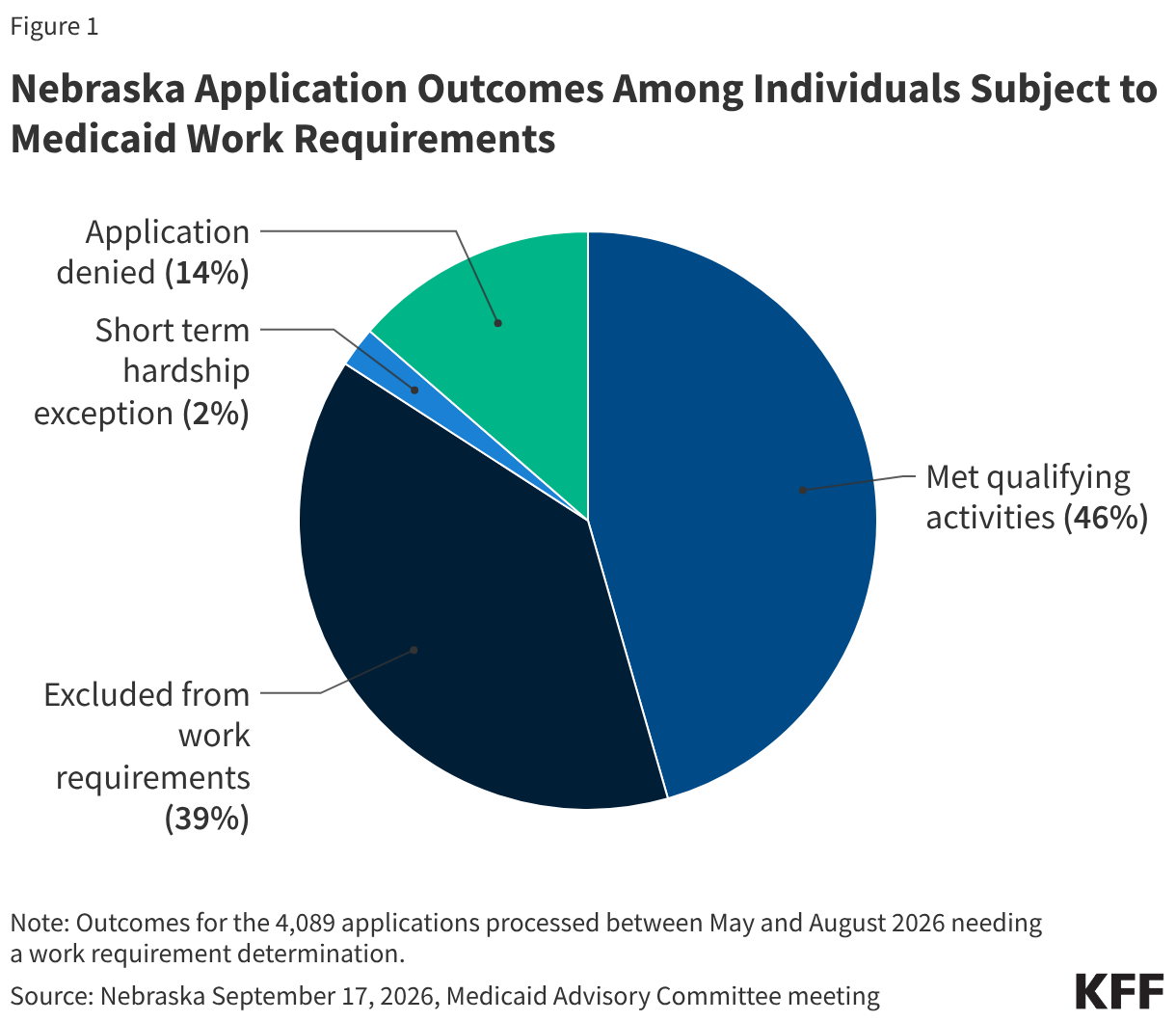
Focusing specifically on the remaining 4,089 applications that were subject to the new work rules, the data reveals that 86% of applicants successfully met the work requirements, qualified for an exclusion, or were granted a short-term hardship exception. Conversely, 14% of applicants subject to the work mandates had their applications denied.
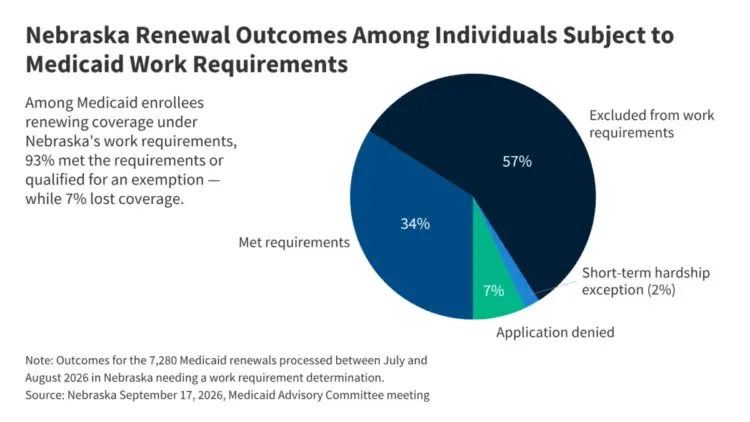
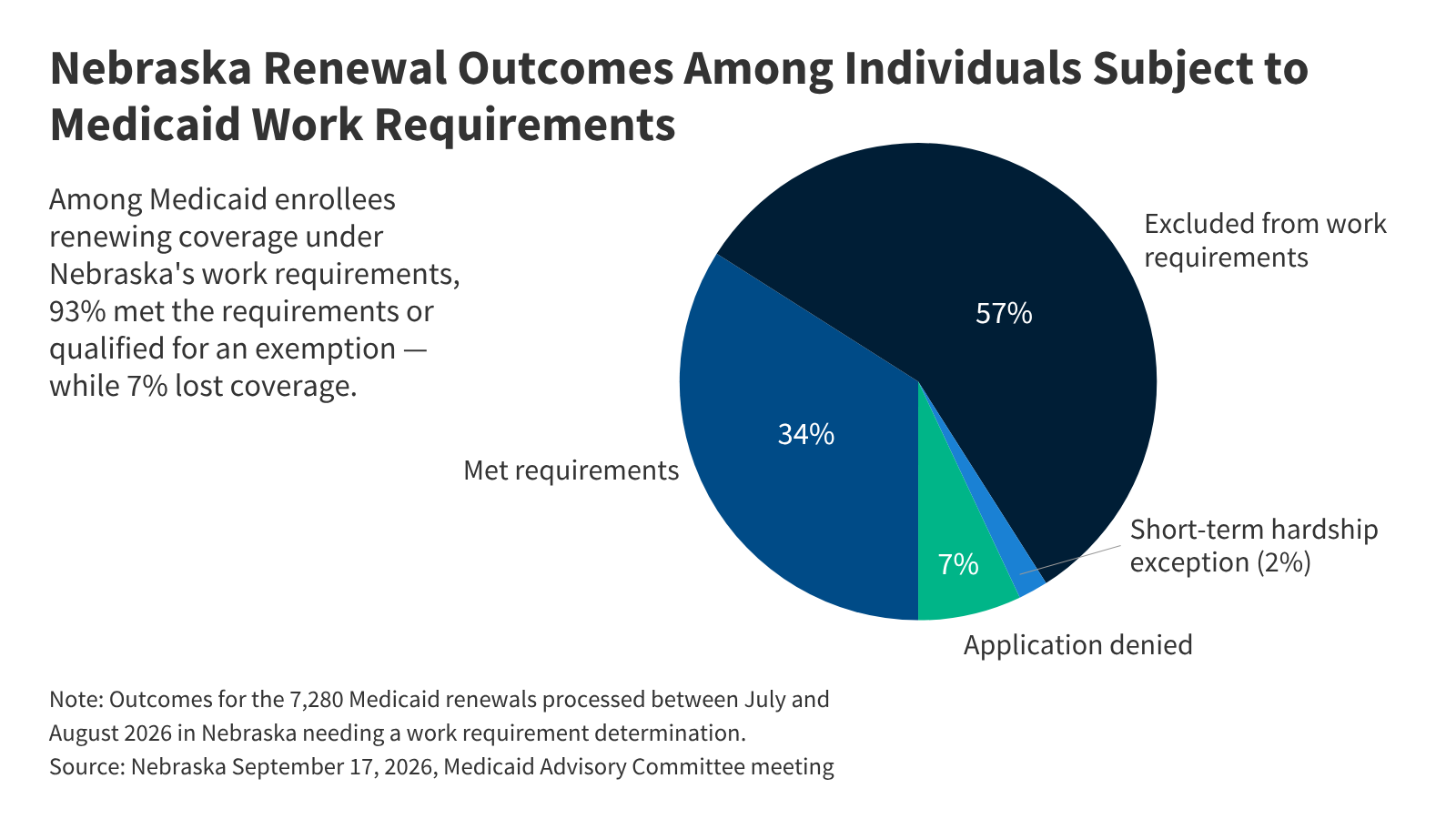
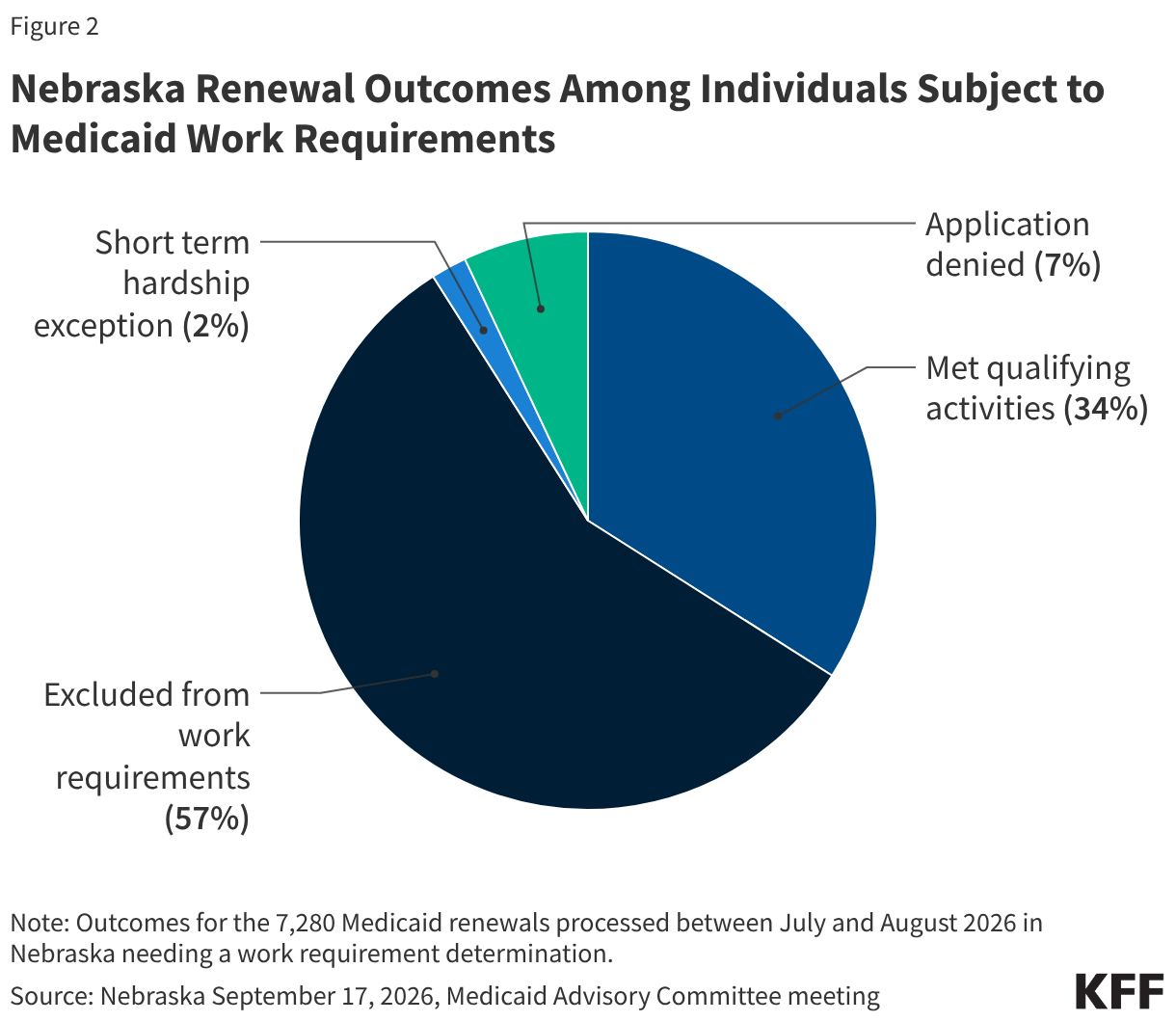
The outcomes for individuals undergoing periodic coverage renewals show a similarly high compliance or exemption rate. Among the 7,280 coverage renewals subject to work requirements that were processed between July and mid-August, 93% of enrollees successfully met the work requirements, qualified for an exclusion, or received a short-term hardship exception, allowing their coverage to continue seamlessly. Meanwhile, 7% of enrollees subject to the rules lost their coverage. These figures exclude other expansion enrollees who were determined ineligible and disenrolled during the renewal period for reasons unrelated to work requirements, such as moving out of state or experiencing changes in income.
What can additional data show?
While these initial figures provide valuable early insights into how coverage is impacted for individuals navigating the work requirements, experts emphasize that a more comprehensive picture will require deeper, more granular data over time. Detailed information regarding the demographics of those losing coverage could illuminate specific barriers faced by vulnerable populations, such as gig economy workers, independent contractors, or individuals juggling multiple part-time positions whose hours fluctuate unpredictably. Such insights could help the state refine its verification processes and identify supplementary data sources to ease administrative burdens.
Furthermore, questions remain regarding individuals who were denied coverage or disenrolled because they failed to respond to notices of non-compliance. It is not yet entirely clear whether these individuals were genuinely ineligible for Medicaid, simply unaware that they needed to provide additional information, or overwhelmed by the administrative difficulties of documenting their work status or exclusion category. Tracking whether these individuals eventually reapply for coverage will be critical in determining the long-term reach of the policy.
Looking ahead, required adjustments to the state’s medical frailty verification process and upcoming federal restrictions on the use of self-attestation in 2028 are expected to influence disenrollment rates. The Centers for Medicare & Medicaid Services recently notified Nebraska that modifications must be made to its medical frailty verification procedures. If the state is forced to adopt a more stringent verification protocol, fewer individuals may qualify for this specific exclusion in the future.
More broadly, while the state’s reliance on self-attestation throughout 2027 will likely cushion some coverage losses that might have occurred under stricter documentation rules during the initial rollout, future documentation mandates could introduce hurdles. These hurdles might ultimately reduce the number of people able to verify compliance or secure exemptions. As Nebraska continues to adapt its administrative processes, monitoring the cumulative effect of application denials and disenrollments on overall state Medicaid enrollment levels—as well as observing whether the new rules inadvertently deter eligible individuals from applying in the first place—will remain a central focus for healthcare policy analysts.



