The internet, social media, and artificial intelligence have fundamentally transformed how people research health information and medical advice. While these digital platforms have made health resources more accessible than ever, they have also dramatically accelerated the spread of medical misinformation. A comprehensive new nationally representative survey from KFF sheds light on these dynamics, capturing how adults navigate online health spaces, which sources they trust, and how widespread false narratives about contraception are actively influencing women’s healthcare decisions.
The 2026 KFF Women’s Health Survey—which was fielded between March 11 and April 14, 2026, among 4,688 women and 1,148 men ages 18 to 64—focuses particularly on reproductive-age women and men between the ages of 18 and 49. The findings reveal that digital tools have become nearly ubiquitous for medical inquiries, while simultaneously exposing millions of people to misleading claims about reproductive health.
Accessing Health Information
The overwhelming majority of reproductive-age adults turn to the digital world when looking for health guidance. According to the survey data, 87% of women and 86% of men between the ages of 18 and 49 have looked for health information or advice online through internet search engines, social media platforms, or artificial intelligence tools over the past year.
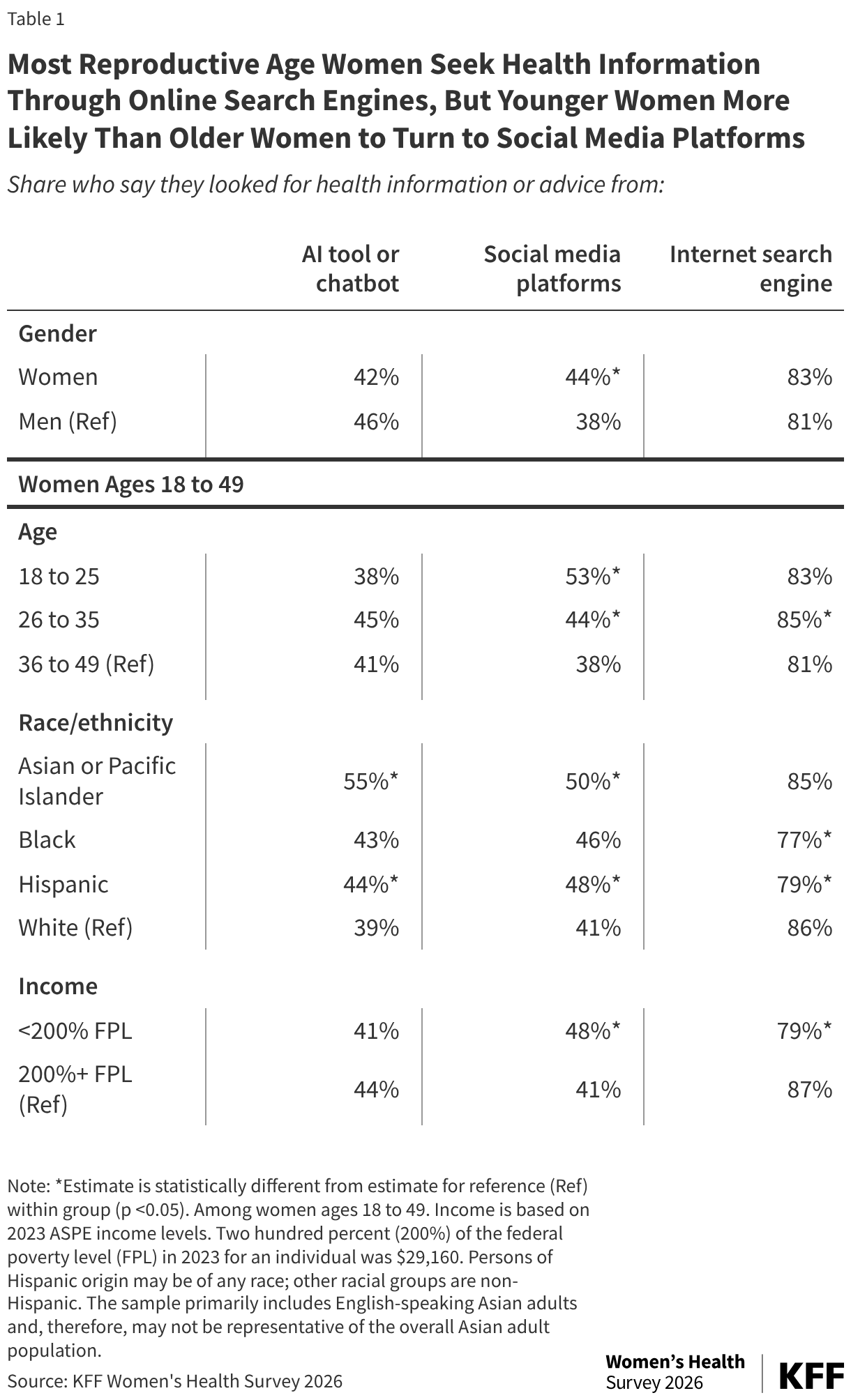
Traditional internet search engines like Google and Bing remain the most common entry point, utilized by 83% of reproductive-age women and 81% of men in the past year. However, alternative platforms are rapidly gaining ground. Women are somewhat more likely than men to use social media for health information, at 44% compared to 38%. Conversely, men are slightly more inclined to consult AI tools or chatbots such as ChatGPT, Google Gemini, or Claude, with 46% of men reporting their use compared to 42% of women. Nearly one in four women report using all three digital avenues—search engines, social media, and AI tools—for their health inquiries.
Demographic breakdowns highlight distinct trends in how different communities access digital health data. For instance, larger shares of Asian (55%) and Hispanic (44%) women report utilizing AI tools or chatbots for health information over the past year compared to White women (39%). While social media is generally used less frequently for health advice than search engines, half of Asian (50%) and Hispanic (48%) women and 53% of young women ages 18 to 25 report seeking health guidance on social platforms. Furthermore, women with lower household incomes look to social media for health information at higher rates than those with higher incomes (48% versus 41%), aligning with previous KFF findings that younger and lower-income adults often turn to social media because they lack a regular healthcare provider or cannot afford medical visits.
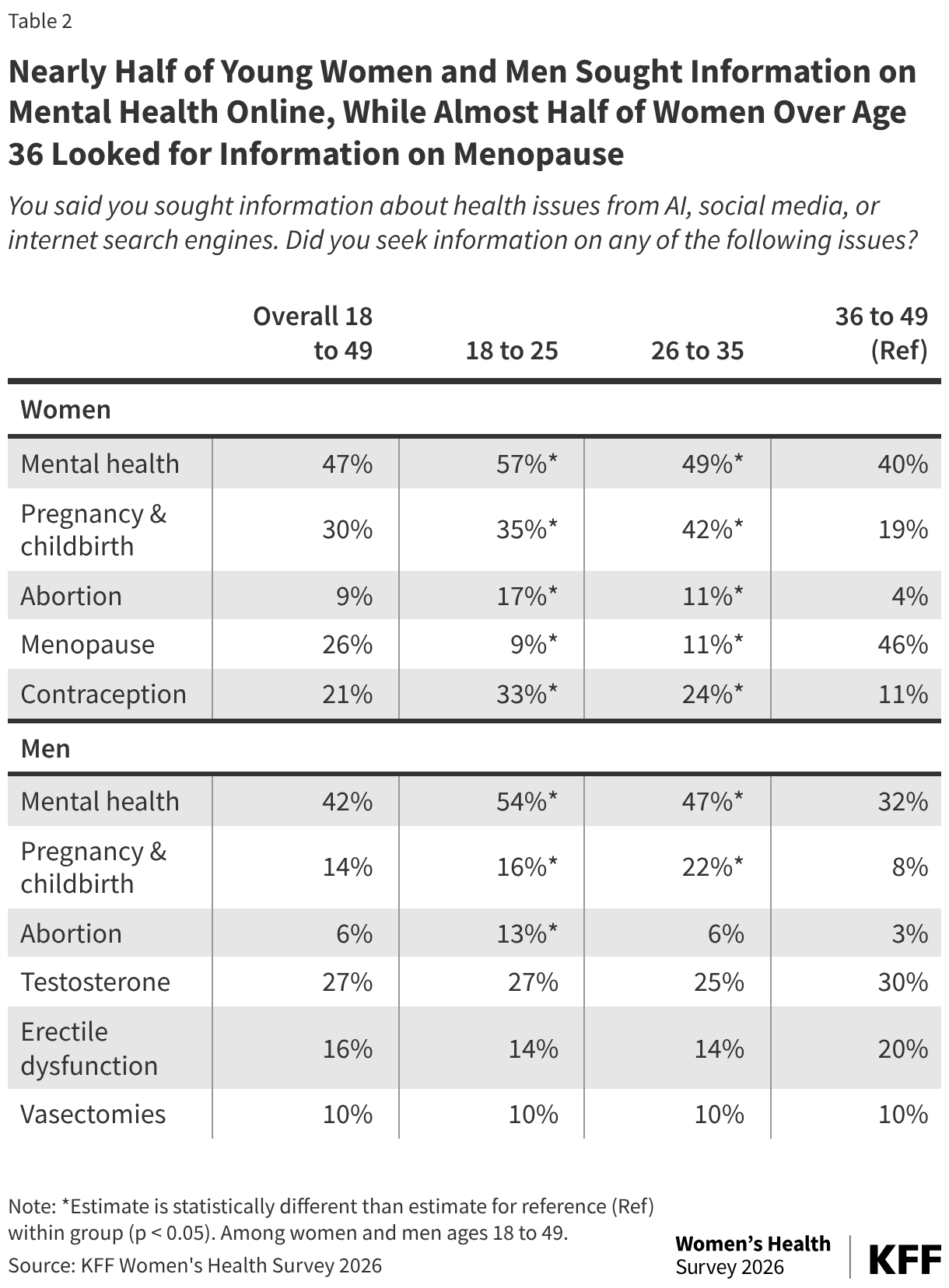
When examining specific medical topics, nearly half of reproductive-age women (47%) report seeking information about mental health online, a figure that jumps to 57% among women ages 18 to 25. Men show a similar pattern, with the largest share—42% of reproductive-age men overall, and 54% of men ages 18 to 25—seeking information about mental health. Men also searched for topics such as testosterone levels (27%), erectile dysfunction (16%), and pregnancy and childbirth (22% among men ages 26 to 35). Among women, a quarter of reproductive-age respondents (26%) searched for information regarding menopause, though this rises to 46% for women between the ages of 36 and 49. While 30% of reproductive-age women overall looked for information on pregnancy and childbirth, that share surges to 71% among women who were pregnant or gave birth in the past three years. Additionally, one in three women ages 18 to 25 sought information on contraception, and 18% searched for abortion-related topics.
Contraception on Social Media
Beyond active searches, passive exposure to reproductive health content on social media is widespread. Regardless of whether they actively sought it out, one in three women of reproductive age (35%) report seeing or hearing something about contraception on social media over the past 12 months. Younger women are significantly more likely to encounter this content, with 42% of women ages 18 to 25 and 39% of women ages 26 to 35 reporting exposure, compared to 28% of women ages 36 to 49.
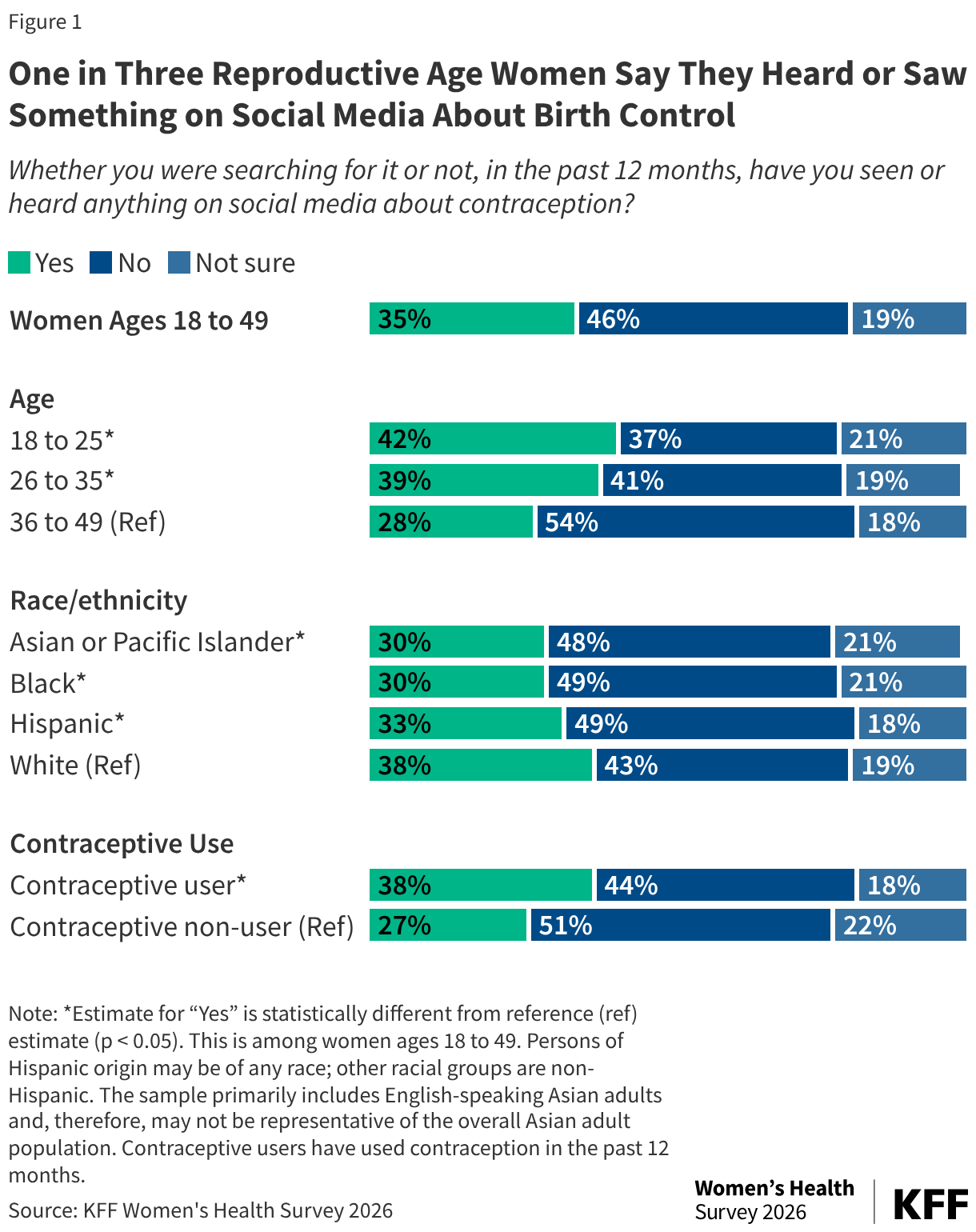
Among those who have encountered contraceptive content on social media, 78% report using contraception in the past year, primarily relying on hormonal methods at 62%. Contraceptive users are more likely to notice this online content than non-users, at 38% compared to 27%.
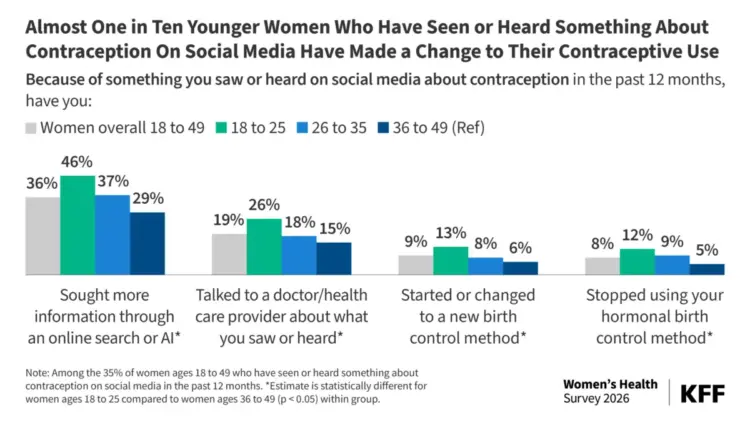
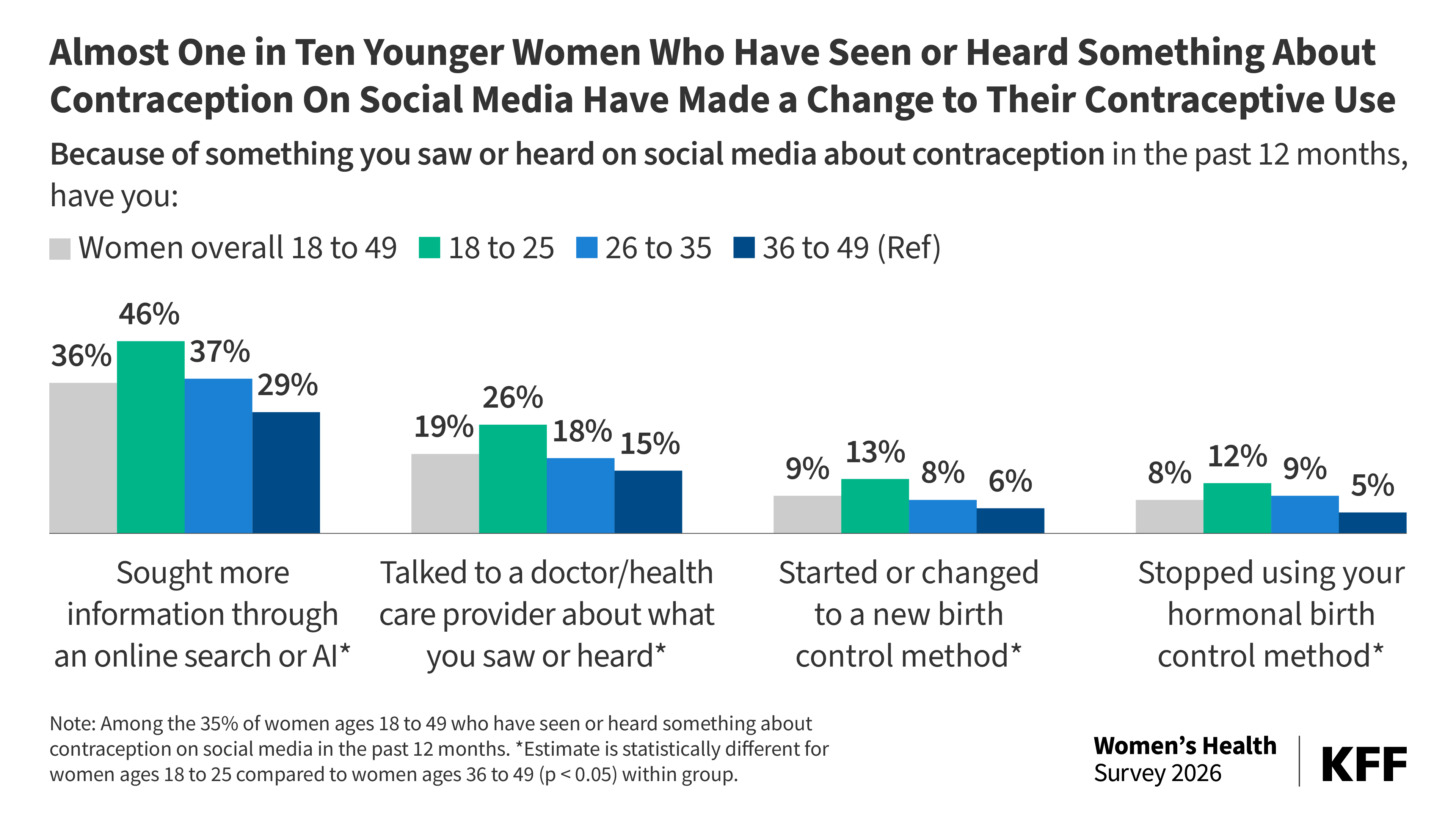
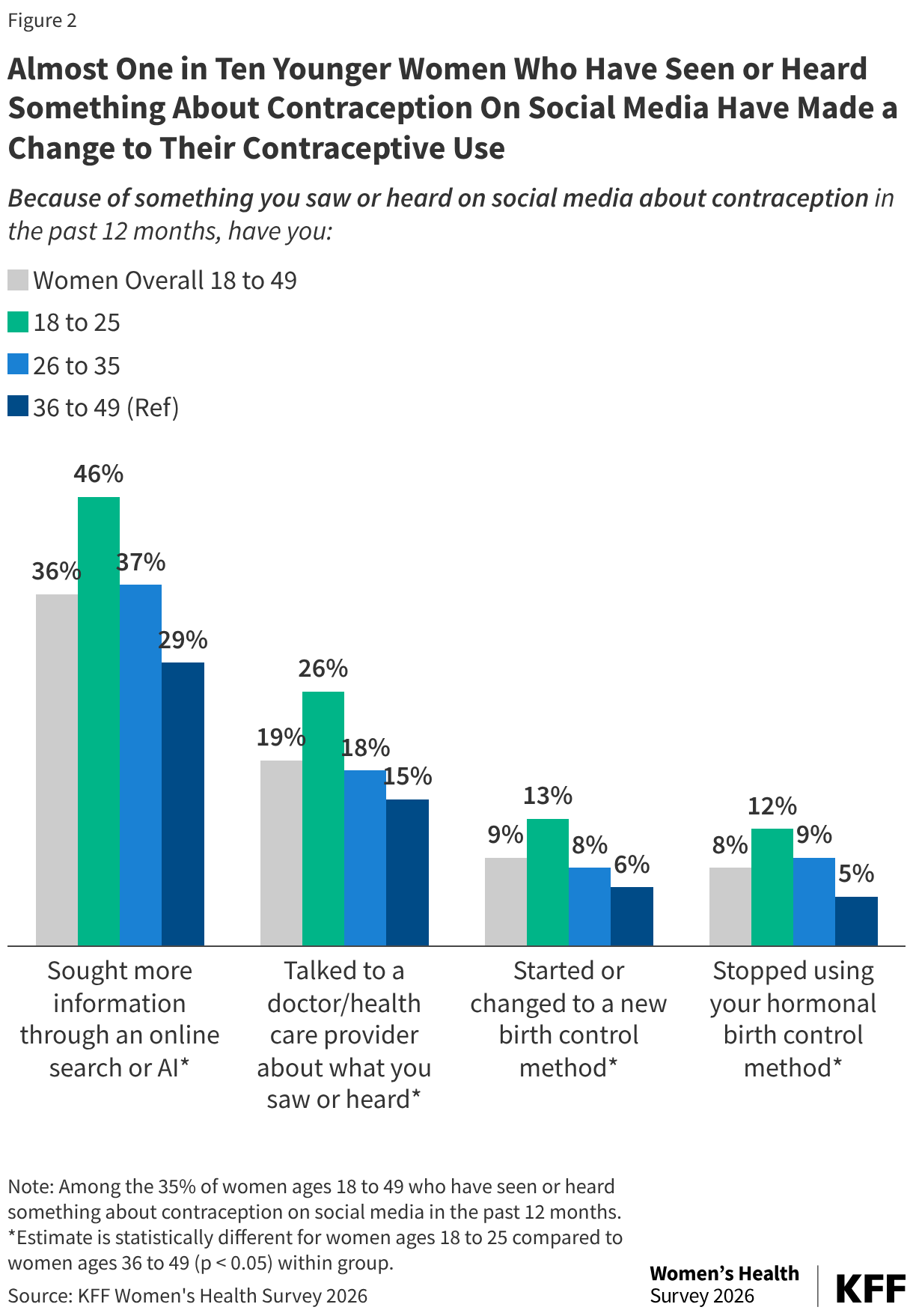
For some women, the content they view online prompts tangible shifts in their reproductive health behaviors. One in ten women who encountered contraceptive information on social media reported changing their behavior as a result: 8% stopped using hormonal birth control (representing 3% of all women ages 18 to 29), and 9% started or changed to a new birth control method (representing 3% of all women). Additionally, nearly one in five (19%) talked to a doctor or healthcare provider about what they saw or heard, and over a third (36%) sought further information through an online search or AI tool. Younger women ages 18 to 25 were notably more likely to take these steps than older cohorts, with 12% stopping hormonal birth control, 13% changing methods, 26% consulting a healthcare provider, and 46% conducting further online or AI research.
False or Misleading Statements About Contraception
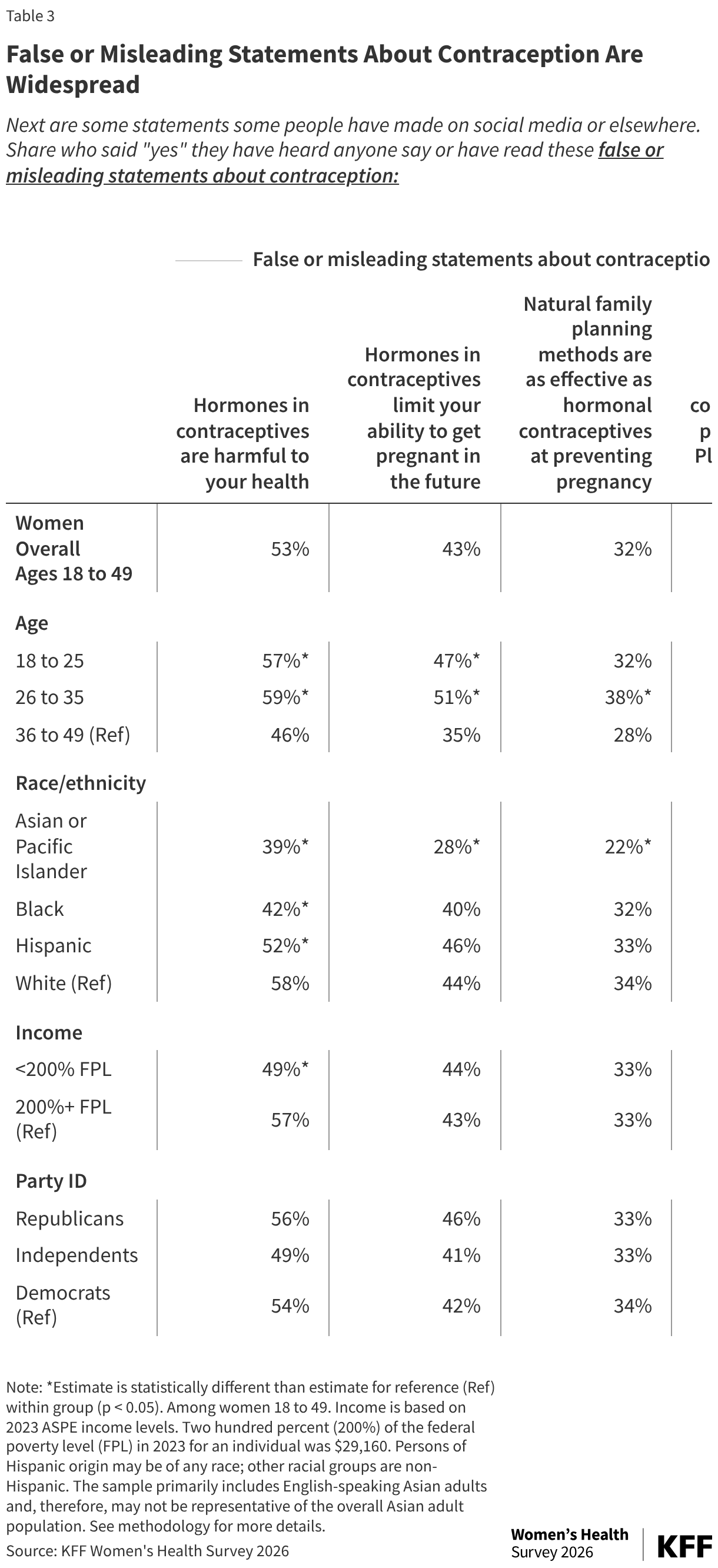
The high volume of digital content has also facilitated the widespread circulation of false and misleading claims regarding contraception. About half of reproductive-age women (53%) say they have seen or heard the false statement that hormones in contraceptives are harmful to health. Furthermore, roughly four in ten (43%) have encountered the incorrect claim that hormonal contraceptives limit a person’s future ability to get pregnant.
Misinformation regarding alternative methods is also prevalent. One in three reproductive-age women (32%) report hearing that natural family planning methods are as effective as hormonal contraceptives at preventing pregnancy. In contrast, expert medical organizations such as the American College of Obstetricians and Gynecologists note that fertility awareness-based methods are roughly 77% to 98% effective with typical use, while hormonal contraceptives range from 93% to 99.9% effective. Similarly, one in three women (32%) have encountered the false claim that emergency contraceptive pills, such as Plan B, cause abortions. Medical science confirms that emergency contraceptive pills do not terminate an existing pregnancy, cannot prevent the implantation of a fertilized egg, and do not affect a developing embryo.
Trust in Health Information Sources
When evaluating who to trust for reliable health guidance, reproductive-age women place the overwhelming majority of their confidence in traditional medical professionals. Eighty-six percent of reproductive-age women state they trust their healthcare provider a great deal or a fair amount, slightly higher than the 79% of reproductive-age men who feel the same way. While trust in providers remains high across all demographics, it dips slightly among lower-income groups.
State and local health departments also command substantial trust, with 55% of all women expressing confidence in them, a figure that rises to 63% among Asian women and 64% among self-identified Democrats. Federal health agencies are trusted by about half (48%) of women ages 18 to 49, a metric recorded following a year marked by significant personnel adjustments and federal health website revisions. Meanwhile, about a quarter of reproductive-age women (26%) report trusting Robert F. Kennedy Jr. as a source of reliable health information.
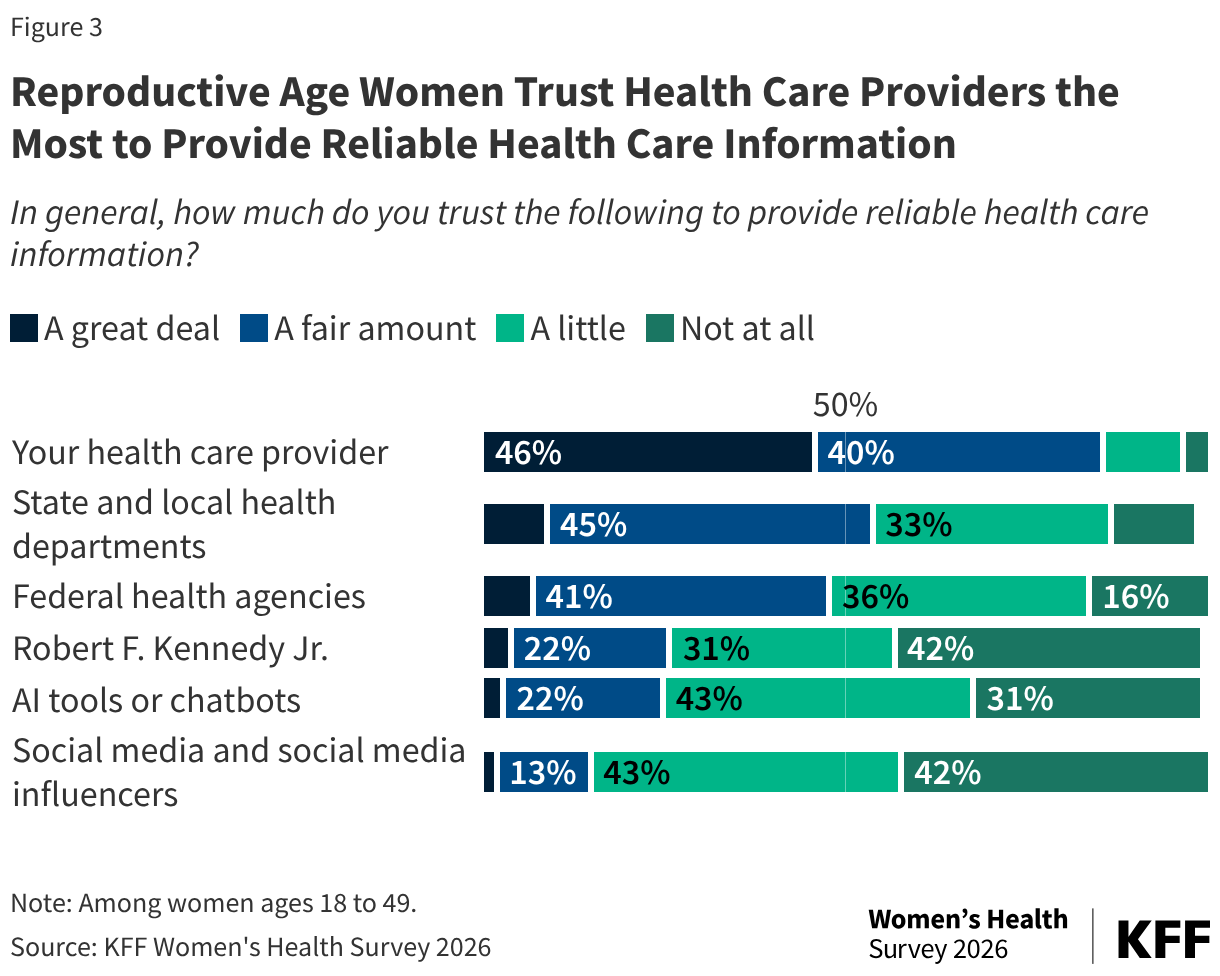
Emerging digital tools and social platforms rank significantly lower in overall public trust. Only a quarter (25%) of reproductive-age women trust AI tools and chatbots a great deal or a fair amount for reliable health information, though trust is slightly higher among Asian women. Social media platforms and online influencers are trusted the least, with just 15% of reproductive-age women expressing confidence in them. However, that figure rises to over one in five (21%) among women ages 18 to 25, underscoring a generational divide in how younger adults evaluate the credibility of online information sources.