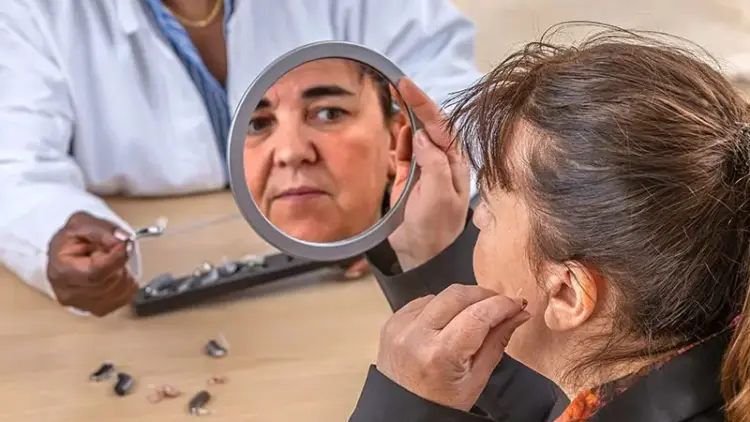
One of the most commonly asked questions that audiologists receive from patients is simple yet deeply practical: “Do I really need two hearing aids or is one sufficient?” It is a question born of everyday realities. Two devices cost significantly more than one, some individuals find a single aid more physically comfortable, and many patients simply want to know what actually works best for their lifestyle and budget. Yet, despite how frequently this dilemma arises in clinical practice, there has been surprisingly little solid, high-quality scientific evidence to provide a definitive answer until now.
A major new randomized clinical trial, published in JAMA Otolaryngology–Head & Neck Surgery in August 2026, set out to fill that long-standing gap in audiological research. Designed to evaluate the real-world differences between wearing a single hearing aid versus a pair, the study offers fresh insights into what the results mean for millions of people living with age-related hearing loss. (Note: The author of the foundational report served as an adviser for this clinical trial.)
Because age-related hearing loss typically affects both ears relatively equally over time, fitting two hearing aids—a practice known professionally as a bilateral fitting—has long been the standard recommendation by hearing care specialists. However, looking across earlier studies and clinical observations, a sizable share of patients, ranging from roughly one in five to more than half, ultimately ended up preferring or consistently using only a single device in one ear.
Patients have long cited various reasons for choosing just one device, including physical comfort, daily convenience, the subjective feeling that a single hearing aid already adequately meets their communication needs, and, most notably, substantial cost savings. Purchasing a second hearing aid roughly doubles the overall price of treatment. For individuals experiencing milder forms of hearing loss, it has historically remained unclear just how much extra clinical benefit that second device genuinely delivers to justify the added financial burden.
Furthermore, most of the earlier scientific studies attempting to address this question suffered from significant methodological drawbacks. They were typically based on small cohorts of participants, combined individuals experiencing a wide range of hearing loss severities, relied on older or outdated technology, and frequently handed out hearing aids for free to study participants. While convenient for researchers, giving away devices for free entirely erased the real-world financial trade-offs that actual patients face every single day when making their purchasing decisions.
To overcome these limitations, the new study was designed as a randomized clinical trial, which represents one of the strongest scientific methodologies available for comparing two different medical treatments. Conducted collaboratively at Duke University and Vanderbilt University between 2021 and 2024, the trial enrolled 275 adult participants aged 50 and older. All of these individuals were entirely new to hearing aids and presented with mild-to-moderate hearing loss affecting both ears.
Researchers randomly assigned the study participants to one of two distinct treatment groups: one group received a single hearing aid to be worn in one ear, while the other group received two devices for a bilateral fitting. Every participant was provided with similar, modern receiver-in-the-canal hearing devices. Crucially, and unlike much of the earlier research conducted in the field, the participants in this trial paid for their own hearing aids and professional audiological services, utilizing only a small manufacturer discount and standard insurance coverage where it applied. By incorporating out-of-pocket expenses, the study successfully captured the financial trade-off that is so often missing from traditional hearing aid research.
After three months of regularly wearing their assigned devices, researchers measured how much clinical and practical benefit each person had obtained. This evaluation was primarily conducted using a well-established, validated questionnaire designed to capture how much easier everyday communication and social interactions had become, alongside several other objective and subjective performance measures.
Upon analyzing the data, the researchers found that wearing two hearing aids did indeed provide a measurable advantage over wearing just one. On average, participants fitted with a pair of devices reported greater improvements in their daily communication abilities and overall satisfaction compared to those fitted with a single device.
However, it is equally important to note that the additional benefit delivered by the second hearing aid turned out to be smaller than the researchers had initially anticipated. The study was originally designed to detect a performance difference of about 10 percentage points between the two groups, but the difference actually observed in the trial was roughly half that amount. The study’s authors are careful to emphasize that it remains unclear whether a gap of that magnitude is consistently large enough to be noticeably meaningful in everyday, real-world situations. Far from being a reason to dismiss the findings, this nuance highlights the complex nature of individual hearing rehabilitation.
When evaluating the outcomes, researchers and clinicians alike emphasize that choosing one hearing aid over two does not mean a patient is receiving an ineffective treatment. If factors such as financial cost, physical comfort, lifestyle demands, or personal preference make a single hearing aid the better fit for an individual’s daily life, that person is still choosing a therapeutic option that delivers genuine, measurable benefit.
Like all scientific investigations, this landmark clinical trial has certain limitations, and the researchers were entirely upfront about them from the outset. The study focused on a specific demographic—adults aged 50 and older with mild-to-moderate bilateral hearing loss—meaning the results may not automatically apply to individuals with profound hearing losses or younger populations. Additionally, the primary evaluation period took place after three months of device use, leaving open questions about long-term adaptation and usage patterns over the span of several years.
Despite these acknowledged limitations, this trial provides robust, high-quality evidence for a practical question that clinicians and patients confront on a daily basis. The data demonstrates that two hearing aids provide more benefit on average, but it also confirms that the benefits derived from wearing a single hearing aid are genuinely meaningful and valuable.
Ultimately, the conclusion drawn from the research is not that one hearing aid is universally just as good as two, nor does it suggest that every single person with hearing loss in both ears is strictly required to wear a pair. Instead, the findings indicate that the decision deserves considerably more nuance than a rigid, one-size-fits-all clinical rule. Patients are encouraged to carefully consider their own unique hearing needs, active listening environments, physical comfort levels, financial budgets, and personal preferences, and then work closely with their hearing care provider to find the specific configuration that delivers meaningful benefit alongside consistent, daily use.
Whatever path or option an individual ultimately chooses, hearing health professionals stress that the single most important step is to actively address hearing loss and seek out the support, technology, and tools that help bridge communication gaps and keep people connected to the world around them.