Nearly three in ten adults across the United States—representing approximately 29% of the adult population—have stepped up to provide unpaid care to a friend or family member over the past year, according to a comprehensive new report released today. The landmark research, titled the KFF Survey of Health Access and Caregiving, sheds light on a massive, often invisible workforce of informal caregivers who support loved ones navigating the challenges of aging, long-term disabilities, or chronic health conditions. While these caregivers provide an invaluable service to their families and the broader healthcare system, the new findings underscore that the role frequently carries a profound personal, emotional, and economic cost.
The survey details both the scope of this unpaid labor and the distinct burdens borne by those who perform it. According to the data, the median amount of time caregivers dedicate to these tasks is five hours per week. However, that median figure masks a wide and demanding spectrum of time commitments. Nearly half of all unpaid caregivers—accounting for 45% of the caregiving cohort, or roughly 13% of all U.S. adults—spend four hours or less each week assisting their loved ones. At the other end of the spectrum, about a quarter of caregivers, representing 23% of the group or 7% of all adults nationwide, devote more than 15 hours a week to caregiving responsibilities, frequently blurring the lines between informal help and a full-time, uncompensated job.
Demographically, the survey reveals that the burden of unpaid caregiving does not fall evenly across the American population. Women make up a disproportionate share of the workforce, comprising 57% of unpaid caregivers compared to 42% men. Furthermore, caregivers tend to be older than non-caregivers, with 53% falling into the age bracket of 50 and older, compared to 44% of adults who do not provide care. This generational dynamic means many older adults are managing their own health needs while simultaneously looking after spouses, aging parents, or other elderly relatives.
The complexity of modern caregiving is further highlighted by the overlapping responsibilities many individuals manage daily. One-quarter of unpaid caregivers are parents or legal guardians living with a child under the age of 18 in their household. Additionally, nearly half—some 44%—report that they are employed full-time. This delicate balancing act illustrates how millions of Americans must constantly juggle demanding careers, raising children, and the unpredictable, time-sensitive needs of vulnerable family members.
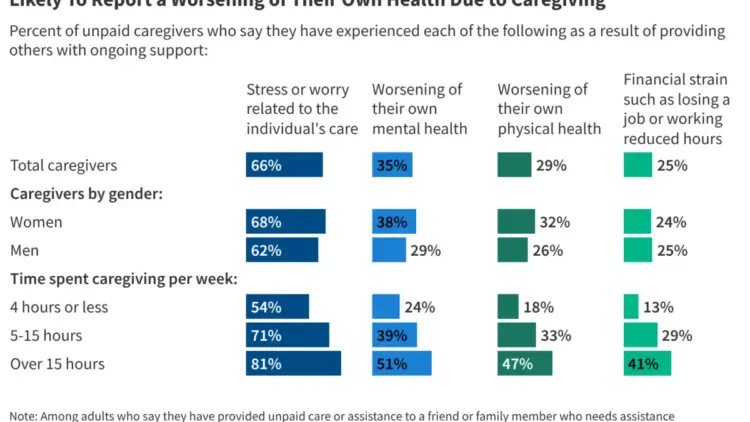
As the hours dedicated to caregiving increase, so too does the toll on the caregiver’s own well-being. Substantial shares of unpaid caregivers report that their duties negatively affect their physical health, mental stability, and financial security. Overall, two-thirds of caregivers—66%—state they have experienced heightened stress or worry directly related to their caregiving responsibilities. More alarmingly, significant minorities report tangible declines in their health: 35% say their mental health has worsened, and 29% note a decline in their physical health.
Financial strain is another critical pressure point. One-quarter of all unpaid caregivers report experiencing financial hardships linked to their duties, such as being forced to leave a job, turning down promotions, or cutting back on work hours to manage care schedules. This financial vulnerability is especially acute among those with less workplace flexibility. The share reporting economic strain is highest among part-time workers, at 41%, and among the unemployed, at 34%, many of whom may have left the labor force entirely to care for a relative.
The correlation between the intensity of caregiving and the severity of its consequences is stark. Among the roughly one in four caregivers who spend more than 15 hours a week providing assistance
, the personal toll multiplies. About eight in ten of these intensive caregivers—81%—report experiencing stress or worry. Furthermore, about half of this heavy-duty cohort say they have suffered a worsening of their mental health, at 51%, or physical health, at 47%. Financial strain also spikes within this group, with 41% of those dedicating more than 15 hours weekly reporting economic hardship. Across nearly every metric measured by the survey, these figures are substantially higher than those reported by individuals who spend fewer hours caregiving each week. Additionally, female caregivers consistently report higher rates of stress, worry, and health declines than their male counterparts.
The day-to-day reality of unpaid caregiving involves a diverse and demanding array of tasks essential to maintaining an individual’s quality of life and safety. The most common responsibilities reported by caregivers involve domestic support, with 70% of all respondents—including 72% of women and 66% of men—assisting with housekeeping, grocery shopping, or preparing meals.
Beyond household chores, many caregivers manage complex medical and administrative duties. About half of all unpaid caregivers, or 51%, report managing an individual’s medical care, which frequently includes organizing medications, ensuring proper adherence, and providing transportation to frequent doctor appointments and therapy sessions. Smaller yet significant shares of caregivers take on high-stakes responsibilities, such as managing the care recipient’s personal finances, reported by 37%, and making crucial medical decisions like selecting healthcare providers or navigating treatment plans, noted by 30%. Furthermore, more than a quarter of caregivers—26%—provide intimate physical care, which includes helping loved ones bathe, dress, and manage other daily personal hygiene needs.
The KFF Survey of Health Access and Caregiving was meticulously designed and analyzed by public opinion researchers at KFF. The data was gathered between May 4 and May 26 of this year, utilizing both online platforms and telephone interviews to reach a large, nationally representative sample of 25,873 adults across the United States. Within this broad sample, researchers successfully surveyed 8,209 individuals who confirmed they had provided unpaid care to a friend or family member due to aging, disability, or a chronic health-related issue within the past 12 months. The survey was administered in both English and Spanish to ensure broad representation. According to KFF, the margin of sampling error is plus or minus one percentage point for the full sample of adults and plus or minus two percentage points for the subset of unpaid caregivers, with margins potentially higher for specific sub-analyses.