For travelers with mobility needs, choosing the right luxury hotel involves navigating a complex web of architectural promises versus everyday realities. A recent stay at the InterContinental Cartagena de Indias—undertaken during a familiarization trip sponsored by the Colombian government—sheds light on what wheelchair users can genuinely expect when booking a high-end coastal getaway in Colombia’s premier tourism hub. While the property offers a modern, aesthetically pleasing environment with several thoughtful accessibility inclusions, it also reveals critical design oversights, particularly within its bathroom facilities, that underscore the ongoing challenges of universal design in international hospitality.
Situated directly on the beachfront in Bocagrande, Cartagena’s bustling modern tourism and business district, the InterContinental Cartagena de Indias forms part of the globally recognized IHG Hotels portfolio. The 285-room luxury destination occupies a strategic location for both leisure and corporate travelers. It sits approximately three miles away from the city’s iconic Walled City, a designated UNESCO World Heritage Site renowned for its rich colonial history, narrow cobblestone streets, and vibrant cultural landmarks. For arriving guests, the property is situated roughly a 25-minute drive from the Rafael Núñez International Airport, making it a convenient base for visitors flying into the Caribbean coastal city.
Room Rates & Reservations
When it comes to booking accommodations at the property, standard nightly room rates typically hover around $175 USD, though prices fluctuate and rise significantly during peak travel seasons, holidays, and major regional events. For travelers requiring accessible infrastructure, the hotel designates specific spaces within its ocean view category. These wheelchair-accessible units are priced in line with standard guest rooms of the exact same category, ensuring that travelers with disabilities do not face financial penalties for needing accessible features. Reservations for these specialized rooms can be secured directly through the official InterContinental Cartagena website.
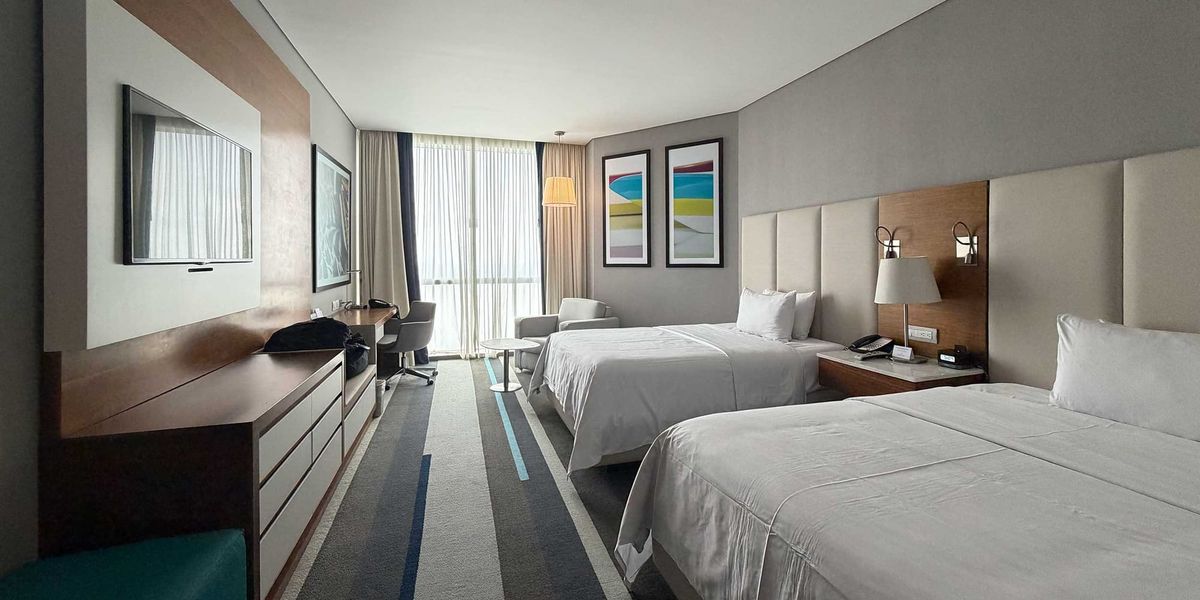
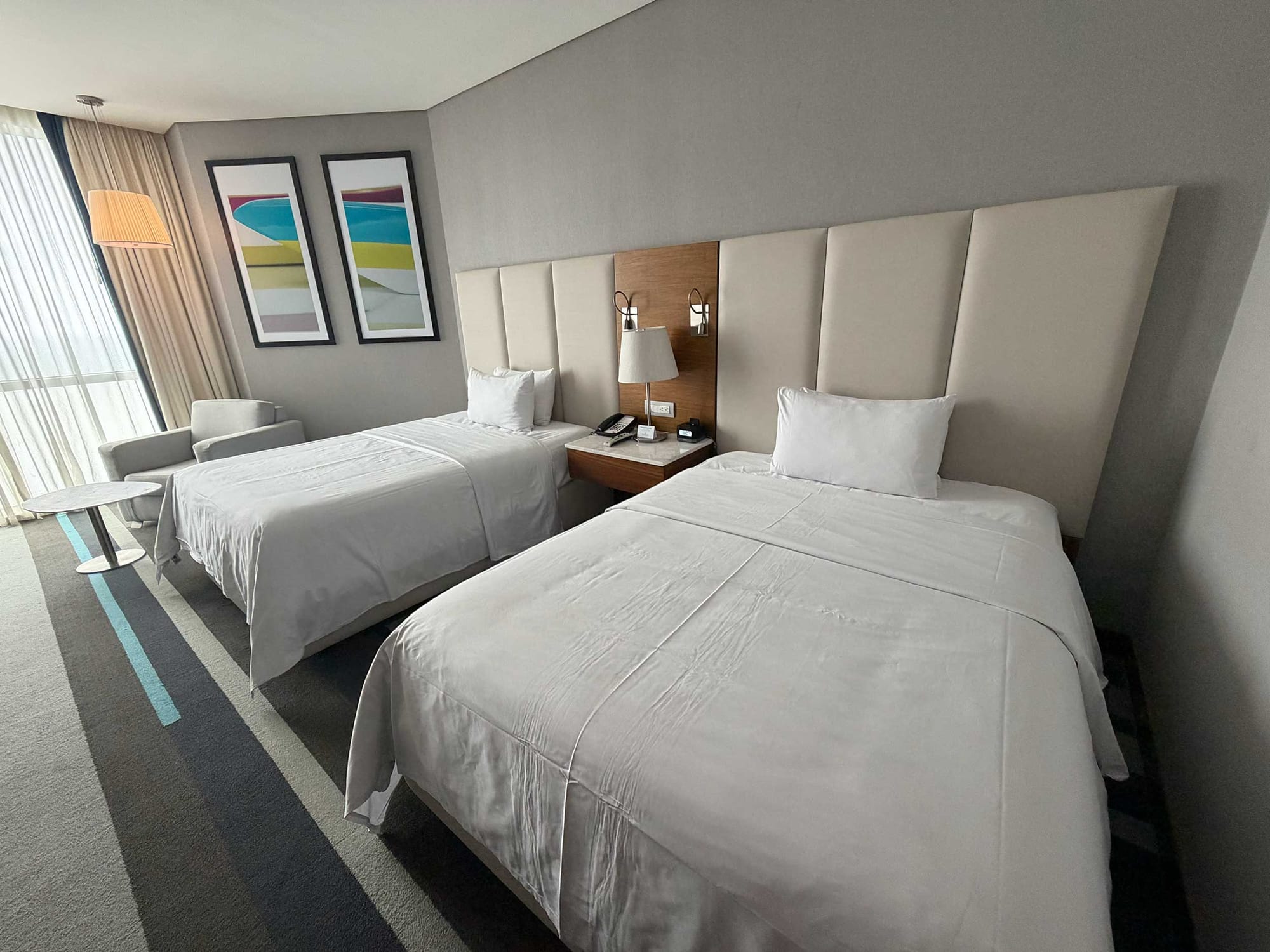
Out of its extensive inventory of 285 guest rooms, the property maintains a total of three wheelchair-accessible hotel rooms. Each of these limited accessible units is configured with two queen-sized beds, catering to families, groups, or travelers who require companion arrangements.
Wheelchair Accessible Hotel Room at InterContinental Cartagena de Indias
During the recent stay, room number 911 served as the primary observation point for evaluating the property’s accessibility standards. Located on the ninth floor, the guest room was accessed through an entryway featuring a door measuring 35 inches—equivalent to 89 centimeters—in width. The door was reported to be well-balanced and easy to open from a wheelchair user’s perspective. However, a minor ergonomic oversight was noted regarding the door’s security viewing ports. The room featured two peepholes: an upper option positioned at 59.5 inches, or 151 centimeters, and a lower alternative set at 40 inches, or 102 centimeters. While the inclusion of a lower peephole is a positive nod toward accessibility, the lower option was placed a bit too low to be comfortably or practically used from the vantage point of a power wheelchair.
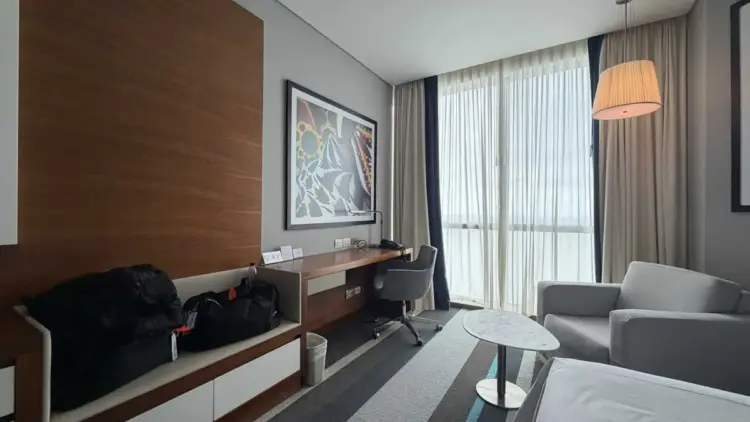
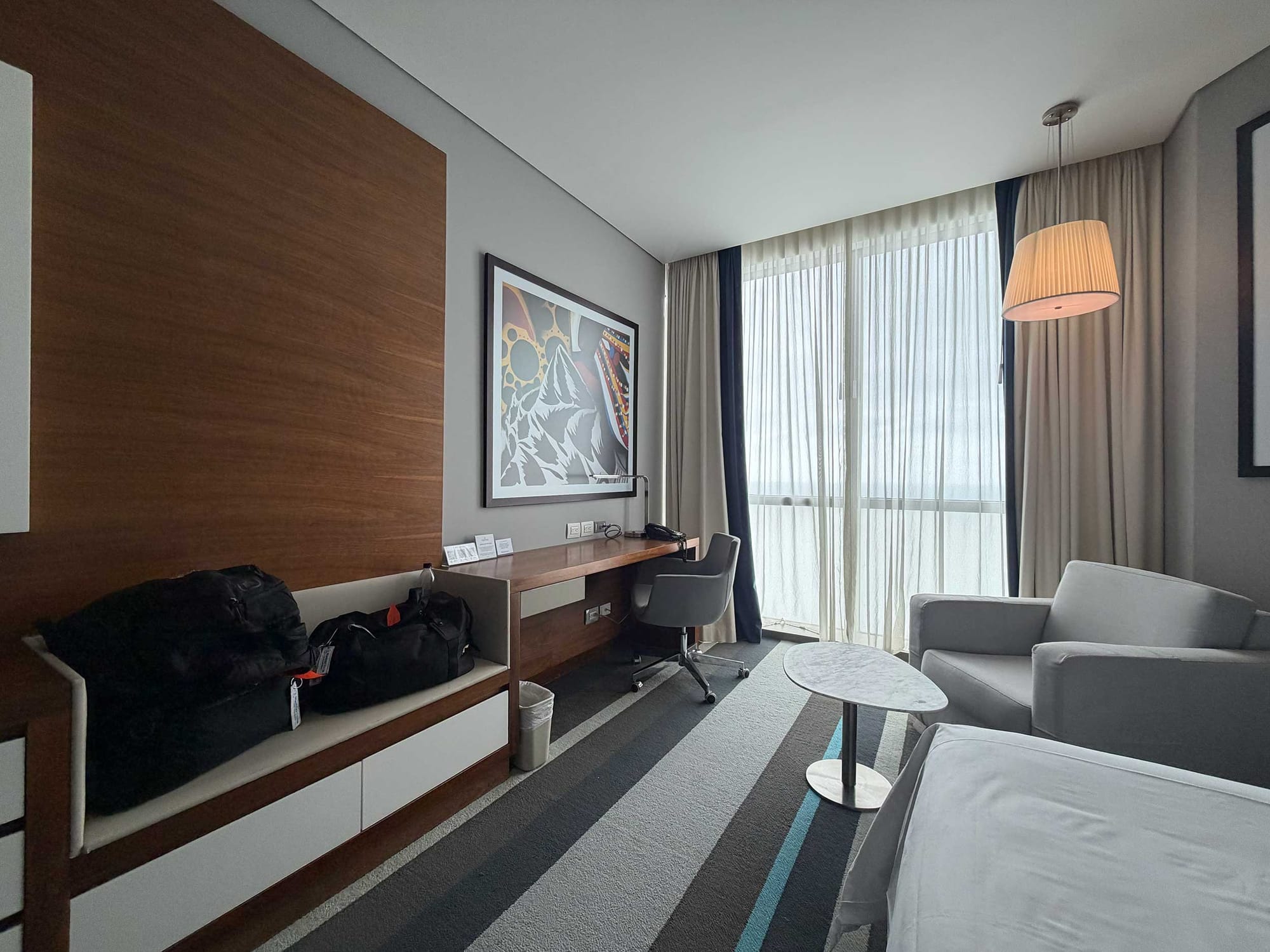
Upon entering the room, guests are greeted by a spacious, contemporary interior layout defined by colorful artwork, patterned striped carpeting, and expansive floor-to-ceiling windows. These large glass panes allow natural Caribbean sunlight to flood the room while offering sweeping, unobstructed views of the sea. The spatial design allows ample clearance, providing enough room to easily maneuver a large power wheelchair throughout the quarters and park comfortably between the two beds.

The bedding arrangement features two queen beds resting on solid platform bases at a height of 25 inches—or 64 centimeters—from the floor to the top of the mattress. While the height is generally standard for modern hotel bedding, the solid platform base lacks any clearance underneath. Consequently, this structural choice completely prevents the use of a portable patient transfer hoist, a vital piece of medical equipment for some travelers with severe mobility limitations.
Additional furnishings within the room include a wood-paneled desk positioned along the wall opposite the beds. The desk measures 29.5 inches, or 75 centimeters, in height, offering 27.5 inches, or 70 centimeters, of knee clearance underneath. An office chair and an additional upholstered seat are also provided near the window, giving guests practical options for relaxation and work.
Wheelchair Accessible Bathroom with Roll-in Shower at InterContinental Cartagena de Indias
While the main living quarters present a comfortable and largely accessible environment, the adjoining bathroom reveals a stark contrast between commendable design choices and glaring structural flaws. On the positive side, the toilet and the vanity area demonstrate a clear attempt to meet international accessibility standards.
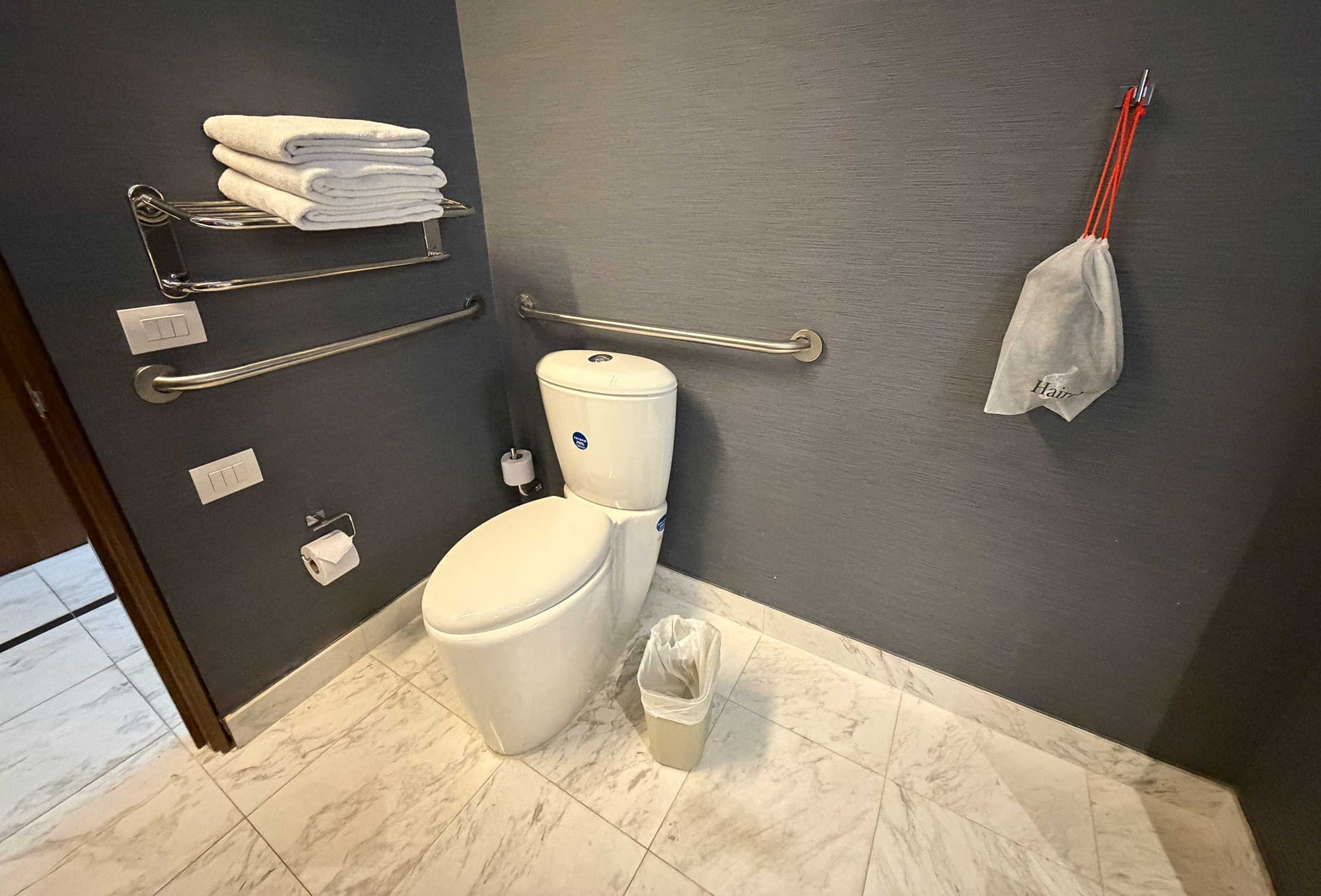
The bathroom toilet is positioned in a corner and measures 18.5 inches, or 47 centimeters, from the floor to the top of the seat, placing it comfortably within the standard range outlined by the Americans with Disabilities Act. To assist with transfers and stability, horizontal grab bars are securely mounted on both the rear wall and the adjacent side wall at a height of 37.5 inches, or 95 centimeters.
The vanity area features an extended white marble countertop designed in an open layout. It measures 30.5 inches, or 77 centimeters, in height, with 27 inches, or 69 centimeters, of vertical clearance underneath. This open base successfully accommodates a wheelchair user’s legs, allowing them to roll underneath the counter to use the sink comfortably. While an extra inch or two of vertical clearance would have enhanced the ergonomics, the vanity functions adequately for daily routines.
However, the roll-in shower represents a major departure from practical accessibility best practices. Although the shower stall incorporates all the necessary components on paper, their physical arrangement renders the space deeply dysfunctional.
The shower is equipped with a small fold-down seat mounted centrally on the back wall. The seat measures a narrow 18 inches, or 46 centimeters, in width by 14.5 inches, or 37 centimeters, in depth, and sits at a height of 16.5 inches, or 42 centimeters, above the floor. The primary issue lies in the geometry of the installation: the seat is isolated in the center of the back wall, placing it at a significant distance from the grab bar on the adjacent side wall, as well as away from the handheld shower head and the water temperature controls.
Because of this layout, using the shower safely requires sitting sideways on the small bench and tightly gripping the grab bar positioned directly behind the seat. For future visits, travelers with similar mobility profiles would be well-advised to request or rent a portable shower seat that can be positioned dynamically to provide better proximity to the water fixtures and controls. The current setup strongly suggests that the shower layout was designed without meaningful consultation from individuals who regularly navigate wet rooms from a seated position.
Location & Transportation
Beyond the hotel walls, the surrounding neighborhood of Bocagrande serves as a bustling hub defined by beachfront views, retail outlets, and dining establishments. For visitors exploring the area, the local streetscape presents a mixed experience. Sidewalk infrastructure is somewhat inconsistent and frequently in need of repair, while curb ramps are available only intermittently rather than universally across the district. Nevertheless, Bocagrande remains one of the more navigable and accessible sectors of Cartagena, with numerous restaurants, cafes, and shops situated within comfortable walking distance of the property.
For travelers looking to venture further—particularly to reach major cultural landmarks such as the wheelchair-accessible areas of the nearby UNESCO-listed Walled City or local accessible beaches—relying solely on walking or public transit can prove challenging. Visitors with mobility needs will almost certainly need to arrange private car services or rental vehicles to navigate the city safely. To assist guests with vehicle logistics, the InterContinental provides valet parking services directly at the hotel entrance.
Final Thoughts
The InterContinental Cartagena de Indias offers a visually striking, comfortable lodging experience in a prime Colombian coastal location, featuring spacious guest accommodations and partially well-executed bathroom amenities. For travelers planning a journey to Cartagena who are comfortable utilizing portable assistance devices such as a mobile shower chair, the property remains a viable and attractive option within the city’s luxury hospitality market.