Medicaid and the Children’s Health Insurance Program (CHIP) continue to serve as critical lifelines for millions of low-income children, adults, seniors, and individuals with disabilities across the United States, providing essential health and long-term care coverage. Because these vital safety-net programs are jointly financed by the federal government and individual states while being administered locally within broad federal guidelines, the landscape of public health coverage varies significantly from one state to the next.
To help policymakers, researchers, and the public navigate these complexities, a comprehensive suite of updated state fact sheets and interactive mapping tools has been released. These resources offer a detailed snapshot of key data, enrollment figures, and demographic characteristics for Medicaid programs across every state, illustrating how local policy decisions directly shape healthcare access nationwide.
The Patchwork of State Medicaid Programs in 2024
The wide divergence in Medicaid programs across the country is largely a reflection of state-level policy choices. Most notably, states hold the authority to decide whether to adopt the Affordable Care Act (ACA) Medicaid expansion, a pivotal policy choice that extends health coverage to low-income adults. Furthermore, states maintain varying degrees of discretion when setting income eligibility limits above federal minimums for specific groups, tailoring their programs to meet the unique needs of their local populations.
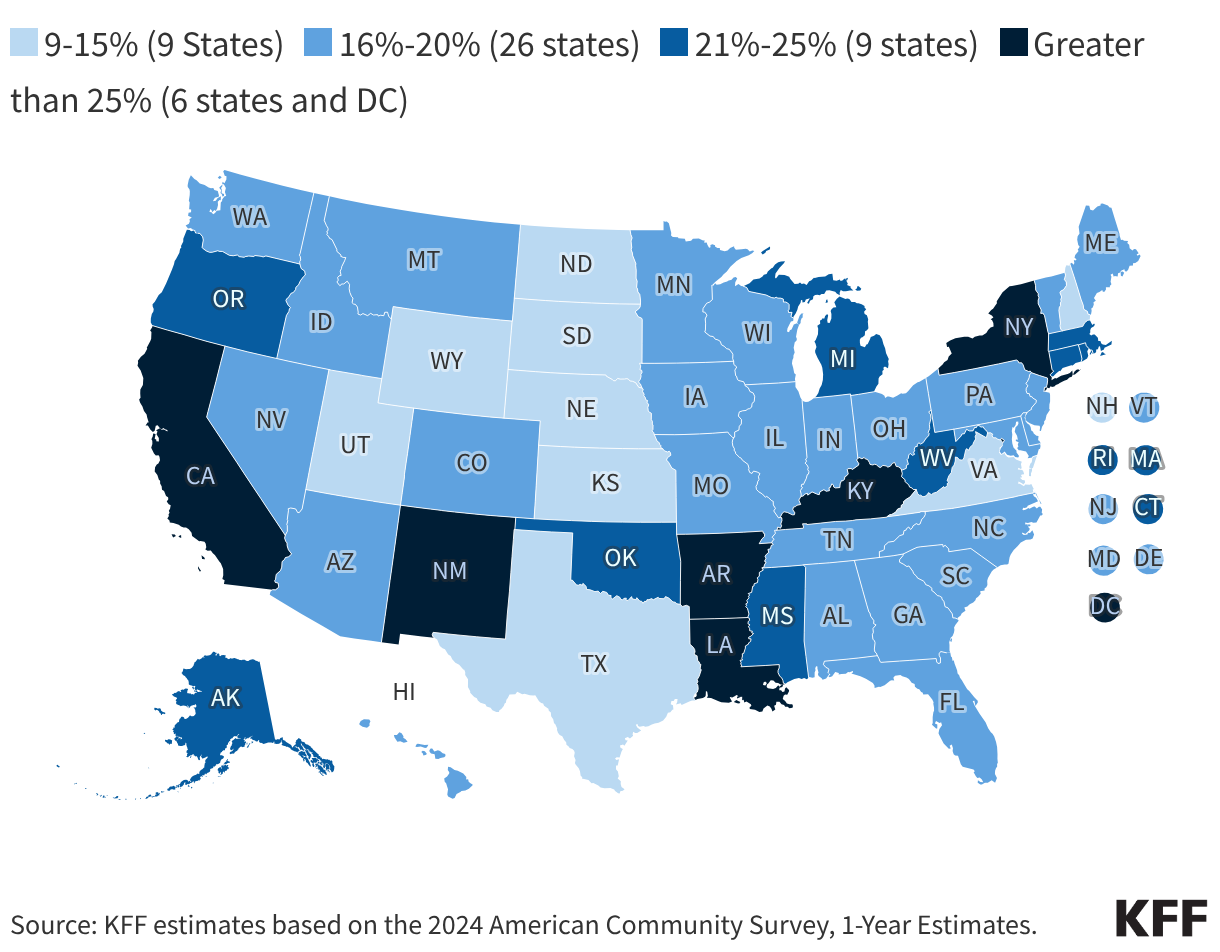
Beyond explicit policy decisions, these state-by-state variations are driven by underlying demographic differences. Age distribution, economic conditions, local healthcare costs, and baseline uninsured rates all play a significant role in determining how many residents rely on Medicaid and CHIP for their healthcare needs. The newly released data resources provide an in-depth visual and analytical breakdown of these factors, utilizing geographic data and choropleth mapping to illustrate the percentage of people covered by Medicaid in each state for 2024.
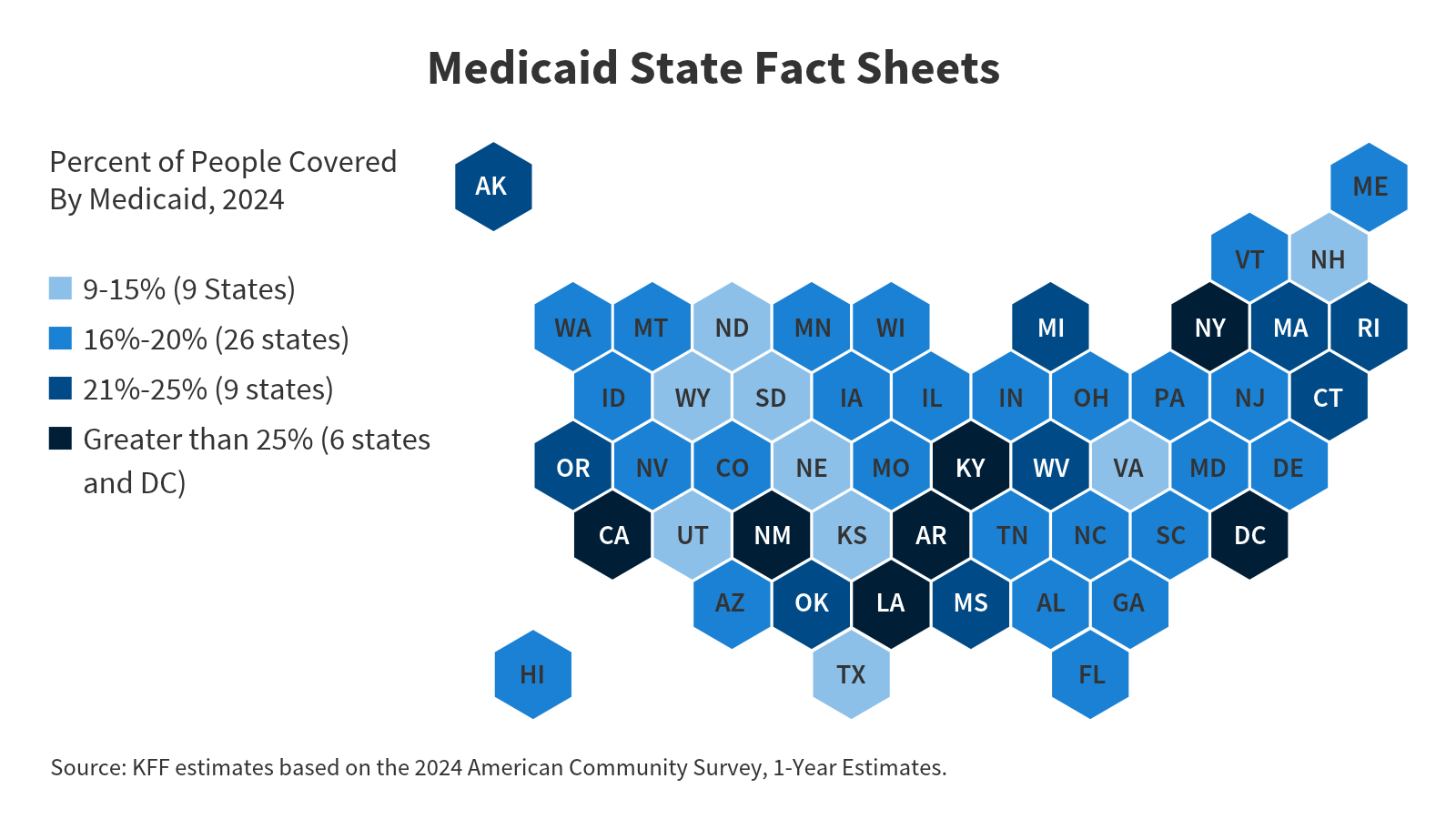
Stakeholders seeking a granular look at individual states can access downloadable fact sheets designed to provide a comprehensive overview of regional enrollment trends, spending distributions, and demographic profiles. These materials aim to clarify how federal-state partnerships translate into boots-on-the-ground healthcare coverage for vulnerable populations.
Comprehensive Sources and Data Methodology
The insights provided in the newly available fact sheets and interactive tools draw from a robust foundation of state- and national-level data compiled by leading health policy research organizations. Understanding the scope and origin of these data points is essential for analyzing trends in public health financing and enrollment.
Total monthly Medicaid and CHIP enrollment figures are derived from extensive tracking provided by state health policy databases, offering historical and current comparisons reaching back to pre-ACA benchmarks. These enrollment metrics are crucial for monitoring how policy shifts, economic fluctuations, and administrative renewals impact public program participation.
In addition to broad enrollment counts, the underlying data incorporates sophisticated geographic metrics, including congressional district interactive maps that track Medicaid enrollment by specific eligibility groups. This allows analysts to observe coverage patterns at a micro-level, bridging the gap between national health policy and localized constituent needs.
Financial data detailing total enrollees, overall spending, and the distribution of financial resources across various healthcare sectors forms another core pillar of the dataset. Because Medicaid is one of the largest budget items for many state governments, tracking how funds are allocated—ranging from acute care and prescription drugs to extensive long-term services and supports for older adults and individuals with disabilities—remains a central focus for budget analysts and legislators.
Furthermore, the data collection tracks the evolving status of state Medicaid expansion decisions, documenting which jurisdictions have embraced the ACA expansion and which have chosen alternative policy routes. These expansion metrics are closely tied to broader analyses of state uninsured rates, specifically focusing on non-elderly populations and tracking how public health programs reduce gaps in coverage for children and working-age adults.
Demographic characteristics of Medicaid enrollees, alongside median eligibility levels established by state agencies, round out the comprehensive data framework. By examining variables such as age, race, ethnicity, and income thresholds alongside participation rates, researchers can better evaluate how equitably and effectively state programs are fulfilling their core mission of protecting economically vulnerable residents.