In an era defined by rapid technological innovation, shifting political landscapes, and an unprecedented volume of digital content, public trust in health information has become increasingly fractured. Recent comprehensive polling data from KFF sheds light on a complex national environment where individuals turn to a diverse array of sources—from traditional healthcare providers and federal agencies to social media platforms and artificial intelligence chatbots—to make critical decisions about their well-being.
While doctors and medical professionals remain a steadfast anchor of reliability for the American public, trust in government health institutions, political figures, and emerging digital tools is deeply divided along partisan, demographic, and socioeconomic lines. These shifting dynamics are fundamentally altering how people perceive routine medical care, vaccine safety, and the validity of health claims circulating in public discourse.
Trusted Sources of Health Information: Who the Public Trusts
When it comes to seeking reliable guidance on health issues, doctors and healthcare providers stand out as the nation’s most trusted resource. A substantial majority of U.S. adults express at least a fair amount of confidence in their personal physicians to deliver accurate and dependable health information. This high level of trust remains remarkably consistent across various demographic groups, including age, gender, race, ethnicity, and educational attainment. However, data indicates that White adults and individuals with college degrees are somewhat more likely to express high levels of trust in their doctors, a trend that may point to underlying disparities in healthcare access and continuity of care.
In stark contrast, public trust in government health agencies and officials is considerably more fractured. Approximately half of all adults report trusting federal institutions such as the Centers for Disease Control and Prevention (CDC) or the Food and Drug Administration (FDA) for reliable health guidance. Yet, confidence drops significantly when looking at specific political figures. Fewer than half of the public express trust in state government officials, Health and Human Services Secretary Robert F. Kennedy Jr., or President Trump.
Partisanship plays a profound role in shaping these attitudes, particularly regarding political leadership. Roughly six in ten Republicans—a figure that rises to at least seven in ten among staunch supporters of the Make America Great Again (MAGA) movement—express trust in Secretary Kennedy or President Trump for reliable health information. Conversely, three in ten or fewer independents and Democrats share that view. Meanwhile, Democrats are more likely than Republicans to place their trust in state government officials, while partisan divides over agencies like the CDC and FDA are somewhat more muted, though still influenced by broader political currents.
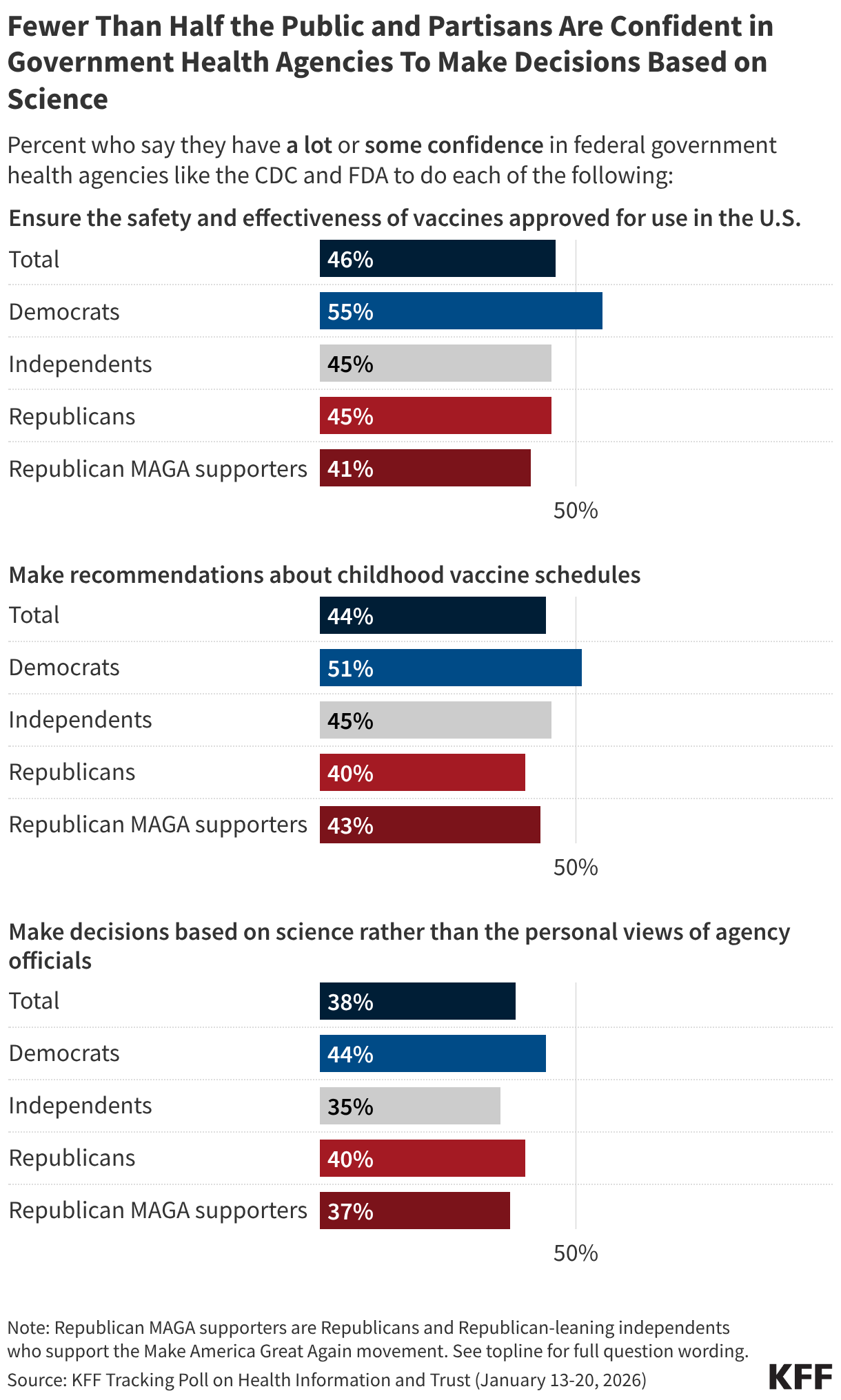
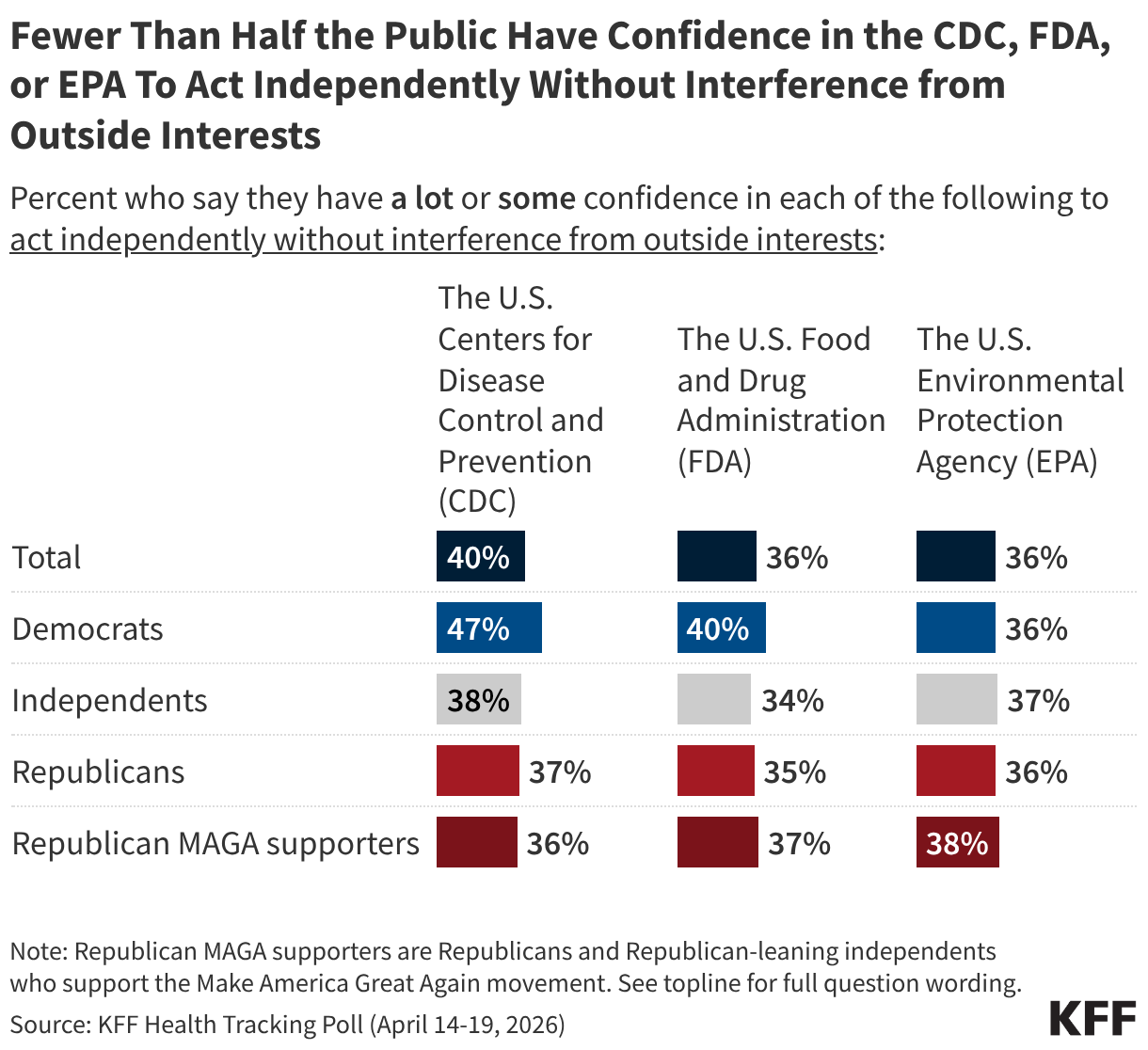
Beyond individual providers and federal agencies, public confidence in the core operational capabilities of government health bodies has waned. Less than half of the population expresses confidence in agencies like the CDC, FDA, or the EPA to carry out their responsibilities—such as ensuring vaccine safety, managing childhood immunization schedules, or making decisions based strictly on science—without outside interference from political or special interests. While Democrats maintain slightly higher levels of confidence in the CDC’s ability to act independently, skepticism remains widespread across the political spectrum.
This landscape represents a notable historical shift. At the onset of the COVID-19 pandemic, the CDC enjoyed broad, bipartisan levels of trust. Over subsequent years, however, trust in the agency regarding vaccine information and public health directives declined sharply amid widening partisan polarization. Additional shifts have occurred more recently following political transitions in Washington, leaving public confidence in federal health authorities at a delicate crossroads.
Social Media and Artificial Intelligence in Healthcare
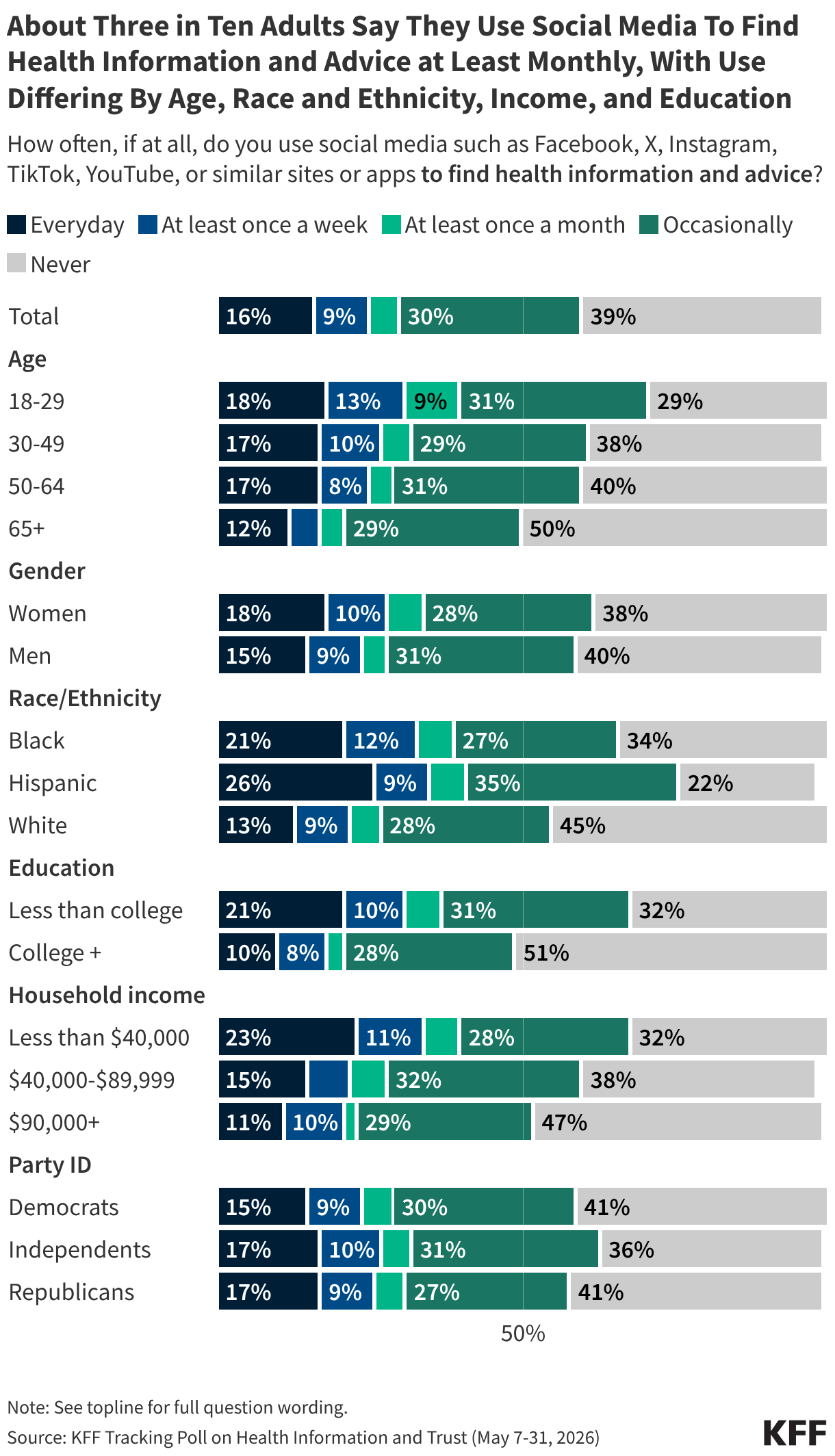
As traditional institutional trust evolves, significant segments of the public are turning to digital channels for medical insights. Approximately three in ten adults report using social media to find health information and advice at least monthly. This behavior is particularly prevalent among younger adults, Black and Hispanic individuals, lower-income households, and those with lower levels of formal education.
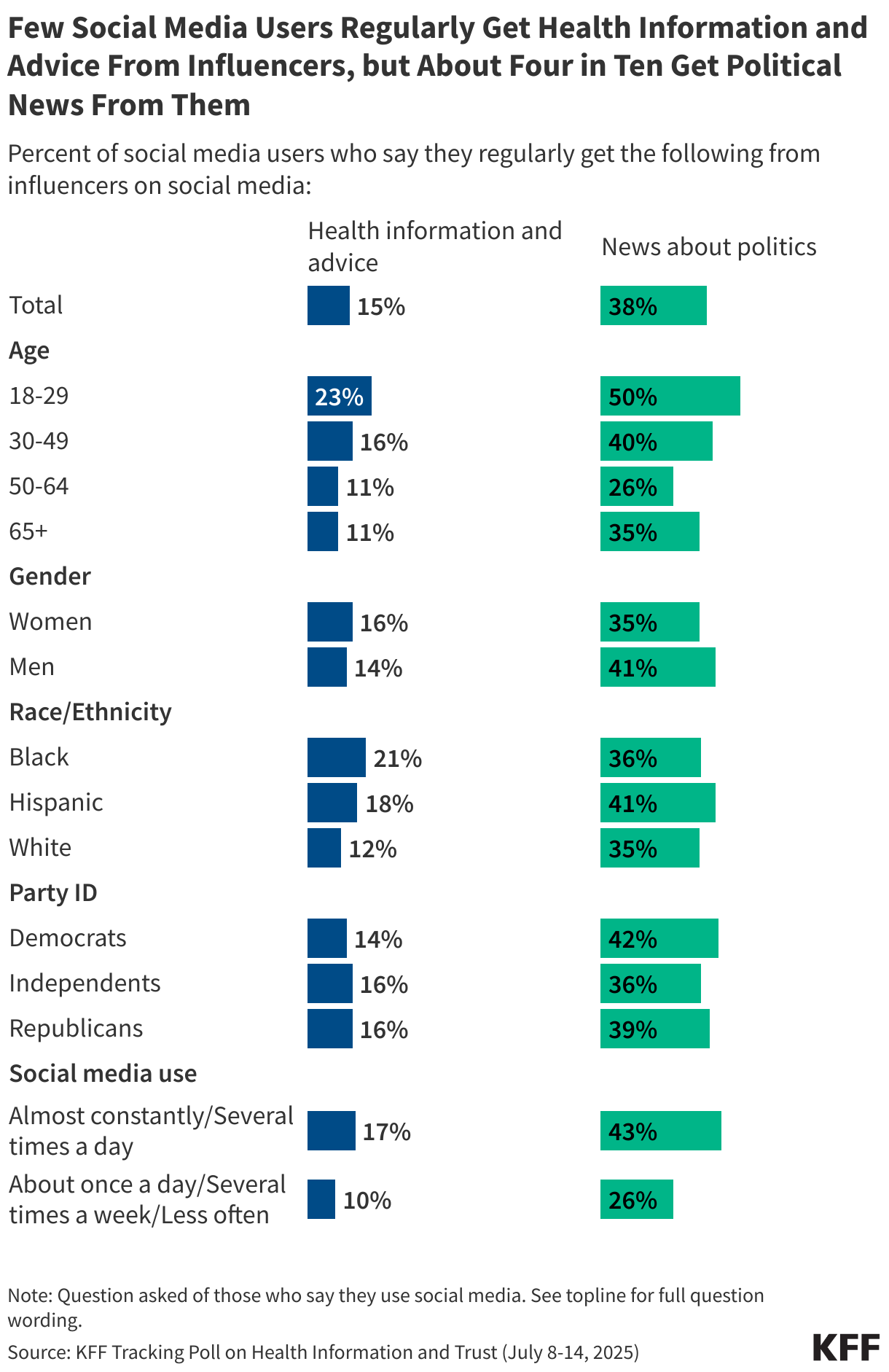
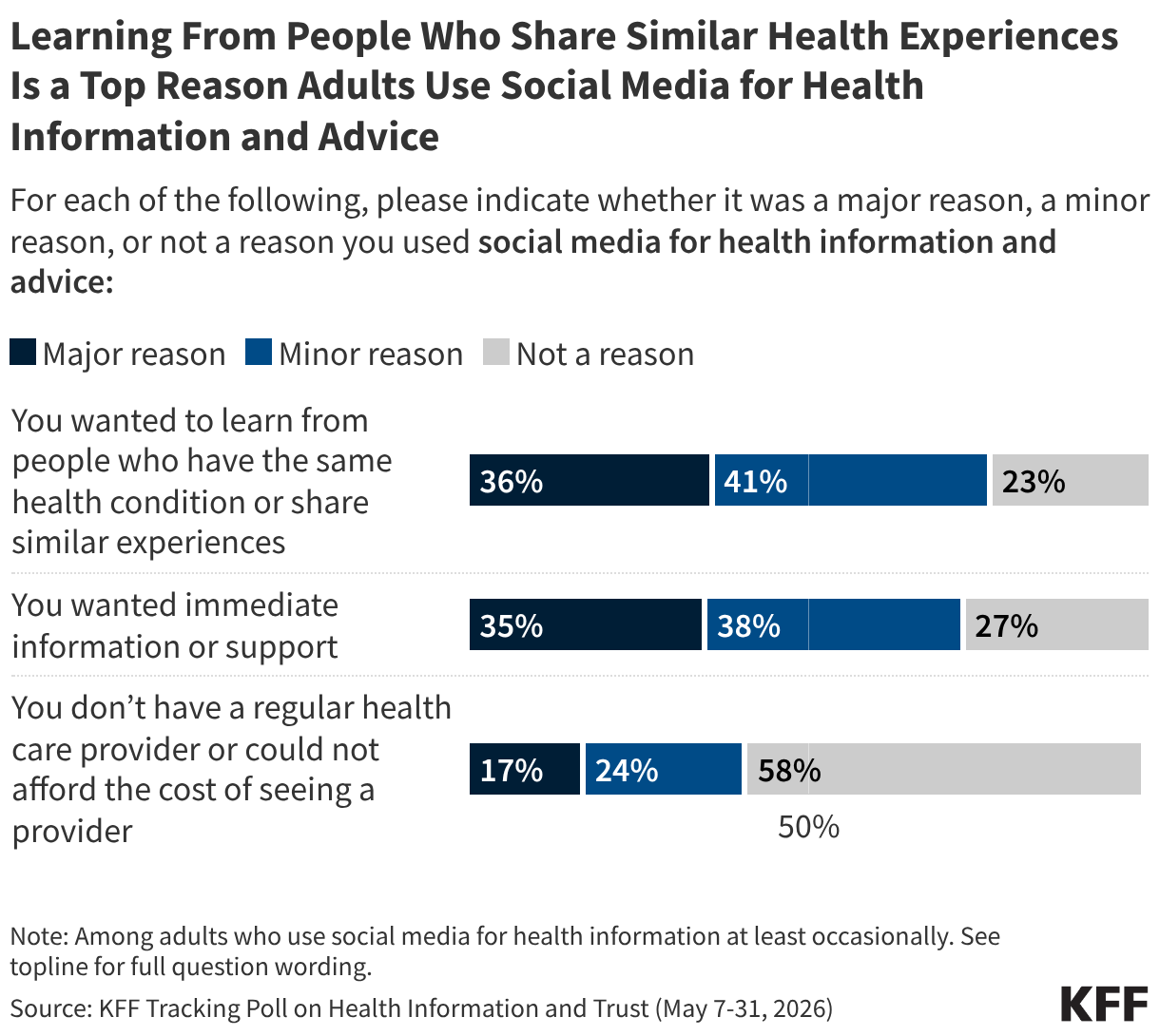
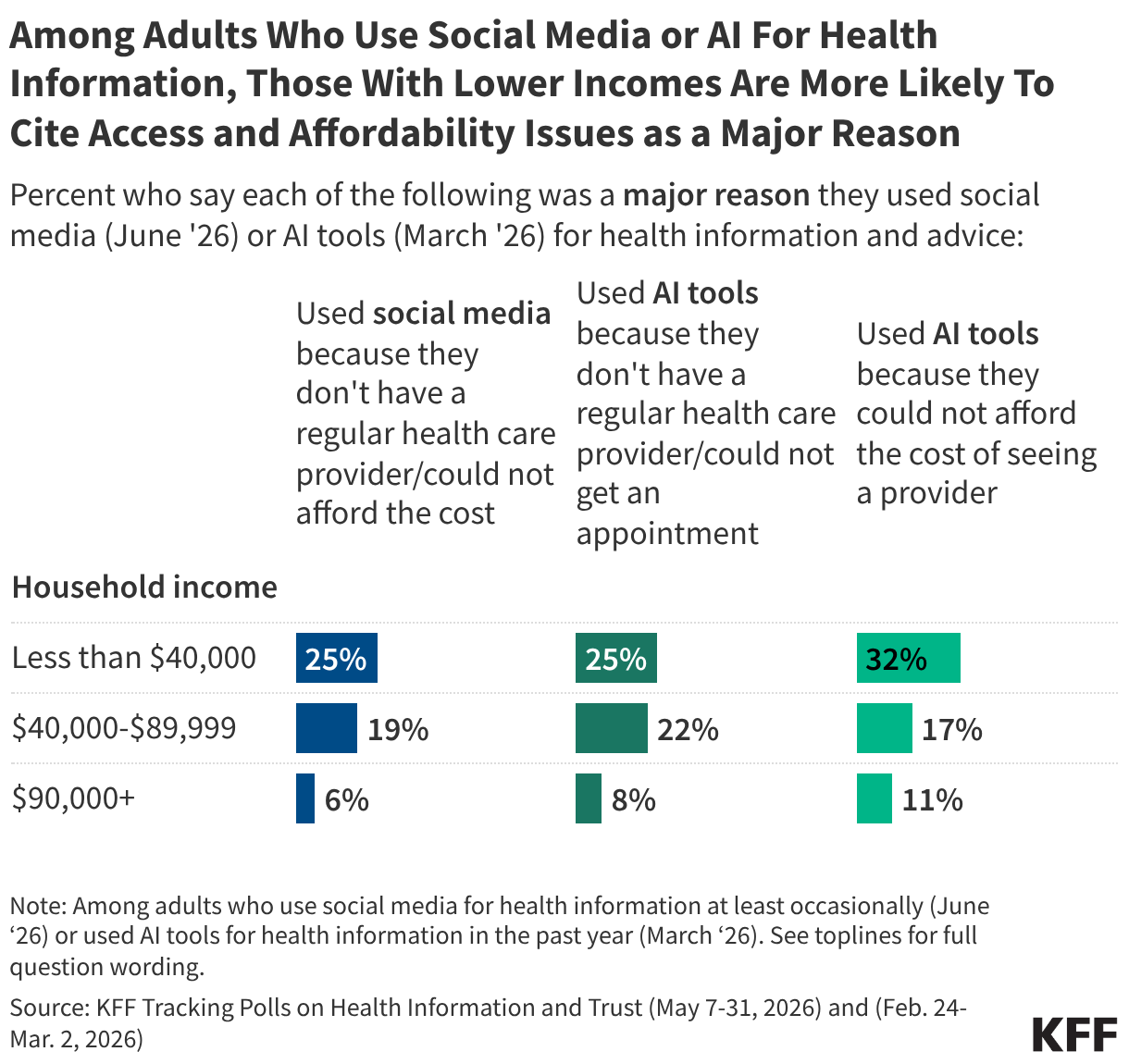
For many users, digital platforms serve to fill critical gaps in the traditional healthcare system. About one-third of adults who consult social media for health guidance cite a desire to learn from peers with similar health experiences or a need for immediate support. Crucially, roughly one in six users point to difficulties accessing or affording traditional medical care as a major reason for turning to these online tools.
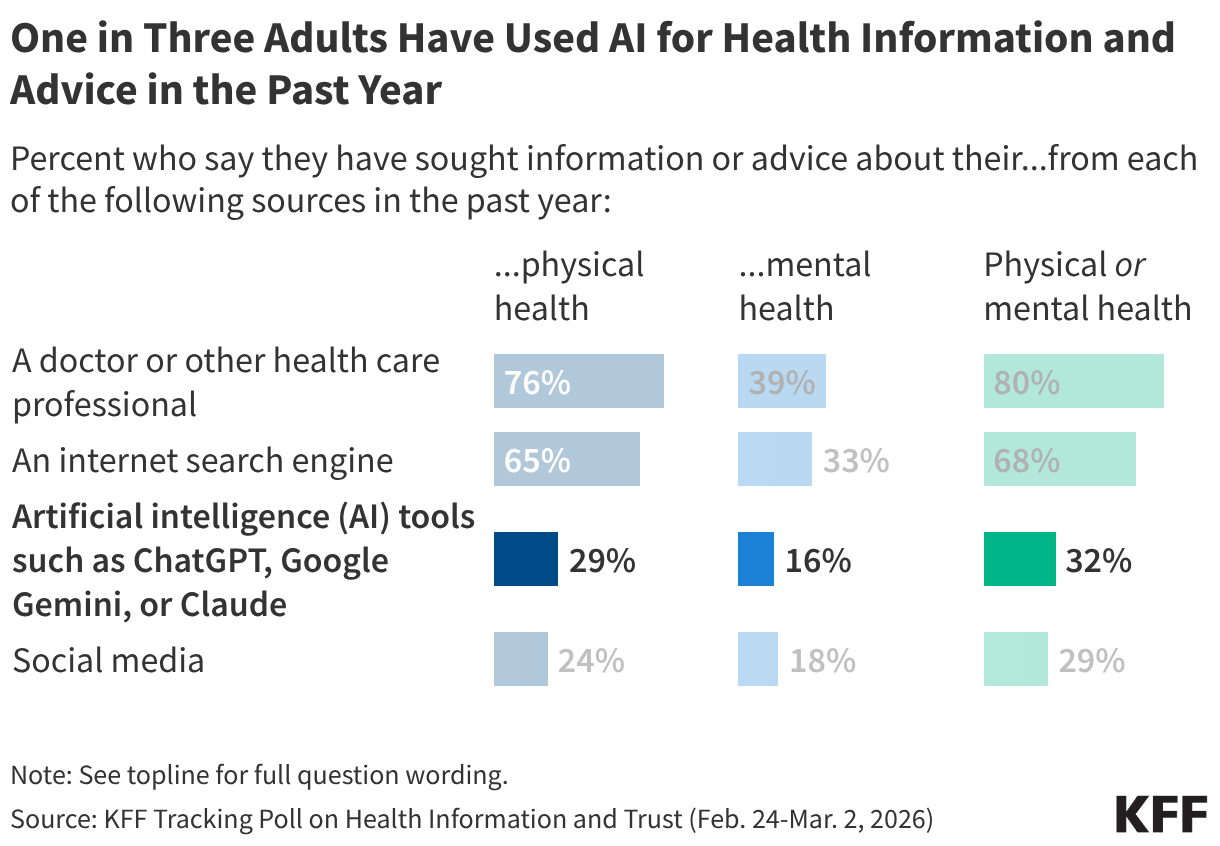
At the same time, the rise of artificial intelligence has introduced a powerful new medium for health inquiries. Roughly 32 percent of the public reports turning to AI chatbots for health information and advice over the course of a year. This adoption rate rivals that of social media, though it remains less common than direct consultation with healthcare providers or traditional internet search engines. Users frequently employ AI tools to look up physical or mental health symptoms, research general medical conditions, or seek quick support before scheduling appointments with a doctor.
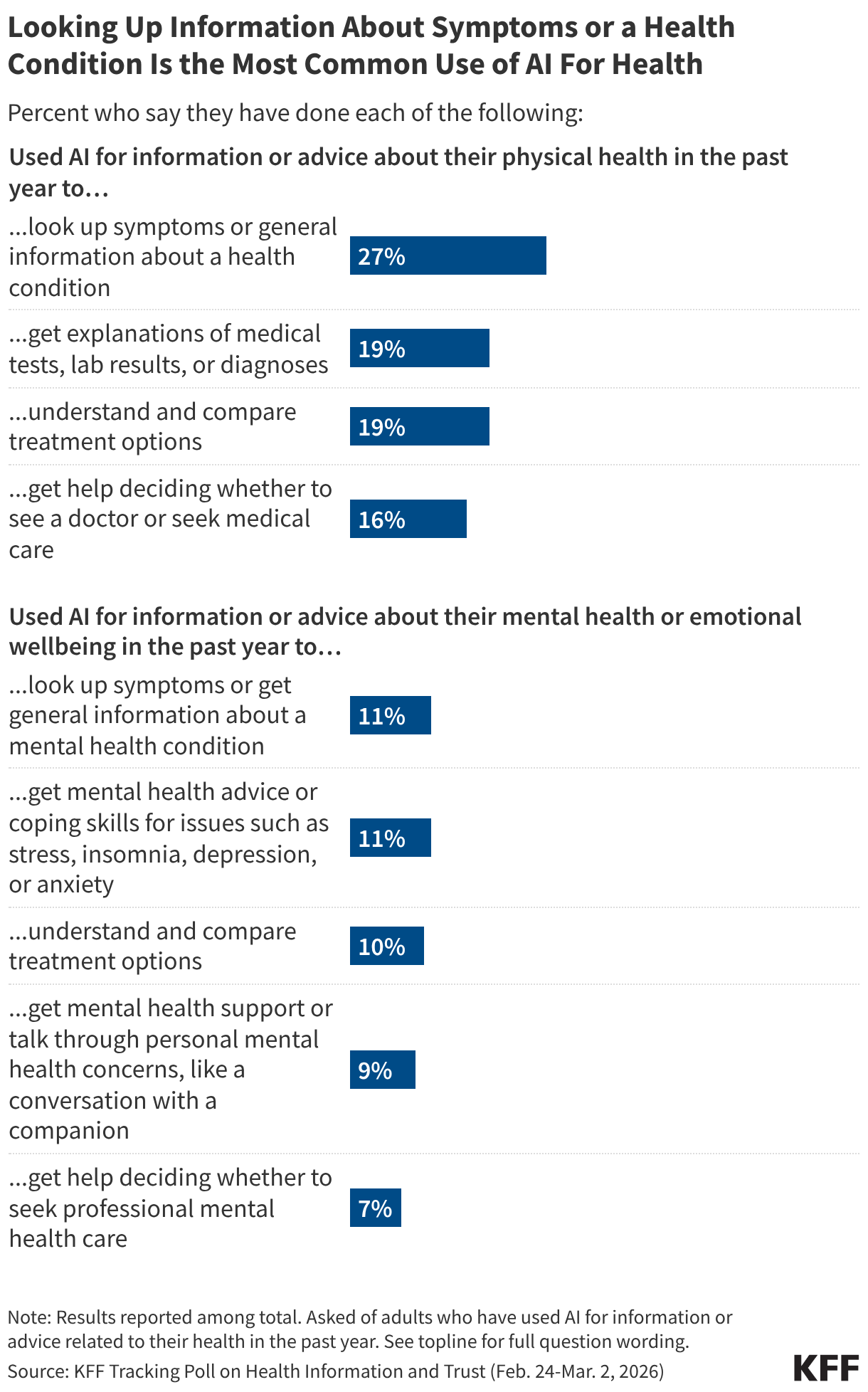
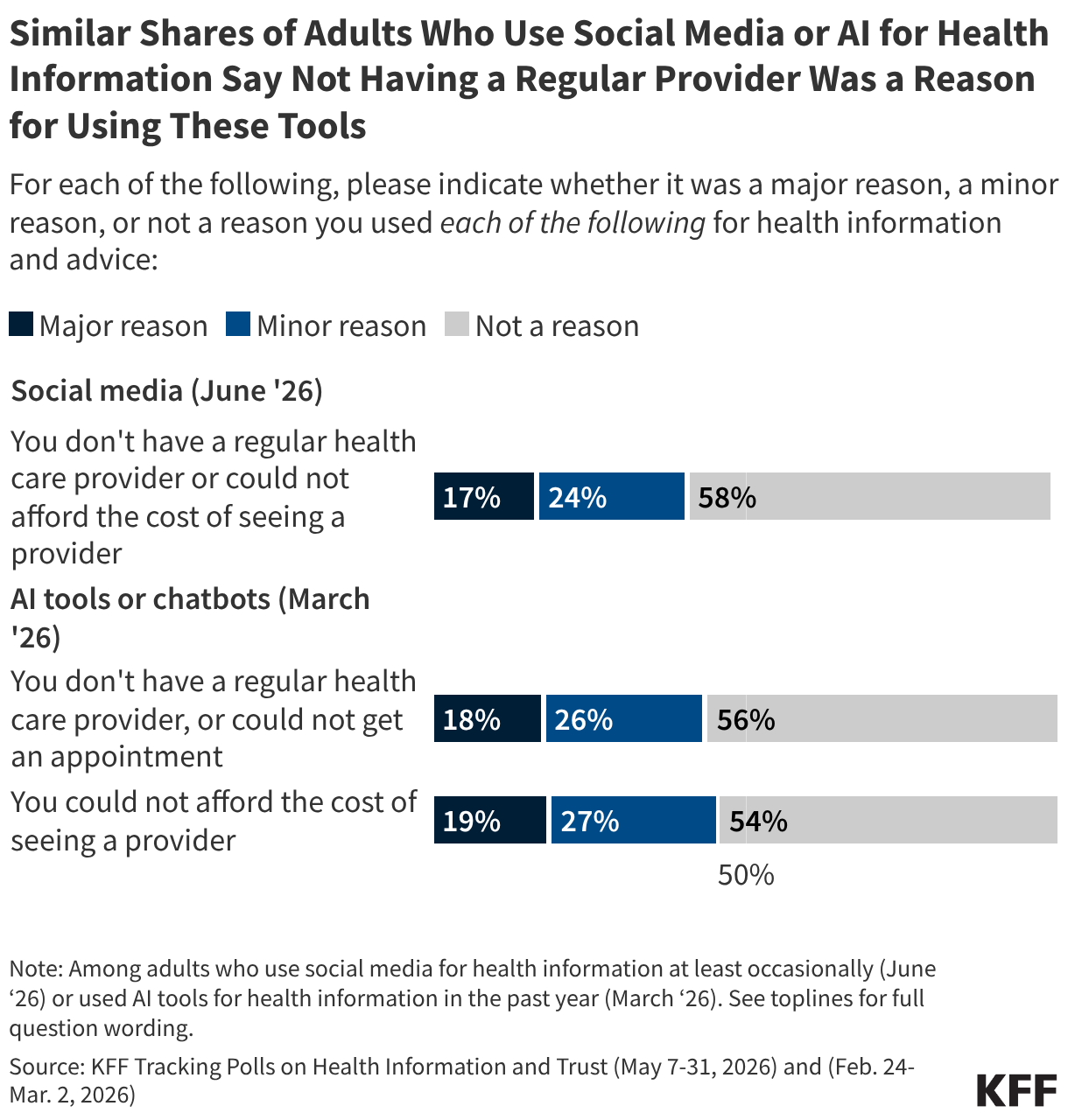
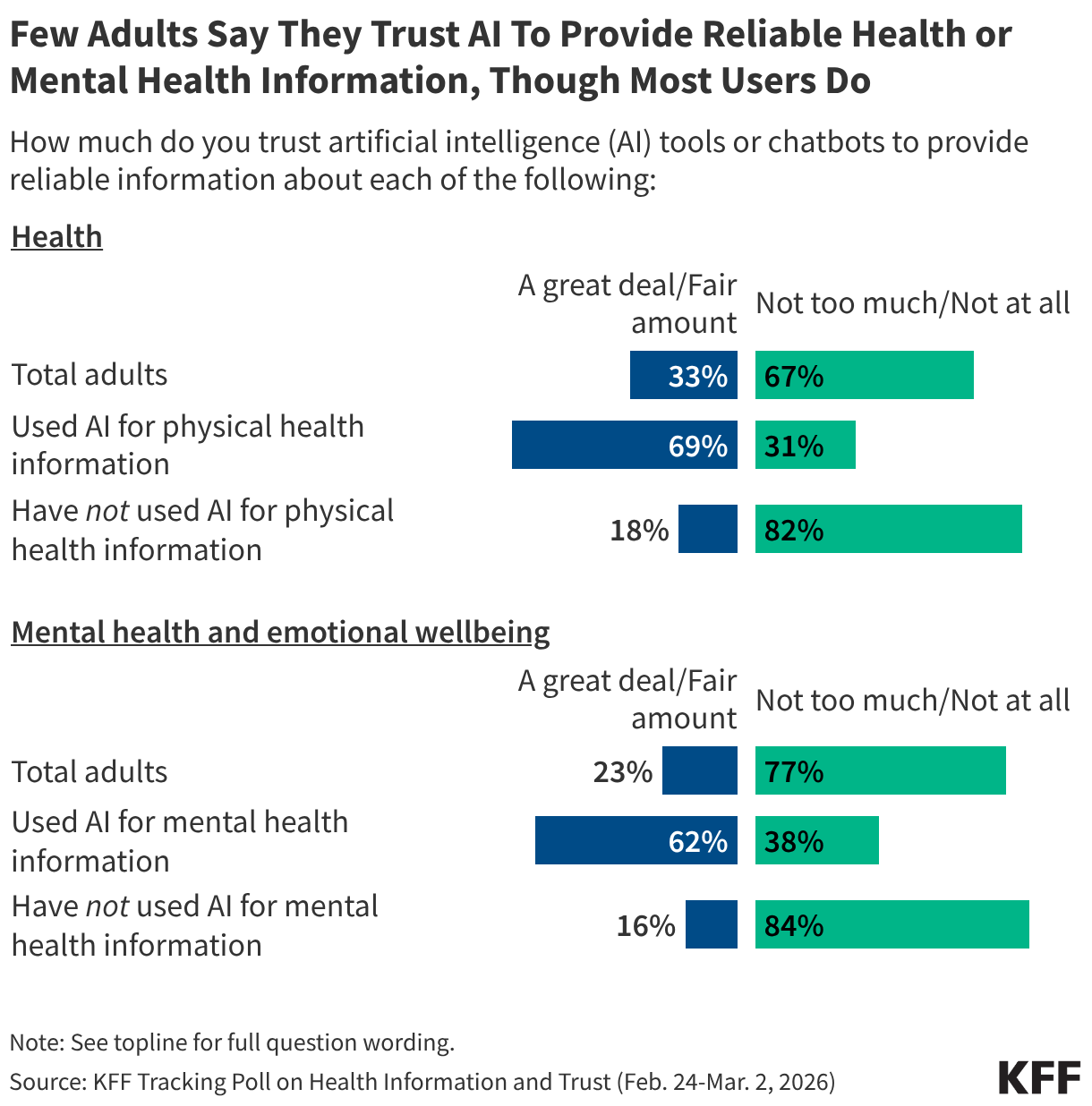
Similar to social media users, individuals who rely on AI for health guidance frequently cite barriers to traditional care. Uninsured adults, younger populations, lower-income households, and certain racial and ethnic minority groups are more likely to lean on these digital tools out of necessity, often driven by affordability concerns, a lack of a regular healthcare provider, or a desire for private, immediate consultation. While the general public maintains skepticism toward AI tools for medical matters, those who actively use them often report high levels of confidence in the information they receive.
False or Unproven Health Claims and the "Malleable Middle"
The proliferation of digital information channels has also increased public exposure to false, misleading, or unproven health claims. KFF polling indicates that while exposure to health misinformation is widespread—often amplified by prominent news coverage, social media trends, or public figures—only small segments of the population express absolute certainty that these claims are true.
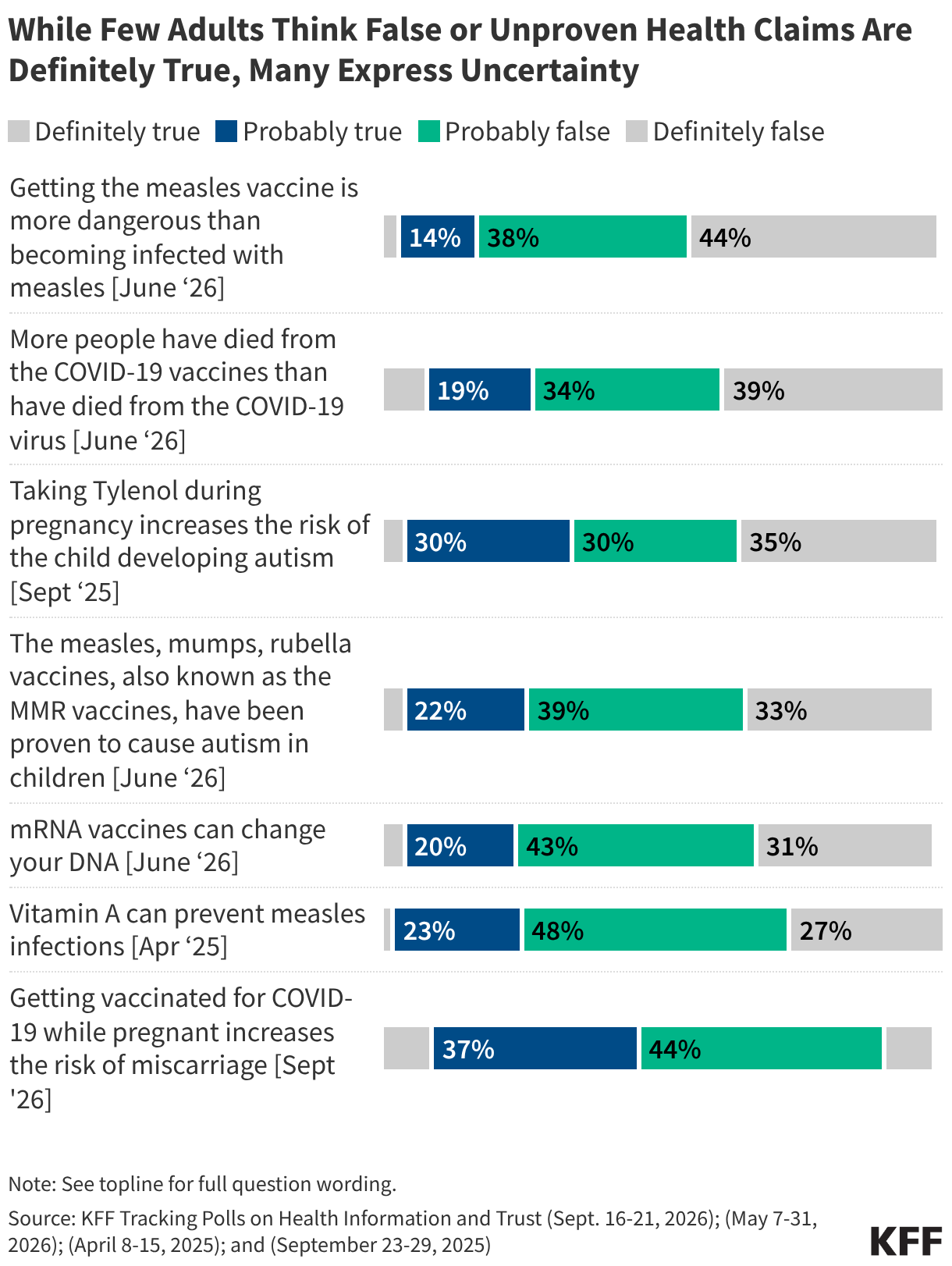
Instead, a vast majority of the public occupies what researchers term the "malleable middle." When confronted with various false or unproven claims regarding COVID-19, vaccines, measles, and other medical topics, at least half of adults express uncertainty, categorizing the statements as either "probably true" or "probably false." This widespread uncertainty highlights a significant opportunity for public health communication, targeted educational interventions, and proactive myth-busting to clear up confusion and restore factual consensus.
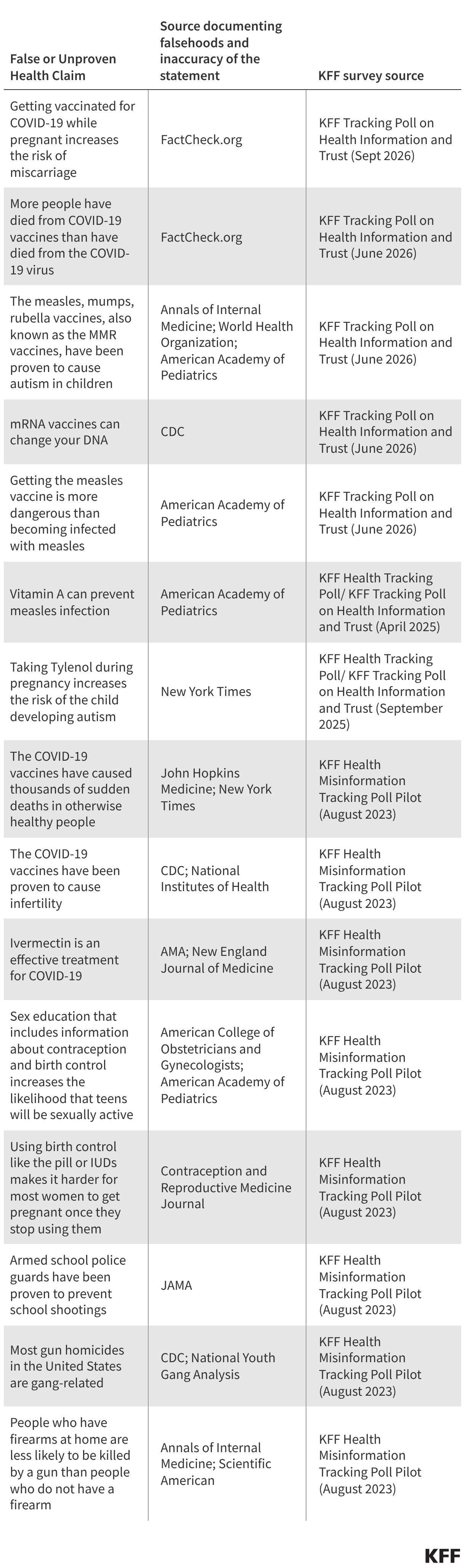
Belief in these claims is not evenly distributed across society. Partisanship, educational attainment, and information consumption habits play substantial roles. Republicans and adults without a college degree are consistently more likely to believe or lean toward believing vaccine-related myths compared to Democrats and college-educated adults. Furthermore, individuals who frequently rely on social media or AI tools for health advice, as well as those who lack a trusted healthcare provider, show higher susceptibility to unproven claims.
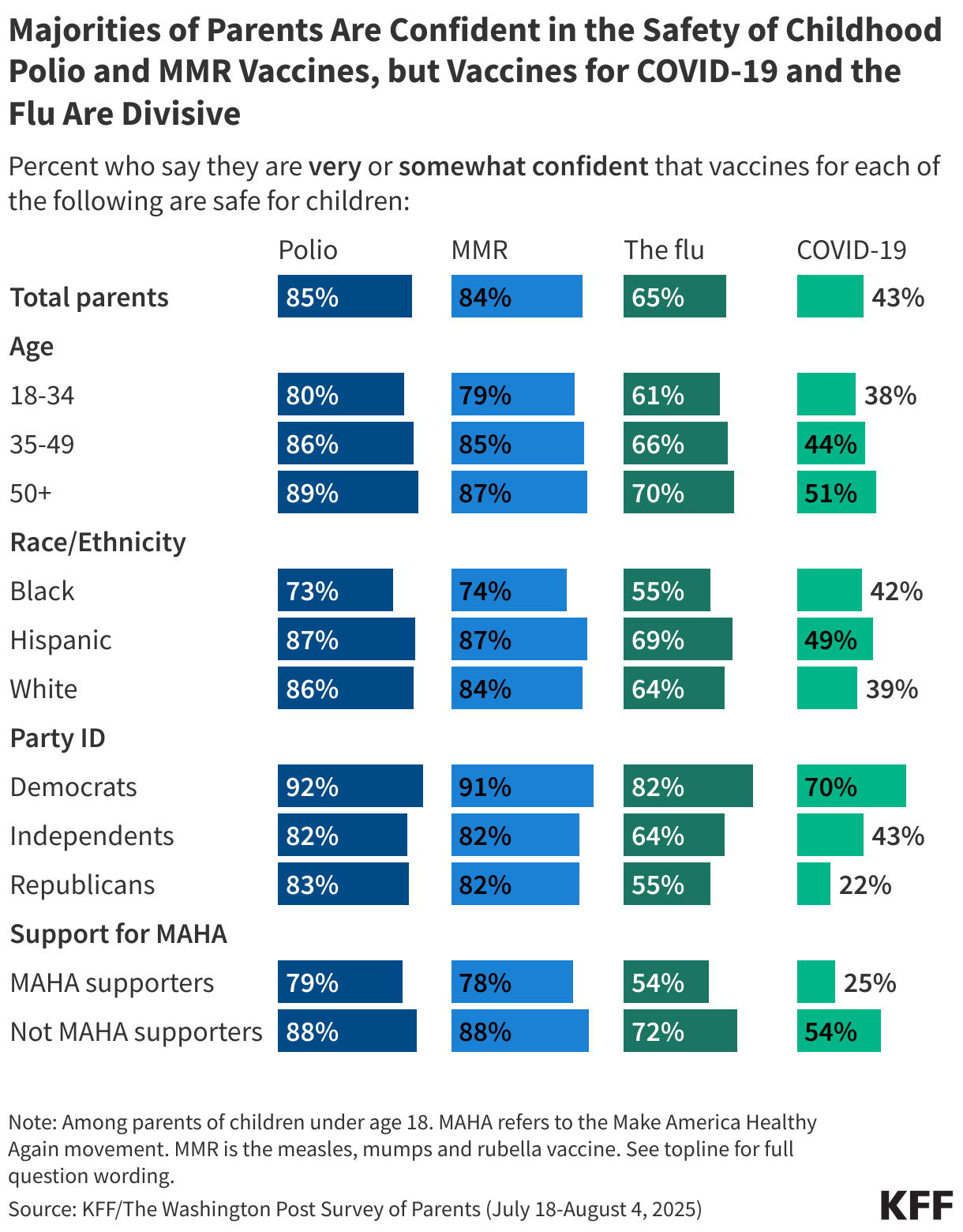
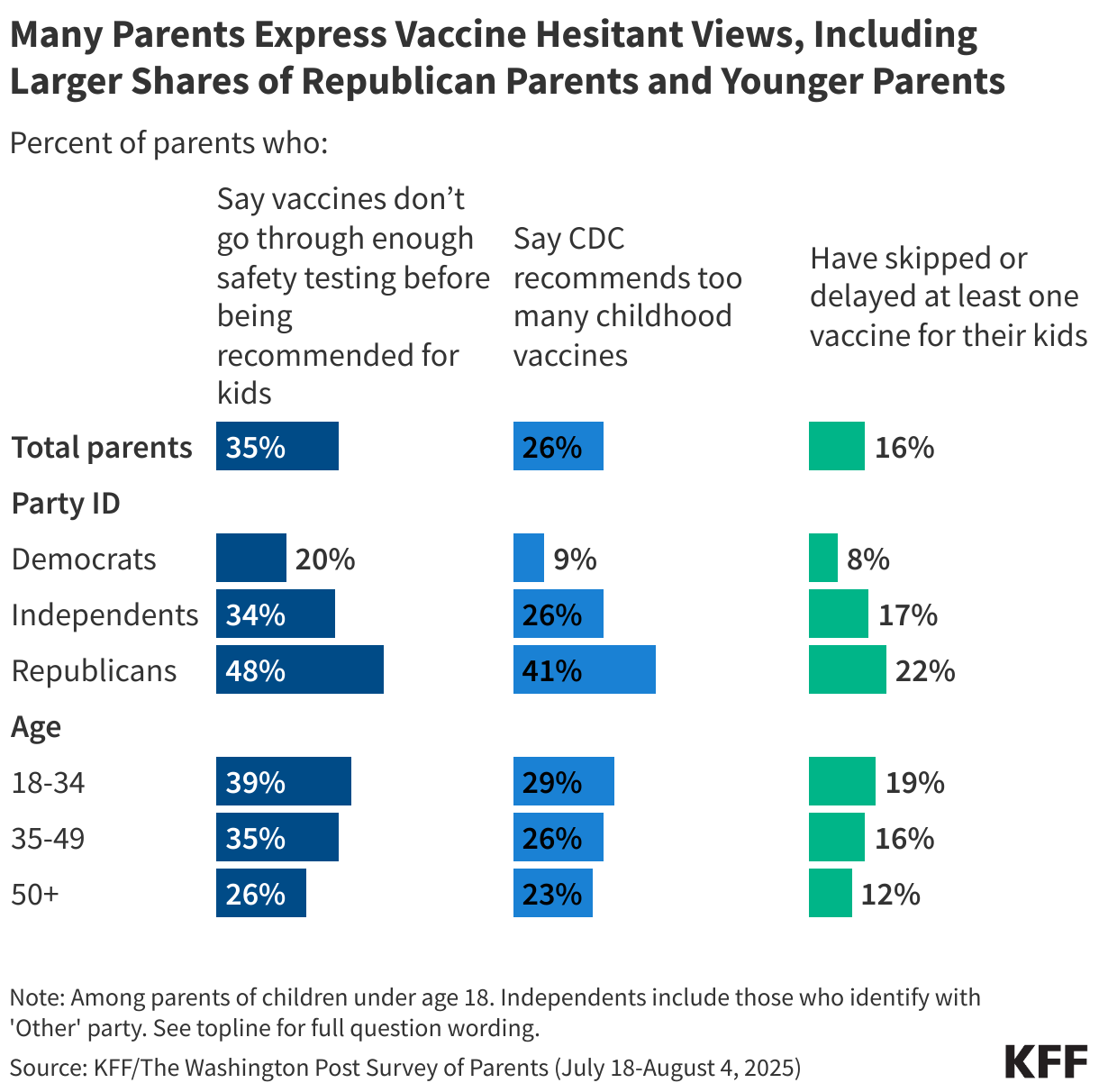
Among parents, these dynamics directly influence domestic health decisions. While the vast majority of parents keep their children up to date on routine immunizations like polio and MMR, about one in six report having skipped or delayed at least one childhood vaccine. Skepticism tends to be higher among younger parents, Republican identifiers, and supporters of the Make America Healthy Again (MAHA) movement. Notably, parents who skip or delay vaccines are about twice as likely to harbor beliefs in false claims regarding measles and COVID-19 immunizations, illustrating the direct link between misinformation and public health behavior.
As the healthcare ecosystem continues to navigate these complex intersections of technology, politics, and personal trust, the foundational relationship between patients and their healthcare providers remains the most reliable bridge across an increasingly divided information landscape.