Amid ongoing political debates and executive actions aimed at reshaping federal health guidelines, a new national survey reveals that a strong majority of American adults maintain confidence in the safety of long-standing childhood immunizations. At the same time, the polling highlights profound partisan divisions, widespread public uncertainty regarding recent executive orders, and lingering misperceptions surrounding newer vaccines and reproductive health.
The findings come from a comprehensive KFF Health Tracking Poll and KFF Tracking Poll on Health Information and Trust, conducted online and by telephone among a nationally representative sample of U.S. adults. While historical vaccines like polio and measles, mumps, and rubella (MMR) continue to enjoy broad-based support across political lines, newer inoculations and specific administrative proposals face significant skepticism and polarization.
Views of Childhood Vaccine Safety
Consistent with prior KFF polling, at least three-quarters of adults across all political affiliations say they are "very" or "somewhat" confident that traditional childhood vaccines, such as polio and MMR, are safe for children. Majorities of the public also express confidence in the safety of influenza and hepatitis B vaccines for minors, though these immunizations reveal larger partisan gaps. While at least eight in ten Democrats express confidence in flu and hepatitis B vaccines, that figure drops to closer to six in ten among Republicans.
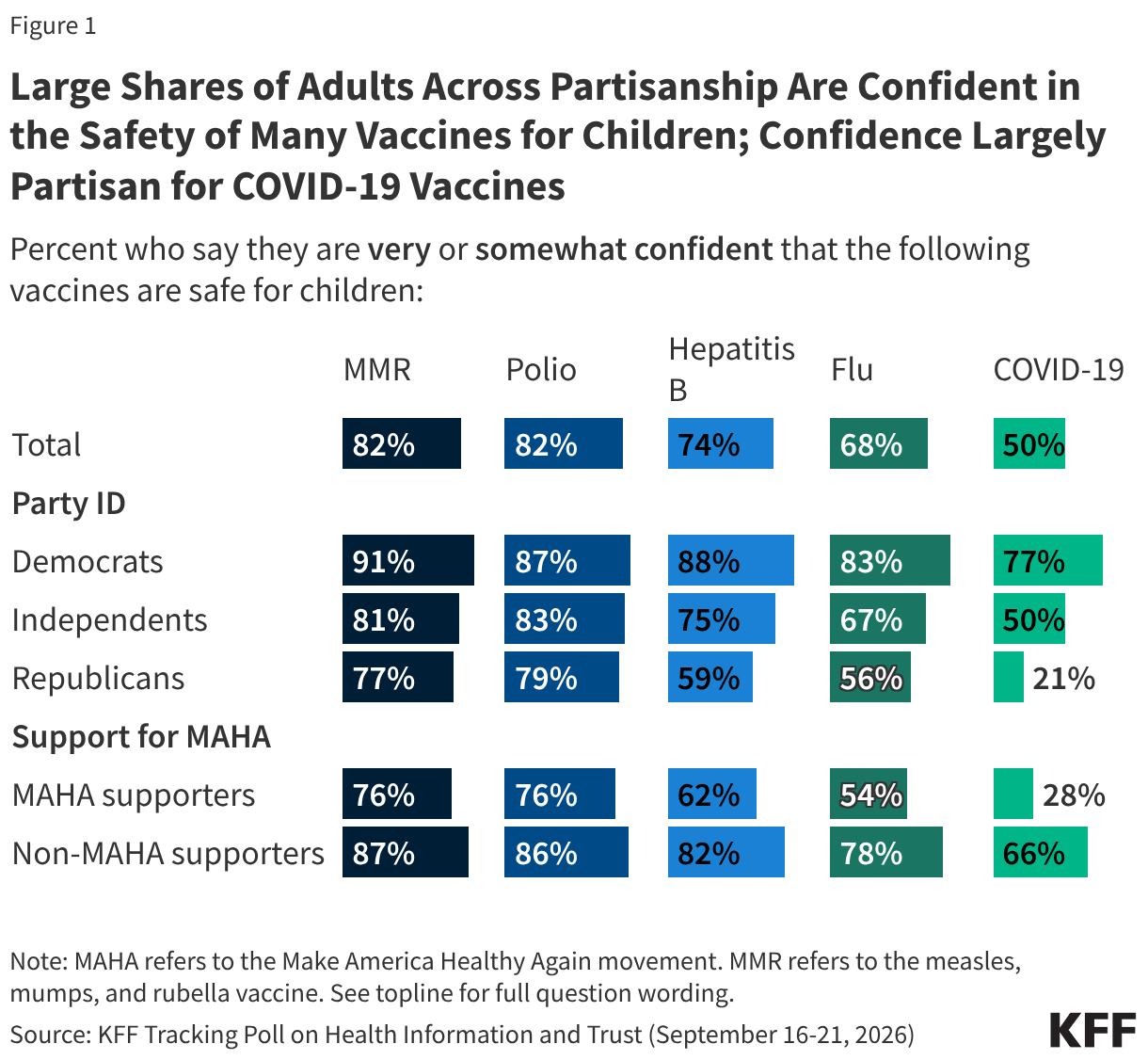
In contrast, confidence in COVID-19 vaccines for children remains deeply fractured. Only half of the general public believes COVID-19 shots are safe for children. This overall figure masks a stark partisan chasm: just two in ten Republicans (21%) share this confidence, compared to half of independents and 77% of Democrats.
These divisions take on heightened significance given ongoing federal policy debates. Influenza, hepatitis B, and COVID-19 are among the immunizations that the Trump administration has sought to shift from routine use to shared clinical decision-making—and restricted to children meeting specific risk criteria in the case of hepatitis B—under recent executive actions aimed at rewriting the federal childhood vaccine schedule. While these administrative changes remain tied up and blocked in federal courts, they have fueled intense public discussions.
Interestingly, many supporters of the Make America Healthy Again (MAHA) movement, who comprise 42% of the public and are frequently associated with vaccine skepticism, nevertheless express confidence in several established childhood inoculations. Three-quarters of MAHA supporters report confidence in MMR (76%) and polio (76%) vaccines, while over half express confidence in hepatitis B (62%) and flu (54%) shots. However, alignment drops sharply regarding COVID-19 vaccines for children, with only 28% of MAHA supporters viewing them as safe. Across the board, overall safety confidence for these vaccines has remained largely steady since earlier this year.
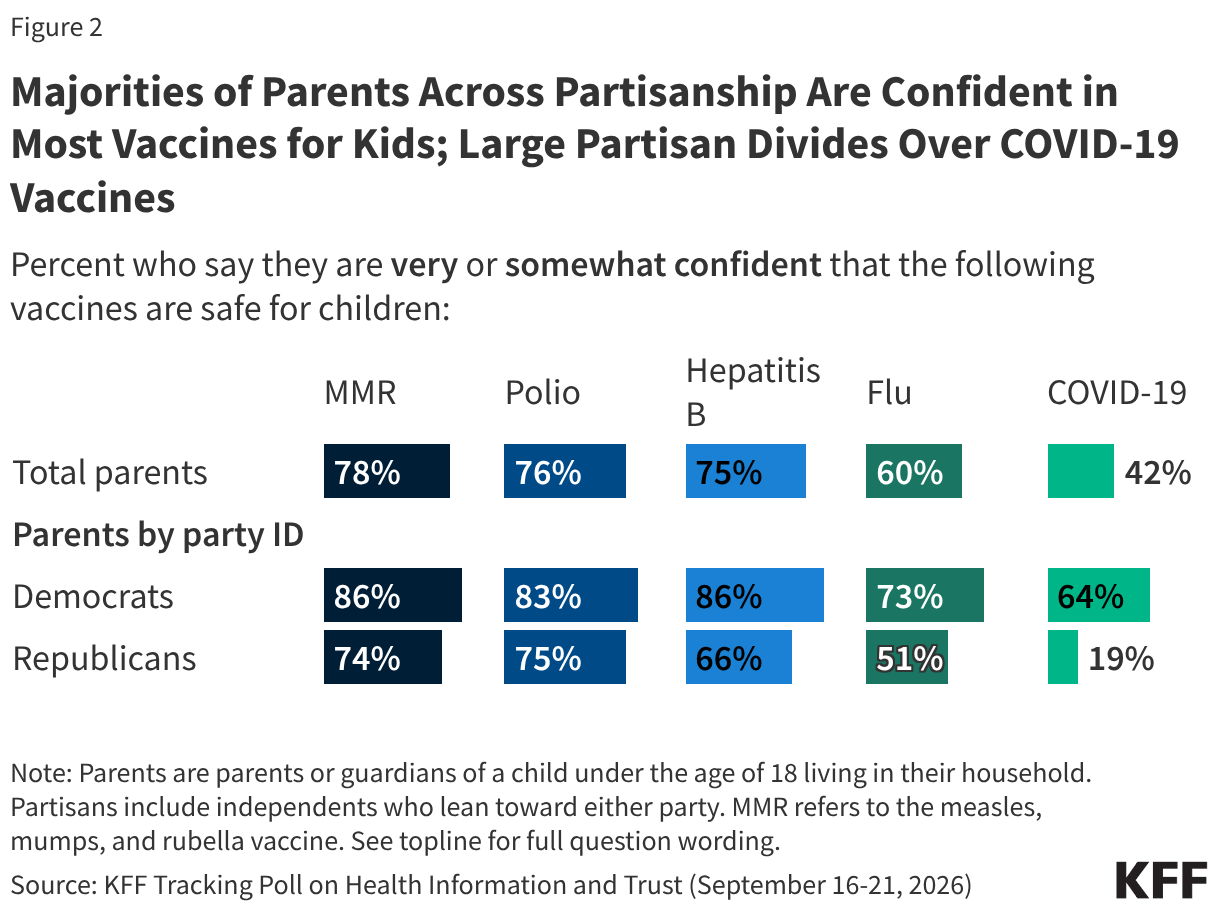
Among parents of children under 18, similar partisan divides emerge. While large majorities of parents regardless of party affiliation express trust in MMR and polio vaccines, Democratic and Democratic-leaning parents are at least 20 percentage points more likely than their Republican counterparts to trust hepatitis B and flu vaccines. The widest gap remains evident regarding COVID-19 shots, where Democratic parents are three times more likely than Republican parents to view them as safe (64% versus 19%).
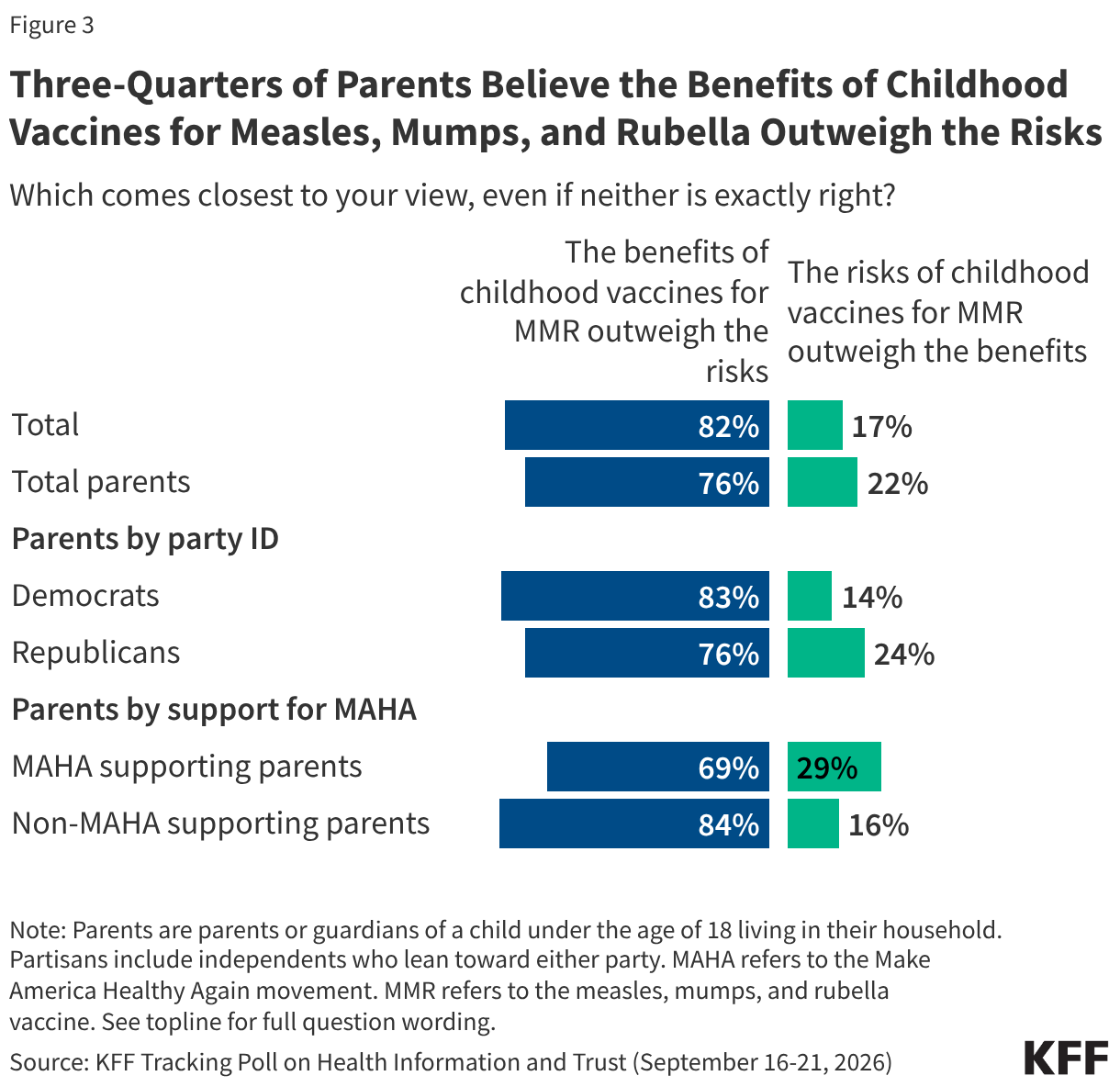
Beyond mere safety confidence, public belief in the efficacy of traditional vaccines remains exceptionally robust. Eight in ten adults overall (82%) and 76% of parents believe the benefits of the MMR vaccine substantially outweigh its risks, while roughly one in five take the opposite view. These metrics have remained remarkably stable since the beginning of the second Trump administration. Even among MAHA-supporting parents, nearly seven in ten (69%) acknowledge that the benefits of the MMR vaccine outweigh the risks, though a larger minority within this group (29%) believes the risks outweigh the benefits compared to non-MAHA parents.
Awareness and Perceptions of the Recent Vaccine Executive Order
The administration’s executive order, signed by President Trump, directs significant alterations to public health guidance. Notably, it calls for reducing the number of diseases targeted by routine childhood vaccination from 17 to 11 and mandates that MMR vaccines be administered as separate, standalone doses rather than a single combined injection.
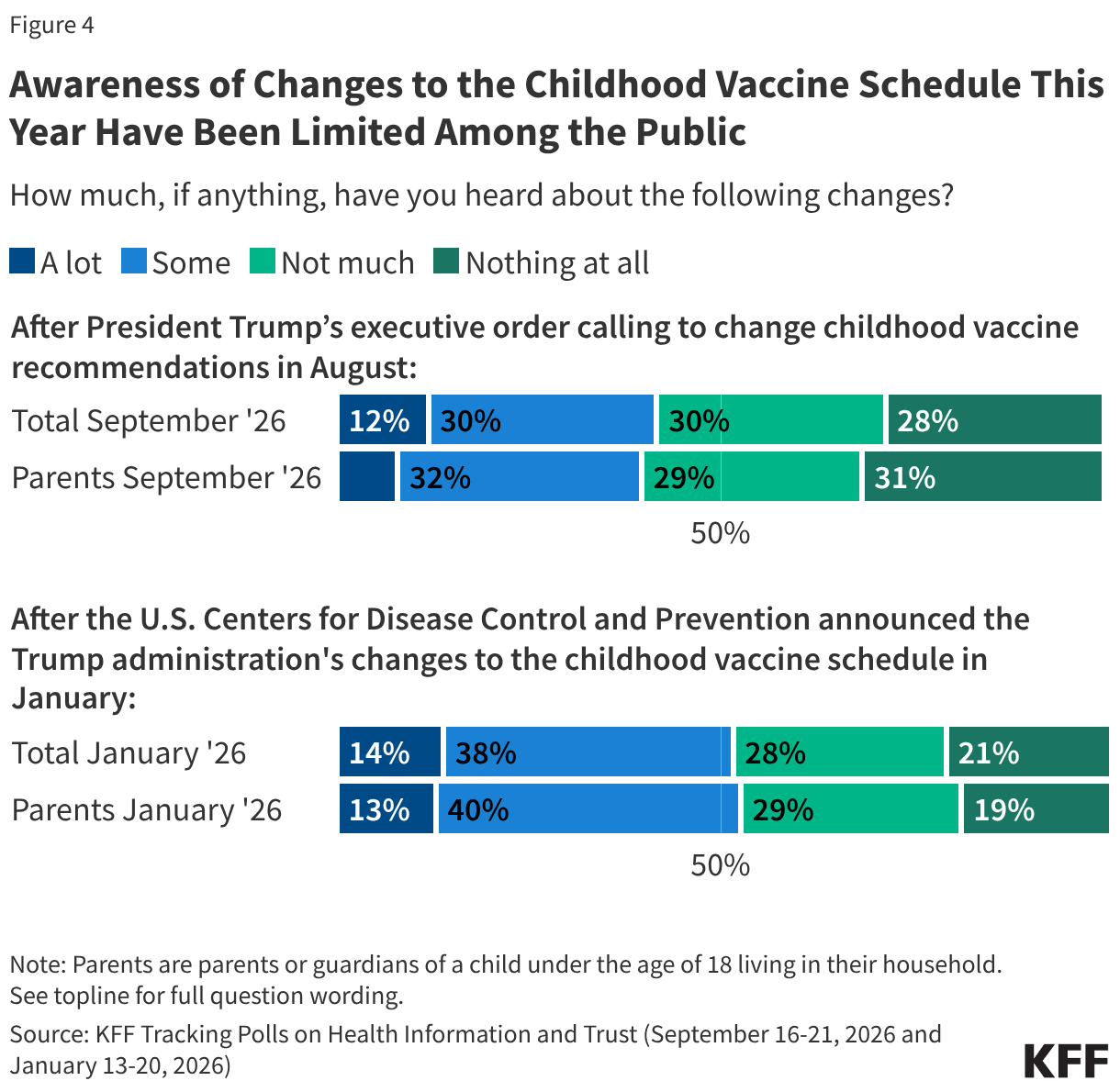
Despite the sweeping nature of these directives, public awareness remains relatively low. Nearly six in ten adults (59%)—and a comparable proportion of parents—report hearing "not much" or "nothing at all" about the administration’s recent attempts to overhaul the vaccine schedule. Only 41% say they have heard "some" or "a lot" about the initiative, a noticeable drop from the roughly half of adults who reported hearing about similar proposed schedule changes announced earlier in January.
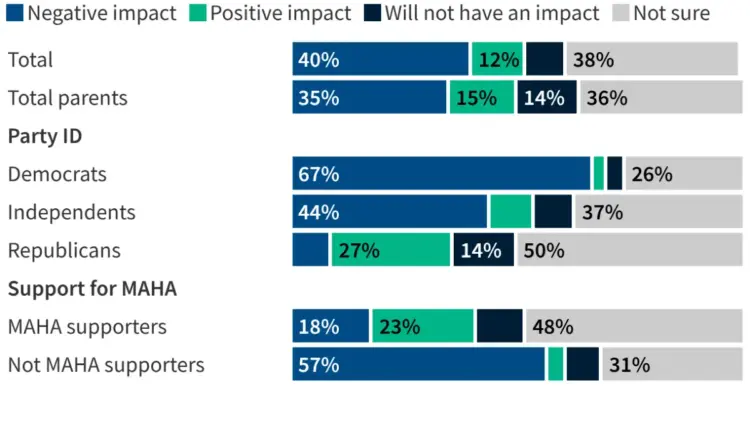
When considering the potential impact of these federal modifications on children’s health, public sentiment leans more negative than positive, though uncertainty is widespread. Four in ten adults overall believe the changes will negatively impact children’s health in the United States, while 12% expect a positive impact, 9% foresee no impact, and 38% remain entirely unsure.
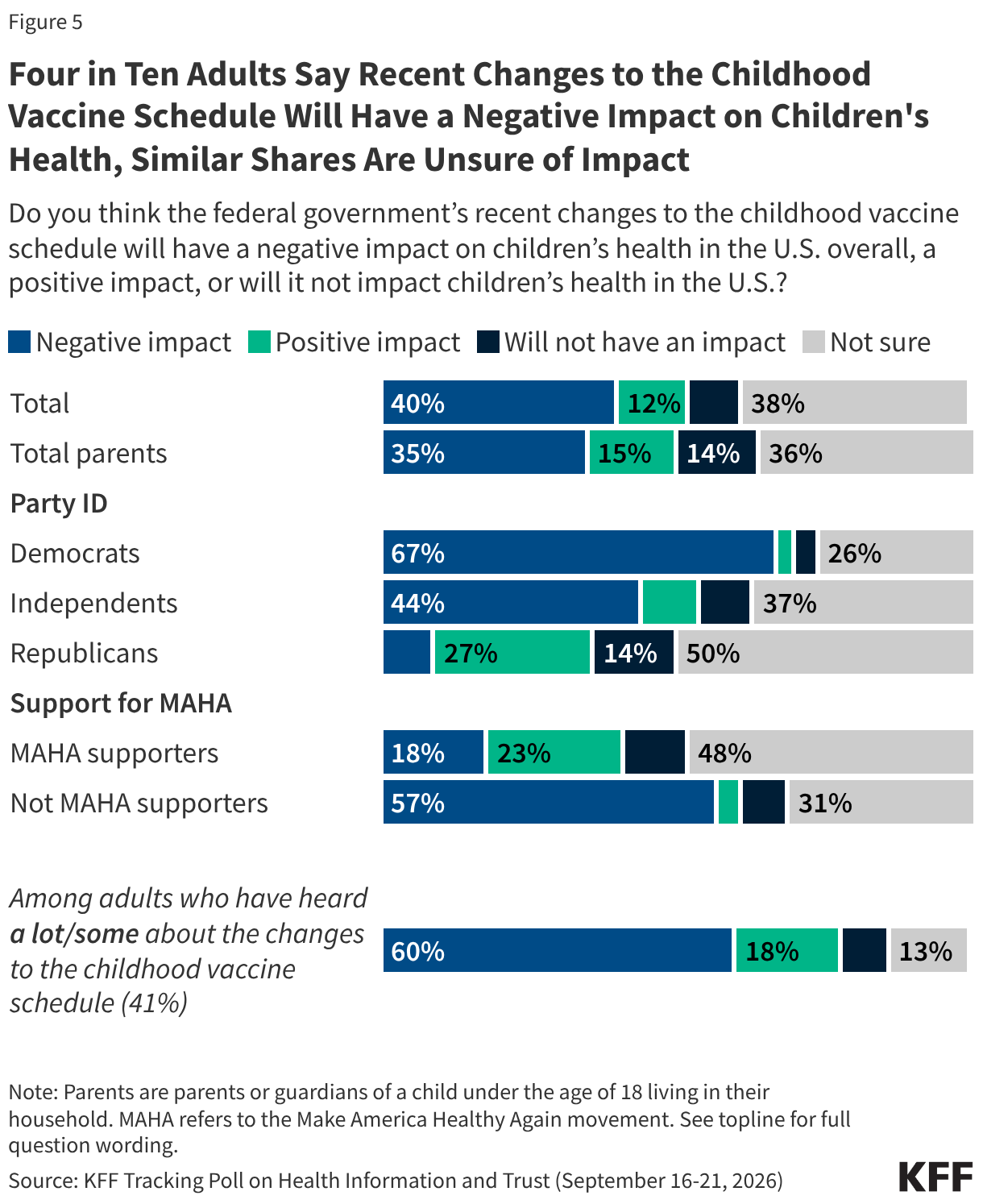
Views on this matter are heavily stratified by political affiliation. Democrats and independents are significantly more likely to anticipate adverse outcomes from the policy shifts. Conversely, Republicans are more likely to predict a positive impact (27%) than a negative one (9%), though half of all Republicans admit they are unsure how the changes will pan out. Among parents generally, half either believe the policy will have no impact or state they are unsure, a sentiment mirrored by nearly half of MAHA supporters. However, among the subset of the public that is highly informed—those who have heard "some" or "a lot" about the executive order—negative expectations rise sharply, with six in ten predicting adverse effects on children’s health, outnumbering those expecting positive outcomes by a factor of three.
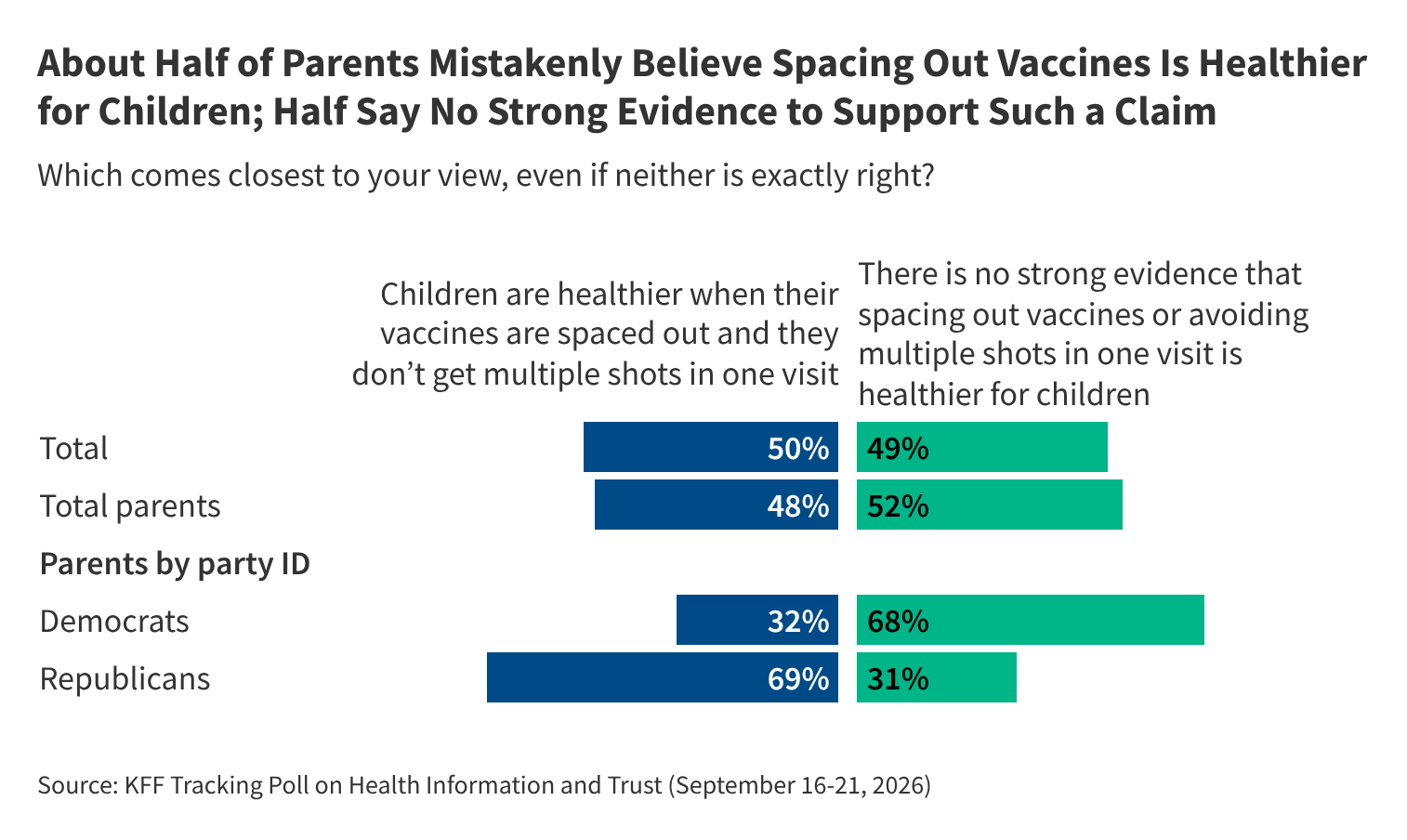
The executive order’s push to separate combined vaccines, such as the MMR shot, intersects with ongoing public debates regarding administration schedules. President Trump has frequently argued that spacing out and separating vaccine doses could reduce autism rates. This political rhetoric taps into a long-standing parental dilemma: the KFF poll reveals that nearly half of all parents (48%) incorrectly believe children are healthier when vaccines are spaced out across multiple visits rather than administered simultaneously. The remaining 52% correctly recognize that there is no strong scientific evidence supporting the claim that spacing out shots is safer.
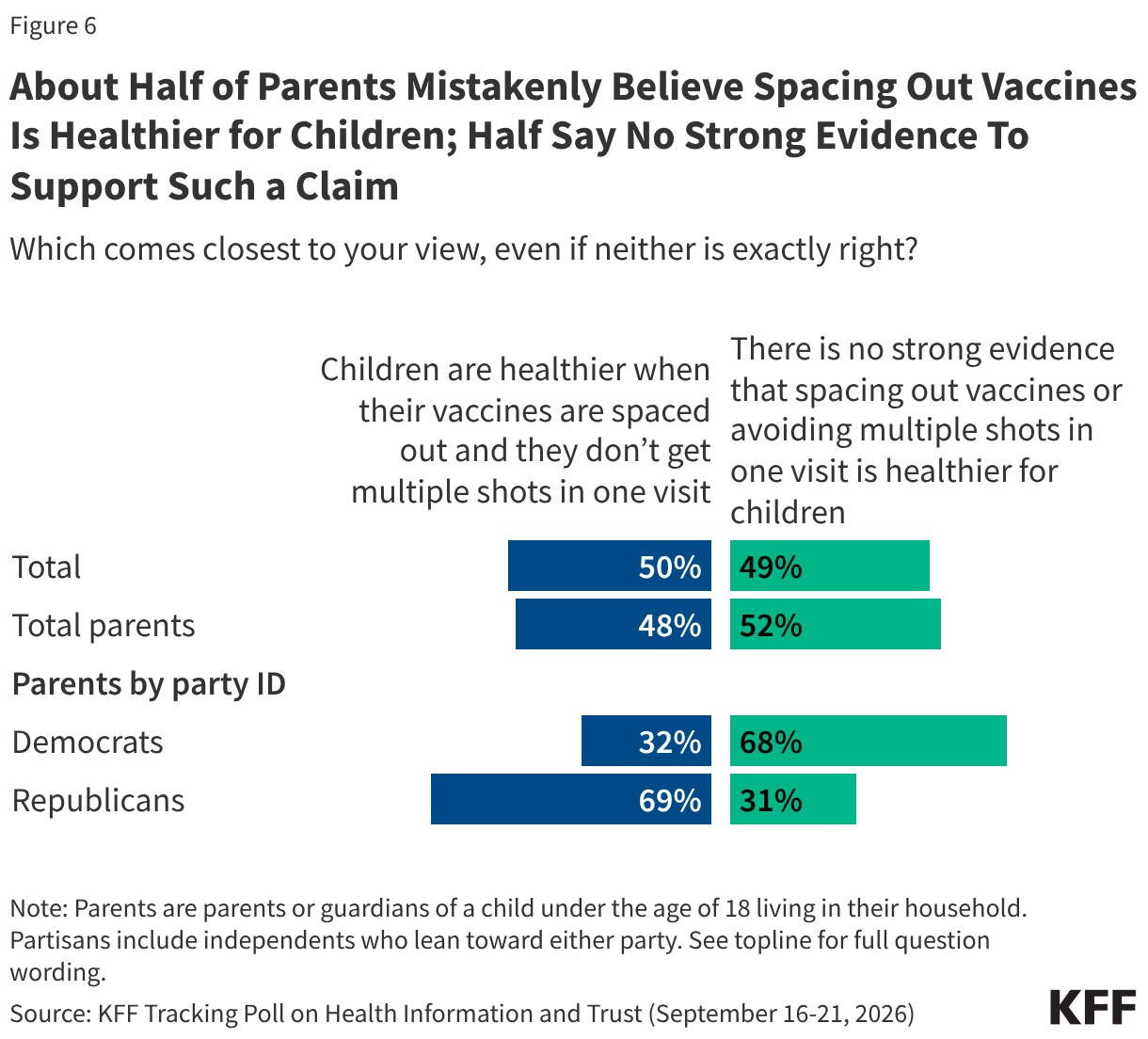
This hesitation around simultaneous vaccinations is not new and consistently ranks among the primary reasons parents give for delaying or skipping childhood immunizations. Beliefs on this issue also break down along partisan lines: roughly seven in ten Democratic parents state there is no strong evidence that spacing out vaccines is healthier, while an almost identical proportion of Republican parents maintain that children are indeed healthier receiving shots on a staggered schedule.
Misperceptions About COVID-19 Vaccine Safety in Pregnancy
In addition to childhood vaccination schedules, the survey underscores the persistence of widespread misinformation regarding the safety of COVID-19 vaccines during pregnancy, breastfeeding, and fertility. Recent public claims tying the vaccine to first-trimester miscarriages have recirculated, contributing to a broader decline in confidence among the public.
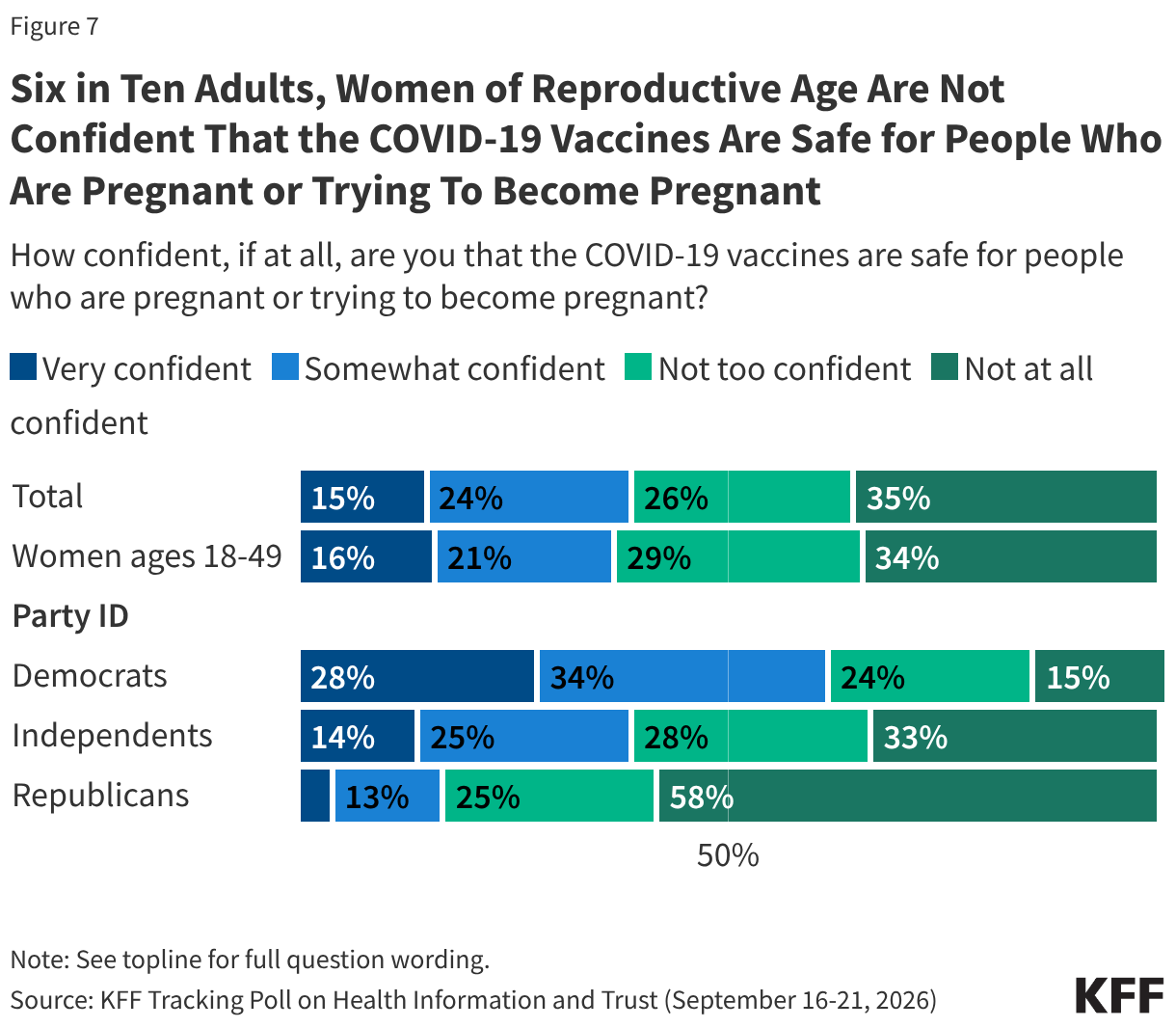
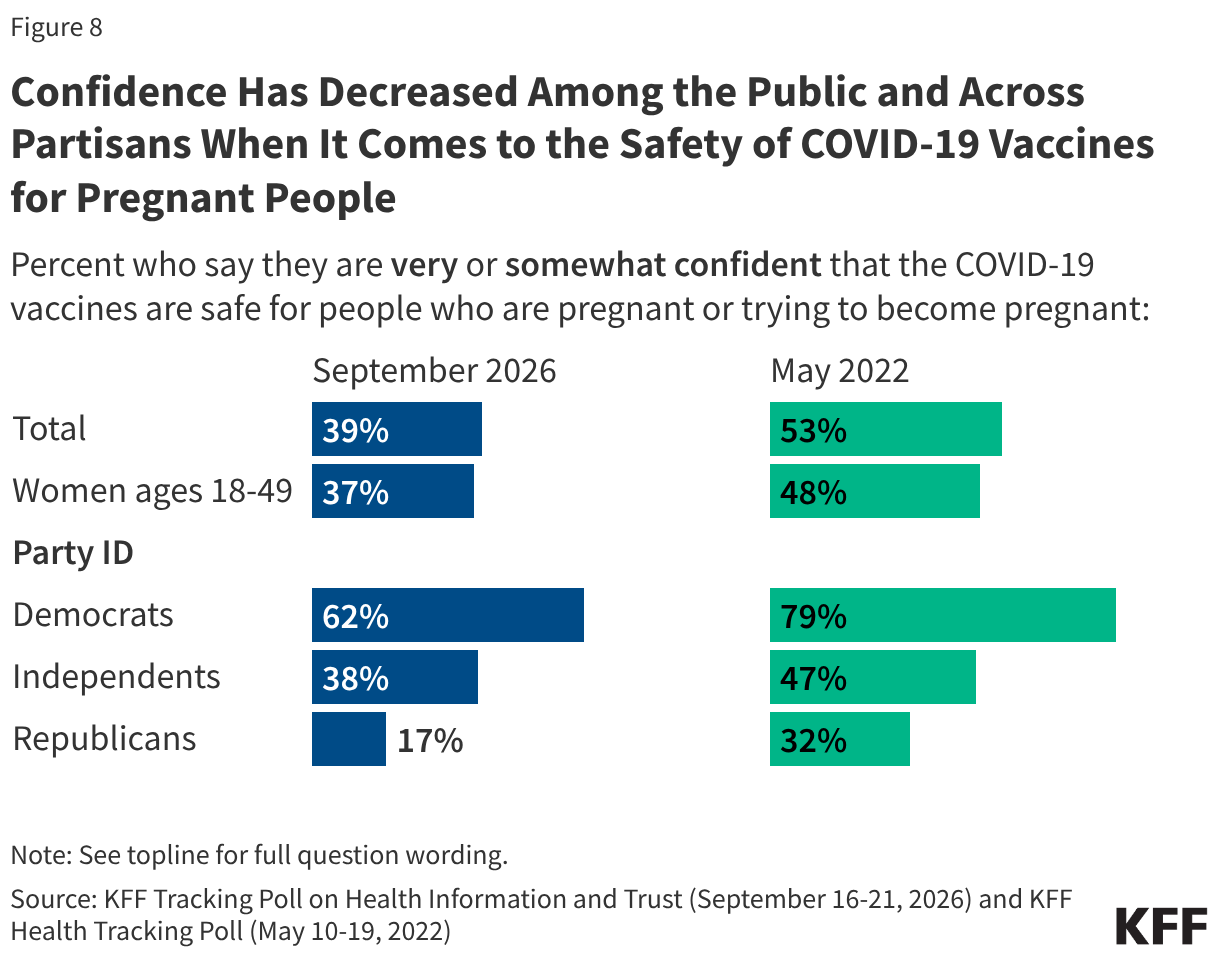
Currently, only about four in ten adults (39%) express confidence that COVID-19 vaccines are safe for pregnant individuals, representing a notable drop from 53% in May 2022. Among women of reproductive age, confidence has similarly slipped from 48% to 37%. Partisan gaps remain exceptionally wide: more than six in ten Democrats (62%) express confidence in pregnancy safety for the vaccine, compared to over eight in ten Republicans (83%) who explicitly state they lack confidence. Across all political groups, trust in the vaccine’s safety for expectant mothers has eroded since 2022.
This diminished confidence coincides with the resurgence of debunked claims linking vaccination to miscarriages. Roughly a third of all adults—including 43% of Republicans, 34% of independents, and 22% of Democrats—report having heard or read that getting vaccinated against COVID-19 while pregnant increases miscarriage risks. Approximately three in ten women of reproductive age have encountered this claim.
While extensive scientific research has repeatedly demonstrated that COVID-19 vaccines pose no elevated risk of miscarriage and are safe for pregnant individuals, public certainty remains low. Only 8% of the public correctly identifies the claim as "definitely false," while 9% mistakenly label it "definitely true." The vast majority of adults fall into a hesitant middle ground, categorizing the claim as either "probably true" (37%) or "probably false" (44%). This widespread uncertainty spans across political affiliations and is similarly reflected among women of reproductive age, highlighting the enduring challenge public health agencies face in combating entrenched misinformation.