
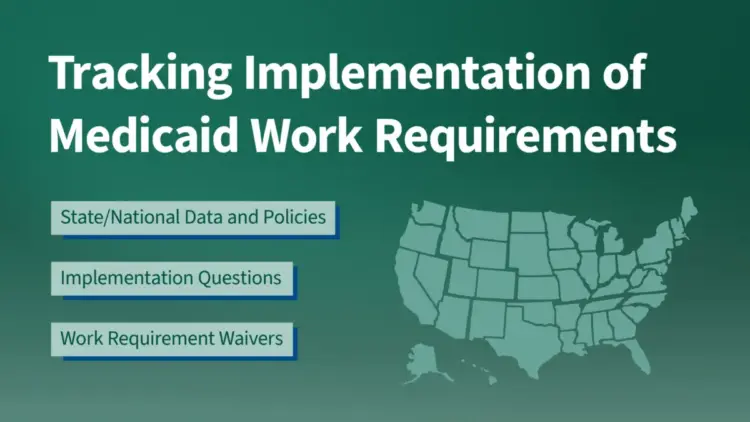
As debates surrounding the structure and administration of public healthcare programs persist at both the state and federal levels, policy experts, researchers, and lawmakers are increasingly turning to empirical data to understand the impact of eligibility modifications. Among the most closely watched policy discussions are those concerning Medicaid work requirements—mandates that condition healthcare coverage on beneficiaries maintaining a specified number of hours in employment, community service, or related activities. To help stakeholders navigate this complex landscape, KFF (Kaiser Family Foundation) has compiled an extensive repository of research, data analyses, policy overviews, and historical evaluations regarding Medicaid work requirements.
This comprehensive collection of resources offers a deep dive into the operational mechanics, exemptions, historical precedents, and public perception surrounding work mandates within the nation’s primary health insurance program for low-income individuals. By aggregating decades of health policy research, the KFF resource index provides critical context for understanding how these policies intersect with healthcare access, poverty reduction, and state-level administrative capacities.
Work Requirements Overview
The foundational debate surrounding Medicaid work requirements centers on whether conditioning healthcare coverage on employment promotes economic self-sufficiency or simply creates bureaucratic barriers that cause eligible individuals to lose coverage. Proponents of work requirements often argue that such policies encourage personal responsibility and help transition individuals from public assistance into the workforce. Conversely, public health researchers and policy analysts point out that the vast majority of non-elderly, non-disabled adults enrolled in Medicaid who can work are already employed, or face significant barriers to employment such as chronic illness, caregiving responsibilities, or lack of accessible transportation. The overarching KFF resources on this topic outline these competing philosophies, examining the fundamental structure of proposed mandates and the populations they target.
Medical Frailty Exemption
A central component of any discussion regarding Medicaid work requirements involves the protection of vulnerable populations. State proposals and federal guidelines typically include provisions designed to exempt individuals who are medically frail, disabled, or dealing with severe health conditions that prevent them from maintaining steady employment. However, defining, identifying, and verifying medical frailty has historically presented a major administrative challenge for state health agencies. The KFF resource materials delve into the criteria used to establish medical frailty, the mechanisms through which beneficiaries are screened, and the potential risks that complex verification processes pose to individuals with serious health needs who might struggle to navigate the administrative red tape.
Implementation of Work Requirements
Translating policy theory into administrative reality requires massive coordination between state Medicaid agencies, departments of labor, and human services departments. Implementing work requirements involves establishing reporting systems, tracking monthly hours, verifying compliance, and managing notices for beneficiaries who fail to meet the criteria. KFF’s documentation on implementation details the logistical hurdles states face when attempting to roll out these programs. These challenges include updating antiquated data systems, managing increased call volumes from confused enrollees, and coordinating data-sharing across different state and federal agencies to minimize the burden on low-income workers.
Complementing these operational insights, the broader 50-state survey of Medicaid eligibility and enrollment policies provides a comparative lens through which to view state-level decision-making. While federal rules establish broad parameters for the Medicaid program, states possess considerable flexibility in how they structure enrollment pathways, renewal processes, and benefit packages. The 50-state data compiled by KFF allows researchers to track how different jurisdictions approach eligibility criteria, offering valuable baseline information when evaluating the potential ripple effects of introducing work mandates across varied demographic and economic landscapes.
Research and Analysis on Medicaid and Work
Empirical research forms the bedrock of the KFF resource collection. Numerous studies and policy briefs analyze the intersection of Medicaid coverage and labor force participation. This body of research consistently demonstrates that employment rates among low-income adults are influenced by a myriad of economic factors, local job markets, and educational attainment rather than the presence of health insurance mandates. Furthermore, data analysis within the KFF repository explores how health coverage itself acts as an enabler of employment, giving workers the stability and treatment they need to maintain steady jobs. By treating health as a prerequisite for sustained labor force participation rather than a reward for it, researchers challenge the underlying premise of work requirement policies.
1115 Work Requirement Waivers
Under Section 1115 of the Social Security Act, the federal government has historically granted states the authority to test experimental, pilot, or demonstration projects in their Medicaid programs. During previous federal administrations, several states applied for and received approval for Section 1115 demonstration waivers specifically designed to implement work and community engagement requirements as a condition of eligibility. The KFF resource index tracks the history, approval status, legal challenges, and ultimate outcomes of these 1115 waivers. This section documents how various states attempted to restructure their programs, the legal battles that ensued in federal courts, and the subsequent withdrawal or modification of many of these waivers as federal policy priorities shifted over time.
Work Requirements Implications and State Experience
The practical implications of implementing Medicaid work requirements extend far beyond administrative adjustments, directly touching coverage rates, state budgets, and health outcomes. KFF’s analysis of state experiences highlights how mandatory reporting structures can lead to substantial coverage losses—often referred to as "churn"—even among individuals who are fully compliant with the work rules. Because many low-income workers experience fluctuating hours, seasonal employment, or difficulties with electronic reporting portals, the administrative burden of proving compliance frequently results in procedural disenrollment. State experiences documented in the research illustrate that these coverage losses occur not necessarily because individuals refuse to work, but because of systemic hurdles in reporting and verification.
Arkansas Work Requirement Experience
Much of the empirical understanding of Medicaid work requirements stems from the real-world implementation of these policies in Arkansas, which became the first state in the nation to implement work mandates under an approved Section 1115 waiver. The Arkansas experience serves as a crucial case study within the KFF resources. Data and evaluations from the Arkansas rollout revealed that over 18,000 adults lost their Medicaid coverage during the months the policy was in effect, while very few individuals gained employment as a direct result of the mandate. The findings from Arkansas underscored the significant risk of coverage loss and administrative complexity, heavily informing subsequent debates and policy analyses across the country.
KFF Polling on Work Requirements
Public opinion surrounding Medicaid work requirements often shapes the political viability of such policies. Through rigorous public opinion polling, KFF has tracked national sentiment regarding whether work should be a condition for receiving public health benefits. The polling data consistently reveals nuanced public views: while many respondents express general support for the concept of encouraging work among program beneficiaries, support often drops significantly when people are informed about the potential consequences, such as eligible individuals losing health coverage due to administrative paperwork errors or the administrative costs associated with enforcing the rules.
Beyond the Data by KFF CEO Drew Altman
Concluding the extensive repository of insights, commentary pieces and analyses authored by KFF President and CEO Drew Altman provide a broader leadership perspective on the role of data in healthcare policy debates. Altman’s contributions place the technical details of Medicaid work requirements into the larger context of American health policy, emphasizing the importance of objective research in cutting through political rhetoric. By examining what the data truly shows—and what remains unknown—these reflections urge policymakers, journalists, and the public to weigh the human and administrative costs of restructuring safety-net programs against the theoretical goals of the policies themselves.



