
The political landscape across rural America is showing signs of shifting friction as the 2026 midterm elections approach. While rural communities remain a vital bedrock of Republican support, a comprehensive new public opinion survey reveals that mounting economic pressures, skyrocketing living costs, and acute anxieties over health care availability are weighing heavily on the minds of rural voters.
The KFF/AP Rural Voters Survey, designed and analyzed by researchers at KFF and The Associated Press, was conducted online and by telephone between August 12 and August 24, 2026. Reaching a nationally representative sample of 2,241 registered U.S. voters living in rural areas, the poll offers a detailed look at the mood of the countryside. Sampling, data collection, weighting, and tabulation were managed by SSRS in close collaboration with KFF, adhering to rigorous standards to capture the authentic sentiments of voters outside major metropolitan centers.
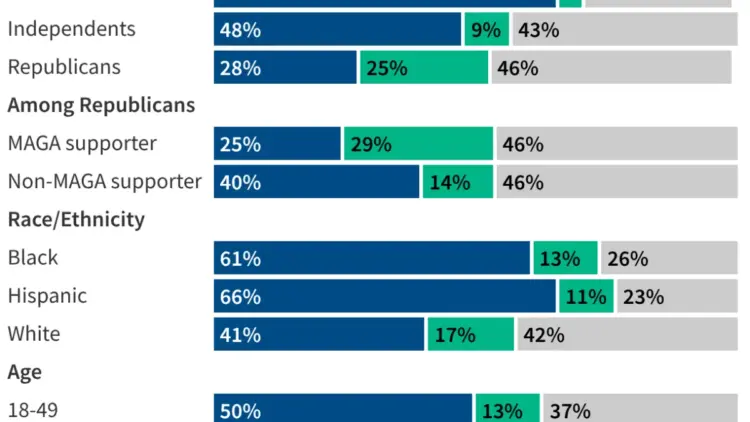
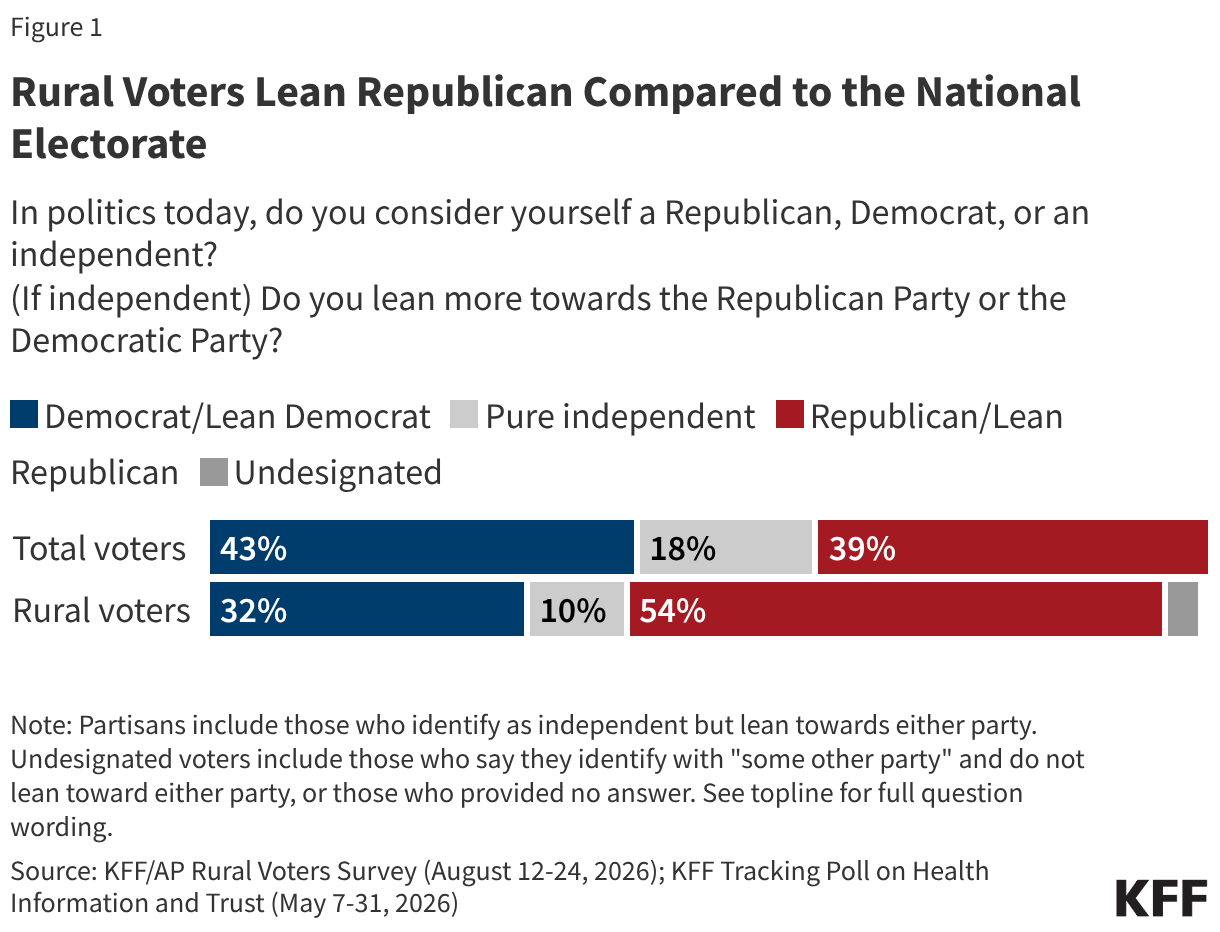
The data shows that rural voters continue to lean significantly more Republican than the national electorate. Just over half, or 54%, of rural voters identify as Republicans or Republican-leaning independents, compared to 32% who align with Democrats or Democratic-leaning independents. Furthermore, within the Republican bloc, support remains firmly anchored to the Make America Great Again (MAGA) movement, with three-quarters of rural Republicans identifying as MAGA supporters and 24% falling outside that designation.
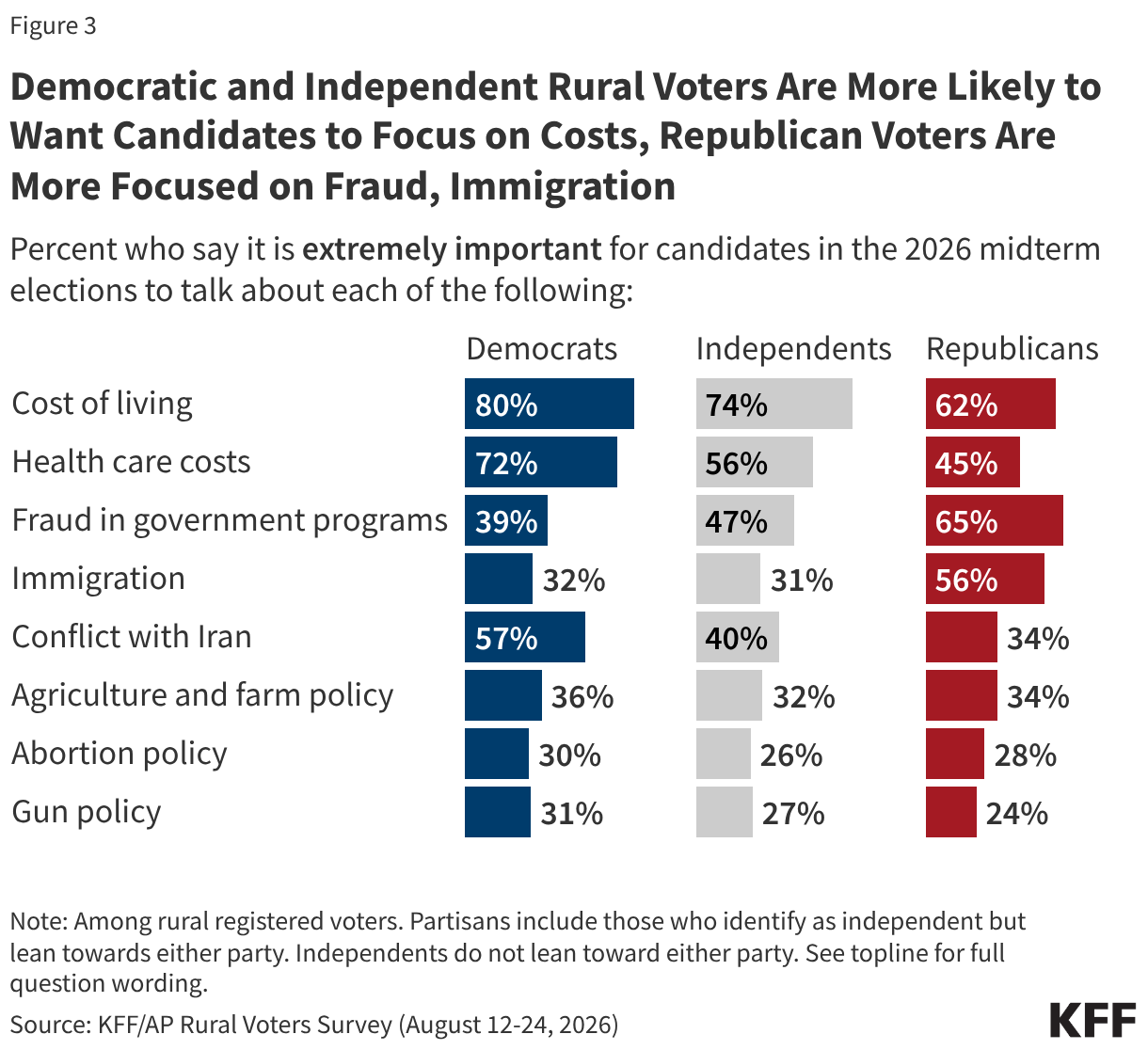
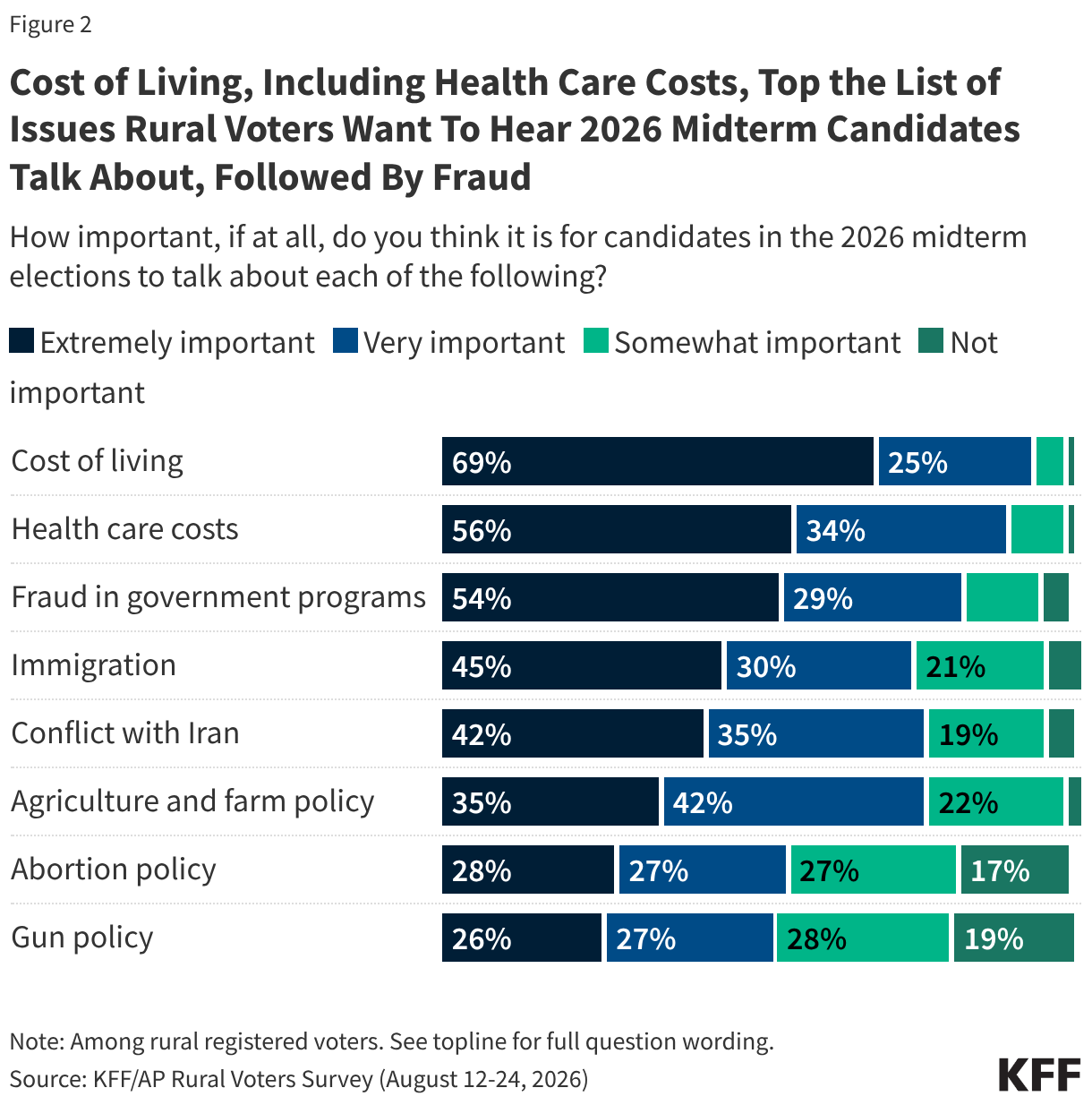
Despite this enduring partisan alignment, the survey underscores a deep sense of economic anxiety that transcends party lines. Majorities of rural voters across the country report that the current economic climate is placing severe strain on their families. When asked to look ahead to the midterm elections, rural voters overwhelmingly point to the cost of living as the single most critical issue they want candidates to address. About seven in ten rural voters describe it as extremely important for candidates to talk about the cost of living, eclipsing other major talking points such as health care costs, government fraud, immigration, and foreign conflicts.
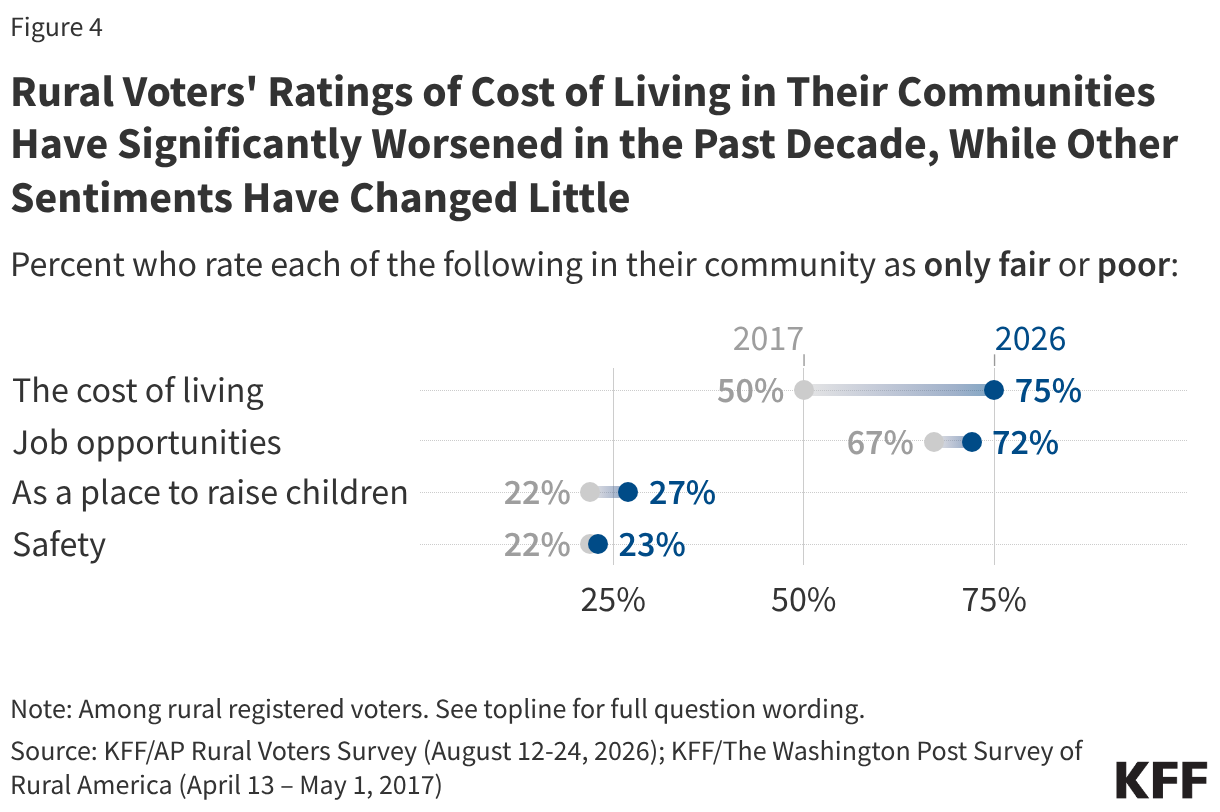
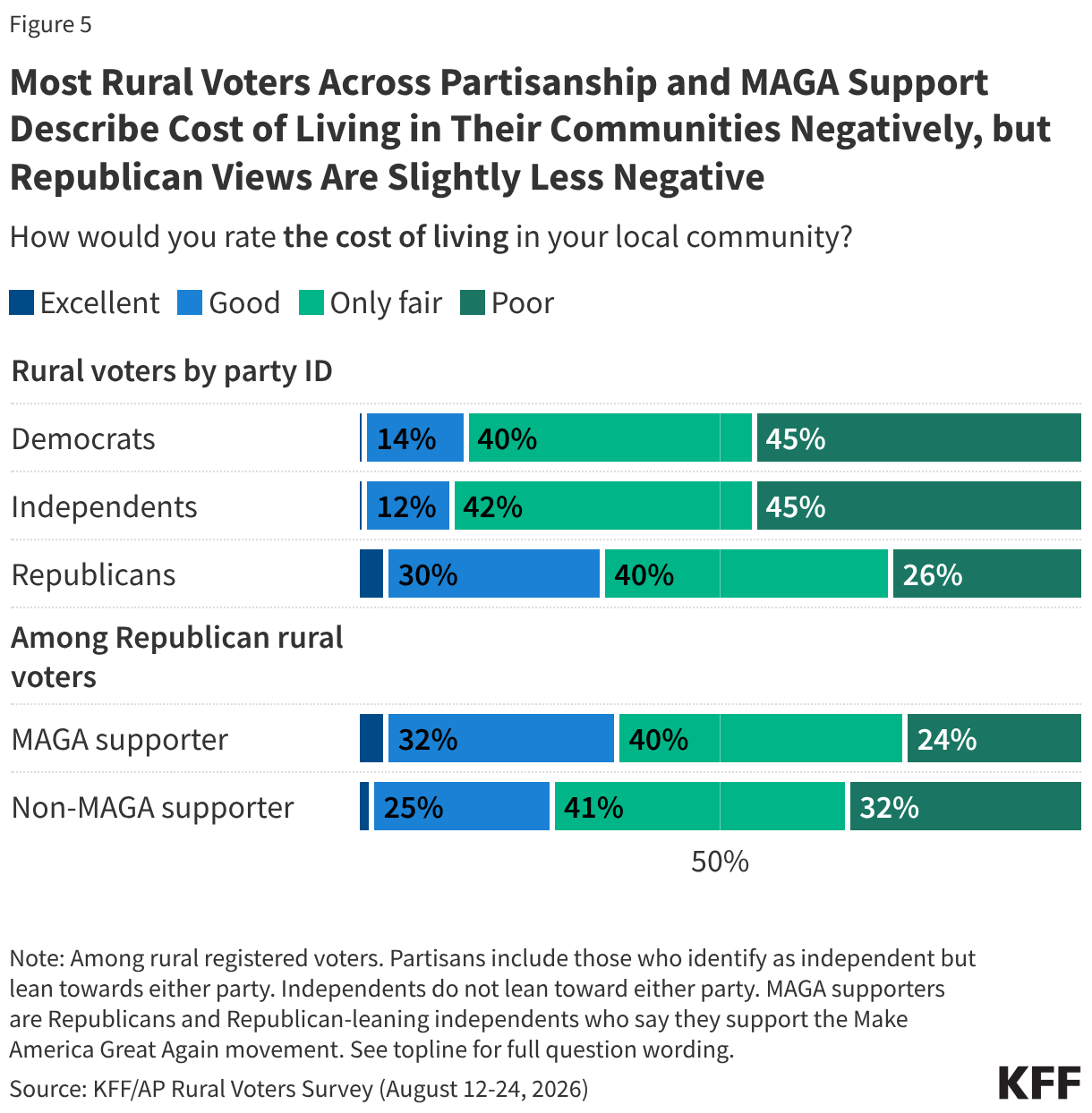
The daily reality of these economic pressures is reflected in how rural residents view their communities. Three in four rural voters now rate the cost of living where they live as "only fair" or "poor," marking a striking 25-percentage-point increase since a similar survey was conducted in 2017. Negative ratings have surged across all political affiliations, reflecting a shared sentiment that everyday necessities have simply become too expensive to manage comfortably on local wages.
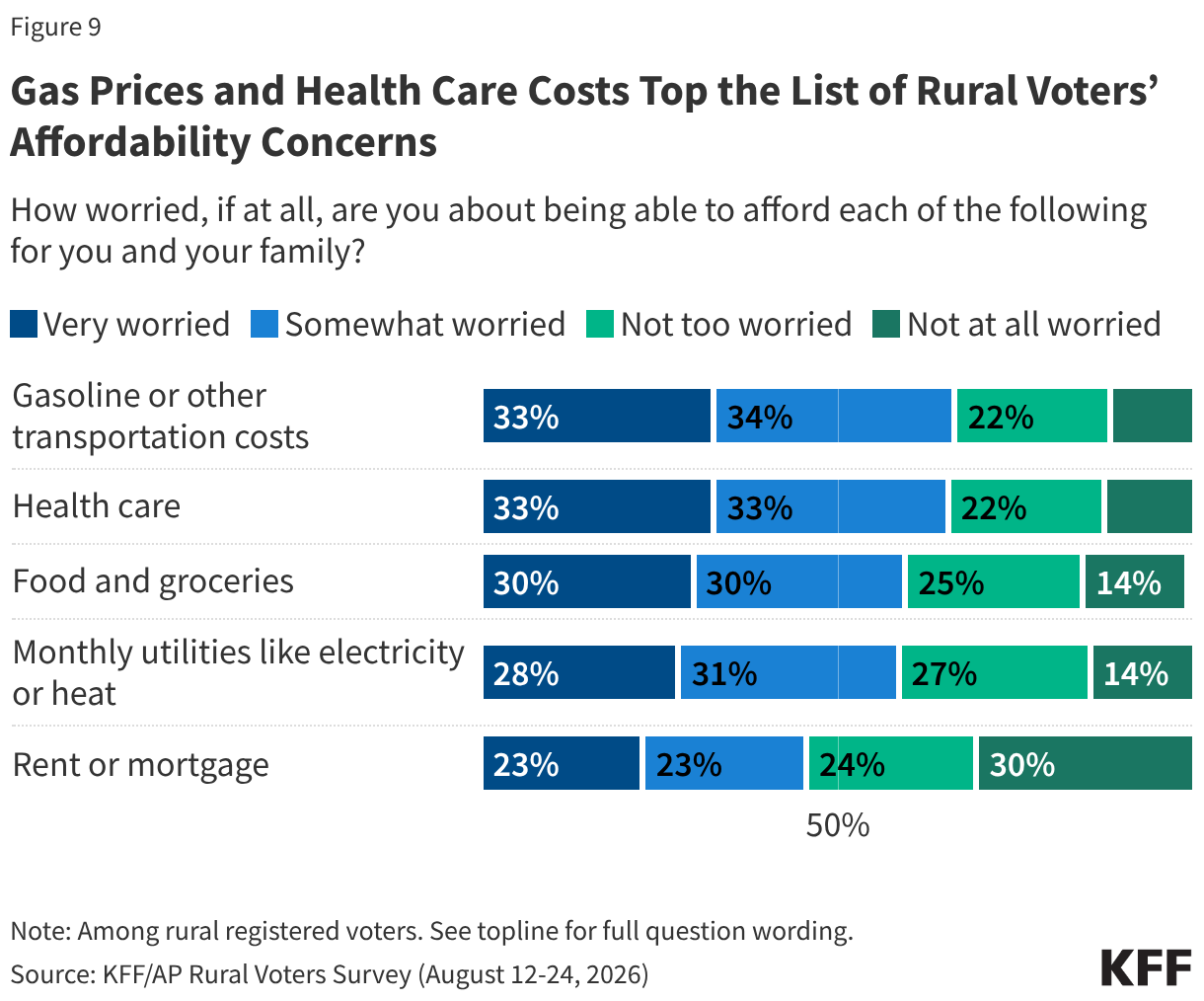
Inflation and escalating expenses have permeated nearly every aspect of household budgeting. Roughly two-thirds of rural voters express worry about being able to afford gasoline and transportation costs or health care for themselves and their families. Sizable majorities also voice anxiety over the costs of food, groceries, and monthly utilities, while nearly half worry about making their rent or mortgage payments. Younger rural voters, facing lower average incomes, report heightened worries across almost every category, with health care affordability emerging as a dominant concern for nearly three-quarters of respondents under the age of 30.
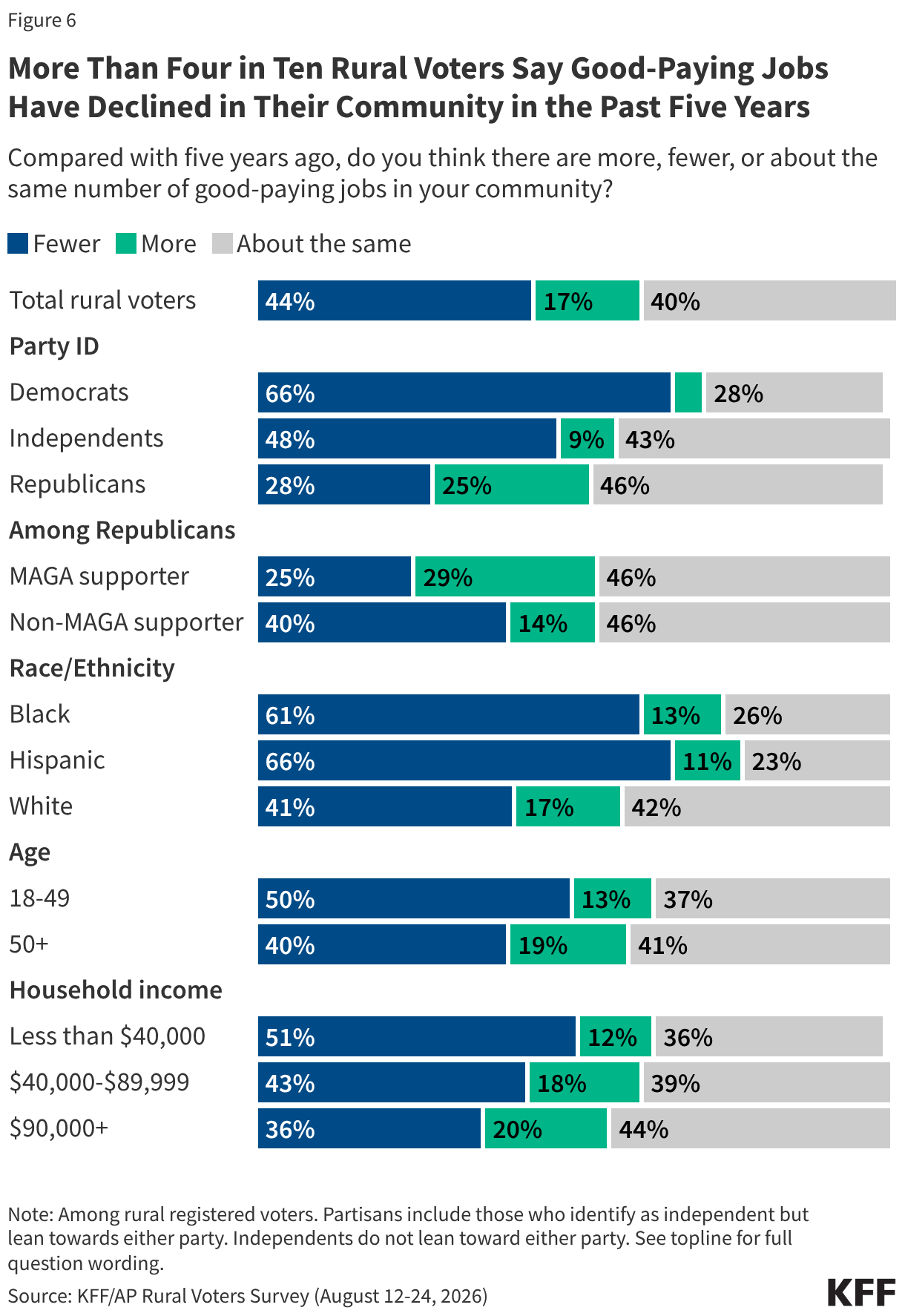
Local economic conditions are viewed through an equally critical lens. A plurality of rural voters report that good-paying jobs have grown scarcer in their communities over the past five years, with more than four in ten noting a decline. These concerns are particularly pronounced among Hispanic and Black rural voters, younger residents, and those with lower household incomes.
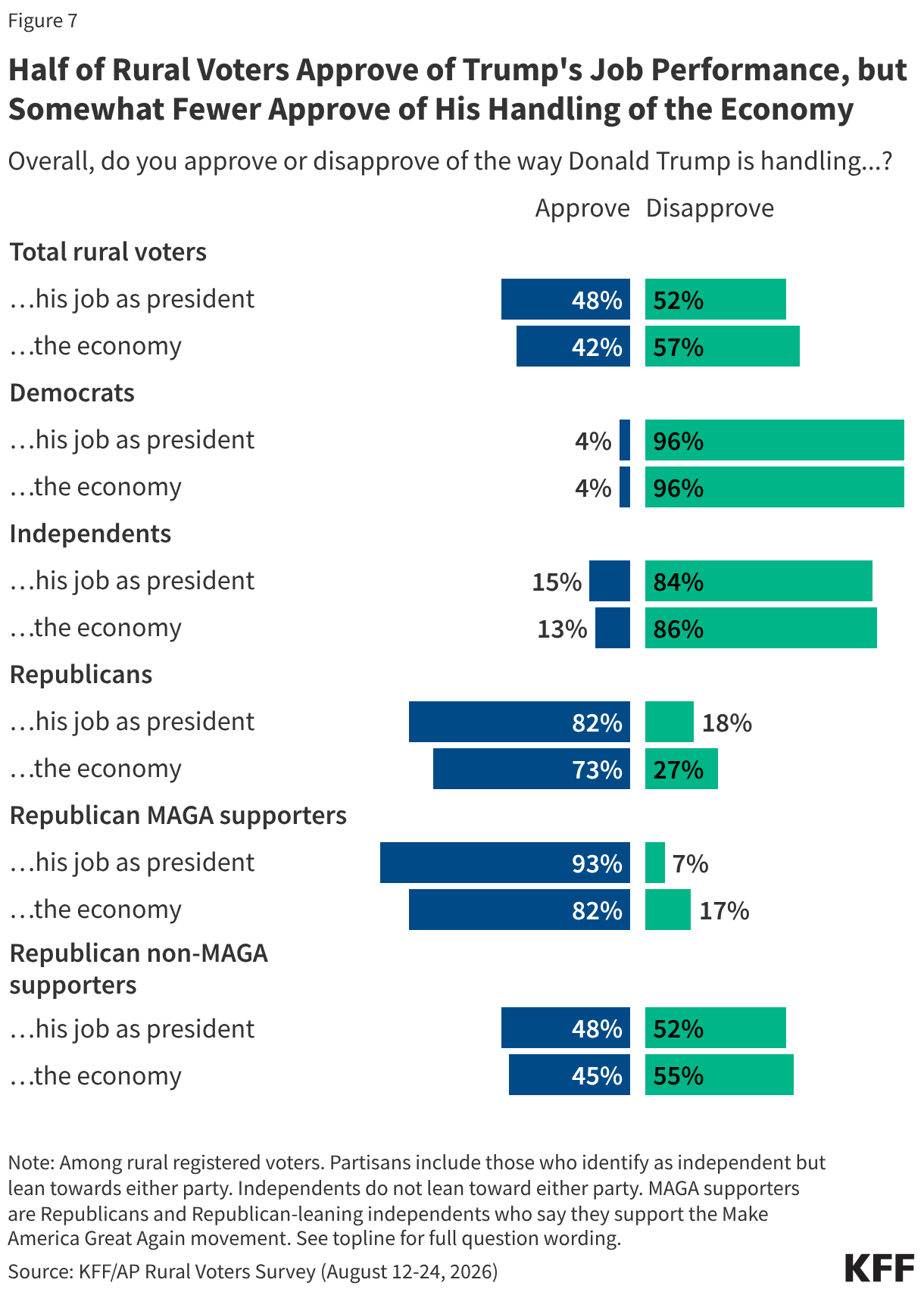
These sustained economic frustrations appear to be taking a toll on perceptions of leadership. About six in ten rural voters disapprove of President Trump’s handling of the economy. While roughly half continue to approve of his overall job performance, that figure represents a noticeable slide from 2017, when 56% of rural registered voters expressed approval. Disapproval is notably sharpest among non-MAGA supporting Republicans, a group that makes up roughly a quarter of rural Republicans. Among these non-MAGA Republicans, majorities express disapproval of both the president’s job performance and his management of the economy, contrasting sharply with the near-universal approval found among core MAGA supporters.
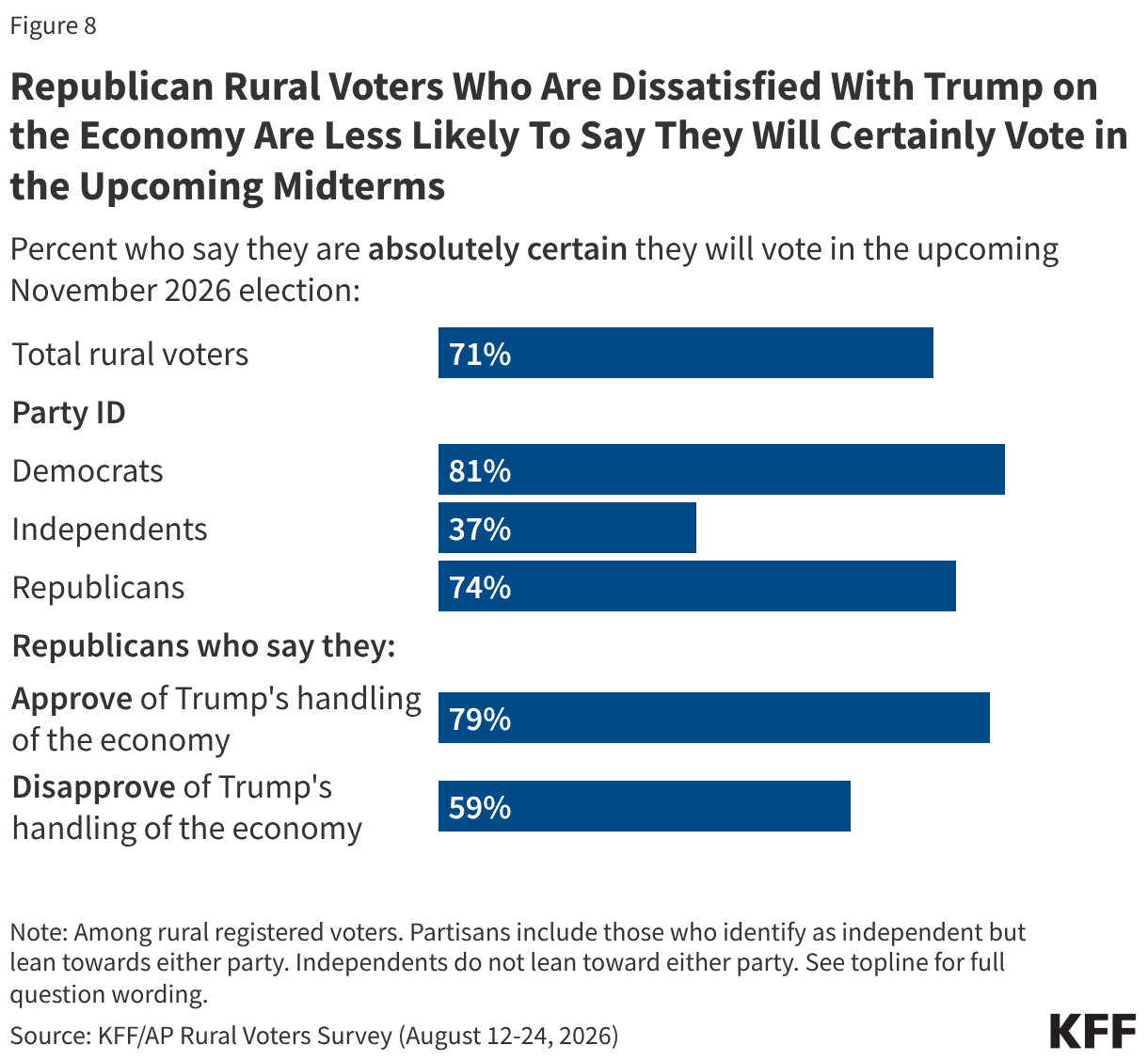
This internal dissatisfaction among a subset of rural Republicans carries potential implications for turnout in the upcoming midterm elections. While 98% of rural Republicans state they are more likely to vote for a Republican candidate than a Democrat, Republicans who disapprove of the administration’s handling of the economy are significantly less likely to say they are "absolutely certain" to vote compared to those who approve.
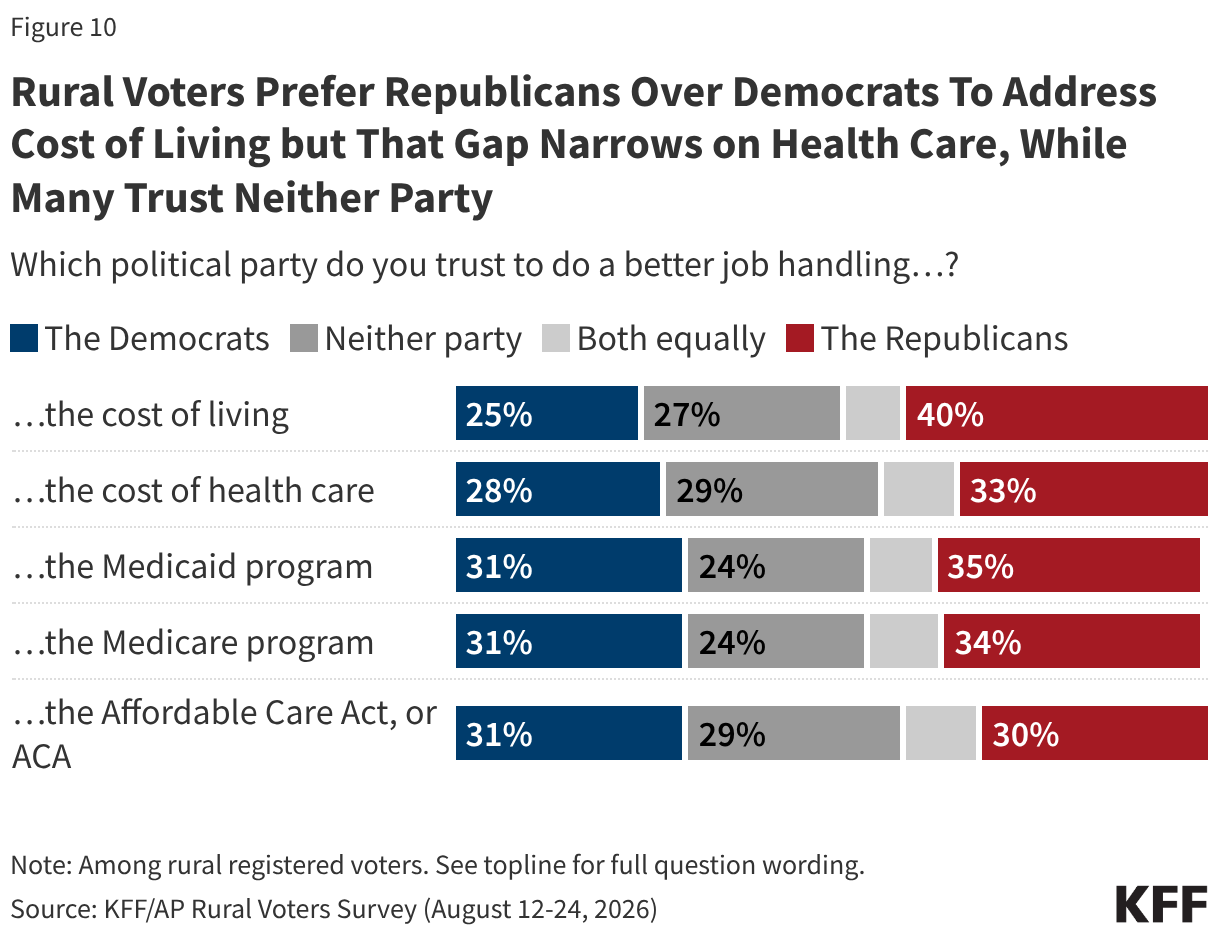
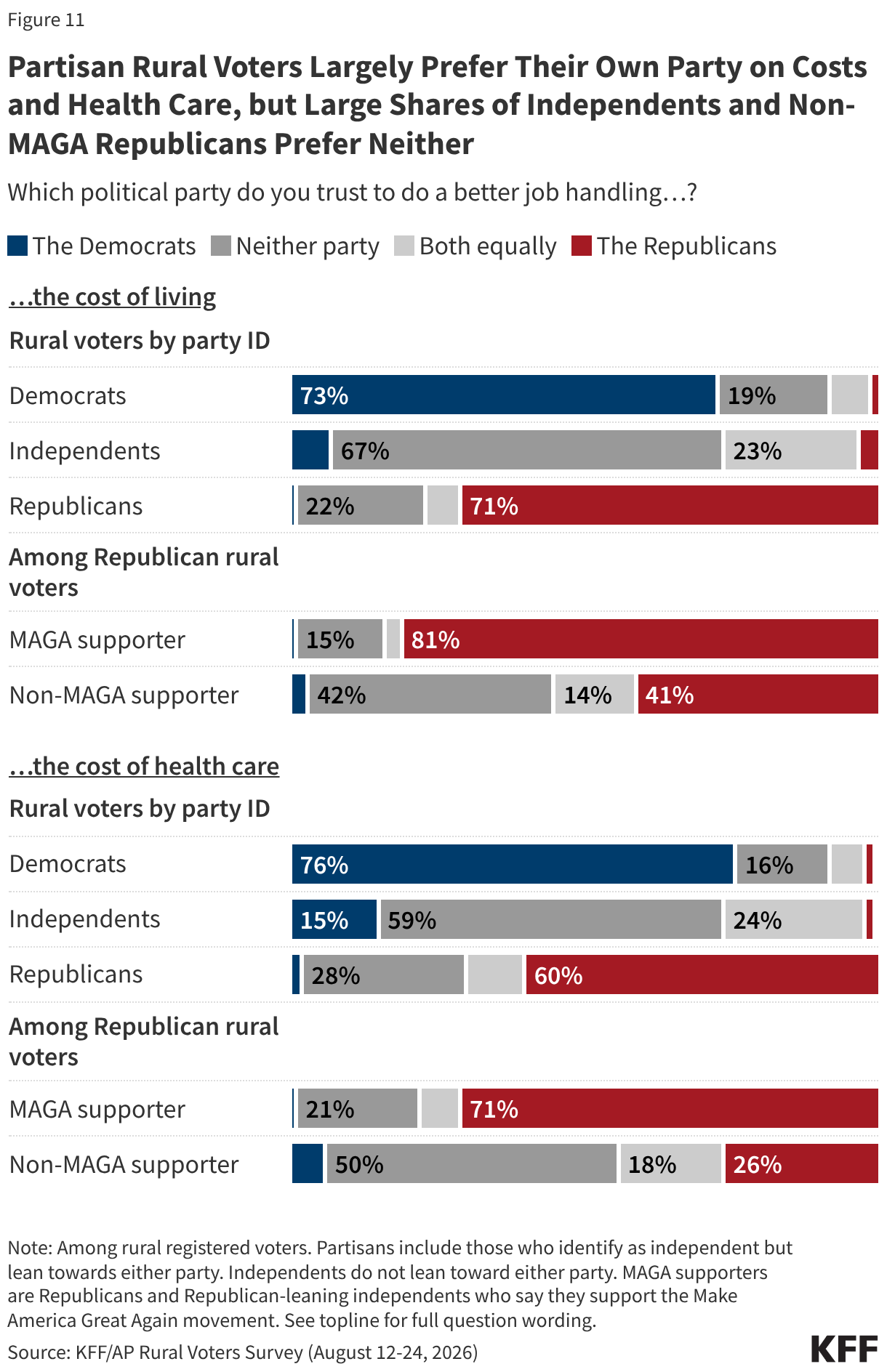
When it comes to political trust in addressing these pressing issues, the Republican Party retains an advantage on managing the overall cost of living, with four in ten rural voters trusting Republicans more than Democrats. However, voters are far more divided on health care costs, where neither party commands a decisive lead and substantial shares of the electorate report trusting neither party at all.
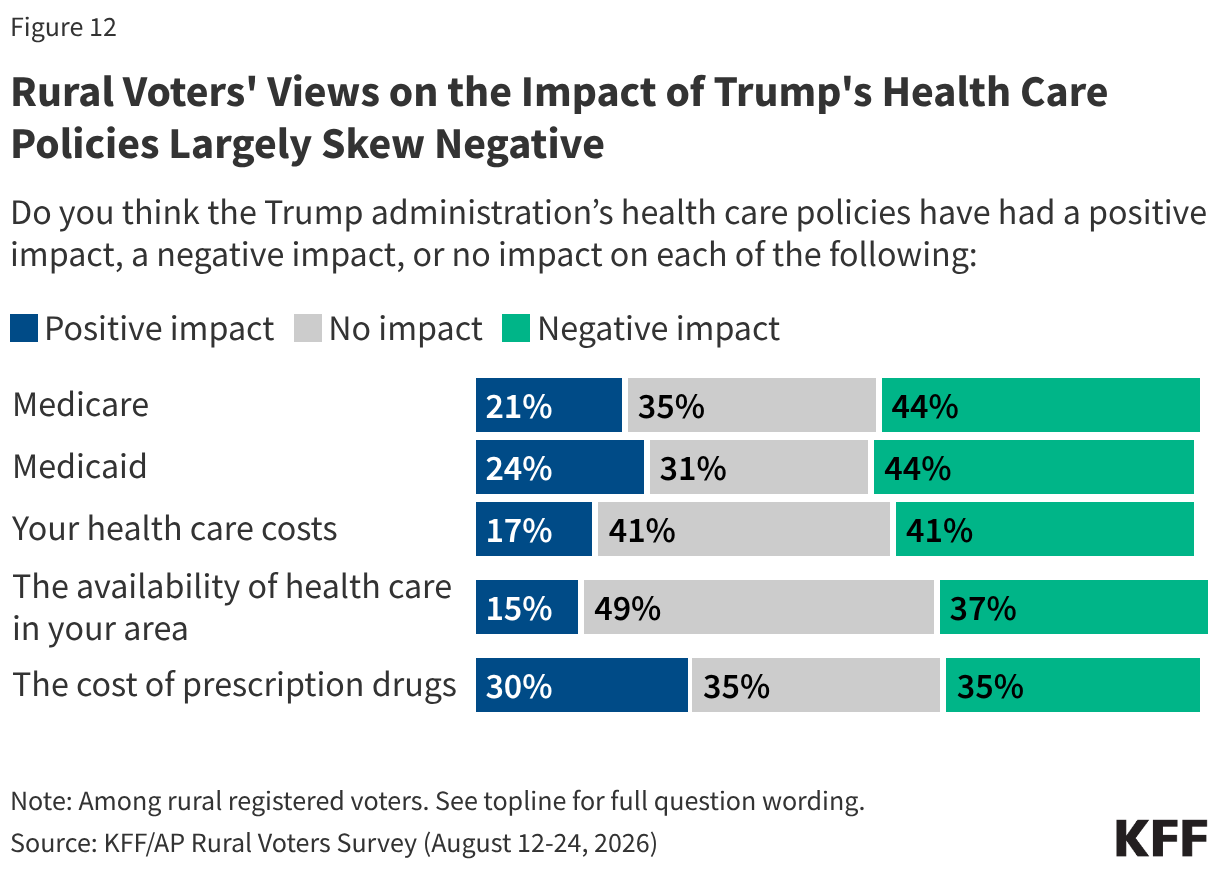
Health care remains a central vulnerability for the administration in rural regions, where systemic challenges such as provider shortages, pharmacy access, and hospital closures have long threatened community stability. Roughly twice as many rural voters believe the Trump administration’s health care policies have had a negative impact rather than a positive one on their health care costs, Medicare, Medicaid, and local health care availability.
The impact of recent federal policy shifts, including legislative changes to Medicaid passed in late 2025 that reduce future federal spending, remains largely obscure to the general public. While about half of rural voters report that they or a family member have relied on Medicaid at some point, and nine in ten view the program as important to their communities, awareness of recent funding reductions is low. Six in ten rural voters say they do not know enough to comment on whether federal spending has decreased, a sentiment echoed by more than seven in ten Republican respondents. Similarly, awareness of a newly established federal Rural Health Transformation Program remains minimal across all political affiliations.
As the political debate intensifies in the run-up to the 2026 midtests, the findings suggest that the enduring strength of the Republican brand in rural America is being severely tested by kitchen-table economics. With voters demanding tangible relief from rising costs and deteriorating local economic prospects, both political parties face a demanding electorate seeking concrete solutions to deep-seated financial and health care insecurities.



