As the state looks ahead to the upcoming 2026 election cycle, advocacy and community organizations are doubling down on efforts to close a persistent participation gap that leaves millions of potential voters on the sidelines. According to data highlighted by Developmental Pathways (DP) and referenced in federal research from the U.S. Election Assistance Commission and Rutgers University, if voters with disabilities cast their ballots at the same rate as voters without disabilities, roughly two million more voices would actively help shape local, state, and national democracy.
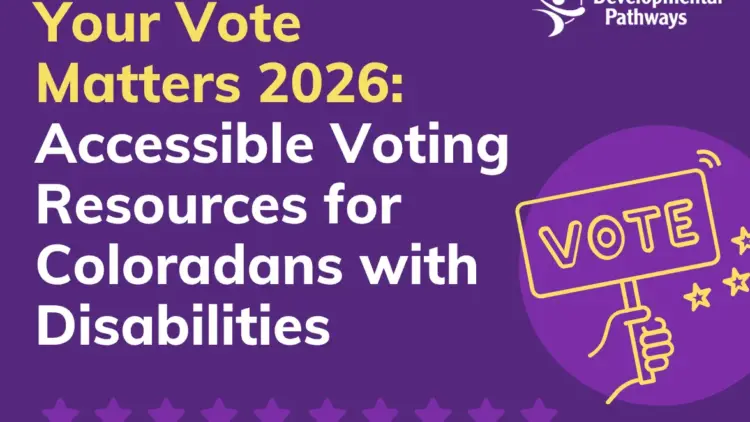
To help bridge this gap locally, Developmental Pathways has announced a comprehensive initiative to support Colorado voters with disabilities as they prepare for the 2026 elections. Grounded in a core commitment to helping individuals with intellectual and developmental disabilities fully participate in community life, the organization has curated a vital suite of information, legal clarifications, planning tools, and educational resources designed to ensure that every eligible citizen can make their voice heard at the ballot box.
The push comes as civic leaders and disability advocates emphasize that democratic participation is not merely a right, but a fundamental cornerstone of community inclusion. By breaking down logistical barriers, clarifying complex legal statutes, and providing accessible tools for ballot navigation, organizations across Colorado are working to ensure that the electoral process is truly open to everyone, regardless of physical or cognitive ability.
Your Right to Vote
A central hurdle for many voters with disabilities—and their families or caregivers—involves understanding the legal framework surrounding voter eligibility. In Colorado, state law is explicitly clear: having a guardian or other legal decision-maker does not affect an individual’s right to vote.
Under current Colorado guidelines, any resident who is 18 years of age or older and meets the state’s basic eligibility requirements retains the absolute right to register, vote, and make their own independent ballot choices. This means that even individuals who rely on supported decision-making models or court-appointed guardians maintain full autonomy over their political voice. For detailed verification of these statutes, prospective voters and their supporters can consult the official eligibility details and the specialized Voters with Disabilities Frequently Asked Questions published by the Colorado Secretary of State’s office.
Furthermore, when questions of accessibility, discrimination, or rights violations arise, help is readily available through the state’s designated Protection and Advocacy System. Disability Justice Colorado serves as a crucial resource for community members navigating the electoral landscape. The organization provides guidance on understanding individual voting rights, explores accessible voting options for those who require alternative formats, and steps in to assist voters in filing formal complaints should their rights be compromised or denied at any stage of the voting process.
Make a Plan to Vote
Translating the right to vote into actual civic participation often requires careful preparation, particularly for voters who navigate physical, sensory, or cognitive accessibility challenges. To assist in this process, Developmental Pathways has introduced a dedicated planning instrument known as the "My Voting Plan" sheet, which voters can easily print and utilize to map out their specific voting journey for the 2026 election.
Colorado’s robust election infrastructure provides multiple pathways for citizens to cast and return their ballots safely and securely. State regulations mandate that every Voter Service and Polling Center (VSPC) must meet rigorous accessibility standards, ensuring that individuals utilizing mobility devices, screen readers, or other assistive technologies can vote independently and privately. In addition to in-person voting options, Colorado’s mail-in ballot system offers flexibility for those who prefer to vote from home, with secure drop boxes located throughout local communities.
Once a ballot has been cast or submitted, transparency remains a top priority for election officials and voters alike. To offer peace of mind throughout the process, the Colorado Secretary of State provides an online tracking system known as BallotTrax. This digital tool allows voters to monitor the exact status of their ballot in real time, confirming when it has been mailed out, received by election officials, and successfully counted.
Understanding Your Ballot
Casting a ballot is only part of the democratic equation; understanding what—and who—is actually on that ballot matters just as much as showing up on election day. Modern elections frequently feature complex policy questions, constitutional amendments, local ballot measures, and numerous candidates vying for public office. Navigating this vast array of information can be overwhelming for any voter, making trusted educational resources indispensable.
To help mitigate this challenge, numerous civic, community, and advocacy organizations publish specialized ballot guides ahead of major elections. While some of these guides operate from a strictly nonpartisan perspective, others may approach issues from specific policy viewpoints. Developmental Pathways advises voters to seek out trusted, transparent sources that align with their personal values and community interests.
As the 2026 election season progresses, Developmental Pathways continues to compile and update a comprehensive directory of ballot guides and educational resources designed specifically to help voters make informed, confident decisions. Because these resources are released on an ongoing basis by various community partners, organizations encourage voters and their support networks to check back frequently for the latest additions and updates leading up to election day.