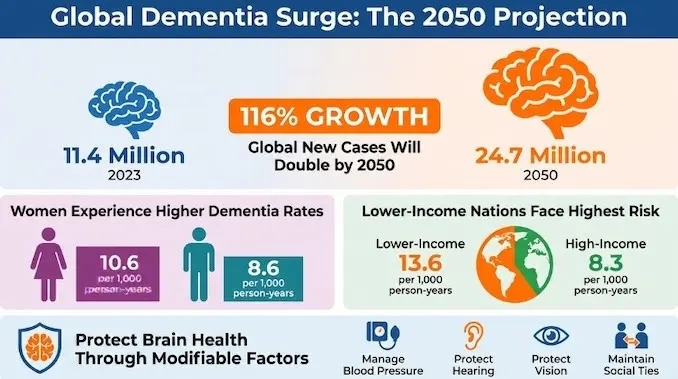
A landmark study published in JAMA Neurology has delivered a sobering projection for the future of global public health: the number of new dementia cases worldwide is expected to double by the year 2050. The research offers a comprehensive look at the rising trajectory of cognitive decline, pointing to an urgent need for international leadership, enhanced preventative healthcare, and systemic changes to address the looming crisis.
For family caregivers who currently manage the daily challenges of caring for a loved one with dementia, as well as individuals looking ahead at their own long-term cognitive health, projections of this scale can feel overwhelming. However, public health experts emphasize that understanding the underlying driving forces behind these numbers is the critical first step toward effective prevention and better care planning.
The Numbers: Why Are Dementia Cases Expected to Double?
According to the data analyzed in the study, there were an estimated 11.4 million new dementia cases globally in 2023. By 2050, that figure is projected to skyrocket to 24.7 million new cases annually, representing a staggering 116% increase.

Public health researchers stress that this sharp upward spike is not driven by the disease itself becoming biologically more aggressive or infectious. Instead, the surge is primarily the result of the rapid and unprecedented aging of the global population. Age remains the single greatest risk factor for the development of dementia, and as modern medicine and living standards improve, people are living longer than ever before.
Dr. Emer MacSweeney, a consultant neuroradiologist, suggests that this projected increase should be interpreted as a vital wake-up call for the medical community. Rather than viewing the trend as an inevitable consequence of an aging demographic, she advocates for using these findings to accelerate advancements in prevention, early diagnosis, and targeted treatment.
The Gender Gap: Why Are Women at Higher Risk?
The research also uncovered a significant and concerning demographic discrepancy regarding who is most vulnerable to developing dementia. According to the study’s findings, the incidence rate for women stood at 10.6 new cases per 1,000 person-years, compared to just 8.6 new cases per 1,000 person-years for men.

While women generally enjoy longer average lifespans than men—and age is the primary risk factor for the condition—researchers indicate that longevity alone does not fully account for the gender gap. Sex-specific biological factors appear to play a substantial role in brain health over the course of a lifetime. These factors include biological changes experienced during menopause and the cumulative effects of lifelong estrogen exposure. This distinct disparity underscores the critical need for women to prioritize their cognitive and cardiovascular health well before they reach their senior years.
The Geography of Dementia: The Heart-Brain Connection
Another key revelation from the study centers on geographical and socioeconomic disparities. The research highlighted that low- and middle-income countries face a notably higher incidence of dementia, recording 13.6 cases per 1,000 person-years, compared to just 8.3 cases per 1,000 person-years in high-income nations.
This wide geographical divide points directly to the well-documented heart-brain connection. Over recent decades, high-income nations have successfully implemented public health campaigns that have driven down smoking rates, improved the management of untreated high blood pressure, and reduced high cholesterol levels. Conversely, many low- and middle-income countries are currently experiencing rising rates of obesity, stroke, and cardiovascular disease. The clear takeaway from these geographic trends is that overall cardiovascular health is a primary driver in protecting long-term brain health.

While individuals cannot stop the natural aging process, medical experts note that a significant portion of a person’s cognitive trajectory is influenced by modifiable risk factors. Healthcare professionals consistently recommend focusing on fundamental lifestyle habits to support long-term brain health. These include managing blood pressure, addressing cardiovascular conditions, protecting sensory health, and remaining socially and mentally active throughout life.
However, medical professionals and advocates emphasize that individual lifestyle choices alone will not be enough to reverse the trend. Curbing the global epidemic of cognitive decline will require coordinated, large-scale action from global leaders, policymakers, and healthcare institutions to address the socioeconomic and systemic barriers that contribute to disparate health outcomes worldwide.