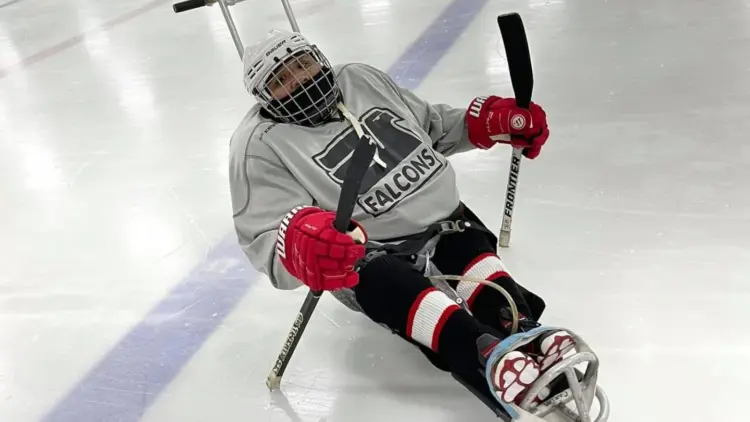
For Illinois native Carlos Murillo, living with a physical disability has never been a reason to step back from life’s greatest thrills. At 32 years old, Murillo is actively redefining what it means to travel, compete, and seek out high-adrenaline adventures as a full-time wheelchair user. Refusing to let external obstacles define his personal boundaries, he has turned his 30s into a relentless pursuit of sports, stadium exploration, and outdoor recreation.
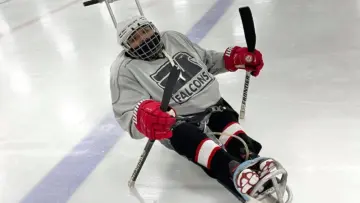
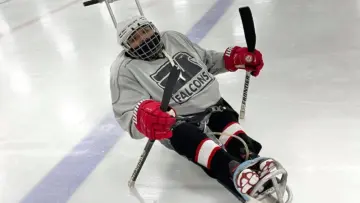
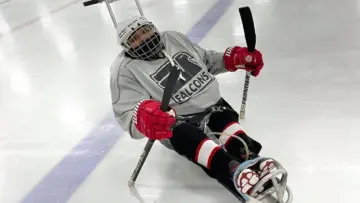
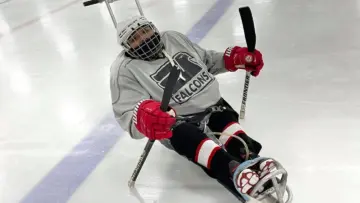
Born with spina bifida—a congenital condition where the spinal cord fails to develop properly—Murillo received his first wheelchair at three years old. While growing up with a mobility impairment presented unique challenges, it also laid the foundation for a life marked by patience, determination, and an unwavering desire to explore. Today, his track record reads like an extreme sports catalog, spanning everything from zip-lining, waterskiing, and kayaking to snow skiing, scuba diving, go-kart racing, sled hockey, wheelchair rugby, archery, horseback riding, cycling, para-motoring, and rock climbing.
Yet, despite an already exhaustive list of accomplishments, Murillo is nowhere near finished. Driven by an ambitious bucket list that includes NASCAR driving experiences, supercar rides, adaptive paragliding, parasailing, adaptive surfing, whitewater rafting, adaptive mountain biking, helicopter flights, skydiving, and extensive international travel, he continues to seek out new horizons while encouraging others in the disability community to do the same.
Origin Story and Mindset
Murillo’s entry into the world of adaptive recreation was not an overnight transformation, but rather a gradual evolution that began during his teenage years. His official introduction to organized adaptive athletics took place in 2007 at a holiday event.
"I started adaptive sports in 2007 at a Christmas party, playing basketball with GLASA Adaptive Sports," Murillo recalled, referring to the Great Lakes Adaptive Sports Association, an organization dedicated to providing sports and recreational opportunities for youth and adults with physical impairments.
That initial exposure opened the door to a broader community of adaptive athletes and specialized programs. However, it was not until much more recently that Murillo decided to turn his casual participation into a structured personal mission. Roughly two years ago, he realized that a long list of dream activities was accumulating without a concrete plan to execute them.
"The bucket list started about two years ago because there were a lot of things I wanted to do," Murillo explained. "I just didn’t know how to go about it, so that’s why I made my bucket list."
Since formalizing his goals, Murillo has experienced a profound shift in perspective. Entering his 30s provided a renewed sense of clarity and ambition, allowing him to push beyond the self-imposed or societal limits that often constrain young adults with disabilities. When reflecting on what personal adventure means to him today compared to earlier in his life, he noted that the current chapter of his life feels vastly more fulfilling.
"It means a lot, because I’m finding so much more in my 30s than I ever did in my 20s," Murillo said.
That mindset is anchored by a complete refusal to entertain self-doubt or dwell on setbacks. When undertaking complex physical tasks that require specialized techniques or custom equipment, initial attempts do not always go smoothly. For Murillo, however, a failure to master an activity immediately is never viewed as a defeat.
"I don’t have doubts or regrets," Murillo asserted. "I have lessons!"
Conquering the Outdoors Through Adaptive Sports
The scope of Murillo’s athletic involvement is remarkably diverse, spanning aquatic sports, winter athletics, high-speed motor activities, and high-altitude adventures. Across each discipline, he has navigated distinct equipment requirements and environmental challenges, demonstrating a versatile physical capability.
Among the various pursuits he has tackled, certain experiences stood out due to preconceived notions about what adaptive technology could accommodate. Before looking into specialized programs, Murillo assumed certain high-wire adventures were simply out of reach for wheelchair users.
"Zip-lining, because I didn’t think there was an adaptive program out there," Murillo noted, describing the activity that surprised him the most. That discovery transformed his understanding of what accessible recreation could offer, sparking a long-term passion for aerial sports.
While aerial zip-lining offered unexpected excitement, other activities required sheer physical endurance. Handcycling, in particular, presented a demanding physical challenge that tested his stamina and upper-body strength.
"Cycling was hard because going uphill was very challenging," Murillo said. "Pushing a bike uphill is not the greatest."
Despite the stark technical differences between sports like scuba diving, sled hockey, rock climbing, and wheelchair rugby, Murillo approaches each new discipline with a surprisingly straightforward strategy. Rather than overthinking mechanics or over-analyzing technique prior to participation, he relies on hands-on repetition and adaptability.
"I really don’t have any techniques!" Murillo admitted. "It just takes a few tries to get the hang of each sport."
Through his active lifestyle, Murillo has reaped the benefits of a robust network of non-profit adaptive organizations across the Midwest and beyond. Organizations such as GLASA, H2O Adaptive Sports, Diveheart, Shirley Ryan AbilityLab, and Wisconsin Adaptive Ski provide the specialized gear, trained staff, and accessible facilities required to make complex sports safe and approachable for individuals with spinal cord injuries, spina bifida, and other physical conditions.
For a newcomer stepping into one of these programs for the very first time, the atmosphere is designed to be welcoming rather than intimidating.
"It’s actually really fun when you start interacting with different athletes and trying different sports," Murillo emphasized.
That camaraderie and early success often lead to lifelong pursuits. In Murillo’s case, several activities immediately stood out as sports he intended to maintain over the long haul. "Zip-lining, para-motoring, and waterskiing," he shared, highlighting the disciplines that caught his heart right from the start.
High Speeds and New Frontiers: The Growing Bucket List
A central driver behind Murillo’s ongoing efforts is a simple desire for excitement and high-energy experiences. As he checks items off his list, he routinely seeks out activities that push the sensory and speed boundaries even further.
When asked what draws him toward challenging feats like NASCAR driving experiences and adaptive paragliding, Murillo’s answer was direct: "I love the adrenaline rush they give me."
His remaining target list reflects that appetite for thrill, encompassing supercar rides, parasailing, adaptive surfing, whitewater rafting, adaptive mountain biking, helicopter flights, and skydiving. While he embraces high-octane challenges, Murillo maintains a realistic view of the physical forces involved, acknowledging that different activities evoke different emotional responses.
"I’m excited about supercar rides and parasailing, and nervous about adaptive surfing and whitewater rafting," Murillo acknowledged, identifying the fine balance between anticipation and healthy respect for open-water environments.
Managing a dynamic bucket list requires ongoing research and decision-making. To determine which goals merit a spot on his official schedule, Murillo evaluates the practical feasibility and overall appeal of each potential activity.
"I look at the pros and cons, and also at what looks more appealing to do," he explained.
Once a challenge is successfully completed, Murillo quickly turns his attention to new opportunities, using online research to identify emerging adaptive sports programs, travel destinations, and unique experiences around the globe. "Just by searching the web and thinking of new ideas," he said of his process for keeping the list fresh and challenging.
Sports Fandom and the Stadium Tour
Beyond his direct participation in adaptive athletics, Murillo is a deeply passionate sports spectator. That fandom has evolved into a comprehensive mission to visit as many athletic venues as possible across Major League Baseball (MLB), the National Hockey League (NHL), the National Basketball Association (NBA), the National Collegiate Athletic Association (NCAA), the National Women’s Soccer League (NWSL), professional rugby, and minor league baseball.
"I really love sports, so honestly, I just wanted to go to as many stadiums as possible," Murillo said.
A notable feature of his sports travels is a frequent presence at minor league baseball parks across the country, including facilities in Kenosha, Wisconsin; Schaumburg, Illinois; South Bend, Indiana; Midland, Michigan; and San Antonio, Texas. Minor league venues often provide a distinct combination of intimate fan interactions, affordable ticket options, and welcoming community environments.
"The cost of the games," Murillo pointed out as a primary draw for minor league venues. "I also usually email the teams to ask for complimentary tickets."
Navigating venue accessibility, however, can reveal significant disparities between stadium facilities. While modern regulations mandate basic accommodations, the overall quality of sightlines, ramp inclines, accessible seating integration, and concourse navigation varies widely from park to park.
When asked to highlight a venue that demonstrated an exceptional commitment to physical accessibility and fan experience, Murillo pointed to a local minor league favorite: "The Schaumburg Boomers’ stadium."
With dozens of stadiums already checked off his itinerary, Murillo has no plans to slow down his stadium tour, noting that his target list remains expansive: "There are a lot on the list. I couldn’t pick just one."
Navigating Accessible Travel Across Borders
Murillo’s adventures have taken him across North America, racking up extensive travel time across states like California, Texas, Florida, Michigan, Indiana, Minnesota, and Wisconsin, as well as international trips to Canada and Mexico.
Traveling extensively as a power or manual wheelchair user requires careful preparation and logistical coordination far beyond that of an able-bodied traveler. Every stage of an itinerary—from flight arrangements and accessible vehicle rentals to roll-in showers and step-free hotel entryways—must be verified in advance.
"There is a lot of planning involved, such as hotels and accommodations, transportation, and wheelchair-accessible things to do," Murillo explained.
Geography and local infrastructure play a massive role in shaping the travel experience. During his domestic and international journeys, Murillo observed stark contrasts in how different regions handle public infrastructure and disability access.
"Texas and California stood out the most accessibility-wise," Murillo shared, crediting their modernized infrastructure and widespread adherence to accessibility standards. Conversely, historic destinations presented tangible physical barriers. "The country that fell short was Mexico, just because of the cobblestones."
Despite the hurdles inherent in long-distance travel, Murillo remains focused on exploring new places. His upcoming travel plans include an international cruise itinerary featuring stops in Honduras, the Bahamas, and a return to Mexico.
Reflecting on the available resources for disabled travelers, Murillo noted that mainstream travel guides often paint an overly simplified picture of physical accessibility, leaving out crucial nuances that can impact a trip.
When asked what information accessible travel resources usually omit, Murillo offered a blunt reality check: "That not everything is wheelchair accessible."
For individuals using wheelchairs who feel intimidated by the complex logistics of planning their first trip independently, Murillo advocates for a mindset of bold action over overthinking.
"Just do it. Be fearless," Murillo advised.
Advocacy and Message: Encouraging Others to ‘Just Send It’
Through his visibility in extreme adaptive sports and travel, Murillo has naturally emerged as an advocate for accessibility and self-determination. He hopes his journey serves as a clear demonstration to both able-bodied society and the broader disability community that physical impairments do not have to constrain an active, adventurous lifestyle.
A primary message Murillo aims to communicate is that adaptive opportunities are far more available today than many people realize, provided individuals know where to look and are willing to ask questions.
"That it is out there; you just have to look for it," Murillo said, addressing what he wishes the general public understood about adaptive adventure sports.
When asked how someone new to a disability should begin searching for local opportunities, his advice was practical and simple: "Just start searching the web. Eventually, you will find something."
Maintaining the drive to throw himself into intimidating sports—whether flying through the air on a zip-line or navigating swift water currents—requires a strong support network alongside an internal commitment to self-improvement.
"My coaches and myself, because giving up is not an option," Murillo said when reflecting on his key motivators.
Among the long list of milestones he has achieved, certain moments remain deeply meaningful. Overcoming the initial barrier to adaptive zip-lining stands out as a powerful personal breakthrough, serving as proof that seemingly impossible goals are often attainable with the right adaptations and persistence.
"Zip-lining, because I thought I would never get to do it since I couldn’t find an adaptive program," Murillo shared when asked about an emotionally impactful moment.
Looking back across his path from a three-year-old child adjusting to his first wheelchair in Illinois to a 32-year-old thrill-seeker traversing North America, Murillo takes quiet pride in every single goal he has checked off. "I’m proud of everything I’ve done," he reflected. "If I weren’t, I wouldn’t have done it."
For newly injured individuals or long-time wheelchair users who might believe their days of high adventure are behind them, Murillo offers a concise, energizing call to action.
"Don’t be afraid to try new things. Just send it," Murillo emphasized. "A lot of things are possible. You just have to work for them."