
Public health researchers and global health analysts are marking the end of an era in pandemic data monitoring following the formal conclusion of policy response tracking. The specialized tracking initiative, which for years served as a vital digital repository for understanding how nations navigated the unprecedented disruptions of the SARS-CoV-2 pandemic, has permanently frozen its policy actions dataset. While historical records and cumulative figures for infections and mortality will continue to see periodic updates under specific conditions, the cessation of government response monitoring underscores a broader global transition away from emergency-phase COVID-19 surveillance.
For years, tracking systems have provided researchers, policymakers, and the public with granular insights into the trajectory of the coronavirus across diverse geographic regions, income brackets, and healthcare infrastructures. The infrastructure behind these metrics relied on standardized reporting frameworks that captured both the human toll of the virus and the regulatory mechanisms deployed to mitigate its spread. However, as the acute phase of the global public health emergency receded and institutional data collection priorities evolved, primary sources phased out their active monitoring of government interventions, necessitating a permanent freeze on policy action metrics.
Understanding the Historical Data Landscape
To maintain a comprehensive record of the pandemic’s impact, monitoring tools historically synthesized data from leading international and academic institutions. From March 2023 onward, official statistics regarding confirmed COVID-19 cases and fatalities were drawn directly from the World Health Organization’s Coronavirus Dashboard. Before that milestone, the tracking ecosystem heavily relied on data compiled by the Johns Hopkins University Coronavirus Resource Center, a foundational mapping initiative that concluded its public-facing operations in the spring of 2023.
Population denominators utilized within these analytical frameworks were derived from United Nations World Population Prospects utilizing standardized 2021 estimates. Furthermore, socioeconomic classifications relied on the latest operational groupings established by the World Bank, while regional categorizations aligned with World Health Organization standards.

To optimize performance and prevent prolonged digital load times, public-facing interfaces typically restricted immediate visualization windows to the most recent 200 days of data. Nevertheless, complete archival datasets spanning the entirety of the tracked timeline remain accessible to researchers through dedicated open-source repositories, such as institutional GitHub pages. Analysts note that reporting mechanisms routinely experienced a standard two-week lag, reflecting the complex verification processes required by national health ministries before international consolidation. Technical corrections implemented in subsequent years—such as clarifications distinguishing cumulative weekly totals from averaged daily rates—further refined the accuracy of historical trend analyses.
Policy Actions and Government Interventions
The policy tracking component of these dashboards historically categorized national responses into three primary pillars: social distancing and closure measures, economic support initiatives, and broader health systems adjustments. These records captured the regulatory landscape as it stood at the close of 2022, serving as a permanent baseline for how governments attempted to balance public safety with economic continuity.
Because the primary data source—the Oxford Covid-19 Government Response Tracker—ceased its active monitoring of government responses, these policy metrics are no longer being refreshed with contemporary legislative updates. Consequently, the existing datasets represent a frozen historical archive of late-pandemic governance rather than a real-time policy monitor.
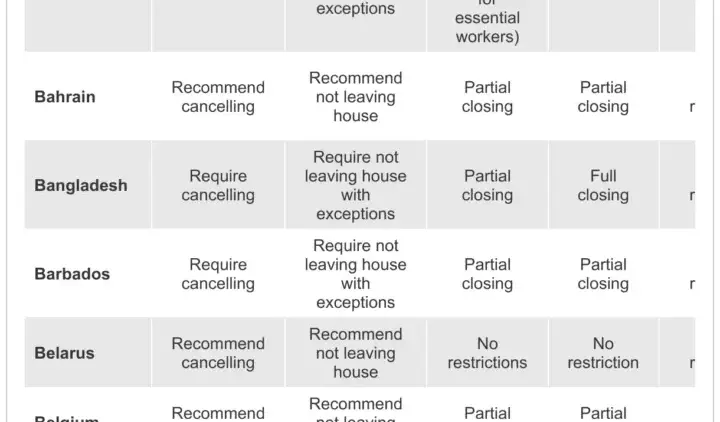
Within the realm of social distancing and closure measures, governments deployed an array of legal mandates and advisory guidelines designed to suppress viral transmission. Stay-at-home requirements varied drastically across jurisdictions. Some nations instituted strict lockdowns where leaving a residence was legally constrained to singular household representatives or limited timeframes, while others permitted daily outdoor exercise and essential grocery procurement under modified conditions.
Workplace and educational closures similarly displayed immense global divergence. Partial workplace closures encompassed scenarios where authorities issued strong recommendations for remote operations, mandated operational safety adjustments, or restricted closures to specific high-risk economic sectors. Similarly, educational institutions experienced a spectrum of interventions ranging from complete closures and mandatory virtual instruction to hybrid models and targeted suspensions of localized school districts.
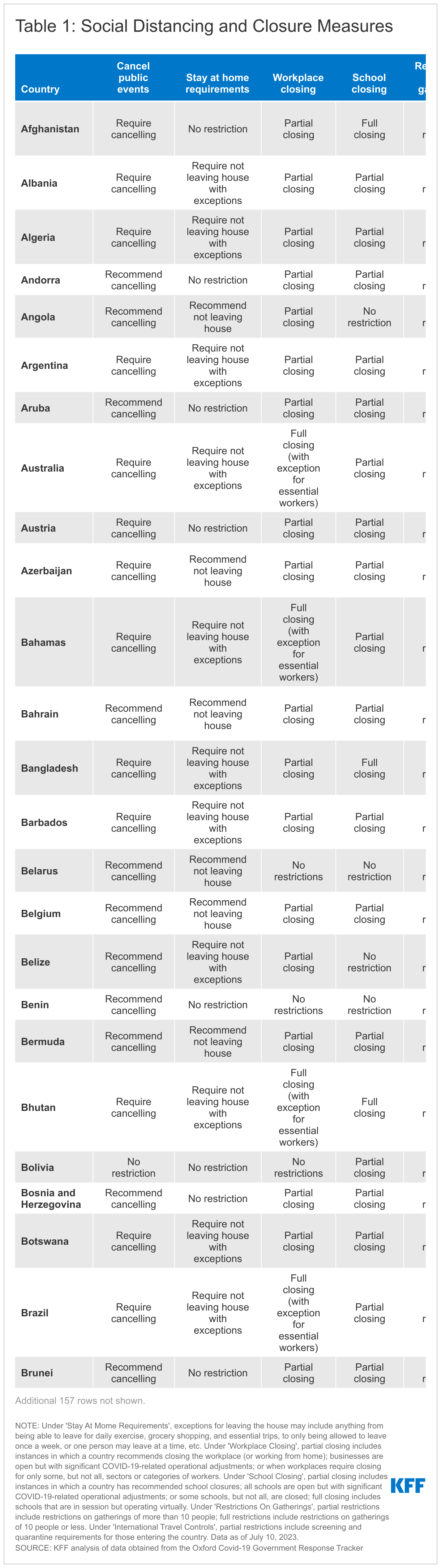
Regulatory oversight also extended to public gatherings and international mobility. Restrictions on gatherings were categorized based on specific numerical thresholds, distinguishing between partial limitations on events exceeding ten individuals and stringent bans on assemblies of ten people or fewer. International travel controls incorporated varying degrees of border closures, mandatory pre-departure screenings, and mandatory post-arrival quarantine protocols for incoming travelers.
Economic Relief and Social Support Measures
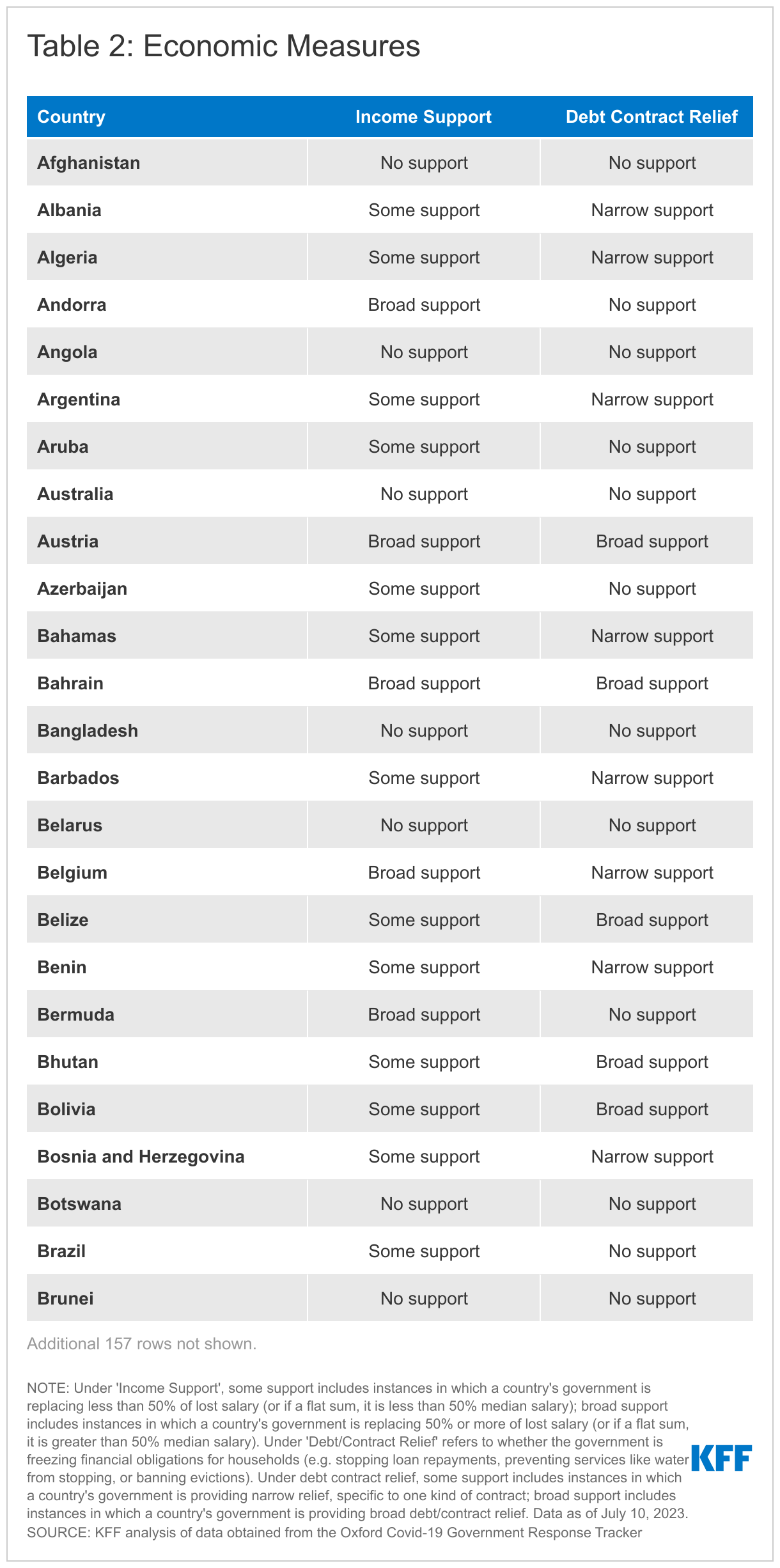
The economic shock waves generated by prolonged lockdowns and operational restrictions forced national governments to deploy fiscal stabilization packages of historic proportions. Tracking frameworks monitored these interventions by focusing primarily on targeted income support and debt relief mechanisms.
Income support metrics evaluated the extent to which public treasuries compensated citizens for lost wages. Narrow support classifications applied to instances where government programs replaced less than half of an individual’s lost salary, or where flat-sum relief payments fell below fifty percent of the national median income. Conversely, broad support measures captured robust fiscal interventions where state-backed subsidies replaced fifty percent or more of lost earnings.
Debt and contract relief tracking followed a comparable methodology. Governments frequently intervened in private financial agreements to prevent widespread defaults on mortgages, rent, and consumer loans. Narrow support designations in this category reflected localized or specialized interventions, such as moratoriums restricted to specific types of commercial or residential contracts, while broader frameworks offered systemic relief across multiple sectors of the economy.
Health Systems Responses and Mitigation Strategies
As healthcare facilities faced unprecedented surges in patient admissions, national authorities integrated structural health systems measures into their pandemic response strategies. These interventions encompassed vaccine rollout logistics, public health messaging, and population-wide mitigation mandates.
Vaccine eligibility tracking documented the phased rollout of immunization campaigns. Partial availability indicators captured periods when vaccines were restricted to specific demographic subsets, such as frontline healthcare workers, clinically vulnerable non-elderly populations, elderly cohorts, or tightly defined age brackets, prior to universal rollout phases.
Non-pharmaceutical interventions, particularly mandates regarding facial coverings, remained a cornerstone of public health policy throughout much of the pandemic. Policy classifications distinguished between universal indoor mandates, situational requirements tied to high-density environments, and government recommendations that encouraged mask usage specifically when social distancing was unachievable.
The foundational documentation, methodological codebooks, and interpretation guides established by academic research groups continue to serve as a vital methodological reference for epidemiologists, political scientists, and public health historians studying the global governance of infectious disease. While active data streams have quieted, the preserved archives offer an enduring empirical foundation for analyzing how global societies confronted the most severe public health crisis of the modern era.



