
For many years, ongoing polling from KFF has documented how the high cost of health care serves as a profound and persistent burden on families across the United States. These escalating expenses heavily influence critical decisions regarding insurance coverage, routine care-seeking, and daily household budgeting. Among a wide array of economic anxieties, medical costs consistently rank as the top financial worry for adults and their families, cutting across diverse demographic lines, geographic regions, and political affiliations.
Recent KFF polling data highlights the deep-seated public anxieties surrounding medical affordability, illuminating how financial pressures force millions of Americans to make difficult compromises between their health and their daily livelihood. While the data illustrates broad systemic struggles, it also emphasizes how specific vulnerable populations—including low-income households, uninsured individuals, LGBTQ+ adults, and patients managing multiple chronic conditions—bear a disproportionate share of the crisis.
Worries and Difficulty Affording Medical Costs
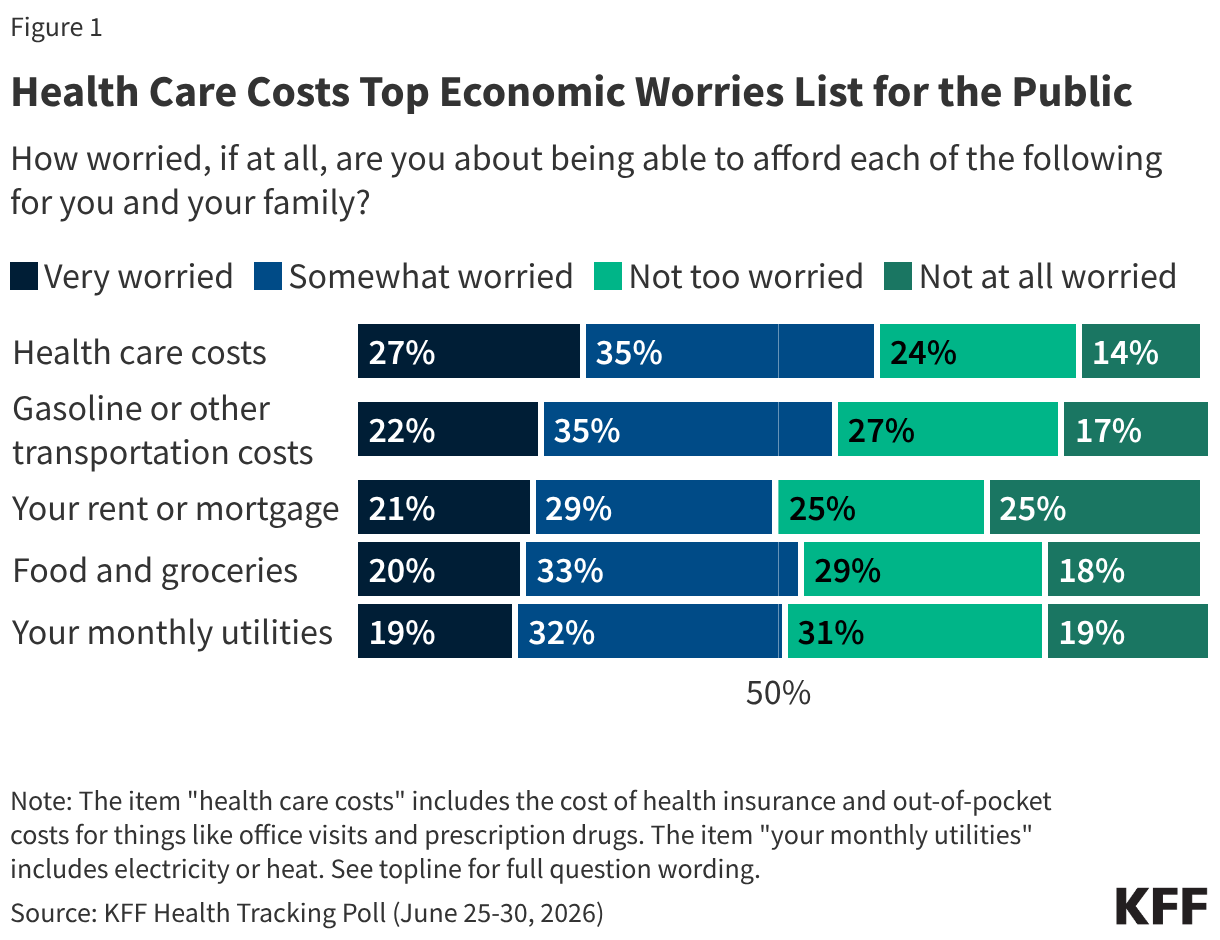
Throughout recent months, health care expenses have remained firmly at or near the very top of the public’s list of financial worries. Approximately six in ten adults report that they are either "very worried" (27%) or "somewhat worried" (35%) about affording health care costs for themselves and their families. This category of anxiety encompasses everything from monthly health insurance premiums to out-of-pocket expenses for routine doctor office visits and vital prescription medications.
To put this widespread anxiety into perspective, medical expenses consistently outpace other common household economic stressors. For instance, about one in five adults report being "very worried" about affording other essential living expenses, such as gasoline and transportation costs (22%), rent or mortgages (21%), food and groceries (20%), or monthly utility bills (19%).
The burden of this worry is particularly acute among those who lack health insurance. Just under nine in ten—or 87%—of uninsured adults under the age of 65 report feeling very or somewhat worried about affording the cost of health care. However, having insurance is far from a complete shield against financial anxiety. A striking 64% of insured adults under 65 also express worry about these costs. Ultimately, health care expenses emerge as a premier household worry regardless of an individual’s specific insurance type or political affiliation.
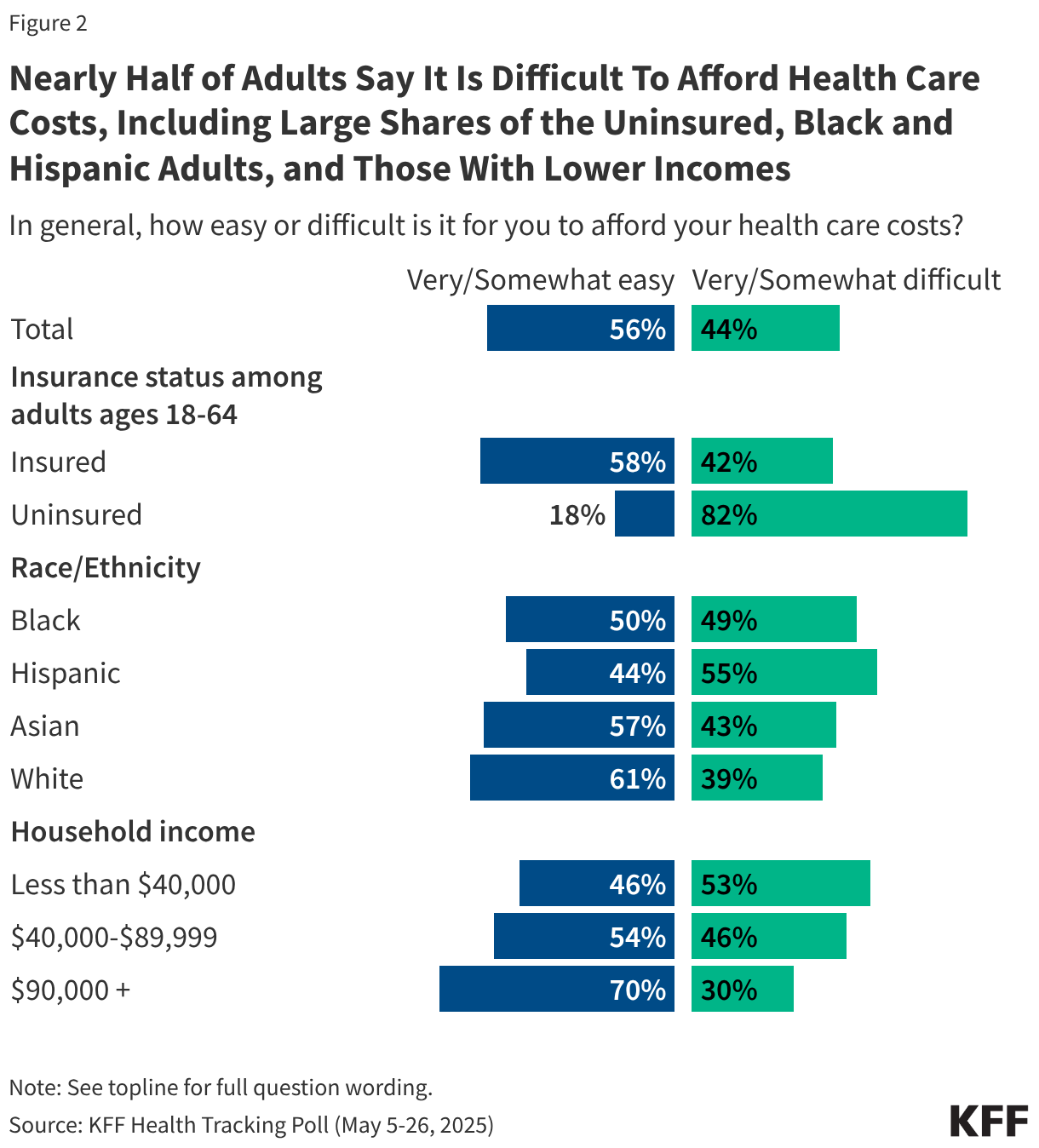
Echoing these pervasive worries, a substantial portion of U.S. adults find medical costs genuinely difficult to afford in practice. While lower-income and uninsured individuals are naturally the most likely to report facing these hurdles, insured individuals and those with higher household incomes are far from immune. Just under half of all U.S. adults—44%—state that it is very or somewhat difficult for them to afford their health care costs.
When examining specific populations, the disparities become stark. Uninsured adults under 65 are overwhelmingly more likely to report that affording health care is difficult, with 82% confirming the struggle compared to 42% of those with health insurance coverage. Racial and ethnic disparities are also evident: a slight majority of Hispanic adults (55%) and half of Black adults (49%) report difficulty affording health care costs, compared to about four in ten White adults (39%). Furthermore, adults living in households with annual incomes under $40,000 are significantly more likely than their higher-income counterparts to report ongoing struggles with medical affordability.
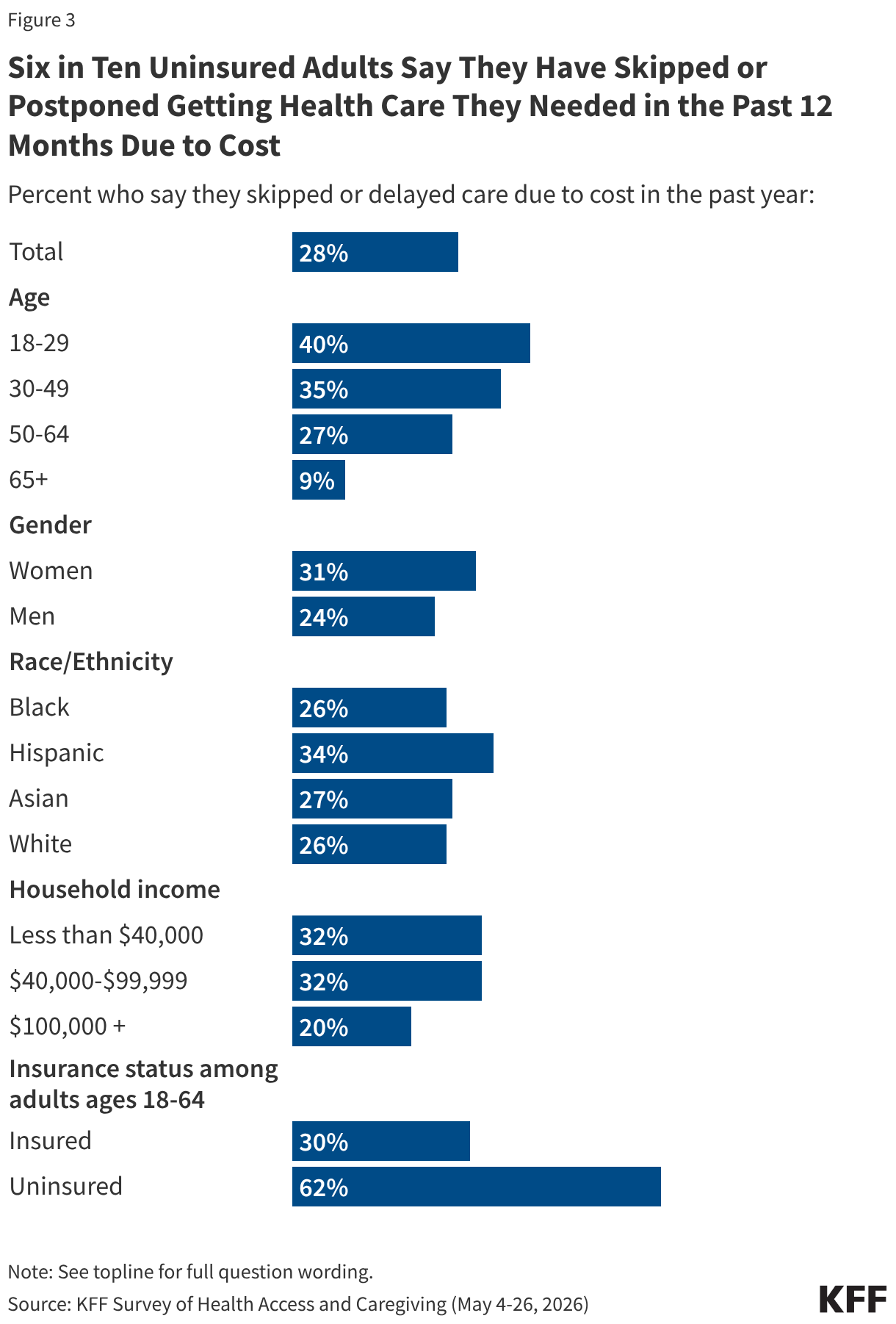
These financial barriers have a direct and damaging impact on care-seeking behaviors. Roughly three in ten adults—representing 28% of the population—say they have skipped or postponed getting needed health care in the past 12 months simply because of the cost. Women, younger adults, Hispanic adults, and those with lower household incomes are notably more likely than their peers to report delaying care.
Furthermore, roughly six in ten uninsured adults—62%—report skipping or postponing needed care due to cost. Yet, having health insurance does not offer full protection; three in ten adults aged 18 to 64 with health insurance still report forgoing necessary care because they could not afford it.
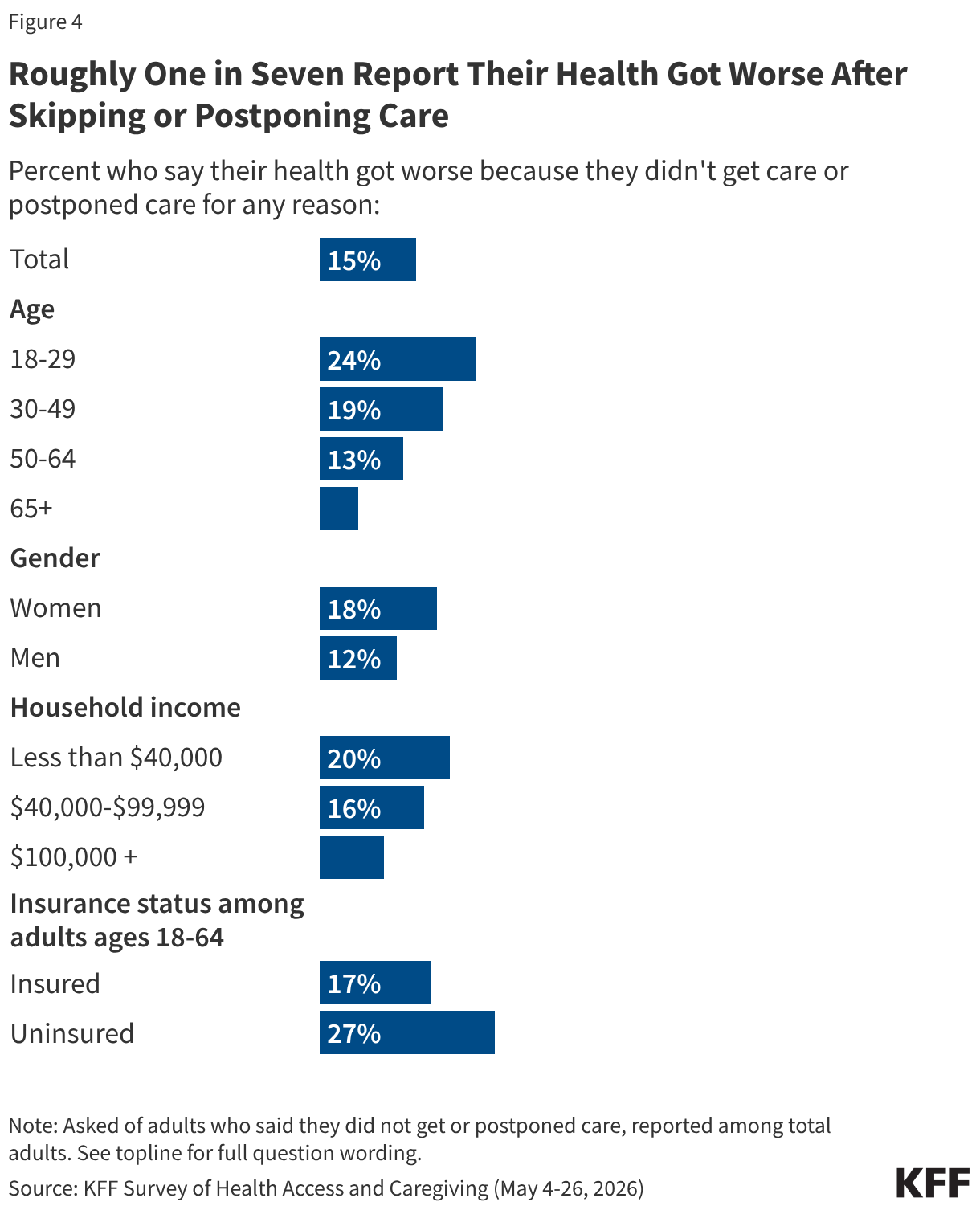
Skipping or delaying medical care for any reason can trigger serious, tangible health consequences. Roughly one in seven adults—15%—report that their overall health actually worsened because they skipped or delayed obtaining care. Among adults under age 65, the uninsured are significantly more likely than those with coverage to state that their health deteriorated as a result (27% versus 17%). Age also plays a distinct role, with four times as many adults under age 30 (24%) reporting that their health worsened after skipping care compared to adults aged 65 and older (6%), the vast majority of whom benefit from Medicare coverage.
Problems Paying Medical Bills
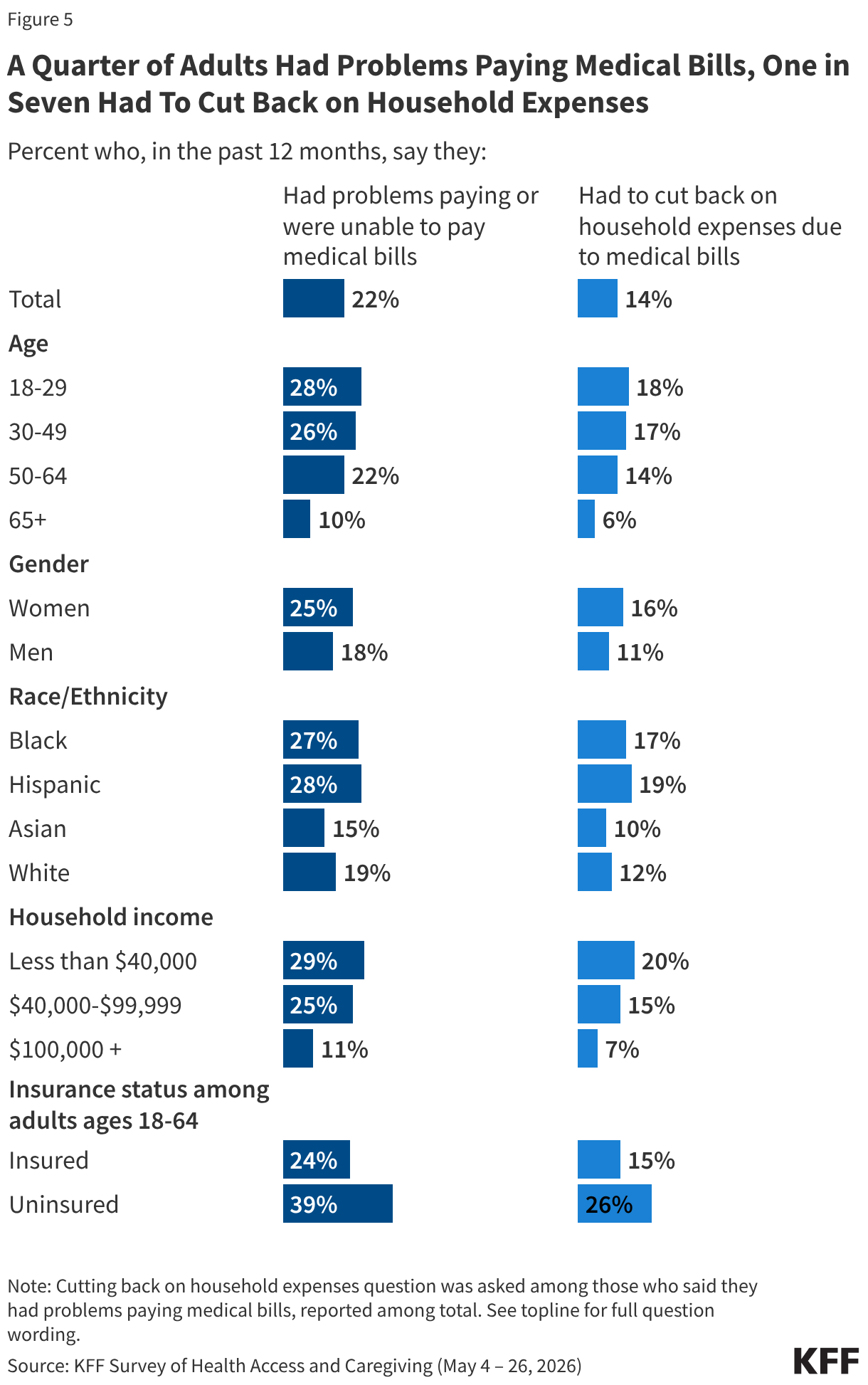
The financial strain of medical care frequently manifests as direct debt and unpaid bills. About one in five adults overall—22%—report that they had problems paying or were outright unable to pay medical bills in the past 12 months. This includes bills originating from physician visits, laboratory tests, diagnostic procedures, or prescription medications. Consistent with broader economic trends, larger shares of younger adults, women, Hispanic adults, Black adults, lower-income individuals, and uninsured adults under 65 report experiencing these billing problems than their demographic counterparts.
The fallout from unpaid medical bills extends far beyond the medical providers’ offices, triggering significant financial repercussions for households. One in seven adults—14%—report that they have been forced to cut back on fundamental household expenses, such as food, clothing, or other basic living necessities, explicitly to pay for health care costs. This drastic measure is even more prevalent among vulnerable groups, affecting 20% of adults with annual incomes under $40,000 and 26% of uninsured adults under 65.
Skipping Care and Medical Bill Problems Among LGBTQ+ Adults and Those With Serious Health Conditions
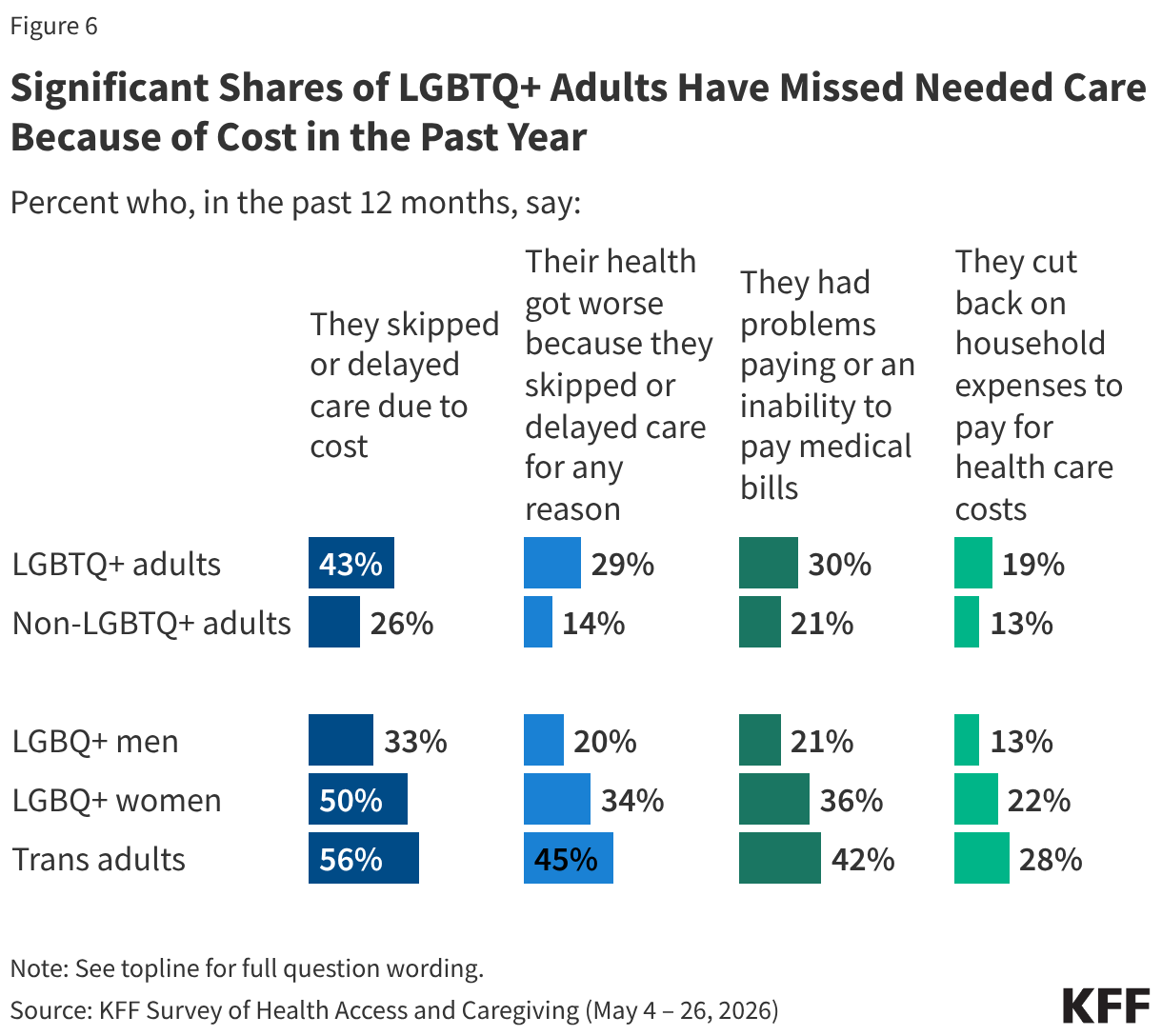
Certain demographics face compounded challenges when attempting to access and afford necessary medical services. KFF polling indicates that LGBTQ+ adults—who on average tend to be younger and report lower household incomes than their non-LGBTQ+ counterparts—experience heightened vulnerability regarding health care affordability.
More than four in ten LGBTQ+ adults report skipping or delaying medical care in the past year due to cost, compared to about a quarter of non-LGBTQ+ adults. Additionally, roughly three in ten LGBTQ+ adults report problems paying or an inability to pay medical bills over the past year, with two in ten stating they had to cut back on basic household expenses to cover their medical costs. Transgender adults face particularly severe challenges, with over half reporting that they skipped or delayed care because of the cost, and nearly half stating that their health deteriorated as a result.
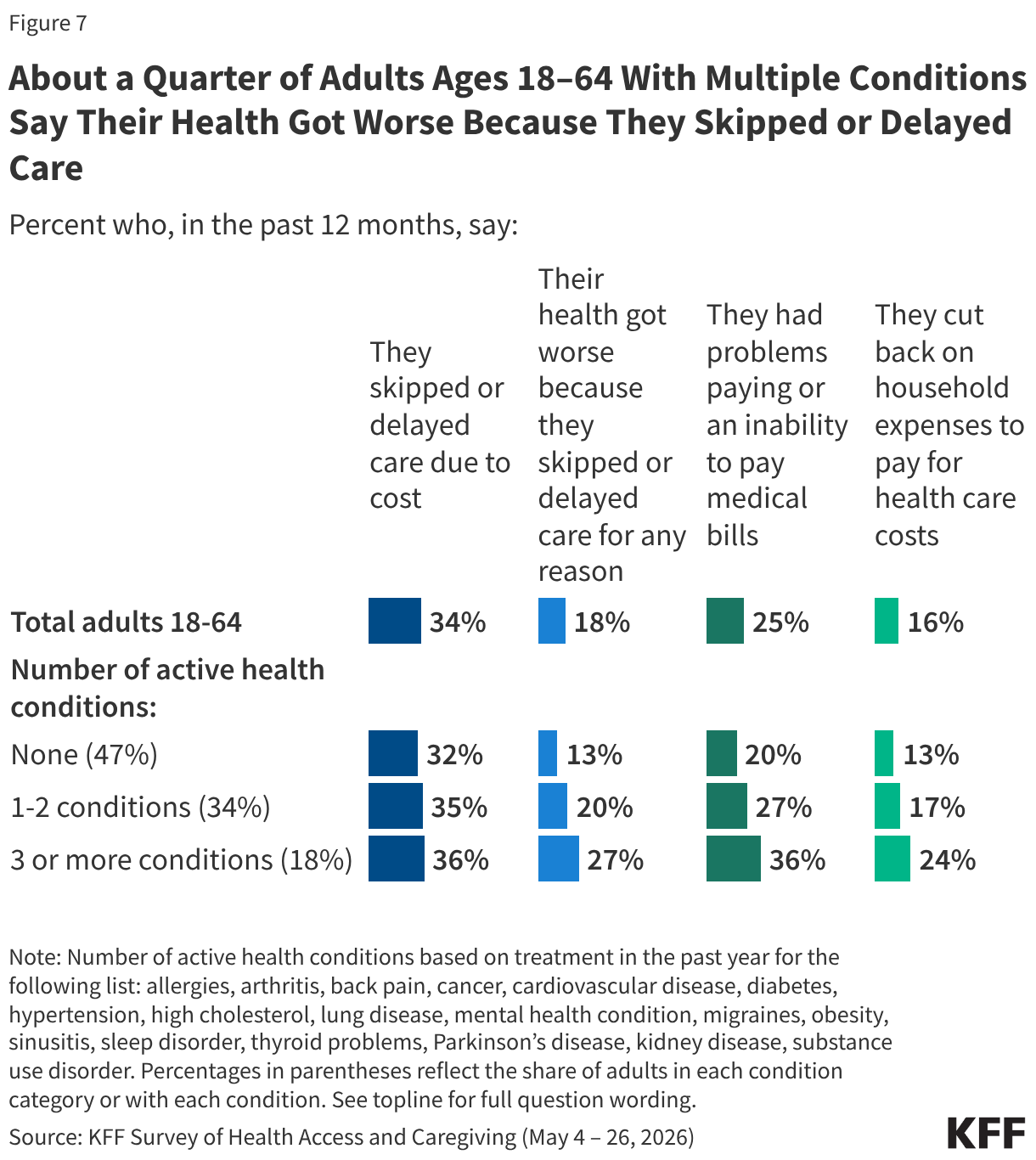
Similarly, individuals managing multiple and complex chronic health conditions face disproportionate obstacles. About one-third of adults aged 18 to 64 with three or more active health conditions report that they did not get the health care they needed in the past year due to cost. A quarter of this group state that their health worsened because they skipped or delayed care for any reason. Furthermore, more than a third of adults aged 18 to 64 with three or more conditions report problems paying medical bills over the past year, while about one in four have had to cut back on basic household necessities to afford their medical care.
Prescription Drug Costs
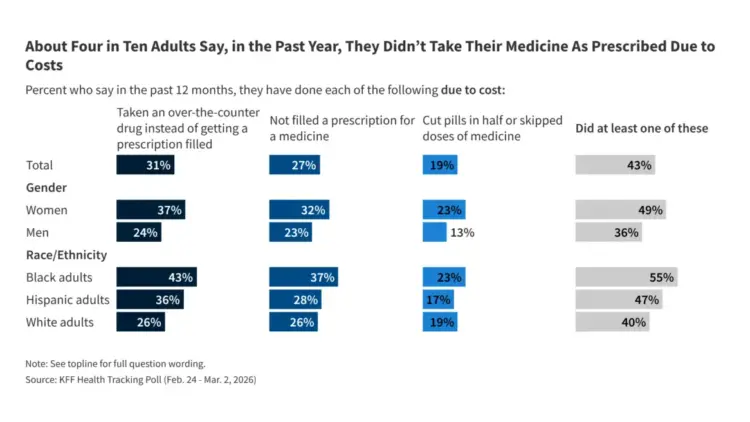
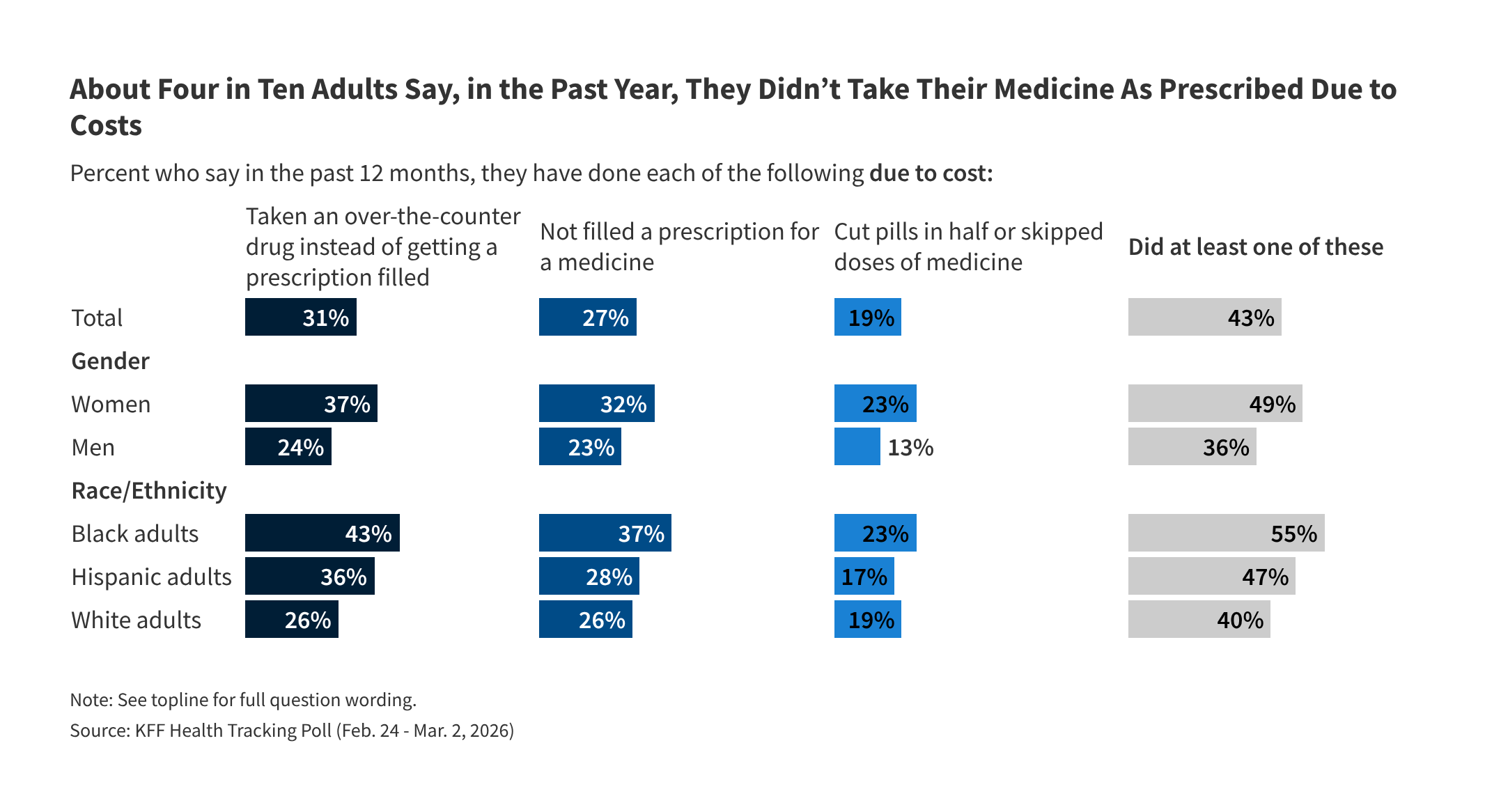
The escalating cost of prescription medications represents another major driver of the health care affordability crisis, frequently forcing patients to ration or alter how they take their prescribed treatments. About three in ten adults—31%—report that in the past 12 months, they have taken an over-the-counter drug instead of filling a prescription because of cost concerns. Additionally, about a quarter have chosen not to fill a prescription entirely, and roughly one in five have cut pills in half or skipped doses of their medicine to save money.
Overall, four in ten adults report taking at least one of these cost-saving measures with their prescription medications in the past year. This figure continues a steady upward trend observed in previous years, rising from a third of adults in prior tracking periods.
These cost-saving measures are heavily concentrated among lower- and middle-income households. About half of adults in households with annual incomes under $40,000, or between $40,000 and $90,000, report that they have not taken their medication as prescribed due to cost in the last year. This contrasts sharply with about three in ten adults living in households with incomes of $90,000 or more.
Uninsured adults under 65 are also more likely to report non-adherence due to cost compared to insured adults under 65. Furthermore, demographic divides persist in medication management, with women and Black and Hispanic adults reporting higher rates of altering their medication usage for financial reasons compared to their respective counterparts.
Health Insurance Cost Ratings
While health insurance provides a foundational layer of financial protection, monthly premiums and out-of-pocket costs frequently present a heavy burden for policyholders. Overall, a majority of insured adults rate their health insurance as "excellent" or "good" regarding out-of-pocket prescription expenses, doctor visit copays, and monthly premiums. However, at least three in ten policyholders rate their insurance as "fair" or "poor" across each of these financial metrics.
Significantly, affordability ratings vary widely depending on the specific type of coverage an individual holds. Adults who rely on private insurance—either through employer-sponsored plans or Affordable Care Act Marketplace coverage—are notably more likely to give their insurance negative ratings regarding monthly premiums, doctor visit out-of-pocket costs, and prescription co-pays compared to those enrolled in Medicare or Medicaid.
Approximately one in four adults with Medicare give negative ratings to their monthly insurance costs and out-of-pocket prescription expenses, while about one in five give negative ratings to doctor visit costs. Meanwhile, Medicaid enrollees are generally less likely to give negative ratings on these affordability measures, reflecting program structures where monthly premiums are absent in most states and cost-sharing is kept minimal.
Health Care Debt and Long-Term Costs
Broad investigations into medical debt underscore how deeply ingrained financial liabilities are within the U.S. health care system. Extensive polling and investigative findings reveal that health care debt is a widespread issue, with 41% of U.S. adults currently carrying some form of debt due to medical or dental bills incurred for themselves or someone in their care.
This includes about a quarter of adults who have past-due bills or bills they are entirely unable to pay, and one in five who are actively paying off debt over time directly to a medical provider. Furthermore, significant shares of the population report owing money to banks, collection agencies, or credit card companies for loans taken out specifically to cover medical expenses, while others have borrowed money from family members or friends.
The vulnerability to medical debt is pervasive, leaving millions of Americans perpetually exposed to financial instability. Approximately half of U.S. adults state that they would be unable to comfortably pay an unexpected medical bill totaling $500 out of pocket. This vulnerability includes nearly one in five who could not pay such a bill at all, and another substantial group that would be forced to incur credit card debt, take out formal loans, or borrow from relatives. Lower-income individuals, women, and Black and Hispanic adults are disproportionately represented among those who would struggle to absorb an unexpected medical expense.
For older Americans and those approaching retirement age, long-term care and support services introduce an additional layer of financial anxiety. Nearly six in ten adults aged 65 and older report feeling at least somewhat anxious about affording the cost of a nursing home or assisted living facility if the need arose, while half express anxiety over paying for in-home support services such as paid nurses or aides. These concerns are even more pronounced among adults aged 50 to 64, with more than seven in ten expressing worry about their ability to afford residential care and professional support services in the future.



