
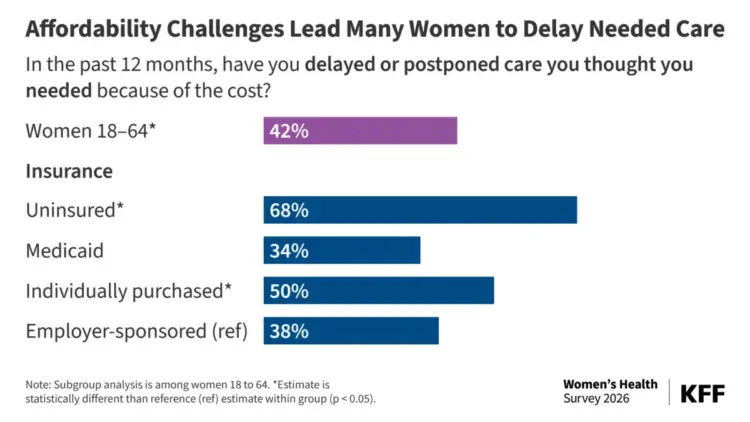
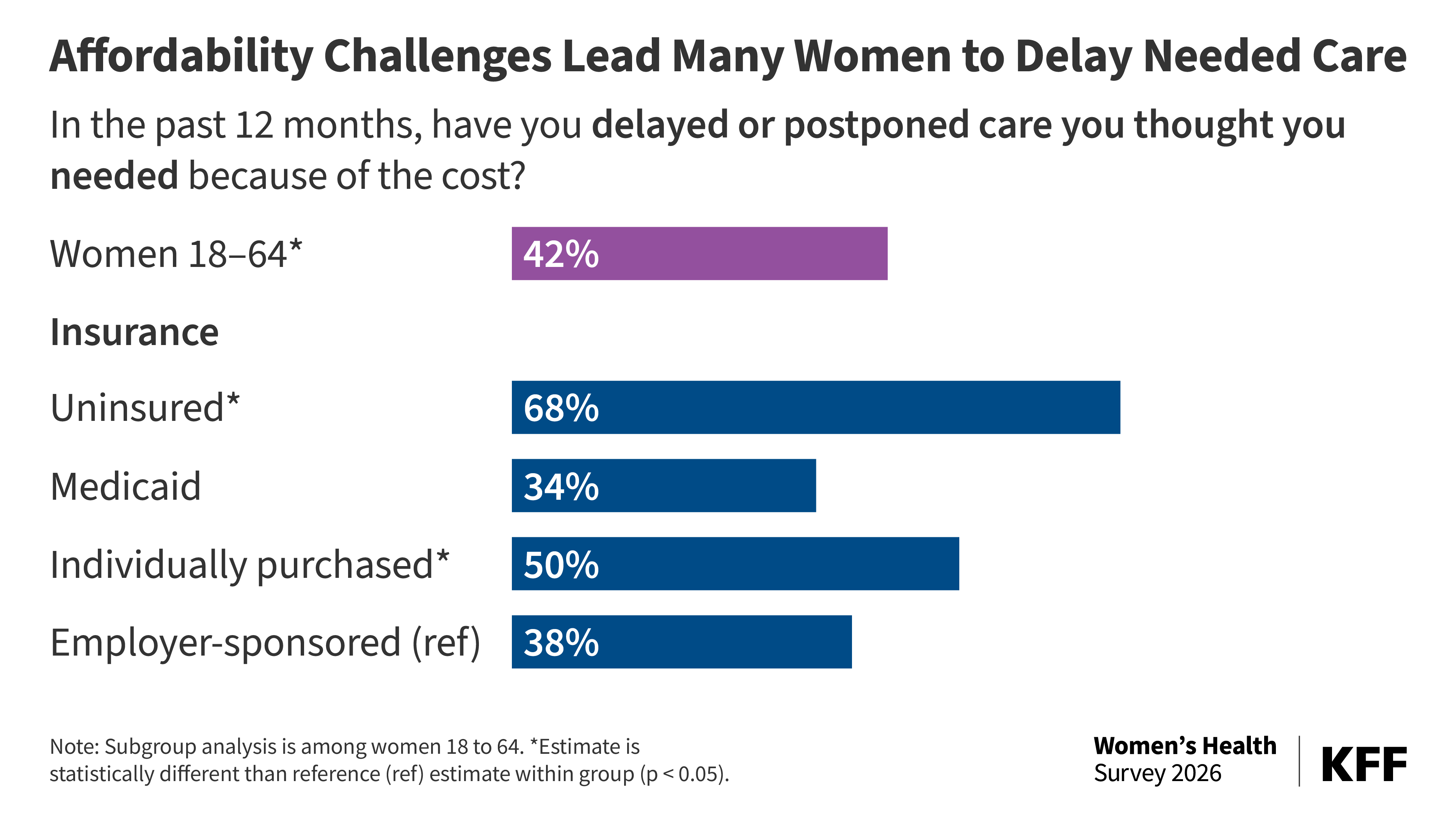
Affordability has firmly established itself at the center of national conversations, touching every corner of household budgets from soaring grocery and gas prices to relentless increases in health insurance premiums and medical care costs. While economic pressures are felt broadly across the American populace, new data demonstrates that the burden of healthcare costs falls disproportionately on women. According to the recently released 2026 KFF Women’s Health Survey, a striking four in ten women report delaying or postponing medical care they believe they need simply because they cannot afford it.
The nationally representative survey, which was fielded between March 11 and April 14, 2026, captures the experiences of 4,688 women and 1,148 men aged 18 to 64. Historically, national health tracking polls have consistently shown that Americans struggle to afford medical services, with women bearing a heavier burden due to systemic economic factors. On average, women earn lower wages, hold fewer financial assets, accumulate less wealth, and experience higher rates of poverty than men. Compounding these financial disparities, women also utilize the healthcare system at higher rates than men, creating a persistent vulnerability when out-of-pocket costs rise.
Key Findings
The comprehensive survey data highlights a sobering reality about access to healthcare in the United States, illustrating that cost barriers are no longer confined to the uninsured. Across nearly every metric of medical utilization—ranging from routine doctor visits and recommended diagnostic tests to vital prescription medications—millions of Americans are forced to compromise their health due to financial strain.
Affordability Challenges
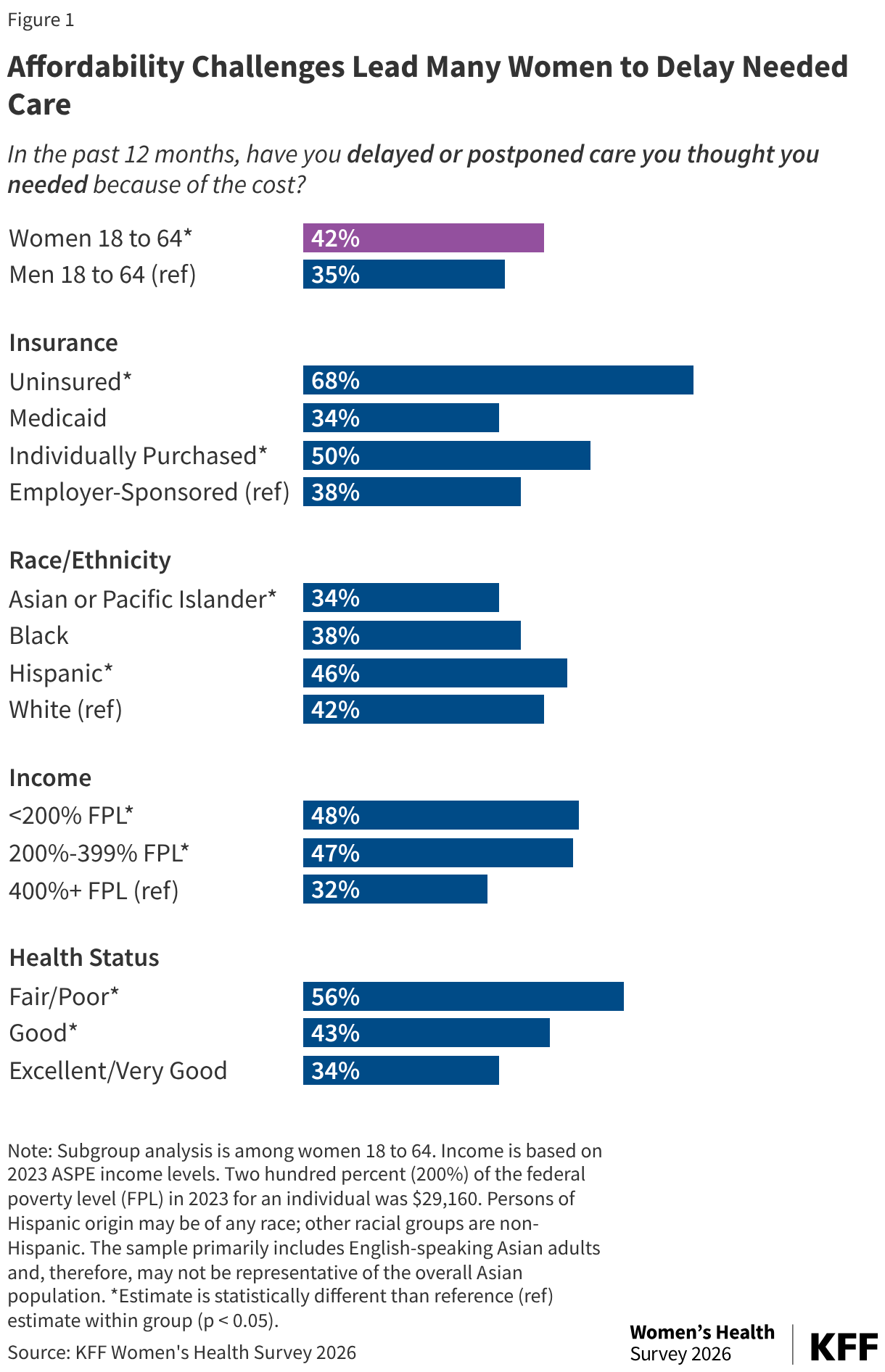
When examining the data closely, the scope of deferred care becomes starkly apparent. Four in ten women, equating to 42%, report that they delayed or postponed needed medical care in the past 12 months because of cost. By comparison, 35% of men in the same age demographic report similar delays. Beyond simply putting off doctor visits, the financial squeeze forces deeper compromises in medical compliance: one in three women report skipping recommended tests or treatments, over a quarter report failing to fill a prescription for a necessary medicine, and 17% report cutting their pills in half or skipping recommended doses altogether to stretch their supplies. When combining these various cost-related delays and gaps, half of all women and 42% of men report experiencing at least one of these barriers over the past year.
Perhaps most concerning to health policy experts is that these cost barriers are not limited to individuals without insurance. While nearly seven in 10 uninsured women report delaying or postponing care due to cost, insured individuals are also heavily impacted. Even after controlling for variables such as income, age, and health status in regression models, the fundamental association between being uninsured and delaying care remains powerful. However, half of all women aged 18 to 64 who rely on individually purchased health plans—which frequently feature higher deductibles, steeper premiums, and narrower provider networks—report that cost prevented them from seeking care. Furthermore, 38% of women with employer-sponsored health insurance report similar delays.
Even public programs designed to protect low-income populations are not immune to these pressures. Medicaid, the joint federal and state program intended to provide comprehensive health coverage with minimal out-of-pocket expenses, still sees one-third of enrolled women reporting that they had to delay or postpone care due to costs. While official Medicaid copayments are typically modest, they can still present a tangible financial barrier for individuals living with very tight budgets. Additionally, low-income enrollees may face steep challenges paying for uncovered services or managing medical needs during brief lapses in coverage. Across all demographics, cost-related delays in care are notably more prevalent among women with lower incomes, Hispanic women, and those who self-report their health as fair, poor, or only good.
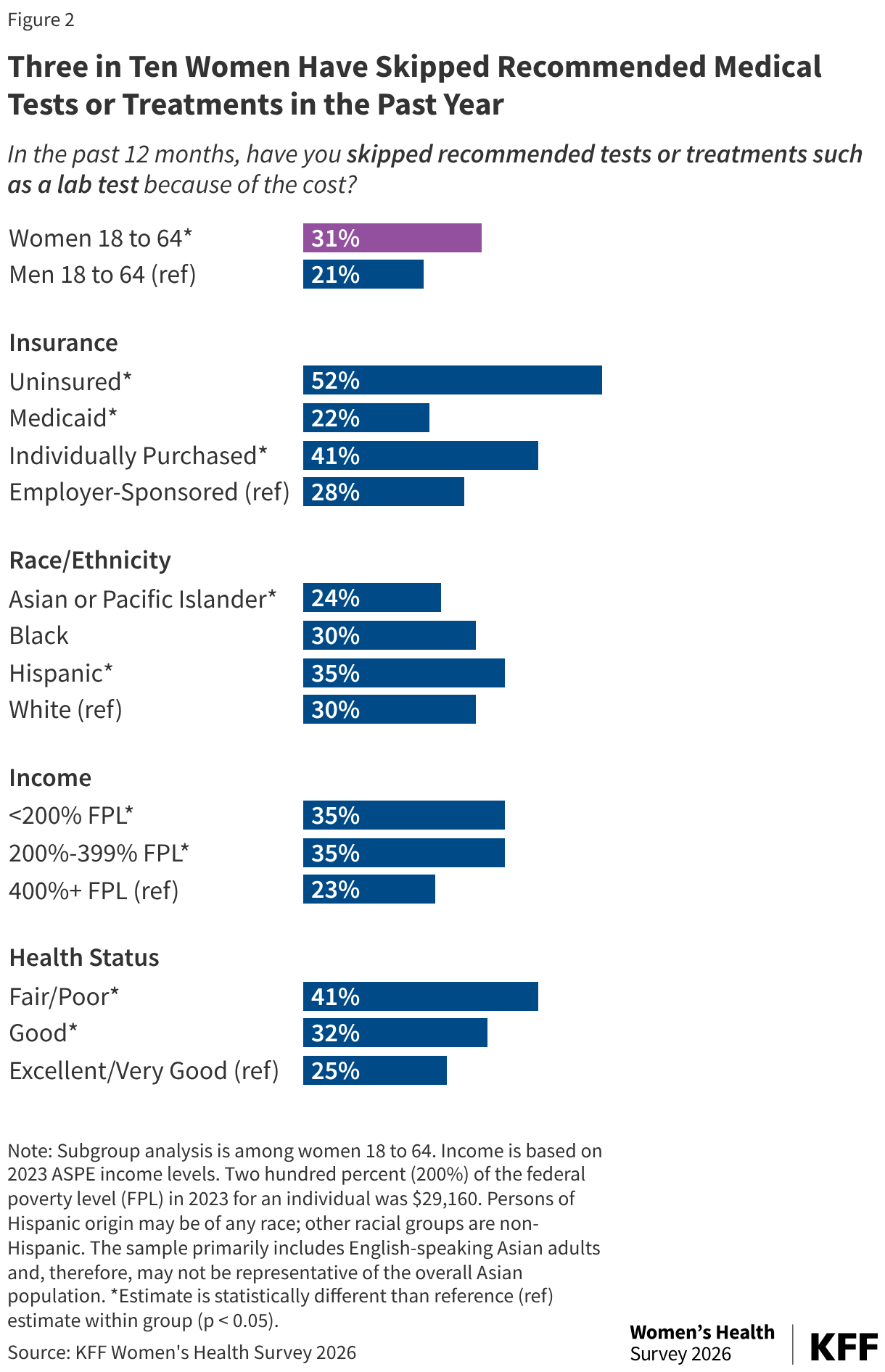
High medical costs also force women to bypass specific diagnostic tests and treatments recommended by their physicians. Half of all uninsured women report skipping these vital services due to cost, alongside 41% of women with individually purchased health plans, 28% of those with employer-sponsored coverage, and 22% of women enrolled in Medicaid. Vulnerable populations feel this impact most acutely; women who rate their health as fair or poor, Hispanic women, and those with low or modest household incomes are significantly more likely to forgo recommended medical interventions than their healthier, wealthier, or White counterparts.
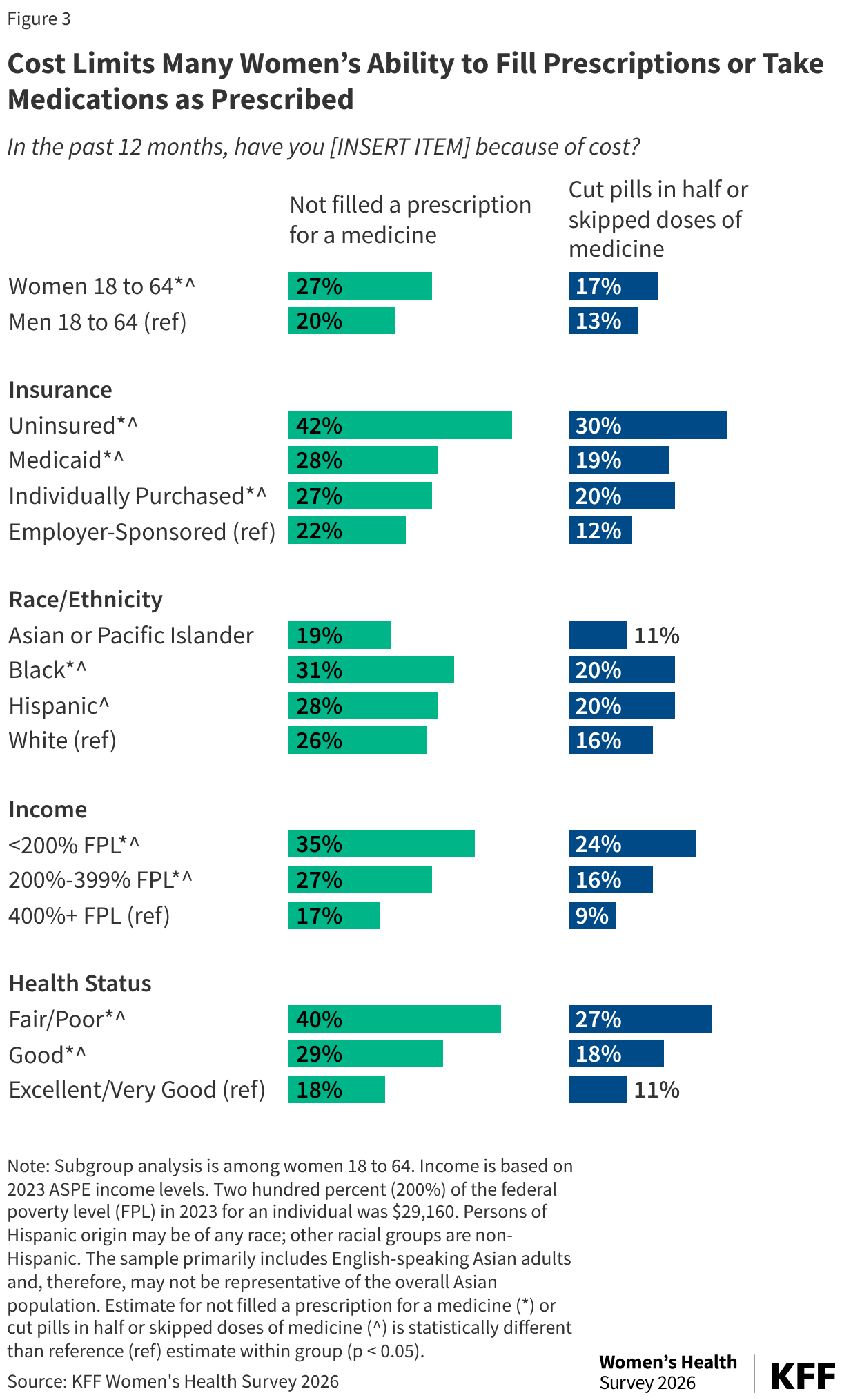
Prescription drug affordability remains another major hurdle. While 62% of women aged 18 to 64 report taking at least one prescription medication on a regular basis, a quarter of all women in this age group admit they failed to fill a prescription within the past year due to cost. Nearly a fifth report cutting their pills in half or skipping doses. Among the subset of women who actively report taking a regular prescription medication, the situation is even more pronounced: nearly a third say they have left a prescription unfilled, and one in five report rationing their medication because of financial constraints. Uninsured women, those with lower incomes, and individuals in fair or poor health report the highest rates of unfulfilled prescriptions and rationed medications, though substantial shares of insured women also struggle to afford their drug regimens.
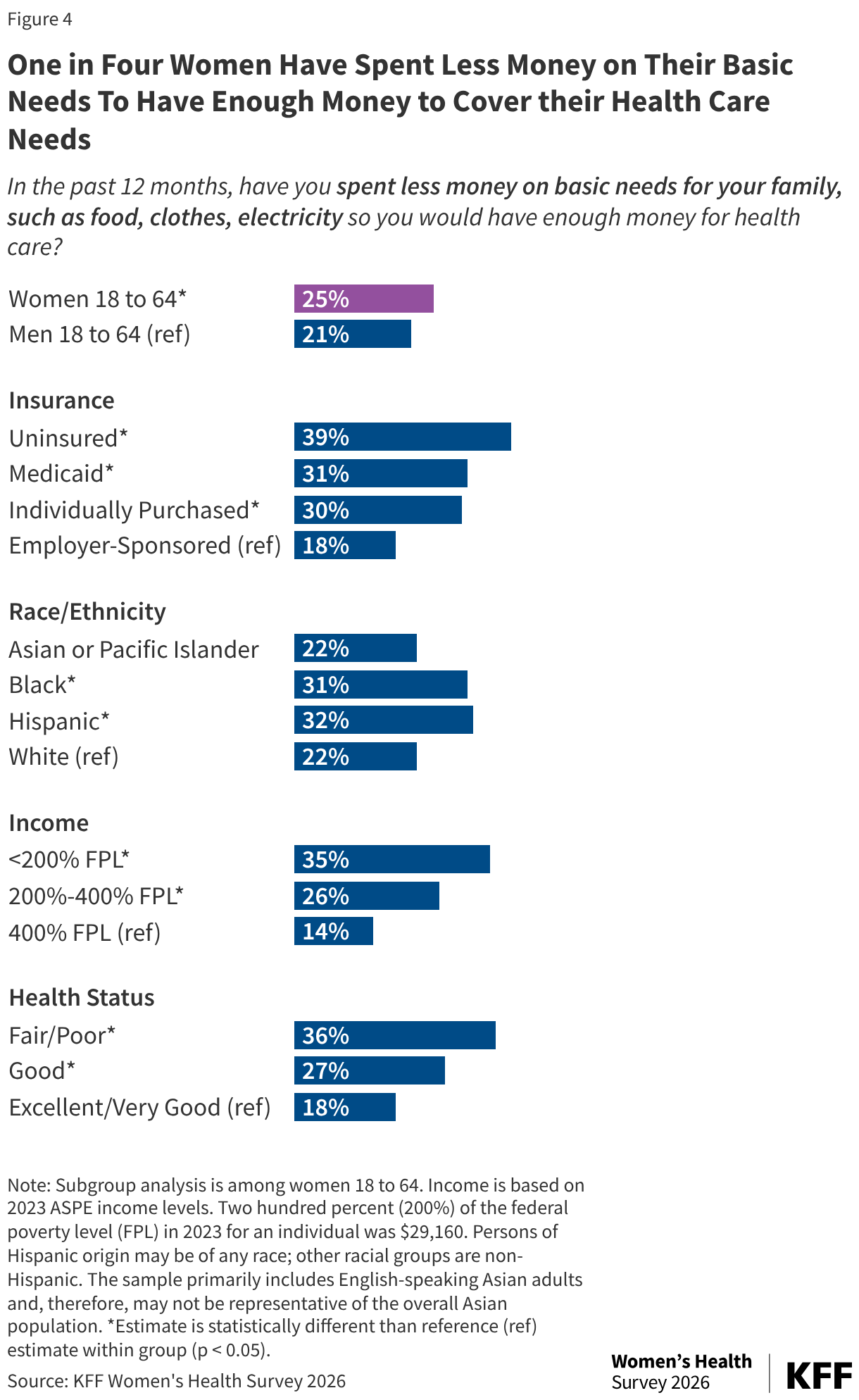
The compounding weight of these healthcare expenses frequently forces women to make difficult trade-offs regarding other fundamental life necessities. One in four women report that over the past year, they have deliberately spent less money on basic human needs—such as food, utilities like electricity, and clothing—solely to ensure they had enough money to cover medical expenses. This drastic measure is reported by nearly four in ten uninsured women, roughly three in ten women covered by Medicaid or individual marketplace plans, and one in five women with employer-sponsored insurance. These sacrifices are disproportionately concentrated among lower-income households, Black and Hispanic women, and those managing poorer health statuses.
Underpinning many of these affordability crises are gaps in continuous health insurance coverage. While the vast majority of women aged 18 to 64 are insured, nearly one in five report that they are either currently uninsured or experienced a period without coverage at some point over the past 12 months. Seven percent of women note they are currently insured but suffered a coverage gap during the year, often precipitated by job loss, changes in employment, shifting premium costs, or disruptions in dependent coverage stemming from a spouse’s job loss, divorce, or widowhood. Younger women, those with lower incomes, and individuals with fair or poor health face the highest rates of these coverage interruptions.
Furthermore, women covered by Medicaid or individually purchased private plans are significantly more likely to report a coverage gap over the past year compared to those with stable employer-sponsored plans. As federal policy changes affecting Medicaid eligibility and the expiration of enhanced Affordable Care Act marketplace tax credits loom on the horizon, health policy experts anticipate that uninsured rates will climb, subjecting even more women to recurring periods without coverage and deepening the national affordability crisis in healthcare.



