
Since the inauguration of the second Trump administration, the President’s Emergency Plan for AIDS Relief (PEPFAR)—the landmark U.S. global HIV/AIDS initiative widely credited with saving an estimated 26 million lives—has experienced substantial disruptions and structural changes. These shifts form part of a wider foreign aid review that has fundamentally altered how American global health assistance is administered abroad. Recent policy adjustments include temporary stop-work orders, strict limitations on continuation services, the cancellation of numerous PEPFAR grants and awards, and a sweeping reorganization of U.S. global health programs. Central to this reorganization is the newly introduced “America First Global Health Strategy,” which prioritizes bilateral agreements with partner nations, focuses heavily on frontline commodities and basic services, and transitions away from disease-specific programming toward a more integrated healthcare delivery model.
While field surveys and mathematical modeling have offered early glimpses into the potential ramifications of these disruptions, comprehensive empirical data to assess the true scope of these changes has been remarkably scarce. Historically, PEPFAR’s flagship data platform has served as a transparent public repository for financial and programmatic outcomes, housing metrics derived from the Monitoring, Evaluation, and Reporting (MER) system that has operated for over a decade. However, this critical data platform was abruptly taken offline in early 2025. When it was eventually restored, it noticeably omitted all programmatic data originating from fiscal year 2025, leaving public health experts, policymakers, and researchers in the dark regarding the program’s operational trajectory.
The U.S. Department of State broke this prolonged data silence by releasing the MER program-level data for the fourth quarter of fiscal year 2025, covering the period from July 1 through September 30, 2025. This release marks the very first tranche of program-level data made publicly available since the sweeping policy alterations enacted last year. Data covering the first three quarters of fiscal year 2025 were never published, a discrepancy that the State Department attributed directly to reporting disruptions and implementation challenges stemming from the operational transitions.
To evaluate PEPFAR’s performance under this new administrative framework given these data limitations, analysts at KFF and Boston University adopted a specific comparative methodology. They contrasted the newly released fiscal year 2025 fourth-quarter results against the fourth-quarter outcomes of the preceding four fiscal years across a targeted subset of MER indicators. Examining identical calendar quarters across different fiscal years helps mitigate seasonal anomalies and reporting fluctuations that might otherwise skew the analysis. Nevertheless, analysts emphasize that this methodology provides only a narrow snapshot, precluding a comprehensive assessment of cumulative disruptions that may have occurred throughout the entirety of fiscal year 2025.
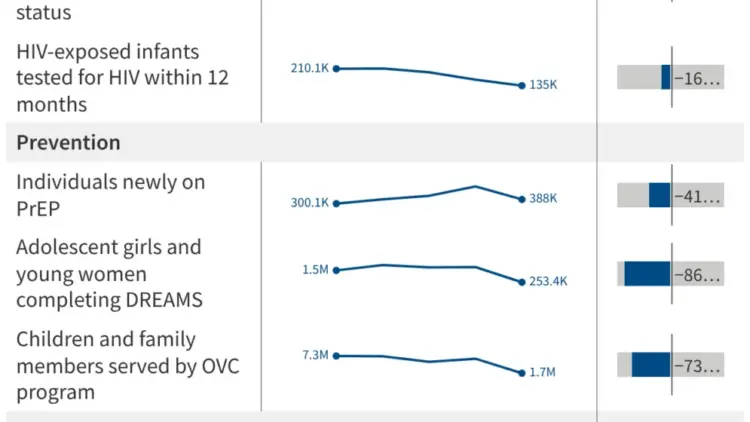
Despite these inherent analytical limitations and the partial nature of the data, the figures offer crucial visibility into how PEPFAR is functioning following the Trump administration’s policy interventions. Overall, the findings indicate a mixed landscape of institutional resilience and localized decline. For several critical metrics, progress visibly eroded during the final quarter of fiscal year 2025. Most notably, support for vital prevention services saw sharp contractions. This included the pre-exposure prophylaxis (PrEP) initiative and the DREAMS program, which focuses on reducing HIV vulnerability among adolescent girls and young women. Both initiatives experienced significant scaling back under the new administration. Public health experts warn that diminished access to these frontline prevention tools could lay the groundwork for a resurgence in new HIV infections down the line.
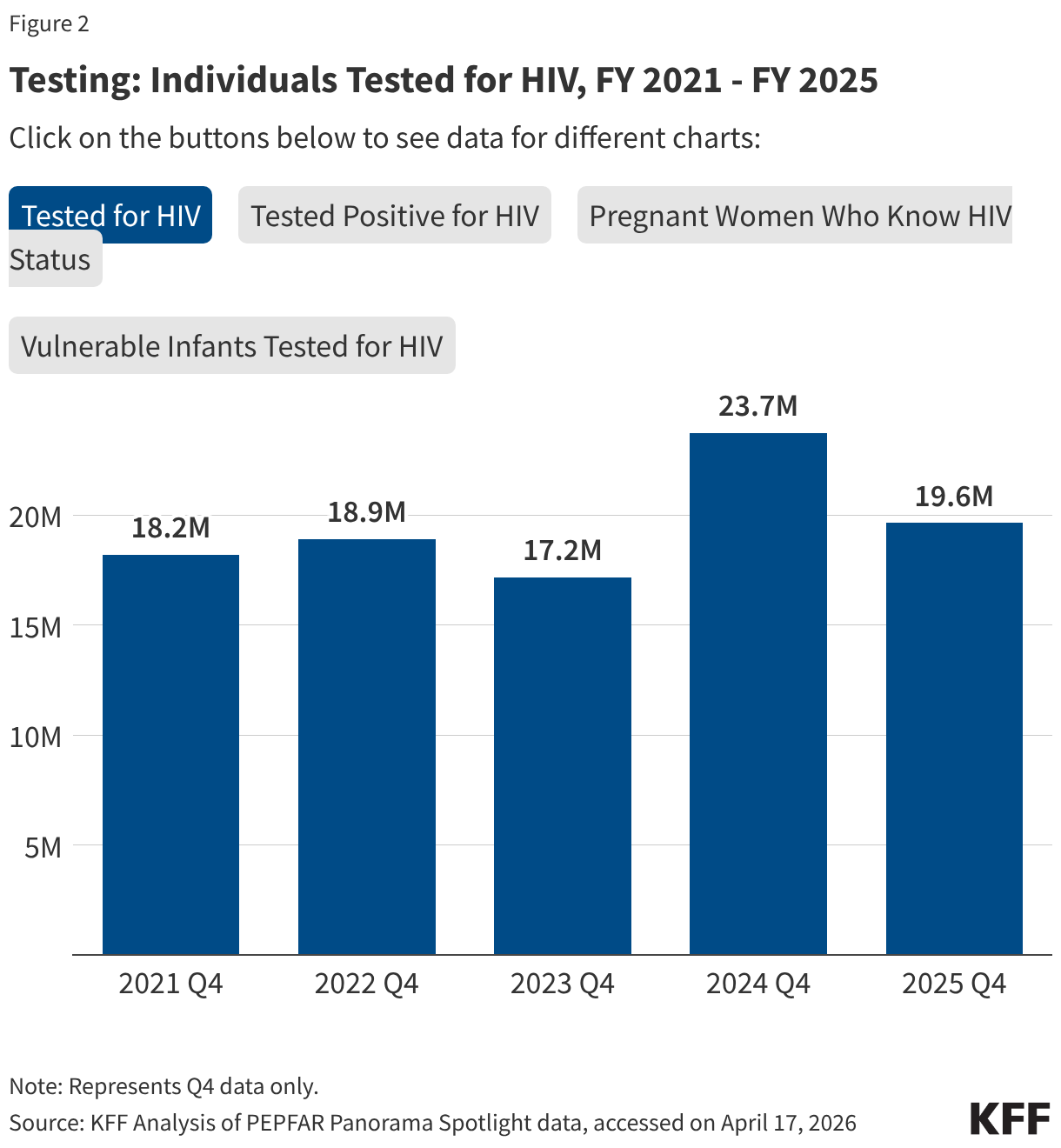
Additionally, the data revealed a noticeable drop in the number of individuals newly enrolled on antiretroviral therapy (ART), serving as a crucial indicator of treatment access and healthcare system reach. Simultaneously, ambiguities emerged in other diagnostic metrics. Both the aggregate number of individuals tested for HIV and the total number of individuals testing positive for the virus registered declines. Analysts note that these drops can be interpreted in conflicting ways: they could signify an actual epidemiological decline in new infections, or they could simply reflect a constriction in testing access and outreach capacity.
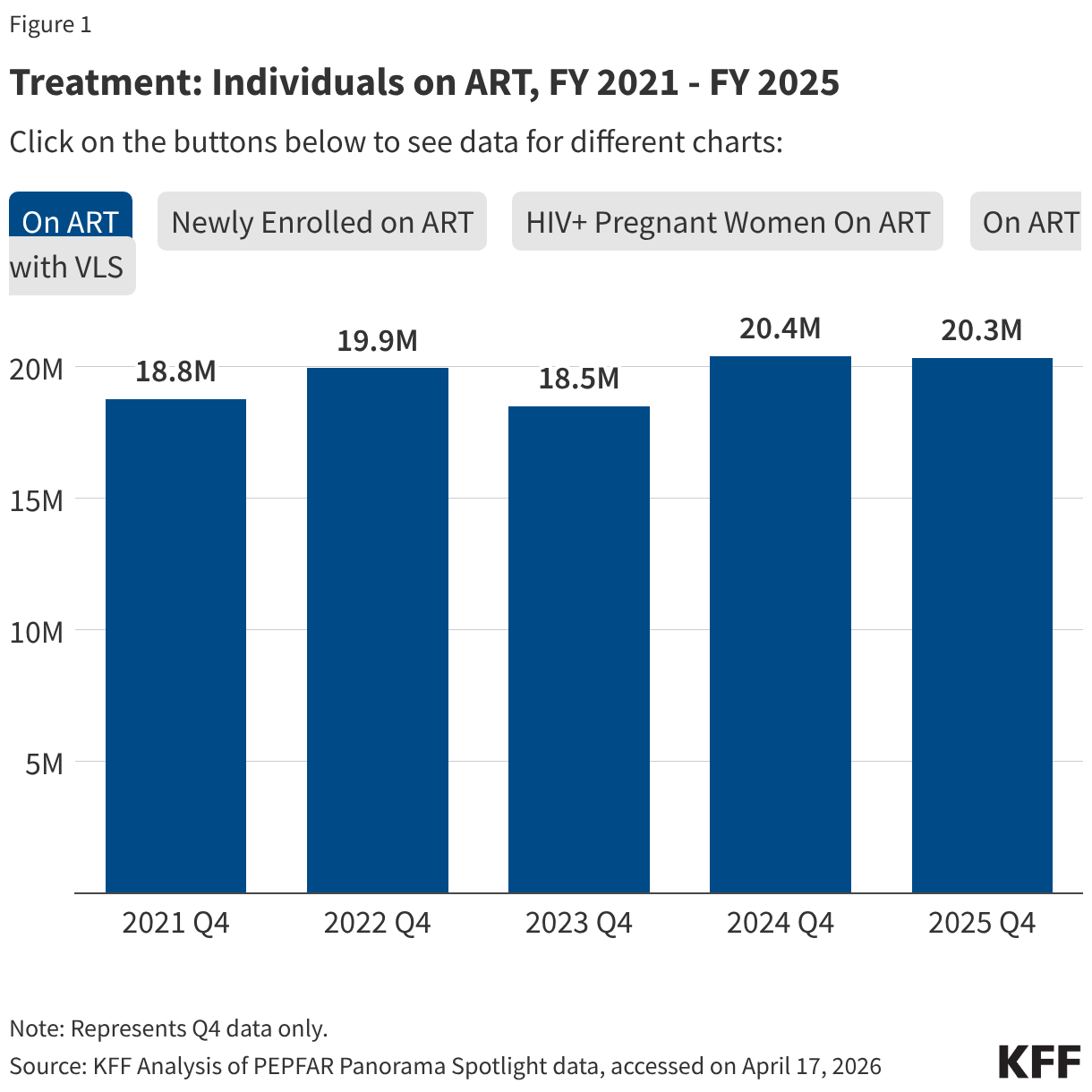
Conversely, the data also highlighted several areas where programmatic progress was successfully maintained or even improved. Most notably, the total number of people living with HIV who remained on antiretroviral therapy held steady, demonstrating enduring resilience within the core treatment infrastructure. Furthermore, institutions recorded an increase in the number of individuals co-infected with HIV and tuberculosis who successfully received ART, signaling sustained coordination in treating overlapping epidemics.
Looking forward, the long-term outlook for transparent data monitoring and reporting under PEPFAR remains highly uncertain. It remains unclear whether quarterly data updates will continue to be published indefinitely, particularly given the fundamental pivot in U.S. global health strategy toward empowering country governments and dismantling vertical, disease-specific programs in favor of horizontal integration. Public health advocates caution that without consistent and reliable data streams, evaluating the long-term outcomes and systemic implications of these major policy shifts will remain exceptionally difficult.
Findings
PEPFAR’s fourth-quarter treatment results over the five-year evaluation period proved decidedly mixed. While baseline treatment metrics—particularly the overall volume of individuals sustained on antiretroviral therapy—remained relatively stable, other vital treatment indicators encountered notable downturns. Most prominently, the number of patients newly enrolled on ART dropped compared to prior fiscal years, underscoring potential bottlenecks in bringing newly diagnosed individuals into continuous care. Other core treatment metrics, including the proportion of HIV-positive pregnant women established on ART and the volume of patients achieving viral load suppression, exhibited distinct trends when evaluated across the comparative multi-year timeline.
HIV testing and diagnostic outputs similarly presented a fractured picture during the final quarter of fiscal year 2025 when measured against the same period in fiscal year 2024, continuing a pattern of fluctuating performance observed across the broader five-year window. While general testing volumes experienced variations, specific sub-indicators—such as the percentage of pregnant women attending antenatal care who remained aware of their HIV status and the volume of vulnerable, HIV-exposed infants tested for the virus within their first twelve months of life—revealed localized variations in service delivery across partner countries.
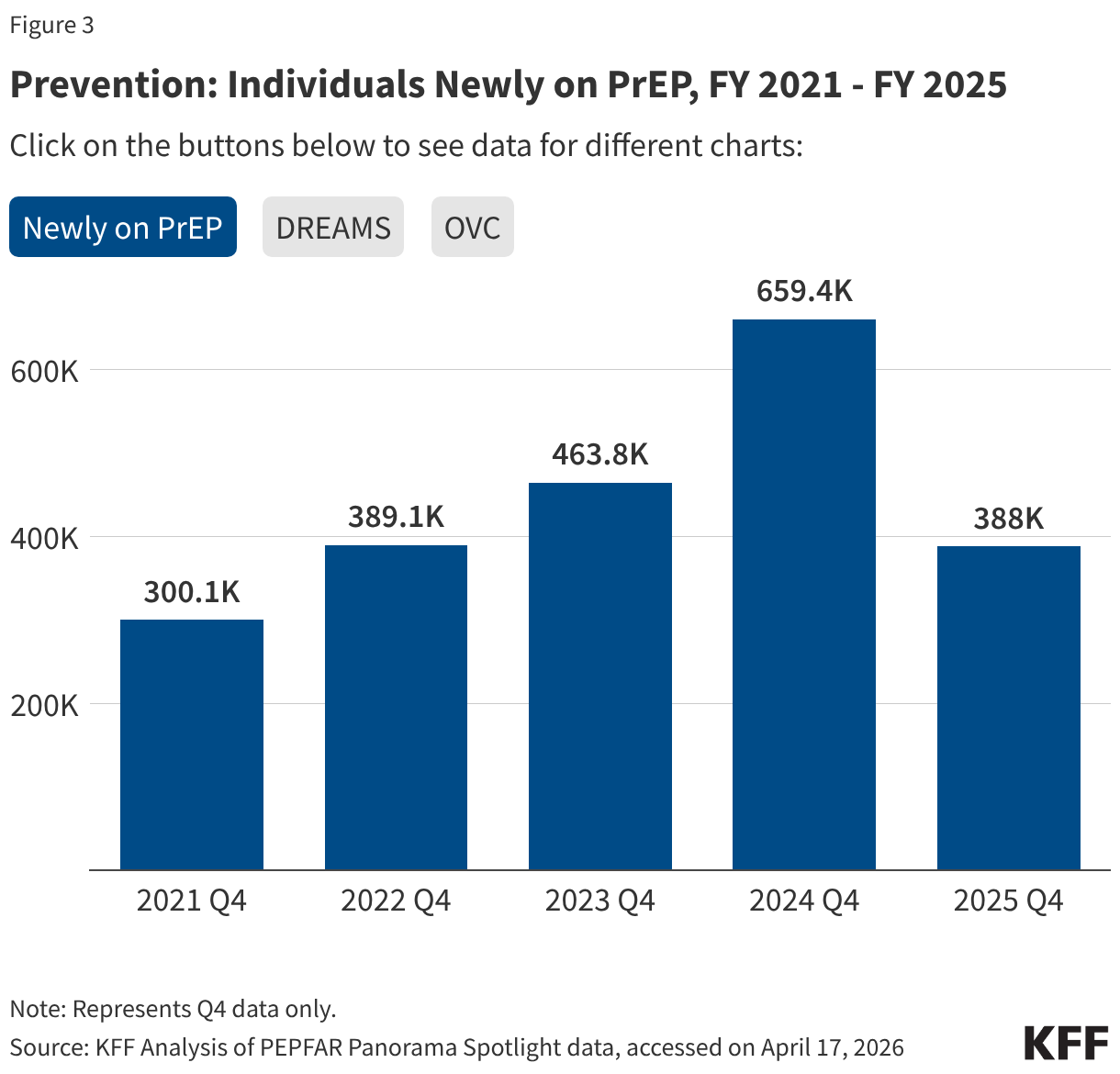
Beyond general testing and treatment, key prevention pillars within the PEPFAR architecture sustained substantial reductions. Support for individuals newly initiating pre-exposure prophylaxis fell sharply, mirroring the broader administrative downsizing of targeted prevention portfolios. Similar downward trends were observed across the DREAMS initiative, which tracks adolescent girls and young women completing specialized resilience and prevention packages, as well as programs serving orphans and vulnerable children and their families.
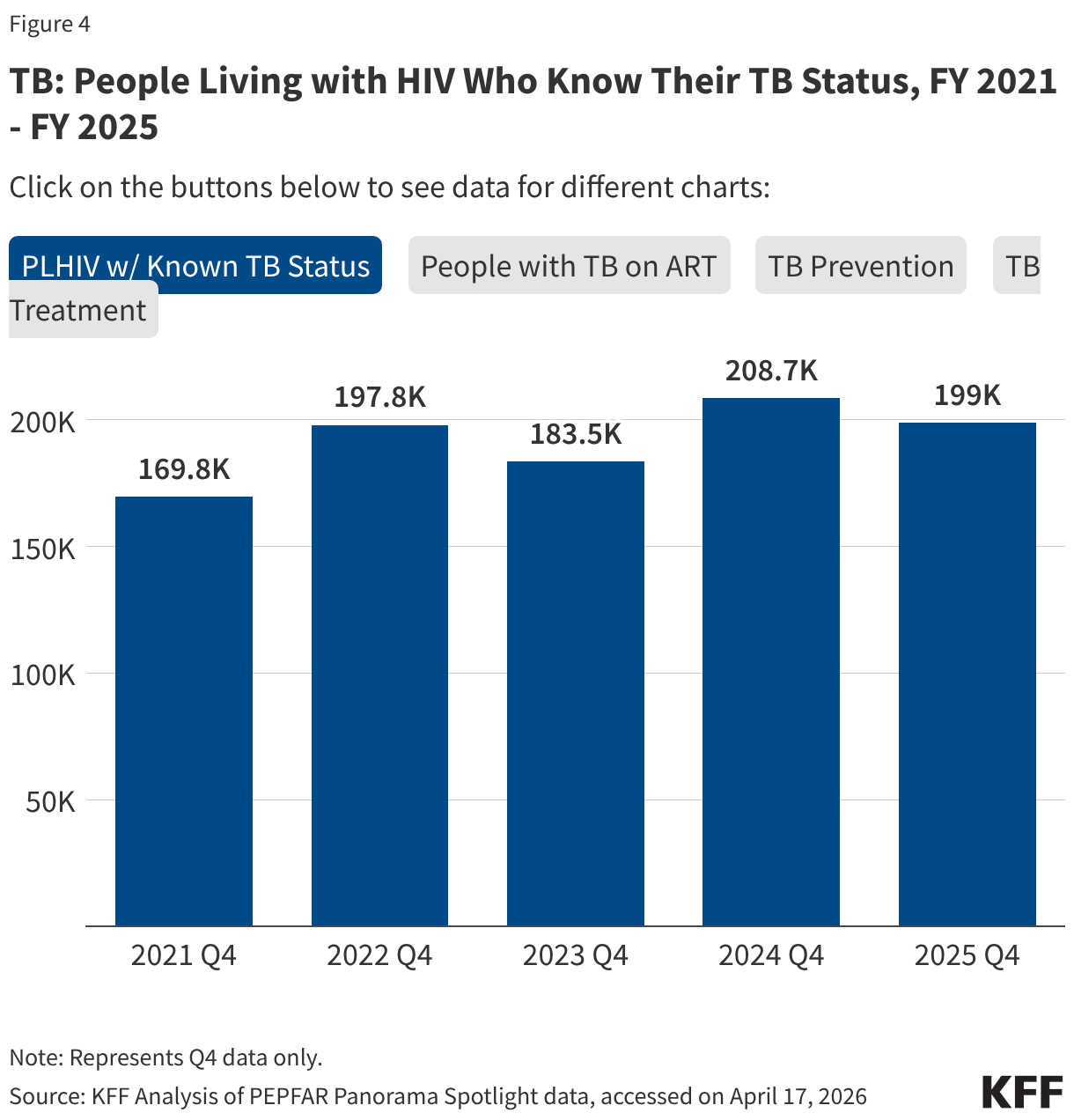
In the domain of tuberculosis and HIV co-infection, where PEPFAR has historically invested heavily to mitigate the elevated mortality risks faced by co-infected patients, results were similarly varied. While the initiative maintained substantial support for identifying TB status among people living with HIV and initiating tuberculosis treatment among co-infected individuals, metrics associated with the initiation of TB preventive therapy among ART patients experienced notable fluctuations across the comparative fiscal periods.
Similar patterns emerged in chronic disease integration efforts, such as PEPFAR’s long-standing initiative to address the heightened risk of cervical cancer among women living with HIV. While clinical screenings for cervical cancer among women on ART registered declines during the period, the proportion of those who screened positive and successfully received follow-up treatment—including interventions such as cryotherapy, thermocoagulation, or loop electrosurgical excision procedure (LEEP)—held relatively steady.
These findings are derived from an independent analysis conducted by researchers at KFF and Boston University, utilizing MER datasets extracted from the PEPFAR Panorama Spotlight platform for the fourth quarter of fiscal years 2021 through 2025. Analysts noted that all countries that successfully reported data in the fourth quarter of fiscal year 2024 also submitted reports for the corresponding period in fiscal year 2025. However, researchers cautioned that methodological shifts instituted by reporting authorities—specifically the reclassification of several indicators from "required" to "optional" status throughout fiscal year 2025—mean that some observed declines in data volume may reflect reduced reporting compliance by participating implementers rather than actual contractions in service delivery on the ground.



